
 Zoe Nora
Did you know nearly nine out of ten audio fans think a Class D amplifier is digital? But, these units are actually advanced analog circuits. This mistake hides the amazing engineering that lets them beat old linear devices in today’s homes.
This guide is here to help you pick the right one with confidence. By knowing how this tech works, you can find a unit that offers exceptional clarity and power. We aim to make sure your choice fits your listening space and sound needs perfectly.
Key Takeaways
- Most people confuse these units with digital technology, but they are purely analog.
- These devices offer superior energy efficiency compared to older linear models.
- Understanding switching frequency helps you identify high-quality audio performance.
- We prioritize matching power output to your specific speaker impedance.
- Choosing the right Class D amplifier transforms your home listening experience.
Understanding What a Class D Amplifier Is
Many people call this technology a digital amplifier, but it’s actually an analog device. It uses pulse-width modulation (PWM) to control power. This method varies the pulse duration to amplify audio signals with great precision.
Definition and Technology Overview
A Class D amplifier is a type of switching amplifier. Unlike old designs, it switches transistors fully on or off. This quick switching cuts down energy loss.
Because it acts as a switch, it doesn’t get hot. This lets makers make units that are smaller and lighter. It’s a myth that it turns the signal digital; it stays analog.
Advantages of Class D Amplifiers
The main perk of a Class D amplifier is its high efficiency. Most are over 90% efficient, saving a lot of power. This means lower bills and less wear on parts.
They’re also small and cool-running. This makes them great for tight spaces or hidden setups. No need for big heat sinks or heavy transformers.
| Feature | Class A | Class AB | Class D |
|---|---|---|---|
| Efficiency | Low | Moderate | High |
| Heat Output | Very High | Moderate | Low |
| Size | Large | Medium | Compact |
Common Applications
Today, you’ll find this tech in many audio settings. Home theaters use them to power channels without overheating. They’re also key in professional audio, like concert subs and portable PAs.
Also, the digital amplifier label fits high-end desktop audio and small Bluetooth speakers. Their power and size make them perfect for today’s spaces. They’re great for home cinemas or studios, offering efficiency and reliability.
Key Features to Look For in Class D Amplifiers
When you start looking for a new audio component, it’s key to know about a Class D amplifier. These devices have changed the audio world by mixing great sound with practical design. By looking at certain technical details, you can make sure your system sounds clear and loud.
Power Output Ratings
Power output shows how well an amplifier can drive your speakers. Look for the continuous power rating in Watts RMS, not peak power. Adequate headroom is crucial to avoid distortion during loud parts of music or movies.
Match the amplifier’s power to your speakers’ needs. For big speakers, choose amplifiers with more wattage. This keeps your sound clean and strong, even at high volumes.
Efficiency and Heat Dissipation
A high efficiency amplifier turns most of its power into sound, not heat. They usually have 80-90% efficiency, with some reaching 97%. This means they stay cooler during use.
These units make less heat, so they don’t need big heat sinks or fans. This makes them last longer. You can listen for hours without worrying about overheating.
Size and Form Factor
These amplifiers are small, perfect for tight spaces. They don’t need big transformers or heavy heat sinks, so they’re sleek and slim. They fit well in small media cabinets or behind speakers.
| Amplifier Type | Typical Efficiency | Heat Output | Size Profile |
|---|---|---|---|
| Class A | 20-30% | Very High | Large/Heavy |
| Class AB | 50-60% | Moderate | Medium |
| Class D | 80-97% | Low | Compact |
Choosing the Right Power Rating for Your Needs
Getting high-quality sound starts with picking the right power for your speakers. When you choose a Class D amplifier, make sure it matches your speakers. This prevents distortion and damage. It’s key for a great listening experience.
Matching Amplifier Power with Speaker Power
It’s vital to match your speaker’s impedance with the audio power amplifier‘s output. Most modern amps can handle 4 to 8 ohms. But, always check your speaker’s specs first. If the power is too low, you might get clipping when trying to play it loud.
To keep your system working well, follow these tips:
- Look at the impedance rating on your speakers.
- Make sure the Class D amplifier can handle the ohm load.
- Choose an RMS power that matches or is a bit more than what your speakers need.
- Don’t push your equipment too hard for too long.
Considerations for Home Theater vs. Stereo Systems
Your power needs change a lot depending on your setup. A stereo system focuses on clear music, needing a good audio power amplifier for two speakers. But, a home theater needs power for many channels to handle surround sound.
For a multi-channel system, think about the total power needed for all speakers. You might need a stronger power supply for a Class D amplifier to keep up during loud scenes. This ensures your sound is always clear and immersive, no matter what you’re watching.
Types of Class D Amplifiers Available
When building a home theater or a portable PA system, the amplifier type is crucial. The market offers a wide range, from small modules to large, multi-channel units. These cater to different acoustic needs.
Integrated vs. Standalone Amplifiers
Choosing between an integrated unit and a standalone component depends on your setup goals. Integrated systems combine pre-amplifier and power stages in one. This is great for home users who want a simple solution.
On the other hand, a standalone digital amplifier module offers flexibility. It’s perfect for DIY enthusiasts or professional installers. These units let you customize your sound chain for high-fidelity sound.
Monoblock vs. Multi-Channel Options
For a dedicated subwoofer, a monoblock Class D amplifier is ideal. These units focus on one channel, ensuring maximum efficiency and minimal interference.
For surround sound setups, multi-channel options are key. They distribute power across several speakers, keeping a compact footprint while delivering consistent performance.
“The beauty of modern amplification lies in the ability to achieve high-output power without the massive heat sinks of traditional designs.”
Brands Known for Quality Class D Amplifiers
Several manufacturers have excelled in high-quality output. ICEpower has been a leader since the late 90s, pushing performance and reliability boundaries.
For mobile DJ rigs or portable PA systems, a lightweight amplifier is often preferred. Below is a summary of how these configurations meet different user needs:
| Amplifier Type | Best Use Case | Key Benefit |
|---|---|---|
| Monoblock | Subwoofers | High Power Density |
| Multi-Channel | Home Theater | Versatile Connectivity |
| Integrated | Living Room Audio | Ease of Use |
| Standalone | Custom DIY Projects | Maximum Flexibility |
Choosing the right Class D amplifier ensures efficiency and power. Whether you need a lightweight amplifier for travel or a complex system for your home, understanding these categories helps you make a better choice.
Importance of Connectivity Options
The physical and wireless connections of a device are as crucial as its power output. When you add a Class D amplifier to your home audio, the ports matter a lot. They decide how well it talks to your current gear.
Input Formats: Digital vs. Analog
Choosing between digital and analog inputs depends on your setup. If you have a top-notch external DAC or a network streamer, go for a unit with strong analog RCA or balanced XLR inputs. On the other hand, a compact amplifier with built-in optical or coaxial digital inputs is great for a simpler setup.
Wireless Connectivity: Bluetooth and Wi-Fi
Wireless features make streaming music from your phone or tablet super easy. But, picking a compact amplifier with wireless can be tricky. Badly shielded designs might pick up on Wi-Fi or Bluetooth signals, causing problems.
Make sure the maker has focused on good internal shielding. This keeps your Class D amplifier connected well, without audio drops or noise.
Additional Features: Remote Control and App Compatibility
Today’s audio systems should be easy to control from your couch. Many come with remotes or apps for adjusting volume, switching inputs, and tweaking EQ settings. These features make your Class D amplifier a breeze to use, fitting right into your listening space.
Analyzing Sound Quality Factors
We think the best way to judge a Class D amplifier is with objective data. Marketing often highlights power output, but the real sound quality comes from how well it reproduces the original signal.
Looking at technical measurements helps you spot quality from low-end gear. This method makes sure your audio system amplifier brings the clear sound you want for your home.
Distortion and Signal-to-Noise Ratio
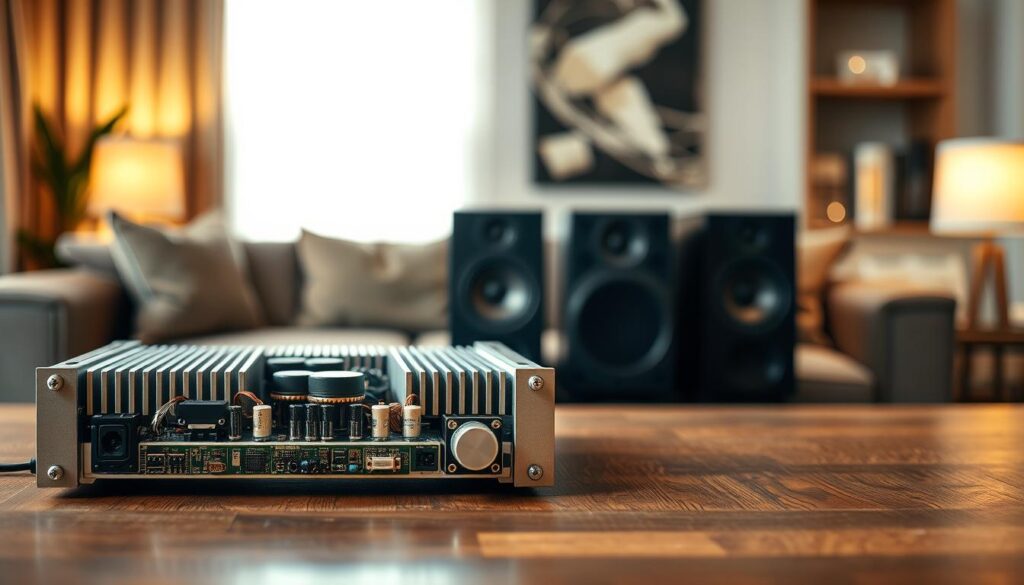
Total Harmonic Distortion plus Noise (THD+N) is key for modern designs. A top-notch Class D amplifier should have a THD+N of ≤0.05% at rated power. This keeps the sound clean and free from unwanted noise.
The Signal-to-Noise Ratio (SNR) shows how much background noise you’ll hear in quiet parts. A higher SNR means less background noise, letting the music’s details stand out without interference.
“The goal of high-fidelity audio is to provide a transparent window into the recording, where the equipment disappears and only the music remains.”
Frequency Response and Bass Performance
Frequency response shows how well an audio system amplifier handles sound across the whole range. You want it to keep a flat response, so neither highs nor lows are boosted or cut.
Bass quality depends on the damping factor. A high damping factor keeps the speaker cones in tight control, preventing unnecessary movement after a signal stops.
This control is crucial for punchy, accurate bass that doesn’t sound muddy or bloated. By focusing on these technical aspects, you ensure your audio system amplifier offers a balanced and immersive sound experience.
Setting Your Budget: Class D Amplifier Price Ranges
Figuring out how much to spend on your sound system is key to perfect sound. We break down the market into three main levels. This helps you find the best deal for your needs. Whether you’re starting small or aiming for a pro setup, knowing what each price range offers is essential for success.
Wallet-Friendly Options Under $200
For beginners, entry-level models are a great start. They’re small, basic, and still pack a punch for small spaces or desktops. These units might not have all the bells and whistles. But they let you enjoy the efficiency of a Class D amplifier without spending a lot.
Mid-Range Choices for Serious Listeners
In the mid-range, you’ll see big improvements in sound quality and power. We think the best value is between $350 and $450. At this price, you get better parts and more features that make your music sound even better.
High-End Models for Audiophiles
For serious fans, high-end models are the top choice. They’re made with the finest materials and built to last. Choosing a high-end Class D amplifier means you’re getting top-notch sound, durability, and peace of mind.
User Reviews and Expert Recommendations
Choosing a top-notch Class D amplifier is more than just looking at specs. Manufacturers often highlight impressive numbers, but these don’t always show how a device performs in real life.
For a smart choice, focus on real data over sales talk. Independent tests help you see what your audio gear can really do before you buy it.
Where to Find Reliable Reviews
For honest reviews, check out Audio Science Review. They offer detailed, unbiased tests that go beyond what’s listed in specs.
Look for specific tests that show how a Class D amplifier handles tough signals. Important tests include:
- FFT plots to check for distortion.
- Impedance sweeps to see how it works with different speakers.
- Signal-to-noise ratio tests for a clean sound.
Influential Forums and Communities
Audio enthusiast forums also offer great insights. They let you learn from others who’ve used a Class D amplifier in their homes.
Joining these groups can help you avoid common mistakes and find the right match for your speakers. You’ll also get tips on comparing different models.
- Learn about common setup mistakes not in manuals.
- Get tips on pairing your amplifier with speakers.
- See comparisons of popular models from users.
By mixing expert reviews with user feedback, you can find a Class D amplifier that’s reliable and performs well. This way, you skip the marketing and get the sound quality you want.
Final Touches: Installation and Setup Tips
Getting high-quality sound is more than just choosing the right equipment. It’s also about how you set it up. Make sure your Class D amplifier is installed right to keep it working well for a long time.
Optimizing Physical Placement
Even the quietest designs can get hot. Give your amplifier at least 2 cm of space on all sides for air to flow. For mobile audio projects, check out this guide on how to install an to keep your wiring and mounts steady.
Refining Your Audio Environment
After setting up your equipment, start calibrating. Begin with your gain settings low and slowly increase them until you reach your preferred volume. Make sure you don’t get any distortion.
Adjust your crossover points to fit your speakers’ abilities. Usually, set high-pass filters around 80 Hz for smaller drivers. Listen to music you know well to check the sound balance across different frequencies.
Small tweaks to your equalizer or crossover settings can bring out new details in your music. With careful setup, your Class D amplifier will deliver an immersive sound experience.