
 Zoe Nora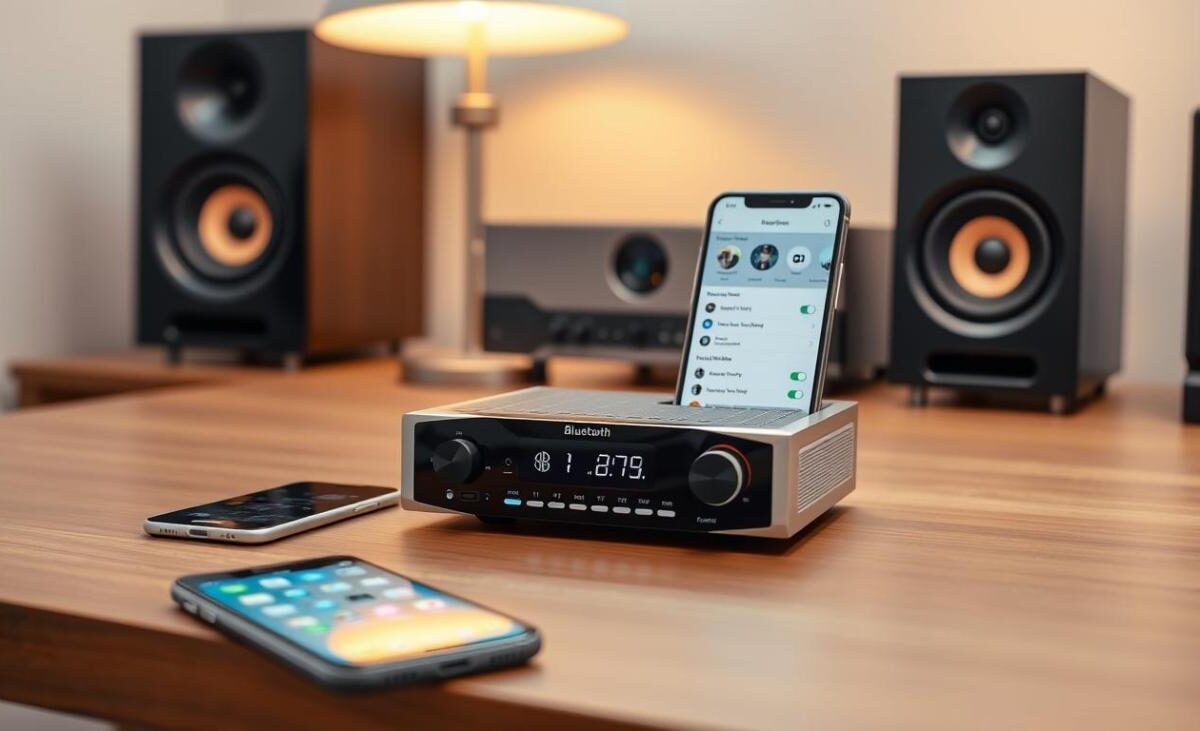
Did you know over 70% of high-quality vintage sound systems sit idle in homes across the United States? Many owners think their classic gear is outdated because it lacks modern wireless features. But, we can easily connect your beloved hardware to today’s streaming services.
By adding an Audio receiver Bluetooth, we can turn any old setup into a modern, connected home hub. This simple step brings new life to your equipment without needing a complete system change.
Installing a receiver with Bluetooth capabilities is easy and anyone can do it. Just follow our guide to unlock your speakers’ full potential. Enjoy high-fidelity sound with today’s convenience.
Key Takeaways
- Vintage sound systems can easily integrate with modern streaming platforms.
- Adding wireless connectivity is a cost-effective way to upgrade your home setup.
- The installation process is simple and requires minimal technical expertise.
- Modernizing your gear preserves the high-quality sound of classic hardware.
- You can create a seamless, connected listening experience in any room.
Understanding Audio Receiver Bluetooth Technology
Learning about wireless audio is key to a great home entertainment setup. We use invisible signals to connect our phones to old sound systems.
A wireless receiver is crucial in this process. It lets old devices talk to new ones, keeping your sound clear.
What is Bluetooth Technology?
Bluetooth uses low-power radio waves to send data between devices. It works on a specific band, from 2.4 GHz to 2.483.5 GHz.
This band lets your audio receiver Bluetooth send info smoothly. Your music or podcasts play without interruptions.
Key Features of Audio Receivers
Today’s devices need Bluetooth connectivity to work well. They use encrypted packets for a secure, stable connection.
“The beauty of wireless audio lies in its ability to simplify complex systems while maintaining high fidelity for the listener.”
Choosing a receiver with Bluetooth capabilities means you’re getting a reliable device. It’s built for fast data transfers, perfect for HD audio streaming.
Benefits of Using Bluetooth Audio Receivers
Adding a wireless receiver to your home has many benefits. It’s easy to set up and makes your old equipment work with new tech.
| Feature | Standard Audio | Bluetooth Receiver |
|---|---|---|
| Setup Complexity | High (Cables) | Low (Wireless) |
| Device Compatibility | Limited | Universal |
| Portability | Fixed | High |
| Signal Range | Short | Extended |
Using an audio receiver Bluetooth changes how you enjoy media. It’s great for upgrading old amps or setting up new rooms. A receiver with Bluetooth capabilities brings Bluetooth connectivity to your space.
Choosing the Right Audio Receiver Bluetooth
Finding the right receiver with Bluetooth capabilities can be tough without a guide. It’s important to match your audio needs with the device’s specs. This ensures your sound system stays reliable and top-notch for years.
Factors to Consider
When looking at a wireless receiver, focus on range and compatibility. Bluetooth 5.0, introduced in 2017, offers better range and uses less power. Make sure the device supports high-resolution codecs for clear audio.
Build quality is key. A well-made audio receiver Bluetooth has better components for a stable signal and clear sound. Look for devices with strong shielding to block interference from other electronics.
Popular Brands and Models
The market has many options, but not all are equal. Choosing a reputable brand means better Bluetooth connectivity and support. While cheaper options might seem appealing, they often lack the quality and longevity of well-known models.
Research brands known for their audio expertise. These companies often update their devices to keep them working well with new technology. This avoids the hassle of poor connections or sound quality.
Price Range and Features
Finding a receiver with Bluetooth capabilities that fits your budget is possible. Compare models through expert reviews, like this guide to the best Bluetooth audio. This helps you see which features, like multi-point pairing or optical outputs, are worth the extra cost.
Your choice of an audio receiver Bluetooth should match your listening habits. Whether you want something portable or high-fidelity, there’s a device that balances price and performance. Prioritizing stable Bluetooth connectivity is key for a great home audio setup.
Setting Up Your Audio Receiver Bluetooth
Setting up your audio receiver Bluetooth is easy. It connects your digital library to your speakers in a few steps. We made it simple so you can add it to your setup without hassle.
Unboxing and Initial Setup
First, you’ll find the device, a power cable, and audio output cords in the box. Look for the input ports on your amplifier or stereo system. These are usually labeled as RCA or AUX jacks.
Connect the cables from your wireless receiver to these ports. Then, plug the power adapter into a wall outlet to turn it on. Make sure the device is placed where it won’t be blocked by metal objects.
Pairing with Other Devices
Once the hardware is set up, start the pairing mode. Most devices do this automatically, showing a flashing LED light.
Go to your phone’s settings and find the Bluetooth option. Scan for new hardware and tap on your audio receiver Bluetooth when you see it. Your device will now use the receiver for streaming.
Troubleshooting Common Issues
Occasionally, you might run into small problems with your Bluetooth connectivity. If your phone can’t find the receiver, try turning Bluetooth off and on again. This often fixes temporary issues.
If you have trouble with sound, check if your wireless receiver is close enough to your device. Good Bluetooth connectivity is key for a great listening experience. If problems continue, try restarting your audio receiver Bluetooth.
Connecting to Different Audio Sources
Modern wireless audio tech is all about being versatile. It lets you stream from almost any digital source. By adding an audio receiver Bluetooth to your setup, you can connect portable devices to high-fidelity speakers. This makes your favorite music and media sound amazing.
Smartphones and Tablets
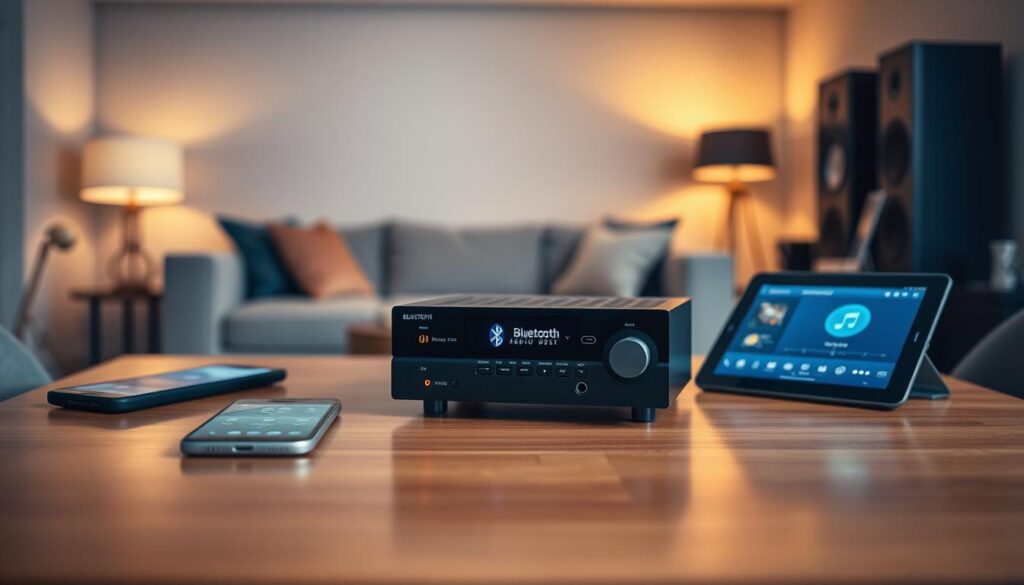
Most people start by pairing their mobile devices. These are the most common sources for streaming music. First, make sure your stereo receiver is in pairing mode. Then, go to the Bluetooth settings on your phone or tablet.
Select the receiver from the list of available devices. This will establish a stable connection.
- Keep your device within 30 feet for the best signal strength.
- Disable other active Bluetooth connections to avoid interference.
- Adjust the volume on your source device to about 80% for optimal gain.
Computers and Laptops
Connecting a computer to your receiver amplifier lets you enjoy high-resolution audio files. You’ll need to access your computer’s sound settings. Here, select the receiver as the primary output device.
This ensures all system audio goes through your high-quality sound system.
If you have connectivity issues, check for driver updates on your computer. A stable connection is key for consistent audio quality during long listening sessions.
Smart TVs and Home Theater Systems
Integrating your TV into a home theater setup needs some technical know-how. You might need a Bluetooth transmitter if your TV doesn’t have wireless audio. These transmitters plug into your TV’s “AUDIO OUT” or “HEADPHONES” ports.
Once connected, the transmitter sends the audio signal wirelessly to your audio receiver Bluetooth unit. This setup is great for watching movies without disturbing others or enhancing the sound of your favorite shows. Make sure your TV’s output settings are set to “External Speakers” or “Audio Out”. This ensures the signal reaches your stereo receiver or receiver amplifier correctly.
Enhancing Sound Quality with Audio Receiver Bluetooth
High-fidelity audio starts with how your equipment handles wireless signals. Using an audio receiver Bluetooth in your home setup changes how data is sent. Whether it’s an old stereo receiver or a new receiver amplifier, the sound quality depends on the tech used.
Audio Formats Supported
Bluetooth codecs connect your device to speakers. Basic codecs like SBC work but can lose audio detail. For better sound, look for devices with aptX or AAC support.
These advanced codecs keep your music clear and detailed. A receiver amplifier with these formats means less distortion and a fuller sound.
| Codec Type | Sound Quality | Latency | Best Use Case |
|---|---|---|---|
| SBC | Standard | High | Basic streaming |
| AAC | High | Medium | Apple devices |
| aptX | Excellent | Low | High-fidelity audio |
Importance of Range and Stability
A stable connection is key, just like the codec. Bluetooth 5.0 offers a stronger signal and longer range. This lets you move your device without audio drops.
A consistent link means no jitter in your sound. Keep your devices close for the best performance.
Tips for Optimal Sound Experience
To improve your stereo receiver, avoid physical barriers. Walls and other devices can mess with the signal. Open spaces help a lot.
Bluetooth 5.0 also lets you stream to two devices at once. This makes your system more flexible. Follow these tips for a clear, immersive sound every time.
Customizing Settings on Your Audio Receiver Bluetooth
Getting the perfect sound is more than just connecting to your home audio system. Once your audio receiver Bluetooth is set up, you can fine-tune it for your listening space. Even small tweaks can make a big difference in sound quality.
Volume Control and Equalizer Adjustments
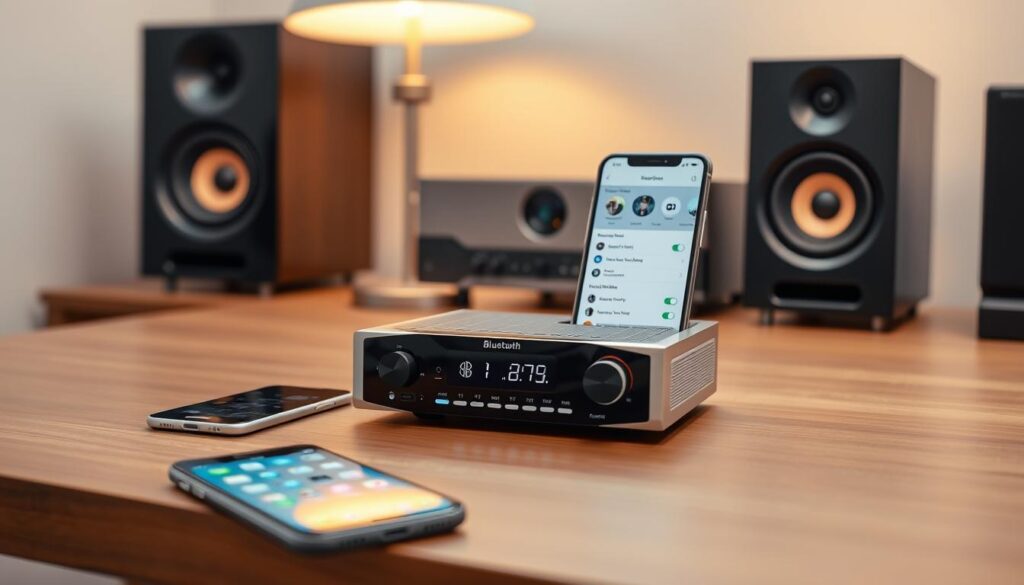
First, manage your volume to get a balanced sound. Many devices use high-quality decoders to keep audio clear during transmission. Adjust these settings on your device or stereo receiver to keep the sound clean.
If your music sounds off, try adjusting the equalizer. Most apps let you boost bass or treble to fit your room’s acoustics. This ensures your receiver amplifier delivers a great sound every time.
Using Third-Party Apps
Third-party apps offer more customization options. They include features like custom sound profiles and room correction software. For help with adding Bluetooth to a stereo receiver, these apps are very useful.
These apps let you save settings for different music types or movie modes. This turns your audio receiver Bluetooth into a personalized media hub. It’s a simple way to enhance your experience without needing professional tools.
Firmware Updates for Better Performance
Keeping your device’s software up to date is key for top performance. Manufacturers often release updates to fix bugs and add new features to your audio receiver Bluetooth. Regularly checking for updates keeps your system compatible with the latest devices.
Set aside time every few months to check for updates on the manufacturer’s website or app. Staying current protects your investment and lets you enjoy new features. Regular maintenance keeps your audio gear sounding great.
Exploring Advanced Features
We can turn our homes into soundscapes with modern tech. Moving past basic sound, we unlock our systems’ full power. This makes our listening space professional. Whether you love music or are an audiophile, these features offer unmatched flexibility.
Multi-Room Audio Capabilities
Today’s tech lets us create big sound networks across rooms. Devices on the same network work together as one system. This is great for parties or enjoying music as you move around.
You need a top-notch audio receiver Bluetooth for this. It connects your speakers for a unified sound. This is a game-changer for consistent sound quality everywhere.
Voice Control Integration
Voice control makes listening easier. Connect your receiver to a smart assistant for hands-free use. You can change volume, skip songs, or switch inputs with just your voice.
This is super helpful when you’re busy or have guests. Voice integration keeps you focused on the music. It makes your system smart and responsive to your needs.
Streaming from Various Platforms
Streaming is easy with a multi-channel receiver as your hub. You can access millions of songs and podcasts directly. No need for physical media anymore.
Here are some streaming perks:
- Direct access to high-resolution music services.
- Seamless switching between different online content providers.
- Centralized management of all your digital playlists.
These advanced features keep our audio gear up-to-date and powerful. They let us create a sound experience that matches our lifestyle.
Maintaining Your Audio Receiver Bluetooth
Keeping your audio receiver Bluetooth in top shape is key. It’s all about keeping it clean and its software up to date. With a few simple steps, your audio receiver Bluetooth will keep playing great sound for years.
Cleaning and Care Tips
Dust is a big problem for any home theater receiver. Use a soft, dry microfiber cloth to clean the outside every week. This stops dust from getting stuck in the vents.
Don’t use strong cleaners or liquids on your device. If dust gets inside, a gentle air blast can help keep things cool and working right.
Updating Software and Firmware
Keeping your software up to date is crucial. It keeps your multi-channel receiver safe and working well with new devices. Manufacturers often release updates to fix issues or add new features.
Check the manufacturer’s website or app for updates. This ensures your audio receiver Bluetooth stays compatible with the latest tech.
When to Replace or Upgrade
Even with good care, technology moves on. If your unit can’t connect to new devices or doesn’t support current audio formats, it’s time to think about upgrading.
For tech-savvy folks, you can add new features to an old home theater receiver with Raspberry Pi projects. This is a smart way to refresh your system before buying a new one.
| Maintenance Task | Frequency | Benefit |
|---|---|---|
| Surface Dusting | Weekly | Prevents overheating |
| Firmware Check | Monthly | Ensures compatibility |
| Cable Inspection | Quarterly | Maintains signal integrity |
| System Reset | Annually | Clears cache errors |
Using Audio Receiver Bluetooth in Different Environments
Modern wireless audio tech lets us enjoy great sound anywhere. At home or on the move, an audio receiver Bluetooth changes how we listen. These small devices connect old tech with new streaming services.
Home Use vs. Professional Settings
In homes, a home theater receiver is key for entertainment. Adding a wireless adapter lets you stream music from phones to speakers. It’s great for relaxing or parties.
For studios or offices, a multi-channel receiver is needed. It must handle many inputs without losing signal. In these places, audio must be reliable for presentations or background music.
Outdoor and Portable Applications
Wireless tech isn’t just for indoors. It’s also for cars, making streaming on the road easy. This upgrade turns a basic stereo into a media center.
Outdoor fans also benefit. Portable speakers and a small receiver bring music to patios or campsites. Your tunes go with you, no matter where you are.
Real-World User Experiences
Setting up audio gear can be tricky. But, multi-channel receivers are very versatile. They help solve common audio issues, whether in living rooms or cars. Here’s how different users use them.
| Environment | Primary Goal | Key Benefit |
|---|---|---|
| Living Room | Upgrade home theater receiver | Wireless streaming convenience |
| Automotive | Modernize older car audio | Hands-free music control |
| Home Office | Improve focus with music | Seamless device switching |
| Outdoor Patio | Enhance social gatherings | Portable audio flexibility |
Potential Issues and Solutions
Even the most advanced systems can sometimes face technical problems. These issues can ruin your listening experience. Luckily, most problems with an Audio receiver Bluetooth can be fixed with simple steps.
Connection Problems
If your device won’t pair, start by clearing its cache. Make sure no other electronics are causing signal interference. Always check that your digital audio receiver is in pairing mode before trying to connect.
Audio Lag and Sync Issues
Latency can be a big problem during video or gaming. Many units have features to help with this. You can connect headphones while playing audio through speakers to reduce delays. Also, adjusting the buffer settings in your playback software can help sync the audio with visuals.
Distorted Sound Conditions
Distortion usually comes from bad cables or too much signal. Check your cables to make sure they’re properly connected to your Audio receiver Bluetooth. If the sound is still fuzzy, try turning down the volume on the source device to avoid clipping before it reaches your digital audio receiver.
| Issue Type | Primary Cause | Quick Fix |
|---|---|---|
| Connection Failure | Signal Interference | Reset Pairing Mode |
| Audio Lag | Buffer Latency | Enable Bypass Mode |
| Sound Distortion | Cable Damage | Check Physical Ports |
| Signal Dropouts | Range Limits | Reduce Distance |
Future of Audio Receiver Bluetooth Technology
Wireless sound tech is getting smarter and more efficient fast. It’s changing how we enjoy music at home.
Emerging Trends and Innovations
The name Bluetooth comes from King Harald Bluetooth of Denmark. He united tribes in the 10th century. Today, engineers use this idea to connect different devices. You can check out a high-quality audio receiver Bluetooth unit to see the progress.
Smart Home Integration
Future devices will blend into our homes with more automation. A digital audio receiver will be the heart of your home network. It will adjust sound settings based on your daily life.
Predictions for Consumer Usage
We’ll see wireless audio get even smoother in the future. Makers like Sony and Bose will focus on saving energy. Users will get longer battery life and quicker pairing.
This tech is key to our connected world. It’s making our lives easier and more enjoyable.