
 Zoe Nora
Did you know over 90% of audio details are lost before we hear them? We use special devices to get back this lost depth. This brings recordings to life.
These tools boost signal strength for crystal-clear sound. With a top-notch amplifier, every note sounds precise.
Building a strong digital sound system or finding the best amplifier for your home theater is key. Understanding this tech is crucial. It’s the heart of any serious setup.
We think every listener should hear music as the artist meant it. Finding the right amplifier is the first step to a deep experience.
Key Takeaways
- Audio hardware boosts signal strength to improve overall clarity.
- Modern setups rely on specialized units to recover lost sound details.
- A high-quality device is essential for a professional home theater experience.
- Proper equipment allows listeners to hear nuances in their favorite tracks.
- Optimizing your gear leads to a more immersive and rich listening environment.
Understanding Digital Amplifiers
Ever wondered how your speakers sound so clear? It’s often thanks to a digital amplifier. These devices are key to modern sound systems. They make sure every sound reaches your ears with perfect clarity.
These components turn weak signals into strong sounds. Learning about them helps you enjoy your sound systems more.
What Is a Digital Amplifier?
A digital amplifier is an electronic device that boosts audio signals. Its main job is to power speakers well. It gives them the energy needed to move.
This type of audio amplifier is very efficient. It connects your source device, like a media player, to your speakers. This keeps the sound true to the original.
How Does a Digital Amplifier Work?
The tech behind it is interesting. An amplifier uses power from a source and controls it to match the input signal’s size.
Efficiency is key here. The device switches its output transistors fast. This high-speed switching lets it power the speakers without losing much energy as heat.
By matching the output to the input, the system keeps sound quality high. This is why today’s amplifiers are small but powerful. They give everyone a better listening experience.
Benefits of Using Digital Amplifiers
Modern sound systems have made a big leap with digital technology. A digital amplifier brings precision that was hard to get before. It makes our sound systems perform better and sound cleaner.
Improved Sound Quality
The main reason we use digital amplifiers is for their remarkable clarity. They keep the signal clean, cutting down on noise and interference.
This leads to a better soundstage, where we can hear each instrument and voice clearly. Every part of the music comes alive, making our listening experience more immersive.
Energy Efficiency
Digital amplifiers are also great because they’re energy efficient. They use power better than old models, making less heat.
This is a big plus for long listening times. We can enjoy great sound without using too much power or needing big cooling systems.
Compact Size
Today’s homes often have less space. The compact size of these amplifiers is perfect for small spaces.
Even though they’re small, they pack a powerful output. This means we can have a clean, simple look without losing sound quality.
Comparing Analog and Digital Amplifiers
Choosing a high-quality amplifier means understanding the tech behind sound. We compare vintage tube amps for their warmth to solid-state’s durability. But, the digital amplifier brings a new sound experience.
Key Differences
Tube amps use vacuum tubes for a unique sound. This sound is loved by many. On the other hand, solid-state amps offer a more neutral sound and last longer.
Digital amplifiers work by switching transistors fast. This keeps them efficient and sound clear. They avoid the power loss of old analog amps.
Advantages of Digital Over Analog
Digital amps are cooler and take up less space. This is great for small homes. They also offer better sound quality.
Digital amps are precise and clear. They’re perfect for those who want power and efficiency. They’re a big step up from old analog systems.
Applications of Digital Amplifiers
Modern audio technology lets us add high-quality sound to many places. A digital amplifier gives us control over sound, making every note clear and strong. This is true no matter where you are.
Home Audio Systems
In homes, people want great sound for entertainment. A top-notch amplifier for home theater is key. It powers speakers for a movie-like feel. These amps are efficient, keeping speakers cool.
Professional Sound Systems
In big places, like concert halls, sound systems need to be top-notch. A digital sound system is crucial for clear sound to many. They’re light and efficient, perfect for moving around.
Automotive Audio
Improving car sound starts with the right amplifier for home theater or car use. A small digital amplifier fits in cars easily. It makes driving sound like a studio session.
Let’s look at how these systems vary in different places.
| Application | Primary Goal | Key Requirement |
|---|---|---|
| Home Theater | Immersive Surround | High Fidelity |
| Professional | Volume & Clarity | Durability |
| Automotive | Space Efficiency | Compact Design |
Choosing the right digital sound system depends on your needs. Whether it’s for a home cinema or car upgrade, these devices meet modern sound standards.
Features to Look For in a Digital Amplifier
When we look for a new digital amplifier, we can’t just focus on how it looks. We need to look at the technical details that affect sound quality. By focusing on these, we make sure our sound is clear and detailed.
Power Output
The power output of a digital amplifier is key. It must match our speakers to avoid damage. Always check the continuous power rating for a true sense of its power.
It’s also important to look at the Total Harmonic Distortion (THD). A lower THD means better sound quality. And a high Signal-to-Noise Ratio (SNR) keeps our music clean and free from background noise.
Connectivity Options
Today’s audio systems need to connect easily with our other gear. Look for devices with both analog RCA inputs and digital ports like optical or coaxial. This lets us connect everything from turntables to streaming devices without losing signal.
Wireless connectivity is also a big plus. Having Bluetooth or Wi-Fi built-in makes streaming from our phones or tablets easy. A digital amplifier with many input options is flexible for future upgrades.
Built-in DSP Capabilities
Advanced digital amplifier models often have built-in Digital Signal Processing (DSP). This lets us adjust the sound to fit our listening space. We can tweak equalization or apply room correction to fix sound issues.
Using DSP can really improve how we listen to music. It lets us control the soundstage and achieve a balanced, professional sound. Investing in a unit with these features can greatly enhance our listening experience.
Installation Tips for Digital Amplifiers
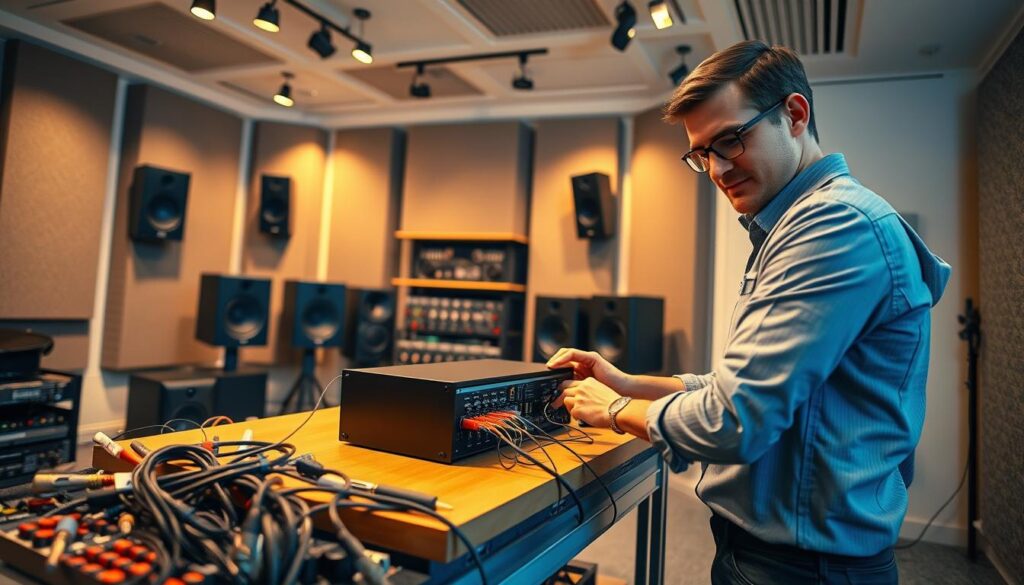
We think a great audio setup starts with careful planning and installation. The right placement and wiring are key for a lasting, high-quality sound system. By following these steps, we make sure our digital amplifier works its best.
Choosing the Right Location
The place we put our gear matters a lot. We need a spot with adequate ventilation to avoid overheating. A digital amplifier gets hot, and trapped heat can damage it early.
To keep our equipment in top shape, here’s what we do:
- Give it at least three inches of space on all sides for air to flow.
- Avoid putting it in a closed cabinet without a cooling system.
- Keep it away from direct sunlight or heat sources like radiators.
- Put it on a stable, vibration-free surface to protect the inside.
Wiring Considerations
Clean signal paths are crucial for the best sound. We use high-quality cables to avoid interference and signal loss. Organizing our wiring helps prevent electromagnetic noise from affecting our digital amplifier.
Here are some key tips for wiring:
- Keep power cables and audio signal cables apart to avoid hum or buzz.
- Use the shortest cables possible to keep the signal strong.
- Check connections often for signs of oxidation or looseness.
- Label your cables for easier troubleshooting or upgrades later.
Remember, taking care of a digital amplifier is more than just setting it up. We should clean it regularly to remove dust and fix it if it starts to sound off. These steps help us enjoy great sound for a long time.
Troubleshooting Common Issues
When your sound system stops working right, a step-by-step method helps find the problem fast. Even the best digital amplifier can have technical issues. By checking the basics first, we can often fix these problems without needing a pro.
No Sound Output
If your system is silent, first check if your digital amplifier is powered on. Make sure the power cable is plugged in well and the unit is getting electricity. Sometimes, just flipping the power switch or checking the circuit breaker can fix it.
Then, look at your input and output connections. Make sure the source device is set right and all cables are plugged in tight. A loose connection is often why you don’t hear anything.
Distortion Problems
Distortion happens when your digital amplifier and speakers don’t match. If the impedance levels don’t match, the sound can get clipped or muddy. Check the specs of both devices to make sure they’re compatible.
Another reason for distortion is wrong gain settings. If the input signal is too strong, the amplifier can’t handle it cleanly. Adjusting the volume levels on your source device can often fix the sound and prevent distortion.
| Issue | Potential Cause | Recommended Action |
|---|---|---|
| No Sound | Power failure | Check power cables and outlet |
| Distortion | Impedance mismatch | Verify speaker compatibility |
| Signal Loss | Loose wiring | Inspect and tighten all connections |
| Clipping | High gain settings | Lower the source volume |
Our Favorite Digital Amplifier Brands
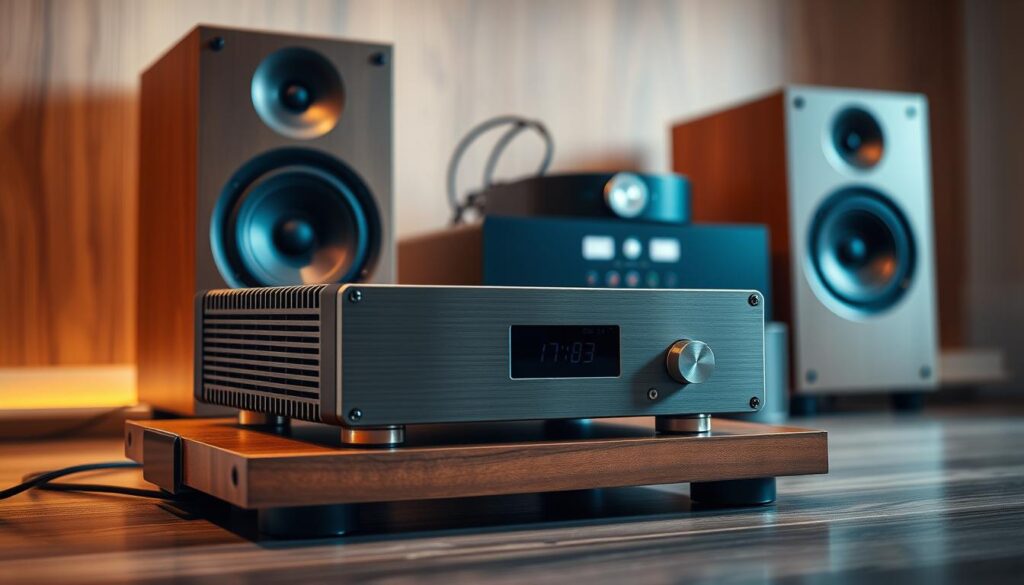
Looking for the best digital amplifier? The brand name is a good clue. High-end models are known for their quality, but budget options also shine. A well-known maker ensures your digital amplifier will sound great for years.
Yamaha
Yamaha is a big name in audio, known for its natural sound. Their products are highly regarded for lasting long and being easy to use. They suit both casual listeners and serious audiophiles.
Denon
Denon is famous for its precise engineering and sound processing. They aim to create a rich, immersive soundstage. This makes music and movies feel alive. It’s a favorite among those seeking a digital amplifier that’s both powerful and accurate.
Sony
Sony is always innovating, combining new tech with classic sound. Their products are praised for being flexible and easy to set up. If you want the best digital amplifier that’s both modern and high-performing, Sony is a great choice.
- Yamaha: Best for natural sound and long-term reliability.
- Denon: Ideal for those who prioritize precision and high-end engineering.
- Sony: Perfect for users seeking modern features and versatile connectivity.
Choosing the right amplifier depends on your budget and what you want to hear. Think about your space and listening habits before buying.
Innovations in Digital Amplifier Technology
Innovation drives the evolution of the modern digital amplifier. The latest in amplifier technology shows a focus on both performance and user experience. These changes are transforming how we enjoy high-fidelity sound at home.
Class D Amplifiers
Class D designs mark a big step in audio engineering. They use exceptional energy efficiency by switching transistors quickly. This cuts down on heat and makes them smaller without losing power.
Thanks to this efficiency, a modern digital amplifier can handle big power while staying cool. It’s ideal for those who want top-notch sound in small spaces. It raises the bar for what we expect from our audio gear.
Wireless Connectivity
Wireless features are now a must-have for users. Modern amplifier technology often includes Wi-Fi and Bluetooth. This lets us stream high-quality audio easily from our devices.
Wireless connectivity means fewer cables, making it easier to set up a digital amplifier anywhere. These flexible setups are key for today’s listeners. They blend smart features with great sound, expanding what’s possible in audio.
How to Optimize Your Audio Setup
Even the most advanced digital amplifier can’t make up for a bad listening space. We often focus on our gear’s tech specs, but the room matters a lot. By tweaking our space, we let our gear shine.
Room Acoustics
Sound waves bouncing off walls, floors, and ceilings affect what we hear. Hard surfaces can cause reflections, making sound muddy or echoey. Adding soft items like rugs or curtains helps soak up these excess sounds.
Managing these reflections is key for a clear soundstage. By cutting down on standing waves, our digital amplifier sounds tighter and more accurate. A well-balanced room keeps music details sharp and clear.
Speaker Placement
Getting speakers right is crucial for a rich soundstage. Place them at ear level for direct high-frequency sound. An equilateral triangle between speakers and listener enhances stereo imaging.
How far speakers are from walls is also important with a top-notch digital amplifier. Too close to corners can boost bass too much, hiding details. Try small tweaks to find the perfect spot for balanced sound.
The connection between speakers and room is vital for a top-notch system. Adjusting these physical elements ensures our digital amplifier offers the best immersive listening experience. Even small changes can make a big difference in sound quality.
Conclusion: Elevating Our Audio Experience with Digital Amplifiers
Getting perfect sound clarity means changing how we use our audio gear. A top-notch digital amplifier is key to any modern sound system. It turns raw digital data into the rich, immersive sounds we love in our homes.
The right gear changes how we see music production. Every digital amplifier for music lovers lets us hear new details in old songs. Brands like Yamaha, Denon, and Sony keep improving, making our music sessions clear and strong.
Choosing a reliable digital amplifier is a big step towards enjoying music more. We suggest looking into these upgrades to make your home sound like a concert hall. You’ll hear the difference right away. Begin your quest for better sound today and enjoy your favorite albums like never before.