
 Zoe Nora
Did you know over 70% of home audio systems don’t reach their full potential? This is because they lack enough current delivery. Many people buy top-notch speakers but forget about the power that drives them.
This guide aims to simplify the complex world of audio hardware. Getting a high-power amp can turn your listening room into a concert hall. It gives your music the headroom it needs.
Choosing the right power amp means knowing how different parts work with your speakers. We’ll look at what makes standard gear different from high-performance models for critical listening.
We want to give you the confidence to create a system that sounds clear and vibrant. Let us guide you in making the right choice for your home setup.
Key Takeaways
- Understand the critical role of current delivery in audio fidelity.
- Learn how to match hardware specifications to your speaker requirements.
- Identify the key differences between standard and high-performance audio gear.
- Gain confidence in navigating the complex US audio hardware market.
- Discover how to achieve better headroom for a superior listening experience.
What is a High-Power Amplifier?
An amplifier is a special electronic device that makes weak signals strong. It boosts the voltage and current from your source, like a turntable or digital streamer. This way, your speakers get enough power to play clear, dynamic sound without getting distorted.
Definition and Functionality
A high-power amp is the heart of your home audio setup. Unlike standard receivers, it can handle sudden loud peaks. It keeps the power steady, so your speakers play the music just like the recording engineer meant.
This electronic device uses power from your wall outlet to match the audio signal. It makes the original recording sound clear and precise. Without this boost, even the most expensive speakers can’t perform well.
Importance in Audio Systems
Building a strong audio system means thinking about how each part works together. Many speakers need a lot of current to move well. If your amp doesn’t have enough power, you might lose detail or get a muddy sound.
Getting a good high-power amp keeps your audio system stable, even when it’s loud. It helps control the speakers, leading to tighter bass and clearer highs. Here’s how different power levels affect your setup:
| Speaker Type | Power Requirement | System Impact |
|---|---|---|
| Bookshelf Speakers | Low to Moderate | Clear, balanced sound |
| Floor-standing Speakers | High | Deep, controlled bass |
| Planar/Magnetostatic | Very High | Maximum dynamic range |
Choosing the right electronic device for your audio system means matching power with your speakers. When you give your speakers the power they need, you get a deeper experience with your music and movies.
Key Features of High-Power Amps
Exploring high-performance audio means learning key technical terms. A high-power amp does more than just play loud music. It’s the heart of your sound system. Knowing these features helps your gear work its best.
Power Output and Rating
The RMS power per channel is crucial to check. Look for continuous wattage, not peak or PMPO. This gives a true picture of how it performs every day. By knowing amplifier specs, you avoid overestimating its power during long use.
“The quality of sound is not determined by the loudest volume, but by the clarity and stability of the power delivered to the speakers.”
Impedance Matching
Every electronic device must work well with your speakers. Impedance matching is key to avoid damage. Make sure your power amp fits your speakers’ ohm rating for safe energy flow.
Connectivity Options
A good electronic device integrates smoothly. Your high-power amp should match your system’s needs. Versatility in connectivity lets you upgrade parts without replacing everything.
Whether using XLR or RCA cables, quality matters. A solid power amp has strong terminals for a clear signal. Checking these now saves you from future problems.
Types of High-Power Amplifiers
When you start building your home audio system, you’ll find different types of electronic devices. Each one has its own way of delivering power and sound. Knowing these differences helps you pick the right equipment for your space.
Solid-State vs. Tube Amps
Solid-state amps use transistors for power management. They are highly reliable and easy to maintain. Many people like them for their clear and neutral sound.
Tube amps, on the other hand, use vacuum tubes for amplification. They are known for their warm, organic, and harmonic sound. Though they need more care, their unique sound and look are worth it for many.
Class A, B, D, and AB Explained
Amplifier classes show how the circuit handles the signal. Class A amps offer great linearity but produce a lot of heat. Class AB is a good balance, offering both efficiency and high-quality sound.
Class D amps are modern and efficient, reaching over 90% efficiency. They run cool and are light, making them great for small spaces. This electronic device technology has changed how we power big speakers without needing huge heat sinks.
| Class Type | Efficiency | Heat Output | Sound Quality |
|---|---|---|---|
| Class A | Low | Very High | Excellent |
| Class AB | Moderate | Moderate | Very Good |
| Class D | Very High | Low | Good/Excellent |
Integrated vs. Separate Amps
An integrated amplifier combines the pre-amp and power amp in one unit. It’s perfect for those who want a simple, space-saving audio system. It cuts down on cable clutter and makes setup easier.
Separate components, or “separates,” have a dedicated pre-amplifier and a standalone power amp. This setup offers maximum flexibility and upgrade potential. It takes up more space but lets you fine-tune your sound chain.
Understanding Wattage and Output
When we buy audio gear, we often look at numbers. But wattage is not always clear. Many think more watts means louder or better sound. But it’s more complicated than that.
Doubling wattage only adds +3 dB to volume. So, chasing high wattage is not always needed. Instead, focus on a stereo amplifier that delivers clean power for the best sound.
The Significance of RMS vs. Peak Power
When checking a power amp, you’ll see RMS and Peak ratings. RMS is for steady power over time. It’s key for daily listening.
Peak power is for short, high-energy bursts. While it might look good, it doesn’t show how it performs in long songs. Always look at RMS for stable performance.
How Wattage Affects Sound Quality
Wattage is about more than just loudness; it’s about headroom. Extra power means your system can handle sudden loud parts without distortion. Without enough power, sound can become harsh or muddy.
A strong sound amplifier keeps your music clear and dynamic, even at high volumes. It keeps the original sound quality. This is why a well-matched system sounds better than one pushed too hard.
Matching Amp and Speaker Power Ratings
Choosing the right equipment is key for both performance and longevity. Make sure your power amp and speakers match. Here are some tips:
- Check the RMS range: Your speakers’ power range should match your amp’s continuous output.
- Avoid under-powering: A weak sound amplifier can harm speakers if pushed too hard.
- Prioritize quality: A lower-wattage unit with good build often beats a high-wattage one with poor quality.
Choosing the Right Amplifier for Your Needs
Your choice of a sound amplifier should match your listening habits and space. Finding the right gear is a personal journey. It balances technical specs with your desire for great sound.
Listening Preferences
Your musical taste is key in picking an amplifier. If you love big orchestras or complex rock, you need an amplifier that can handle sudden loudness without distorting.
On the other hand, if you enjoy quiet jazz or background music, a lower-wattage amplifier might be perfect. Defining your primary use case helps you find the right amplifier among many options.
Room Size Considerations
The size of your room affects how much power you need. We suggest calculating your needs based on speaker sensitivity, measured in decibels at one watt per meter.
By multiplying speaker sensitivity by the amplifier’s power output, you can estimate sound pressure levels in your room. Bigger rooms need more power to fill them, while smaller ones can do well with less.
Budget Constraints
It’s important to balance your budget with your sound expectations. Investing in a quality sound amplifier that meets your needs is often better than spending too much on extra features.
Think about the long-term value of your purchase when comparing models. Prioritizing build quality and reliability means your amplifier will keep delivering great sound for years.
Popular Brands and Models
Choosing the right sound amplifier often starts with knowing top brands. The world of audio equipment is vast. We look for brands that focus on both durability and sound quality.
Looking at a brand’s reputation helps us find the right gear. For serious listeners, reliability is key in building a top-notch system.
Top High-Power Amp Brands in the US
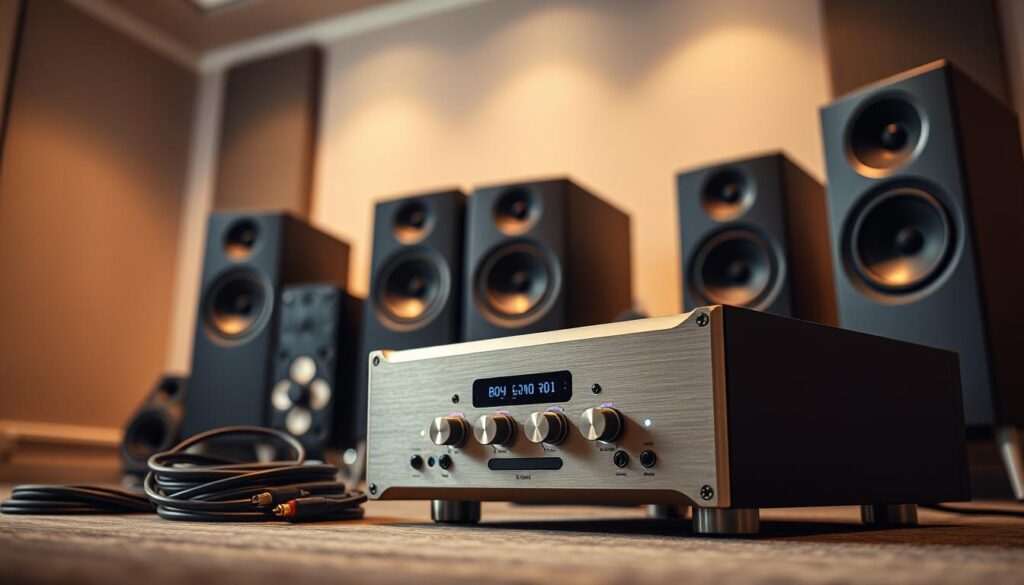
In the US, some brands stand out for their quality. McIntosh, Crown, and Parasound are known for their strong build and power. They invest in research to make sure their amps work well with demanding speakers.
Going with these brands means you get support and consistent performance. It’s a smart choice for long-term use.
Notable Models to Consider
Today’s music gear combines old-school power with new tech. The WiiM Amp is a great example. It’s small but packs a lot of features.
This amp has Wi-Fi streaming and HDMI ARC. It also has a special output for subwoofers. It’s perfect for both music and movies.
Reviews and Comparisons
We test different amps to see how they do in real life. This helps us figure out which features are most important for our setup.
| Model Name | Primary Use | Key Feature | Connectivity |
|---|---|---|---|
| WiiM Amp | Streaming/Integrated | Wi-Fi/HDMI ARC | High |
| Crown XLS | Professional/PA | High Wattage | Medium |
| Parasound NewClassic | Audiophile/Home | Build Quality | High |
Think about these points before buying. Matching specs to your listening habits ensures your audio equipment will last and perform well.
Accessories and Add-Ons
Getting the best sound from your audio equipment means paying attention to the little things. The amplifier is key, but other parts matter too. They help make sure your sound is top-notch.
Essential Cables and Connections
Good cables are crucial for your audio system. Cheap cables can bring in noise and mess up your sound. Use oxygen-free copper cables to keep your signal strong.
- Use balanced XLR cables for professional-grade interference rejection.
- Ensure banana plugs are tightly secured to prevent loose connections.
- Keep power cords separated from signal cables to avoid electromagnetic hum.
Speaker Placement Tips
Even the best speakers sound bad if not placed right. Try to make a triangle with your speakers and where you sit. This helps with sound quality and makes music feel more real.
“The room is the most important component in your audio chain, and speaker placement is the first step to mastering it.”
Don’t put speakers against walls, as it can mess up the bass. Move them a bit to find the perfect spot. Even small changes can make a big difference.
Acoustic Treatments for Best Sound
Hard surfaces like glass and wood bounce sound, making it echo. Using acoustic panels can fix this. You don’t need a fancy studio to improve your sound.
Put absorption panels on your side walls first. A thick rug or bass traps in corners can also help. These tricks let your audio equipment play music as it was meant to be heard.
Maintenance and Care for Your Amp
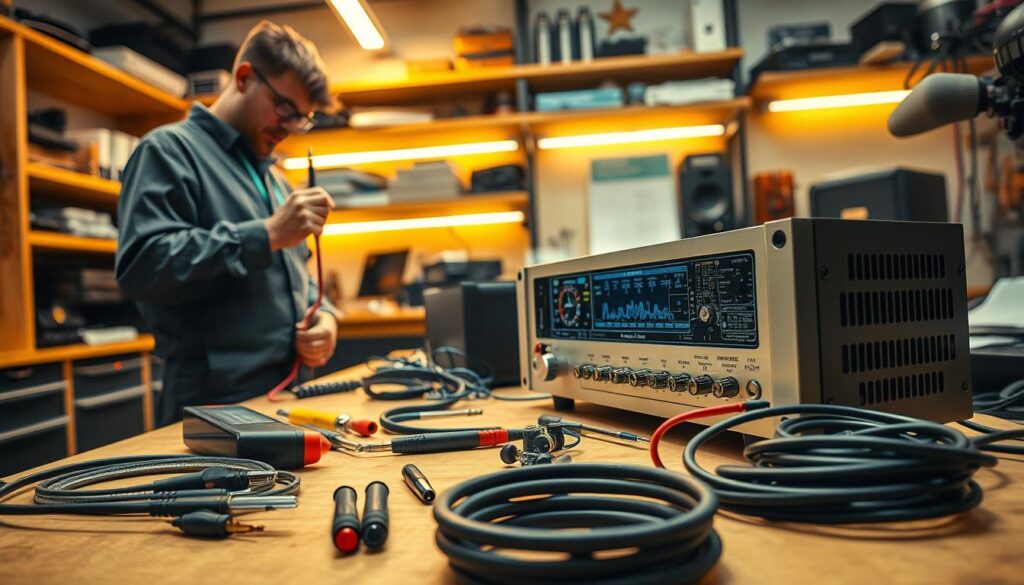
Looking after your audio equipment is key. A few easy steps can keep your system running smoothly for years. This way, you’ll enjoy great sound without worry.
Common Issues and Troubleshooting
Even top-notch systems can have small problems. If sound stops, check cables and power first. Make sure everything is plugged in right.
For software issues, try restarting your amp. If problems continue, look up error codes in your manual. They might help find the problem.
Regular Maintenance Practices
Cleaning your music gear is crucial. Dust can trap heat and damage parts. This makes them wear out quicker.
Class AB or tube amps need good air flow. They get hot, and too much heat can harm capacitors.
- Keep at least six inches of space around your amp.
- Don’t put your amp in a closed space without fans.
- Use a soft cloth to clean the outside often.
Warranty and Support Considerations
Your audio equipment is a big investment. Register it with the maker right after buying. This keeps your warranty valid and gives you support access.
If something big breaks, don’t try to fix it yourself. It might void your warranty. Contact authorized service centers for professional service on your music gear.
Understanding High-Resolution Audio
To get true high-resolution sound, we need to understand how our gear works. Digital music files are getting more complex. So, our playback chains must be precise.
We must make sure every part of our setup can handle high-bitrate audio well. This way, we keep the original sound of the recording.
The Role of Amps in HD Audio
Modern high-resolution audio needs amps that can handle lots of current without distortion. The amplifier is key in our system, keeping signals clean and accurate. A high wattage amplifier is needed to handle wide dynamic ranges.
“The goal of high-fidelity reproduction is to make the listener feel as though they are present in the room where the music was originally captured.”
Without enough power, music can sound compressed or muddy. Good sound equipment keeps the signal strong from start to finish. This way, we hear every detail, from a singer’s breath to a piano’s fade.
Compatibility with Streaming Services
Streaming services now offer high-quality music that rivals CDs. Our gear must be able to handle these streams well. Many systems now have advanced converters to make internet streams sound great.
Using a high wattage amplifier with a quality streamer makes music sound amazing. This combo lets us enjoy top-notch sound from the cloud. It’s key to check if your sound equipment works with your favorite streaming services.
Future Trends in Audio Technology
The audio world is moving toward better integration and smarter tech. We’ll see more amps with room correction and AI sound tweaks. These features will help fine-tune your system to your room’s acoustics.
- More wireless high-resolution audio tech.
- Efficient amps that still pack a punch.
- Modular designs for easy upgrades.
As tech advances, the goal is to keep sound pure and clear. Whether through new circuits or digital smarts, the future looks bright. Picking a reliable high wattage amplifier today keeps your system ready for what’s next.
Buying Tips for High-Power Amps
Finding the right audio equipment is a detailed journey. It’s about matching technical specs with your sound preferences. Choosing the perfect high wattage amplifier is key.
Where to Buy: Online vs. Local Stores
Choosing where to buy your music gear depends on what you value more. Online stores offer a wide range and good prices. You can easily compare different models from home.
On the other hand, local shops give you a chance to get expert advice. You can talk directly to people who know a lot about high-end audio. Seeing the equipment in person helps you make a better choice.
Importance of Listening Tests
It’s crucial to do your own listening tests before buying. Technical specs are important, but they don’t tell everything. How a device sounds in your space matters a lot.
“The true measure of an amplifier is not found in a spreadsheet, but in the clarity and emotion it brings to your favorite recordings.”
Numbers can’t fully show an amplifier’s distortion. Listening to your music through it lets you check if it meets your quality standards.
Checking Reviews and Ratings
Do your homework before buying music gear. Look at reviews and ratings from other users. They share valuable insights on reliability and performance.
- Look for consistent feedback on build quality.
- Check for reports on thermal management during extended use.
- Prioritize models with responsive customer support histories.
By using these methods, you can find a high wattage amplifier that will be the heart of your system for years.
Final Thoughts on High-Power Amps
Choosing the right gear changes how you enjoy your favorite music and movies. Getting a high wattage amplifier is key to achieving the sound quality you want.
Investing in Quality Sound
Brands like McIntosh or Crown are known for their long-lasting reliability. Investing in top-notch sound equipment means your system can handle complex music with ease.
Quality parts give you the clean, clear sound you deserve. Your system should honor the artist’s original vision.
Embracing Your Listening Journey
Your journey to perfect sound gets better as you explore new music and tech. Aim to build a system that enhances your daily music experience.
We suggest joining local audio clubs to share your experiences. Fine-tuning your space for an immersive soundstage at home is rewarding.