
 Zoe Nora
Over 90% of raw audio signals from turntables or microphones are too weak to drive speakers. Without help, these signals would stay silent or sound distorted. A Preamplifier solves this common technical problem.
This component sits between your audio source and the power amplifier. It boosts tiny electrical signals to a standard line level. This gives audio equipment a clean, strong signal for better sound quality.
You may find this technology built into your gear as an internal circuit or used as a standalone unit. Whether you use an integrated feature or a dedicated preamp, the goal remains the same. It gives you better control over volume and input switching, creating a flexible, high-fidelity listening experience.
Key Takeaways
- Most audio sources produce signals that are too weak for direct amplification.
- The primary role of this device is to boost signals to a usable line level.
- It acts as the central hub for managing your various audio inputs.
- You can find this technology as an internal circuit or a separate external unit.
- Using this component results in a cleaner, more professional sound output.
What is a Preamplifier (Preamp)?
At its core, an audio preamplifier serves as the central control point for your entire sound setup. It connects your input devices to the power amplifier that drives your speakers.
Without this key component, your system may struggle to manage several sources or control your listening experience. Understanding its role helps enthusiasts improve their audio chain.
Definition of a Preamplifier
A preamplifier is a gain stage that takes weak signals from CD players, streamers, or DACs. It boosts them to standard line level, so the power amplifier can process them without added noise or distortion.
It is important to distinguish this from a power amplifier. While the preamp conditions and routes signals, the power amplifier increases voltage and current. This power drives your speakers or headphones effectively.
Main Functions of a Preamplifier
The primary role of a preamp includes more than signal boosting. It acts as a command center with volume control and source switching.
It also performs vital impedance matching, which prevents signal loss between components with different electrical characteristics. This keeps the audio signal clean and accurate throughout its path.
For vinyl enthusiasts, choosing the right preamp for turntable playback can transform listening. Many modern units include a dedicated phono stage, which boosts a phono cartridge’s extremely low-voltage output. This raises the signal to a level your main system can recognize.
With a high-quality preamplifier, you gain precise control over your soundstage. A dedicated preamp for turntable setup or digital-focused unit can remain the heart of a high-fidelity system.
Why a Preamplifier is Essential for Audiophiles
Beyond volume control, a high-quality preamplifier guides your entire audio chain. Many people think it only adjusts loudness, but it manages delicate electrical signals before the power stage. This keeps music pure and free from unwanted interference.
Sound Quality Improvement
A dedicated stereo preamp provides the transparency needed to hear every nuance in a recording. With a low noise floor, it reveals subtle details, such as a vocalist’s breath or guitar string’s decay. This precision is hard to achieve without a component designed to route signals with care.
A high-end unit greatly improves instrumental separation, so music no longer feels like a flat wall of sound. We can pinpoint each musician’s position, creating a natural and immersive soundstage in our living rooms.
Dynamic Range Enhancement
Dynamic range means the difference between a track’s quietest and loudest parts. A well-engineered preamplifier provides enough gain to handle these shifts without distortion. This makes sudden orchestral crescendos sound powerful, rather than compressed or muddy.
By preserving these contrasts, a stereo preamp helps us feel music’s emotional impact as the artist intended. It adds depth and layering, making complex arrangements coherent and engaging. The following table shows how these components influence our listening experience.
| Feature | Standard Performance | Audiophile Performance |
|---|---|---|
| Signal Clarity | Basic | High Transparency |
| Noise Floor | Audible Hiss | Near-Silent |
| Dynamic Contrast | Compressed | Wide and Natural |
| Soundstage | Narrow | Deep and Expansive |
Types of Preamplifiers Available Today
When you search for the perfect audio chain, you will find several hardware categories. Each preamp design processes signals differently. These designs suit different sound preferences and technical needs.
Solid-State Preamplifiers
A solid-state preamp uses transistors and integrated circuits to manage audio signals. These units are known for their exceptional transparency and low noise floor. Choose this technology for clean, accurate music reproduction.
Tube Preamplifiers
In contrast, a tube preamp uses vacuum tubes to amplify incoming signals. Many audiophiles prefer it because it adds a subtle, pleasing harmonic richness called warmth. This vintage-inspired sound can add natural depth to digital recordings.
Musical Instrument Preamplifiers
Electric guitars and microphones need specialized hardware for their unique output levels. A dedicated instrument preamp provides needed gain staging, keeping signals strong without unwanted distortion. These devices work with the high-impedance outputs found on many professional instruments.
| Type | Primary Benefit | Best For |
|---|---|---|
| Solid-State | High Precision | Studio Monitoring |
| Tube | Harmonic Warmth | Vinyl & Vocals |
| Instrument | Gain Control | Live Performance |
The right preamp depends on whether you value clinical accuracy or musical character. Understanding these differences helps you make an informed choice and improve your listening experience.
How to Choose the Right Preamplifier for Your Needs
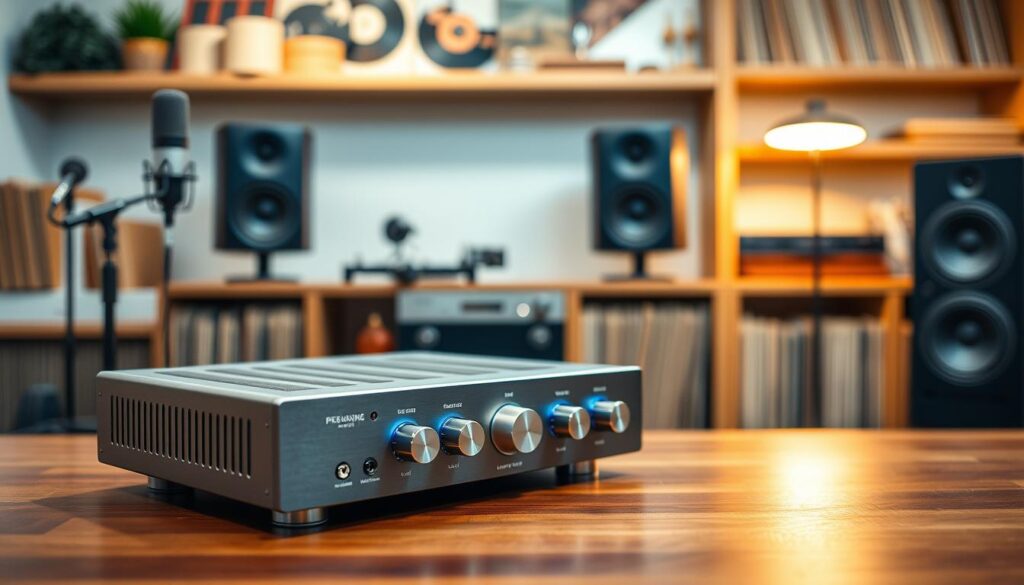
Choosing the right gear often depends on system synergy, not just the price. When you search for the best preamp, consider how it fits your audio chain. A good unit becomes the heart of your system and keeps every signal clean and accurate.
Assessing Your Audio Source
Before buying, identify the needs of your source components. If you enjoy vinyl, you need a dedicated preamp for turntable setups with a phono stage. This stage properly amplifies and equalizes the cartridge’s low-level signal.
Check the nominal output levels of digital devices, such as CD players or streamers. Some sources produce high-voltage output and need enough headroom to prevent distortion. These specifications help your audio preamplifier handle incoming signals accurately.
Matching with Your Amplifier
After reviewing your sources, check how the device connects to your power amplifier. Match the input and output impedance to maintain a flat frequency response. For high-end systems, choose a preamp with balanced XLR connections to reduce noise over long cables.
Gain staging also supports high-fidelity sound. Choose a unit with enough gain to drive your amplifier without adding hiss or noise. When exploring a high-quality preamp, consider future upgrades, including modular inputs or digital-to-analog conversion.
| Feature | Entry-Level | Audiophile Grade |
|---|---|---|
| Circuitry | Solid-State | Tube or Hybrid |
| Connectivity | RCA Only | XLR and RCA |
| Phono Stage | Optional | Integrated/Adjustable |
| Build Quality | Standard | Premium Shielding |
Ultimately, the best preamp for your home balances current needs with long-term audio goals. Evaluate your setup carefully, and enjoy a more immersive listening experience.
The Role of a Preamplifier in Home Theater Systems
A dedicated preamplifier can transform your home theater’s cinematic sound. It serves as the nerve center for signal routing and gain control in every channel.
Modern systems need more than basic volume control. Whether you choose a traditional stereo preamp or digital processor, this Preamplifier keeps signals clean before they reach the power stages. Visit a reliable stereo amplifier collection to find options that match your gear.
Improving Dialogue Clarity
Muffled or buried speech often frustrates home cinema viewers. A high-quality audio preamplifier provides precise control over center-channel gain and frequency response.
- Dedicated processing: It isolates vocal frequencies to ensure they remain crisp.
- Signal integrity: By reducing noise floor, it allows subtle inflections in dialogue to shine through.
- Balanced output: It ensures the center channel is perfectly calibrated against the left and right speakers.
“The true magic of a home theater lies in the ability to hear every whisper as clearly as every explosion, which is only possible with proper signal management.”
Enhancing Sound Effects
Beyond dialogue, the audio preamplifier shapes your immersive soundstage. It balances front-to-surround levels, helping ambient effects move smoothly across the room.
A high-performance stereo preamp gives you better control of dynamic range. This keeps loud effects from overwhelming quieter, atmospheric details in a film. With a stable signal path, your system delivers punchy bass and sharp directional cues, making movies feel alive.
Preamplifier vs. Integrated Amplifier: What’s the Difference?
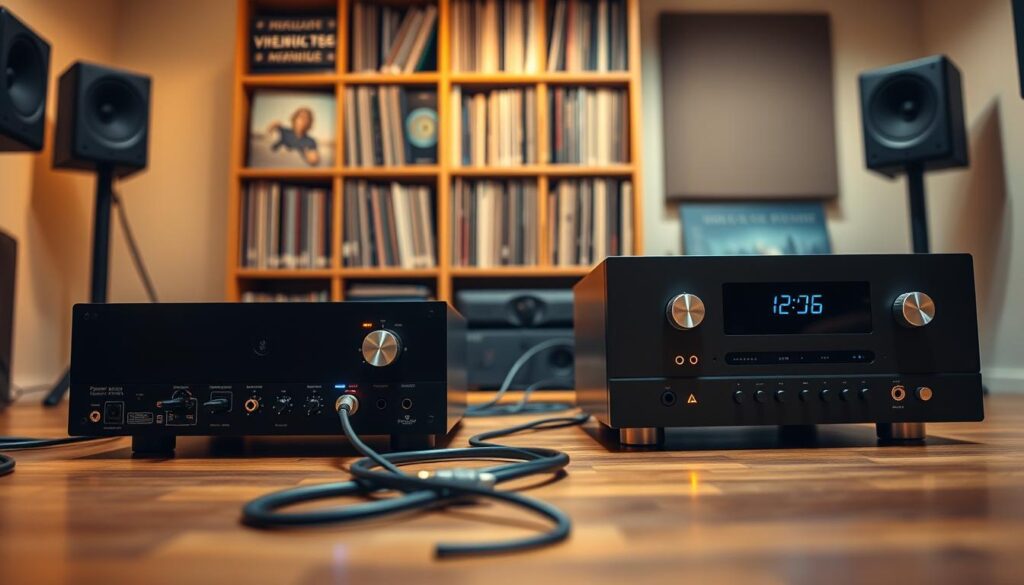
When building a high-fidelity sound system, we choose between separate components and all-in-one solutions. The main difference is how each unit handles signal processing and power amplification inside its chassis. A Preamplifier controls the signal, while an integrated amplifier combines control and power sections in one box.
Key Features of Each
A standalone preamp gives audio fans modular control over their audio chain. Separating delicate signal processing from high-current power amplification can reduce electrical interference. This design lets us upgrade the power amplifier independently as our needs change.
An integrated amplifier offers a simple experience by placing every function in one unit. It saves shelf space and reduces the cables needed for a working system. Many modern integrated units include high-quality DACs, making them a convenient choice for digital music lovers.
When to Use Each Option
Choosing between these options depends on our long-term goals and available space. If we value flexibility and want to test different power stages, a dedicated stereo preamp offers the best path. It lets us combine components to create a specific sonic signature.
If we prefer a minimalist look or have limited room, an integrated solution often fits better. It simplifies setup while still delivering excellent performance in most home environments. A high-quality stereo preamp remains the gold standard for those seeking the absolute best in sound separation and control.
| Feature | Standalone Preamplifier | Integrated Amplifier |
|---|---|---|
| Space Requirements | High (Requires extra shelf) | Low (Compact design) |
| Upgrade Path | Excellent (Modular) | Limited (Fixed unit) |
| System Complexity | Higher (More cables) | Lower (Plug and play) |
| Performance Focus | Maximum signal purity | Balanced convenience |
Installation Tips for Your Preamplifier
Start with a clean, organized installation to get the most from your new equipment. When adding a preamplifier to an audio chain, check how each component interacts. This careful setup prevents signal noise and helps your system perform at its best.
Cable Connections and Setup
Use high-quality shielded cables to connect your sources to the preamp. If using a preamp for turntable, use its dedicated phono input or an external phono stage for proper signal levels. Connect the ground wire to the chassis to remove annoying hum.
When linking your stereo preamp to a power amplifier, choose RCA or XLR cables based on your hardware capabilities. XLR connections usually work best for longer runs because they reject noise better. Follow a safe startup order. Turn on your source and preamp first. Power on your amplifier last to protect your speakers from sudden voltage spikes.
Positioning for Optimal Performance
The location of your stereo preamp affects its lifespan and sound clarity. Place the unit on a stable, vibration-free surface to prevent mechanical interference. Do not stack components directly, because trapped heat can damage internal circuitry over time.
Keep your preamplifier away from power transformers and wireless routers to reduce electromagnetic interference. Leave enough slack in every connection to prevent excess cable strain. Good airflow around the chassis keeps the preamp cool for consistent audio performance.
| Setup Factor | Recommended Action | Benefit |
|---|---|---|
| Cable Management | Use shielded XLR or RCA | Reduces signal noise |
| Component Spacing | Maintain 3-inch clearance | Prevents overheating |
| Power Sequence | Preamp on before Amp | Protects speaker drivers |
| Surface Choice | Use a rigid, level shelf | Eliminates vibration |
Common Misconceptions About Preamplifiers
We often hear myths about how a preamplifier works in a home system. Many listeners think the most expensive unit will always bring a huge sound upgrade. Yet high-fidelity sound depends on more than price.
Cost vs. Value
The idea that a high-end audio preamplifier can fix every system is often wrong. Great sound depends on your source, speakers, and listening room. If your source signal is poor, even the best preamp cannot restore lost detail or recording flaws.
System matching is the key to success. A costly unit may perform poorly without a good match for your power amplifier or turntable. Choose components that work together instead of chasing the highest price.
“The most important component in your system is the one that brings you the most joy, regardless of its cost or technical specifications.”
Complexity and User Friendliness
Another myth says a high-quality preamp for turntable or digital setup must be hard to use. Modern engineering makes these devices easy for most users. Many models have clear inputs, simple controls, and remote volume control.
Manufacturers now offer automatic source management and simpler menu systems. You do not need an engineering degree to enjoy high-fidelity audio at home. The table below shows how expectations differ from modern ownership.
| Feature | Common Myth | Actual Reality |
|---|---|---|
| Setup Time | Requires professional help | Plug-and-play simplicity |
| Operation | Extremely complex | Remote and app control |
| Performance | Price equals quality | System matching is key |
| Maintenance | Constant adjustments | Low-maintenance design |
Focus on your needs to find the best preamp for your lifestyle. A well-chosen audio preamplifier should improve listening without complicating your daily routine.
The Impact of Preamplifiers on Live Sound
Professional sound engineers know a great concert mix starts long before the music begins. Microphones and instruments create weak electrical signals that need boosting to usable levels. This process keeps the signal clean and strong as it travels through the mixing console.
Use in Concert Settings
Effective gain staging supports a successful live performance. By setting correct input levels on a preamp, engineers reduce background noise and prevent distortion. If gain is too high, the signal clips and creates harsh sounds that hurt the listener’s experience.
Consistent performance matters when many inputs fill a busy stage. A reliable solid-state preamp is often preferred in large venues because it offers transparency and stability. These units handle complex signals without unwanted color, keeping sound faithful to its source.
Benefits for Musicians and Sound Engineers
Musicians often seek certain tones to shape their signature sound during a show. Some prefer modern gear’s accuracy, while others choose the warmth of a tube preamp. This equipment adds subtle harmonic richness, making vocals or guitars feel more organic and alive.
Sound engineers must balance artistic choices with a venue’s technical demands. Choosing the right hardware helps the team control the performance’s dynamic range. The following table shows the main differences between these technologies in a live setting.
| Feature | Solid-State Preamp | Tube Preamp |
|---|---|---|
| Sound Profile | Clean and Neutral | Warm and Harmonic |
| Reliability | High Durability | Requires Maintenance |
| Best Use Case | Large Scale Mixing | Studio-Style Live Sets |
| Weight/Size | Compact and Light | Heavy and Bulky |
Ultimately, an artist’s specific needs and the space’s acoustics guide the choice of a preamp. Use a solid-state preamp for precision or a tube preamp for character. The goal stays the same: deliver clear, powerful, immersive audio to every audience member.
Top Brands in the Preamplifier Market
When seeking the best preamp, we find many choices, from budget models to high-end luxury units. Price matters, but we must also compare inputs, phono support, gain control, and system compatibility. These checks help keep the audio chain balanced and clear.
Affordable Options
For beginners, brands like TEAC offer strong entry points without sacrificing build quality. These units often provide flexible connections, making them a smart choice for users needing a reliable solid-state preamp. These models can grow with your system as you upgrade other parts over time.
Premium Choices
For peak sound performance, Chord Electronics, Pass Labs, and Manley Labs set the industry standard. Choose the warm, harmonic richness of a high-end tube preamp or the surgical precision of a reference-grade solid-state preamp. Bricasti, Bryston, and Naim also make advanced designs for demanding audiophiles.
Before investing, compare each model’s specific technical features. The following table shows how equipment tiers compare in standard features and capabilities.
| Brand Tier | Primary Focus | Connectivity | Typical Features |
|---|---|---|---|
| Entry-Level | Value & Utility | Basic RCA | Integrated DAC |
| Mid-Range | Performance | Balanced XLR | Phono Stage |
| High-End | Reference Audio | Full Balanced | Custom Gain Control |
| Luxury | Sonic Purity | Advanced Digital | Modular Upgrades |
Future Trends in Preamplifier Technology
High-fidelity audio is moving toward a future where the Preamplifier serves as a hub for digital and analog systems. New devices combine advanced signal processing with smooth network connections. You can explore the global preamplifiers market growth to understand how these innovations shape the industry.
Evolution of Digital Integration
Modern units now include advanced digital-to-analog converters and high-resolution streaming. This evolution lets a stereo preamp manage complex data streams while preserving clean sound. Manufacturers like McIntosh and NAD lead this work by placing powerful processors inside their chassis.
Smart Connectivity and Control
The next generation of audio preamplifier designs centers on simple app control and smart home compatibility. These devices connect traditional listening habits with modern convenience. Choosing the right preamp means balancing current source components with your long-term plan for connected home audio.
Your ideal setup depends on how you plan to manage your music library and streaming services. Prioritize flexibility and features that help future-proof your system when choosing your next gear. Investing in a versatile unit keeps your listening experience immersive for years.