
 Zoe Nora
Over 70% of home audio systems fail to reach their full potential because their power components do not match. Many listeners think higher wattage always means better sound, but that belief wastes money and harms performance.
Finding the best amplifier for your setup requires balance among your speakers, room size, and listening goals. The right Amplifier should work safely with your existing gear, not simply push raw power.
This guide explains how to assess the technical specifications that matter. It covers impedance, power delivery, and installation features that shape your final choice. By focusing on system synergy, you can build an incredible setup within your budget.
Key Takeaways
- Prioritize system compatibility over high wattage ratings.
- Match your power needs to your specific speaker impedance.
- Consider your room size when selecting output capacity.
- Set a realistic budget that accounts for both quality and features.
- Always perform listening tests to ensure the sound profile matches your preferences.
Understanding Amplifiers: What They Do and Why They Matter
Every high-fidelity audio system relies on an amplifier to bring music to life. It connects your audio source and speakers, turning weak electrical signals into powerful sound waves that fill your room.
Many people think more power always means louder sound. However, perceived volume depends greatly on your speaker’s sensitivity rating. Amplifier design should focus on precision, not only raw output.
The Role of an Amplifier in Audio Systems
An amplifier takes a low-voltage signal from a source, such as a turntable or digital streamer. It increases current and acts as your setup’s engine, giving every note enough energy to reach your ears. Without this boost, your speakers would stay silent or produce barely audible audio.
“The amplifier is the heart of the audio system, providing the muscle required to translate electrical impulses into the emotional experience of music.”
How Amplifiers Enhance Sound Quality
A well-designed amplifier does more than raise volume; it improves the clarity and dynamics of your audio. It controls speaker drivers and prevents unwanted vibrations from muddying the sound. By reducing distortion, it reveals subtle recording details that might otherwise disappear.
When comparing models, look for amplifier features that fit your listening habits. Some units favor warmth and musicality, while others favor clinical accuracy and speed. The right match helps your speakers perform at their absolute best.
Types of Amplifiers: A Brief Overview
Amplifier designs vary, and each offers a different approach to sound reproduction. Knowing these categories can help you narrow your search for the perfect equipment:
- Solid-State: Known for reliability, efficiency, and a clean, neutral sound profile.
- Tube: Often favored by audiophiles for their warm, harmonic distortion and vintage aesthetic.
- Switching (Class D): Highly efficient designs that provide significant power in a compact, cool-running package.
Types of Amplifiers and Their Unique Features
When you search for the best amplifier, you will see that models use different internal technologies. The way an amplifier processes audio shapes the sound you hear in your room. We group these devices by their main parts and how they handle electrical power.
Solid-State Amplifiers
Solid-state devices use transistors to amplify audio signals. Many buyers choose them for their high efficiency and low maintenance needs. They produce less heat than older designs, so they suit compact systems with limited space.
Many listeners value solid-state gear for its clean, precise, and transparent sound. These amplifiers handle complex musical passages with ease and serve as reliable workhorses in modern home setups.
Tube Amplifiers
Tube amplifiers use vacuum tubes to boost signals, a technology many audiophiles value for its warm and rich sonic character. They add subtle, pleasing harmonic distortion, which can make vocals and acoustic instruments sound incredibly natural. However, tubes need more care because they wear out and require replacement.
If you want a top amplifier for a vintage listening experience, tubes may be your ideal match. They are less efficient than solid-state options, but many enthusiasts value their unique aesthetic and emotional depth.
Class A, B, AB, and D Amplifiers
Besides internal parts, consider the amplifier’s operating class. This class shows how the device uses power and manages heat during operation. Understanding these classes helps you choose a design that fits your audio goals.
| Class | Efficiency | Heat Output | Sound Quality |
|---|---|---|---|
| Class A | Low | High | Excellent |
| Class AB | Moderate | Moderate | Very Good |
| Class D | Very High | Low | Good/Very Good |
Class A designs offer the highest fidelity but use significant power. Class D is the most efficient choice for modern, high-power applications. Most home systems use Class AB, which strikes a perfect balance between performance and heat management.
Key Considerations When Choosing an Amplifier
When you begin an amplifier comparison, a spec sheet can feel overwhelming. To judge different amplifier features, learn how each device works with your speakers. Focus on a few key measures to help your system perform at its best.
Power Output: Understanding Watts
Many users confuse peak power with continuous, or RMS, output. RMS (Root Mean Square) represents the actual, sustained power an amplifier can deliver, so prioritize this figure. Choose an amplifier rated at roughly 1.5 to 2 times your speakers’ continuous power.
This extra headroom helps the system handle sudden musical peaks without struggling. Without enough power, audio may sound thin or lose impact during complex passages.
Impedance Matching: What You Need to Know
Impedance, measured in ohms, shows the electrical resistance speakers present to an amplifier. Common ratings include 4, 8, and 16 ohms. Your chosen amplifier must remain stable with your speakers’ load to prevent overheating or damage.
“The marriage between an amplifier and a speaker is defined by the stability of the load; if the impedance drops too low, the system will inevitably falter.”
Always check the manufacturer’s specifications to confirm compatibility. A mismatch can cause poor performance or trigger protective shutdown modes in high-quality gear.
Distortion: How It Affects Sound Quality
Distortion means an unwanted change in the audio signal as it passes through equipment. Harmonic distortion can color the sound, while clipping occurs when you push an amplifier beyond its limits. Clipping is especially dangerous because it can damage speaker drivers over time.
High-quality components reduce these problems, creating a clean and transparent listening experience. By reviewing these technical details, you can choose an amplifier that brings music to life with clarity and precision.
Evaluating Your Audio Needs and Setup
Better sound starts with understanding our listening space and goals. Before buying, we must define what our system needs to perform well. Careful planning helps us buy amplifier hardware that fits our home.
Home Theater vs. Music Listening
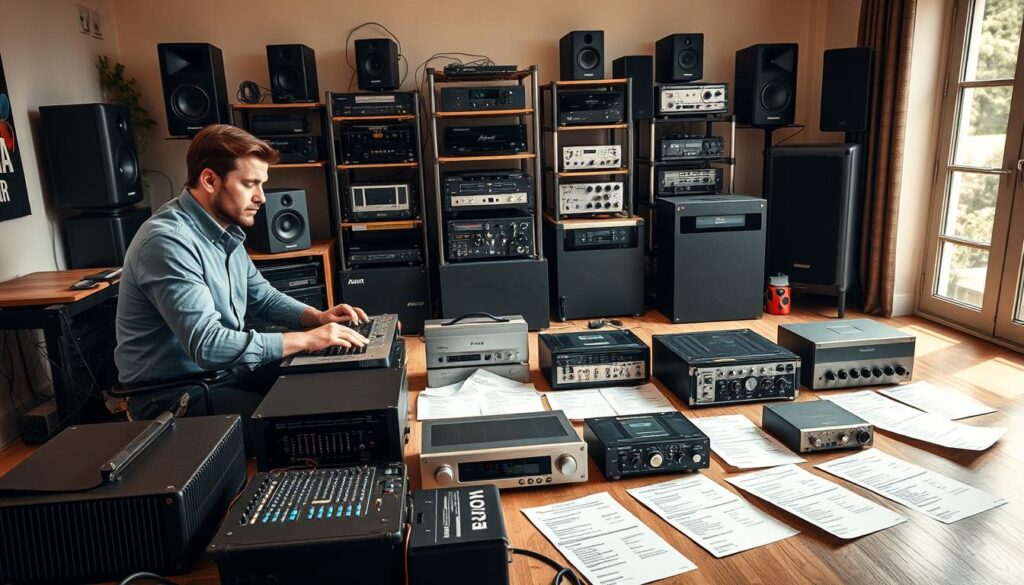
Our system’s main purpose guides our equipment choices. High-fidelity music often suits a two-channel stereo setup, which offers a clean signal path and clear sound. Home theater needs multiple channels to create surround sound effects.
A standard 5.1 home theater setup typically needs six amplification channels. A powered subwoofer handles its own amplification, which simplifies our needs. The right amplifier brands depend on whether we value immersive movies or precise music.
Room Size and Acoustic Considerations
Our room’s size strongly affects the power we need. Larger spaces need more wattage to fill them without distortion, while smaller rooms may need less power. We must also consider acoustic features, including hard surfaces that reflect sound.
Soft furnishings and carpets absorb excess reflections, creating a warmer sound profile. Assessing room size helps us avoid overspending on unused power. Proper planning keeps our budget focused on features that matter in our environment.
Speaker Compatibility and Pairing
Matching an amplifier to our speakers may be the most technical step. We must check speaker impedance and sensitivity ratings for a safe, efficient connection. Low-sensitivity speakers need a stronger power supply to reach satisfying volume levels.
We should also consider where we place our speakers. When researching different amplifier brands, we seek models that perform steadily across our speakers’ impedance range. These factors help us buy amplifier solutions that provide long-term reliability and exceptional sound quality.
The Importance of Listening Tests
Technical specifications offer a starting point, but your ears matter when choosing audio equipment. Data sheets can narrow choices, but hands-on testing should guide the final decision. This helps confirm the best amplifier suits your setup and expectations.
How to Conduct an Effective Listening Test
Use music tracks that you know well for a fair test. Familiar recordings help you notice changes in soundstage and instrument placement. Use the same speakers throughout testing to keep a consistent reference point.
Compare different units at the same volume level. A louder sample can sound better, even when quality remains identical. Also, focus on the importance of the first watt, which can shape listening clarity.
What to Listen For: Sound Quality and Clarity
While amplifier reviews can support your research, your ears must make the final judgment. Listen for clear handling of complex passages and vocal realism during quiet moments. The sound should stay clean, without distortion or background noise.
Notice how the unit controls bass and handles changes in volume. A high-quality device should deliver tight, punchy bass without clouding the midrange. Careful listening can build confidence in choosing the best amplifier for your audio environment.
Top Brands in the Amplifier Market
Choosing audio equipment takes a clear view of manufacturers that deliver quality. When comparing amplifier brands, we check reliability, warranty support, and measured performance, not just logos. Prioritize system compatibility and service availability over marketing claims.
Specifications should matter more than branding alone. Whether you build a home theater or car audio system, know its technical needs. Car audio enthusiasts should compare mono, two-, four-, or five-channel layouts, plus crossovers, bass boost, and high-level inputs.
A Look at Popular High-End Brands
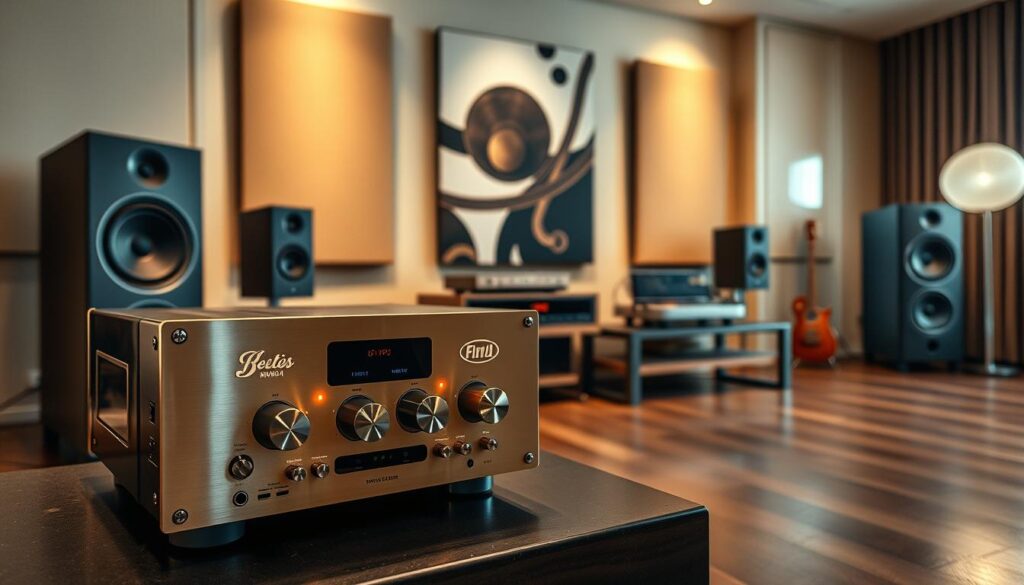
High-end manufacturers often use precision engineering and premium components to reduce distortion. McIntosh and Pass Labs are known for reliable products and exceptional sound staging. They also offer strong warranty support to protect your investment for years.
Budget-Friendly Options for Everyday Use
An affordable amplifier can still deliver strong performance. Established companies like Yamaha and Sony offer good value through mass production. These units suit everyday listening, with steady power output and user-friendly interfaces.
Innovative Newcomers in the Industry
New companies are bringing more Class D technology to the market. These newcomers can offer a top amplifier that is compact and highly efficient. Modern digital signal processing adds remote control integration and advanced thermal management, features once reserved for expensive gear.
| Category | Primary Focus | Best For | Price Range |
|---|---|---|---|
| High-End | Build Quality | Audiophiles | Premium |
| Budget-Friendly | Value | Casual Listeners | Low to Mid |
| Innovative | Efficiency | Modern Setups | Mid-Range |
How to Connect Your Amplifier Properly
After you buy an amplifier, wire it correctly. A clean installation protects your investment and helps your audio system perform at its best.
Basic Wiring Techniques
Installation starts with four main connection types: power, ground, signal, and speaker wires. Use high-quality cables that match your specific amplifier’s power needs. This prevents signal loss and overheating.
Connect the power wire directly to the battery, with an appropriate fuse near the source. Attach the ground wire to clean, unpainted chassis metal for a stable electrical path. Route signal cables away from power lines to reduce unwanted electrical interference.
Avoiding Common Connection Mistakes
Heat management supports long-term reliability. Mount your unit where ample ventilation allows heat to escape during heavy use.
Before finishing, check your inputs, outputs, and channel settings. Review the specific amplifier features, such as built-in crossovers or bass boosts, and set them for your speakers. These steps help prevent phase cancellation and accidental equipment damage.
Maintenance Tips for Your Amplifier
Regular care and smart troubleshooting help protect your investment. A little routine upkeep keeps your audio system working well for years.
Cleaning and Care Best Practices
Dust is the main enemy of electronic parts. Use a soft, dry microfiber cloth to wipe your unit’s exterior weekly. For internal vents, compressed air clears debris that can block airflow and cause overheating.
Proper ventilation is essential for long life. Keep at least three inches of clearance around your device so heat can escape. When reading amplifier reviews, look for thermal management notes because cooler units often last longer.
“The longevity of your audio equipment is directly proportional to the care you provide during its daily operation.”
Inspect your cables every few months for fraying or oxidation. Secure connections prevent signal loss and protect internal circuitry from short circuits. If you are shopping for an affordable amplifier, remember that low cost should not replace build quality or easy maintenance.
Troubleshooting Common Issues
Even with proper care, technical problems can occur. Common issues, including intermittent sound or a steady hum, often need simple wiring or input adjustments.
| Symptom | Likely Cause | Recommended Action |
|---|---|---|
| No Output | Loose connection | Check all speaker wires |
| Audible Hum | Ground loop | Check power cables |
| Overheating | Blocked vents | Clear surrounding area |
| Protection Mode | Short circuit | Inspect speaker terminals |
If your unit enters protection mode, a short circuit or impedance mismatch usually triggers this safety feature. Turn off the power immediately and inspect speaker wires for stray copper strands touching the chassis. Fixing these issues quickly helps prevent permanent hardware damage.
Upgrading from an Old Amplifier
Even reliable gear eventually stops meeting your changing audio needs. Some listeners value the character of 10 vintage amplifiers, but older hardware can have limits that nostalgia cannot overcome.
Signs It’s Time for an Upgrade
Watch how your system performs during daily use. Persistent background noise, frequent protection mode shutdowns, or audible clipping at moderate volumes show that your hardware is struggling.
If your unit runs hot or fails to support modern, high-resolution digital sources, you should buy amplifier technology. Ignoring these warning signs can permanently damage your speakers or other connected components.
“The best audio system is one that disappears, leaving only the music behind.”
What to Consider When Upgrading
When you move forward, a careful amplifier comparison helps you find the right match. Evaluate power delivery and impedance stability to ensure your new unit drives your speakers well.
Consider these technical factors before finalizing your purchase:
- Power Output: Ensure the wattage matches your speaker requirements.
- Connectivity: Verify that the inputs support your modern streaming devices.
- Efficiency: Look for designs that minimize heat and energy waste.
- Dimensions: Check that the unit fits within your existing furniture.
These metrics help you buy amplifier hardware that solves real system limits. A careful amplifier comparison prevents impulsive choices and helps ensure your investment provides a noticeable improvement in sound clarity and depth.
| Feature | Old Unit | New Upgrade |
|---|---|---|
| Power Delivery | Limited | High Efficiency |
| Connectivity | Analog Only | Digital & Wireless |
| Heat Output | High | Low |
Making Your Final Decision
Now that you have reviewed the technical details, turn your findings into a clear purchase plan. Choosing hardware is not about buying the most expensive model. It means finding the right match for your space and long-term goals before completing your purchase.
Setting a Budget for Your Amplifier
Set a clear spending limit before you begin your search. Account for more than the unit’s sticker price, including high-quality cabling, professional installation, and room acoustic treatments.
Also consider your future expansion plans. If you may add speakers or upgrade source components, a more versatile unit could save money later. A careful budget helps you get strong value without losing essential performance.
Comparing Features and Specifications
During an amplifier comparison, look beyond advertised wattage. More power does not always create louder sound, especially with high-sensitivity speakers. Check continuous power output and match it to your speakers’ impedance requirements.
An affordable amplifier works well when it meets your needs for channel count, low distortion, and connectivity. Reliability also matters, so check build quality and warranty coverage. Use the table below to organize your final evaluation.
| Decision Factor | Priority Level | Key Metric |
|---|---|---|
| Power Output | High | Continuous Watts |
| Impedance | Critical | Ohms Matching |
| Connectivity | Medium | Input/Output Ports |
| Warranty | High | Years of Coverage |
Conclusion: Enjoying Enhanced Audio with the Right Amplifier
Choosing the right audio component can transform how we enjoy music and movies. Power, impedance, and speaker compatibility help determine whether our setup works well.
The top amplifier for our needs is not the same for everyone. Choose a model that safely meets system requirements and delivers the sound quality you value. We encourage you to use a digital amplifier to enhance audio in your home theater or listening room.
Compare amplifier brands such as Marantz, Denon, and NAD. Check technical specifications to match your investment with your acoustic environment. An affordable amplifier may deliver the clarity and depth you want without exceeding your budget.
Trust your ears during the final selection. Careful research can create a rewarding listening experience that lasts for years. Start your search today and build the high-fidelity system you deserve.