
 Zoe Nora
Did you know over 70% of online viewers leave a video quickly if the sound is bad? Your voice is key, and the right gear makes a big difference. It keeps listeners and boosts your credibility.
Whether you’re starting a podcast, streaming, or recording music, the right Microphone is crucial. We’ve tested the latest to guide you through audio hardware. Our guide includes everything from the easy-to-use USB microphone to the strong dynamic microphone for loud places.
We look at your budget, recording space, and needs to help you choose wisely. Let us help you get crystal-clear sound that keeps your audience hooked from start to end.
Key Takeaways
- Audio quality is key to keeping viewers and listeners.
- A USB model is great for beginners and streamers because it’s easy to use.
- Dynamic microphones are best for recording in noisy home spaces.
- Even on a tight budget, you can get professional sound quality.
- Our 2024 guide focuses on real-world performance and ease of use.
Understanding Different Types of Microphones
Your recording environment is key to choosing the right microphone. It’s important to know how these devices work. They capture sound waves and turn them into electrical signals.
“The microphone is the most critical link in the audio chain, as it is the first point of contact for your sound source.”
Dynamic Microphones
A dynamic microphone is a top choice in the audio world. They are tough and can handle loud sounds without getting distorted.
They’re great for places with lots of background noise. You’ll see them at live shows and podcasts where sound quality isn’t perfect.
Condenser Microphones
For detailed vocal recordings, go for a condenser microphone. They have a thin diaphragm that picks up sound quickly. This gives a clear and detailed sound.
But, they’re very sensitive to noise. Use them only in well-treated rooms to avoid picking up unwanted sounds.
Ribbon Microphones
The ribbon microphone offers a smooth sound. It uses a thin metal strip in a magnetic field to capture audio.
They’re fragile and need careful handling. Pros use them in studios for a classic sound.
| Type | Best Use Case | Durability | Sensitivity |
|---|---|---|---|
| Dynamic | Live/Untreated Rooms | High | Low |
| Condenser | Studio Vocals | Medium | High |
| Ribbon | Vintage Studio Tone | Low | Medium |
Key Features to Consider When Buying a Microphone
First, learn how a microphone picks up sound. This knowledge is key to getting professional sound quality. Whether you’re recording a podcast or singing, your microphone’s specs matter a lot.
Frequency Response
Frequency response shows what audio frequencies a device can capture, in Hertz (Hz). A flat response gives you an accurate sound. But, a shaped response can add warmth or clarity to your voice.
Most people like a tailored response that makes speech sound better. Check the frequency chart from the maker to see if it suits your needs.
Polar Patterns
The polar pattern shows how sensitive your microphone is to sound from different directions. Cardioid is the top pick for solo creators. It picks up sound right in front while ignoring the back.
Other patterns are for specific needs. Omnidirectional captures room sounds, and bidirectional is great for interviews. Picking the right pattern keeps your recording clean and free from background noise.
Connectivity Options
Choosing between a USB microphone and a studio microphone depends on your setup. A USB microphone is easy to use right away, perfect for beginners.
For a more advanced setup, a studio microphone with XLR is better. It offers a clearer path for upgrading. Learn more about wireless microphone tips for perfect audio to keep your signal chain clean, no matter your choice.
| Feature | USB Models | XLR Models |
|---|---|---|
| Setup Complexity | Very Low | Moderate |
| Audio Quality | Good | Professional |
| Hardware Needs | None | Audio Interface |
| Best Use Case | Streaming/Podcasting | Studio Recording |
Best Microphones for Home Recording in 2024
Starting a home studio means picking the right microphone. It’s key for recording podcasts, music, or voice-overs. Think about your room’s sound and how easy it is to use the microphone before buying.
USB Microphones
USB microphones are great for beginners. They plug right into your computer, no extra gear needed. They’re perfect for those who want to focus on their work, not tech.
Today’s USB mics have top-notch converters for clear sound. Looking for the best one? Check out what is the best microphone for voice recording to help your search.
XLR Microphones
XLR microphones are the top choice for pros. They need an external interface for digital conversion. This setup offers more control over your sound, but it’s more complex.
For detailed recordings, an XLR condenser microphone is the way to go. They’re best in treated rooms, capturing every detail of your voice. Here’s a quick comparison to help you decide:
| Feature | USB Microphone | XLR Microphone |
|---|---|---|
| Setup Complexity | Low | High |
| Audio Quality | Good | Professional |
| Upgradability | Limited | High |
Versatile Options
As you grow, your needs might change. Many mics now have both USB and XLR outputs. These versatile options let you start simple and upgrade later.
Going for a hybrid condenser microphone means your investment lasts. It’s a smart choice for a home studio that grows with you. This way, you don’t have to replace everything as your setup changes.
Top Microphones for Podcasters
Choosing a microphone for podcasting can be tough with so many options. Your voice is key to your content, and the right microphone makes a big difference. Whether you’re starting or upgrading, finding a good balance between cost and quality is crucial.
Budget-Friendly Picks
For beginners, a USB microphone is a great starting point. The Audio-Technica ATR2100-USB is a top pick because it connects via USB and XLR. This flexibility lets you start recording on your computer and upgrade later without a new mic.
Good technique is as important as the equipment. Keep your mouth four inches from the mic for a clear sound. A basic pop filter also helps avoid harsh sounds.
Mid-Range Choices
In less sound-treated spaces, a dynamic microphone is needed. The Shure MV7 is a great choice for such rooms. It has great software integration, even without a professional studio.
Getting a sturdy boom arm is wise at this stage. It keeps your desk tidy and lets you place the mic perfectly. You might also want to learn how to choose the perfect ribbon microphone for music or voice work.
High-End Recommendations
For top-quality sound, the Electro-Voice RE320 is the best. This dynamic microphone offers clear, detailed sound. It’s a favorite in radio stations and professional studios.
High-end gear costs more, but the sound quality is worth it. To get the best from these tools, consider these accessories:
- Shock mounts to block vibrations.
- High-quality XLR cables for a clean signal.
- A dedicated audio interface for enough gain.
Best Microphones for Vocalists
Finding the right microphone is key to a great performance. Vocalists often face a tough choice. They need to decide between a sensitive studio mic and a tough stage mic. Knowing your environment helps make the best choice.
Condenser Picks
In a controlled setting, a condenser microphone is best. These mics pick up high frequencies and subtle details. They’re great for studio work to highlight your voice’s texture.
The Audio-Technica AT2020 is a top pick for home studios. It has a wide range and can handle loud sounds well. But, use it in a room with good acoustics to avoid background noise.
“The microphone is the bridge between the artist’s soul and the listener’s ear; choose one that honors that connection.”
Dynamic Picks
For live shows or untreated rooms, a dynamic microphone is better. These mics are tough and handle loud sounds without distorting. They’re also good at ignoring background noise, perfect for loud stages.
The Shure SM58 is a top choice for its durability and sound. It’s built to last and gives a clear, strong sound that cuts through any mix.
- Condenser: Best for studio detail and airy vocals.
- Dynamic: Best for live stages and high-volume sources.
- Environment: Always consider your room acoustics before buying.
| Feature | Condenser Mic | Dynamic Mic |
|---|---|---|
| Sensitivity | High | Low |
| Durability | Moderate | High |
| Best Use | Studio Recording | Live Performance |
Your choice depends on your goals. For clarity and precision, choose a condenser. For reliability and noise rejection, go with a dynamic.
Choosing the Right Microphone for Streaming
When you start streaming, your audience cares more about the sound than the video. Good sound keeps them interested and makes your stream look professional. Think about what you need before you buy.
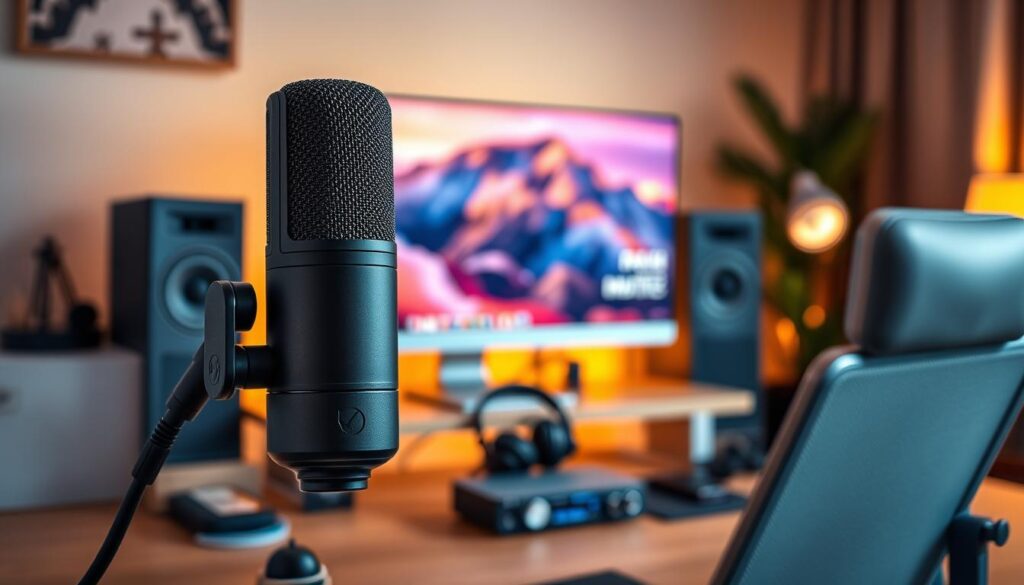
For easy setup, a USB microphone is a great choice. They plug right into your computer and work well with streaming software. You can start broadcasting quickly.
USB Microphones for Streamers
Modern USB microphones have key features that make streaming easier. Look for ones with:
- On-board mute buttons for quick privacy during breaks.
- Zero-latency monitoring via a headphone jack to hear yourself in real-time.
- Gain control knobs to adjust your input levels on the fly.
If you like to move around, a wireless microphone is perfect. It lets you roam freely without being tied to a desk. A lavalier microphone is also great for clear audio when you’re facing the camera.
High-Quality XLR Microphones
For better sound, consider an XLR microphone. They need an external audio interface for cleaner sound and more control. The setup is more complex, but the sound quality is better.
Choosing an XLR setup means you can change microphones as you grow. It’s a good choice for those who want a lasting audio setup.
“Great audio is the foundation of a great stream; it builds trust and connection with your audience faster than any visual effect.”
Best Microphones for Musicians in 2024
When you’re recording a soft acoustic guitar or a loud vocal, your gear choice is key. Today, musicians have many tools to capture every detail of their performance. Picking the right equipment helps bring your vision to life in the final mix.
Instrument Microphones
Getting the real sound of an instrument needs thought on sensitivity and polar patterns. For acoustic guitars and strings, a ribbon microphone is great for its natural, warm sound. These mics are perfect for studio work because they soften harsh highs.
For louder sounds like guitar amps or drums, durability is crucial. Many turn to tough dynamic mics that handle loud sounds well. For recording in noisy places, a shotgun microphone is best. It picks up sound right in front of it, ignoring everything else.
- Ribbon microphones: Best for natural, vintage-style warmth.
- Dynamic microphones: Perfect for high-volume sources and live stages.
- Shotgun microphones: Excellent for focused, directional recording.
Vocal Microphones
Your voice is unique, and finding the right studio microphone is key. Large-diaphragm condensers are top for clear, detailed vocals in good rooms. They give a sharp, professional sound that fits well in any mix.
But not all rooms are perfect for recording. In less ideal places, a dynamic mic like the SM58 is great. It ignores background noise and works well with strong vocals. Consistency and reliability are what make a great vocal setup, no matter the cost.
The best microphone is the one that makes the performer feel comfortable and confident enough to deliver their best take.
The goal is to find a mic that fits your performance’s needs. Knowing how these tools affect your sound helps you get pro results anywhere.
Top Microphone Brands to Consider
Knowing the history of top audio brands helps you choose wisely. When looking for a studio microphone, going with well-known brands means better support and lasting quality. These brands have honed their tech over years to serve various creators.
Shure
Shure is famous for its legendary durability and classic looks. Their gear is a must-have in professional studios and on stages worldwide. They offer durable dynamic mics for live shows and top-notch options for podcasting.
Audio-Technica
For a studio microphone that’s great for home recording, Audio-Technica is excellent. They provide great value without losing sound quality. Many singers love their condenser mics for their clear, detailed sound.
Rode
Rode has changed the game with innovative solutions for today’s creators. They have everything from easy USB devices to top-notch XLR and wireless systems. Their focus on user-friendly features makes them a favorite for streamers, podcasters, and musicians.
| Brand | Primary Strength | Best For | Connectivity |
|---|---|---|---|
| Shure | Durability | Podcasting & Live | XLR |
| Audio-Technica | Vocal Clarity | Home Recording | XLR & USB |
| Rode | Versatility | Streaming & Content | USB, XLR, Wireless |
Best Microphones for YouTube Creators
Choosing the right microphone for your YouTube channel is key. It depends on how you film. Whether it’s desk tutorials, interviews, or outdoor shots, good audio keeps viewers watching. Clear sound is crucial for any video.
Entry-Level Options
For new creators, keeping things simple is important. A basic USB microphone is a great start for desk videos. It connects directly to your computer, offering better sound than laptop mics.
If you like to move around while talking, a lavalier microphone is perfect. It clips to your clothes and keeps your voice clear. For more freedom, a wireless microphone lets you roam while keeping your voice strong.
Professional Choices
As your channel grows, you might want better sound control. A shotgun microphone is top choice for pros. It picks up sound right in front of it, cutting out background noise.
“Great audio is the secret ingredient that turns a good video into a professional production.”
For pro shotgun microphones, you’ll need an external recorder. This is best for shots where the camera is far from the subject. For interviews, a lavalier microphone with a recorder ensures every word is clear.
In tough filming spots, a wireless microphone system is a lifesaver. It’s great for shoots with multiple people. With these tools, you can focus on your story, knowing your audio is top-notch.
Essential Accessories for Your Microphone
Your microphone is the core of your setup. But, the right accessories are crucial for keeping it stable and clear. These tools help you get professional results by controlling your environment and enhancing your workflow.
Pop Filters
A pop filter is key for any studio microphone. It blocks harsh “p” and “b” sounds, called plosives, from distorting your audio.
Many think pop filters are the same as foam windscreens. But, windscreens are for outdoor wind noise. Pop filters are better for indoor recording to keep your voice clear.
Shock Mounts
Mechanical vibrations harm clean audio. Bumping your desk or moving your feet can introduce unwanted sounds into your recording.
A shock mount uses elastic to isolate the device from these vibrations. This keeps your audio smooth and free from low-end thumps.
Boom Arms
Getting the right position is crucial for perfect recordings. A standard desktop stand is okay for casual use. But, a boom arm offers more flexibility.
Boom arms let you move your gear closer to your mouth while keeping your desk clear. They are essential for creators who need to adjust their position often during long sessions.
For a professional setup, focus on a sturdy boom arm and a high-quality shock mount. If you’re starting with USB recording, a simple pop filter is a great first upgrade to boost your sound quality.
How to Set Up and Use Your Microphone Effectively
Getting your audio setup right is key to making pro-quality recordings at home. Whether you’re using a top-notch XLR setup or a simple USB microphone, how you place your gear matters a lot. It greatly affects the sound quality you get.
Placement Tips
To get the best sound, keep your microphone about six inches from your mouth. This distance helps keep the sound natural and reduces unwanted echoes. Also, angle the microphone slightly off-axis to avoid harsh sounds.
It’s also important to treat your room well for a clean sound. Use things like rugs, curtains, or acoustic foam to soak up echoes. A quiet room lets your gear work its best without needing too much editing later.
“The most important piece of gear in your studio is the room itself; treat it well, and your recordings will shine.”
Common Mistakes to Avoid
Many people struggle because they put their gear in the wrong spots. Avoid placing your device near noisy fans or cooling systems. If you have a USB microphone, don’t put it behind your keyboard, as keyboard clicks will mess up your audio.
Another mistake is speaking too far from the microphone. This makes you turn up the gain, which can add background noise. Lastly, don’t try to fix bad acoustics with software; it’s better to get a clean signal from the start.
| Setup Factor | Recommended Action | Why It Matters |
|---|---|---|
| Distance | 4 to 8 inches | Balances clarity and warmth |
| Environment | Soft surfaces | Reduces echo and reverb |
| Gain Level | Moderate setting | Prevents digital clipping |
| Positioning | Off-axis angle | Minimizes harsh plosives |
Frequently Asked Questions About Microphones
Choosing the right audio gear can lead to many questions. We aim to clear up these issues. This way, you can make a smart choice for your recording needs.
What is the best budget microphone?
The Audio-Technica ATR2100-USB is a great pick for beginners. It has both USB and XLR connections. This means you can expand your setup later without buying a new mic.
How do I choose a microphone for my needs?
Consider your recording space and the sound source. For podcasting at a desk, a desk-mounted mic is perfect. But, if you’re always on the move, a wireless mic is better.
For video interviews, a lavalier mic is the best. It captures clear audio right next to the speaker.
Can I use a microphone with my smartphone?
Yes, many devices can connect to external audio through adapters or USB-C. You can attach a quality mic to your phone for mobile recording. Just make sure your device supports it for the best sound.