
 Zoe Nora
More than 80% of professional content creators cite poor sound quality as the main reason audiences lose interest. Clear sound matters for every project, but finding the best audio recorder can feel overwhelming. We believe success begins by matching your goals with the right hardware.
Your choice matters whether you record a melody or document a lecture. We often consider the Zoom H5 for complex creative tasks and the Sony ICDUX570 for simple, everyday notes. Price tags do not always reflect performance, so we focus on battery life, storage, and portability instead.
Our Audio recorder guide helps you find a reliable audio recorder for your workflow. By understanding your environment, you can make a smart investment that lasts for years.
Key Takeaways
- Prioritize sound quality and battery life over high price points.
- Select devices like the Zoom H5 for professional creative projects.
- Choose compact models like the Sony ICDUX570 for lectures and meetings.
- Match your hardware to your specific recording environment for the best results.
- Focus on portability and storage capacity to ensure you never miss a moment.
What is an Audio Recorder?
When you need high-quality sound, a dedicated device becomes essential. An audio recorder is a specialized sound recording device that captures, stores, and replays audio with high fidelity. Unlike basic microphones, these units provide the processing power needed for professional results.
The right gear helps when documenting a lecture or recording a musical performance. A dedicated voice recorder keeps audio crisp and clear, even in challenging environments.
Understanding Audio Recording Basics
To master your equipment, understand the technical specifications that shape sound quality. The sampling rate shows how many times each second the device captures audio. Bit depth controls your recording’s dynamic range.
Record at least 48.2 kHz and 24-bit depth to preserve detail for post-production editing. Compressed MP3 files save space, while uncompressed WAV files provide the highest possible quality.
Also consider whether you need mono versus stereo recording. Mono often works for simple voice notes, while stereo adds spatial depth for music and ambient soundscapes.
Types of Audio Recorders Available
The market offers tools for different workflows. A portable voice recorder suits journalists, while multitrack field units let musicians layer several instruments at once.
Smartphone-connected devices balance convenience and quality for mobile creators. Studio-grade hardware remains the gold standard for controlled settings, where every detail from the sound recording device must be perfect.
| Recorder Type | Best Use Case | Primary Benefit |
|---|---|---|
| Handheld | Interviews & Lectures | Portability |
| Multitrack | Music Production | Layering Capability |
| Smartphone-Attached | Content Creation | Ease of Sharing |
| Studio Units | Professional Audio | Maximum Fidelity |
Key Features to Look for in an Audio Recorder
Understanding the core parts of an audio recorder helps you get professional results. Before buying, compare each hardware feature with your recording environment.
Microphone Quality Matters
The heart of any digital audio recorder is its microphone system. Quality built-in capsules provide clear sound, but external microphone support adds flexibility through XLR or 3.5mm inputs. Gain control adjusts input levels and prevents distortion during loud sessions.
“The quality of your source audio is the foundation upon which all great sound design is built.”
Battery Life and Storage Capacity
Reliability matters when you record in the field. Models like the Zoom H5 support 44.1–96 kHz settings and 16–24-bit depth, keeping files crisp. For advanced post-production options, the Zoom F3 provides 32-bit float WAV recording. It prevents clipping when levels are set incorrectly.
Storage is vital for long-form projects. Check whether your chosen digital audio recorder supports high-capacity media, such as MicroSD cards up to 1TB. This capacity prevents space problems during critical interviews or musical performances.
Connectivity Options
Effective monitoring and file management create a smooth workflow. Choose an audio recorder with a dedicated headphone jack for real-time monitoring. This helps you catch background noise or technical issues before they ruin your take.
Finally, consider how you will move files to your computer. Modern devices should offer fast USB connectivity or easy-to-access card slots for quick data transfers. Prioritizing these connectivity options will save time during editing.
Best Audio Recorders for Beginners
We believe beginners deserve high-quality tools without a sound engineering degree. As a beginner, choose a voice recorder that captures clear audio without complex settings. Prioritize reliability and ease of use over advanced features you may never need.
Affordable Options for New Users
Finding a budget-friendly device is often the first priority for new users. The Sony ICDUX570 is a fantastic choice with pre-set recording templates for voice memos, meetings, music, and lectures. It is a truly top-rated voice recorder for students and professionals alike.
If you need something even more compact, the EVISTR model is a popular portable recorder that weighs only 2.60 ounces. Its interface takes patience to master, but it offers strong battery performance and sound quality for its size. These models show that professional-grade results do not require a fortune.
User-Friendly Interfaces
For beginners, a device’s physical design often matters more than high-end sample rates. Choose a voice recorder with intuitive menus and simple, tactile controls. One-button recording can help you capture important moments during a lecture or interview.
Also, look for a portable recorder with easy file transfer. Simple USB connectivity lets you move files to a computer without extra software. Clear menus and accessible storage let you focus on your content instead of your equipment.
Professional Audio Recorders for Advanced Users
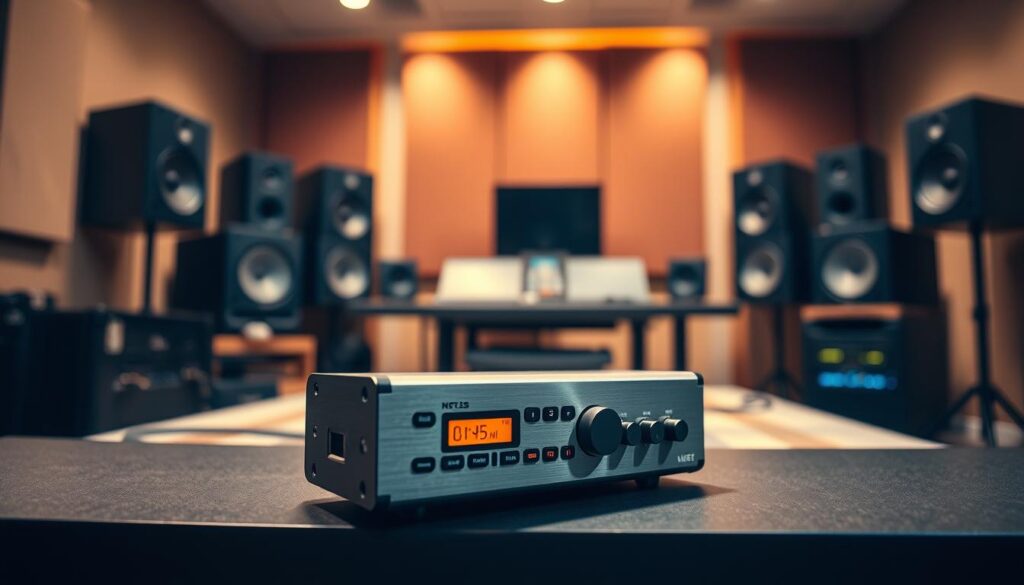
When your project demands precision, choosing the right professional audio recorder matters. Whether you capture dialogue on a film set or record a live concert, your gear shapes the final sound. Professionals need reliable, flexible tools for unpredictable environments.
High-End Features for Quality Recording
Advanced audio recording equipment must handle complex signal chains with ease. Balanced XLR and TRS inputs support secure connections to high-quality microphones. Many units also offer phantom or plug-in power for condenser microphones without external supplies.
To keep audio clean, pros use limiter functions and low-cut filtering. These tools prevent clipping and remove unwanted rumble. High-resolution formats, such as 32-bit float WAV, preserve dynamic range and keep recordings clear when levels change unexpectedly.
“The quality of your production is only as good as the weakest link in your signal chain; never compromise on your recording hardware.”
Recommended Brands for Pros
When seeking the best digital voice recorder, many professionals choose industry staple brands like Zoom. The Zoom F3 helps field recordists capture every detail with 32-bit float technology, without manual gain adjustments. It shows how modern audio recording equipment can meet demanding field conditions.
Alternatively, the Zoom H5 remains popular with users who prefer tactile control. It has an integrated detachable XY microphone and two XLR/TRS inputs, making it adaptable for musicians and podcasters. Choose based on whether you prefer automated safety or hands-on manual adjustments.
| Feature | Zoom F3 | Zoom H5 |
|---|---|---|
| Primary Use | Field Recording | Music & Podcasting |
| Gain Control | Automatic (32-bit) | Manual Dials |
| Inputs | 2 XLR/TRS | 2 XLR/TRS + XY Mic |
| Best For | Unpredictable Audio | Versatile Studio Work |
Ultimately, investing in a high-quality professional audio recorder is an investment in your craft. Understanding these technical specifications helps your projects sound professional in any recording environment.
Comparing Digital vs. Analog Audio Recorders
When choosing a new sound recording device, we often compare digital and analog workflows. Modern technology offers great convenience, but some creators still prefer vintage equipment’s unique sonic character.
Pros and Cons of Each Type
A digital audio recorder works efficiently in today’s fast-paced production settings. It offers instant file transfers, easy organization, and non-destructive editing, saving time during post-production.
Many professionals choose analog hardware for its distinctive signal character and warmth. They enjoy handling physical tape or circuitry, which can give the final output a texture software cannot easily copy.
Use Cases for Digital and Analog Recorders
When choosing a sound recording device, think about your storage and quality needs. Digital units record uncompressed WAV files for maximum editing data or use MP3 compression to save space on long projects.
Advanced tools like the Zoom H2n show the versatility of a modern digital audio recorder. Its five built-in microphones support four-channel recording and surround sound, making it ideal for immersive media or VR projects.
| Feature | Digital Recorder | Analog Recorder |
|---|---|---|
| Editing Ease | High (Software based) | Low (Physical splicing) |
| Signal Quality | Clean and Precise | Warm and Textured |
| Portability | Highly Compact | Often Bulky |
| Storage | SD Cards/Cloud | Magnetic Tape |
Top Audio Recorder Brands in the Market
When you search for the best audio recorder, you will quickly see a few industry giants lead the market. Marketing can persuade buyers, but long-term performance offers a more reliable guide. Established manufacturers support your investment with years of engineering expertise.
Renowned Brands to Consider
Zoom is a leading choice for creators, musicians, and field recorders. Its devices earn praise for their versatility and high-quality preamps, supporting professional audio production. For top microphone picks for every budget in, many users pair them with a Zoom recorder for studio-grade results.
Sony has a legendary reputation for making compact, accessible hardware. Journalists and students often choose its units because they need a top-rated voice recorder that fits in a pocket. Sony devices are easy to use, so you do not miss a key moment during an interview or lecture.
Customer Reviews and Ratings
To judge user feedback, take a balanced approach. A high star rating helps, but check battery life, memory capacity, and file-sharing ease. A device may have a great microphone but fail when its interface feels too complex for daily use.
Our analysis of digital models shows a wide range of performance results. We compiled the comparison table below to show how different units perform in real-world testing.
| Brand/Model | Primary Use Case | Performance Score |
|---|---|---|
| Zoom F3 | Professional Field | 75 |
| Sony ICD Series | Voice/Dictation | 68 |
| Generic Entry-Level | Casual Recording | 41 |
Ultimately, the best audio recorder depends on your specific workflow. Consider a professional unit’s rugged build or a top-rated voice recorder‘s simple design, then compare technical specifications with verified user experiences. This analytical approach saves time and prevents frustration over time.
Portable Audio Recorders for On-the-Go Recording
When traveling or reporting from the field, a compact portable recorder becomes your most valuable tool. We know clear sound in spontaneous situations requires gear that fits your workflow without weighing you down.
Best Compact Models
Several devices balance small size with performance. The Zoom F3 is a favorite because it measures roughly 3 x 3 x 2 inches. This size makes it easy to add to a compact production rig. It includes tripod threads and mounting bars for stable placement during interviews or rehearsals.
Alternatively, the Sony ICDUX570 suits users who value simplicity. This audio recorder has a built-in USB plug for quick file transfers and offers 22-hour battery life at high-quality settings. It is designed for users who capture voice notes or lectures away from a desk.
Benefits of Portability
Choosing a smaller device trades physical size for technical flexibility. You gain convenience, but may get fewer input options and smaller controls than larger studio units. For most field applications, deploying your audio recorder in seconds outweighs these minor limits.
Before buying, assess your needs for battery capacity and internal memory. A truly effective portable recorder should be reliable enough to ensure you never miss a critical moment, wherever you are.
| Model | Primary Strength | Best Use Case |
|---|---|---|
| Zoom F3 | Compact Rigging | Field Production |
| Sony ICDUX570 | Battery Life | Lectures & Notes |
| Generic Pocket Unit | Portability | Spontaneous Ideas |
Audio Recorders for Musicians and Podcasters
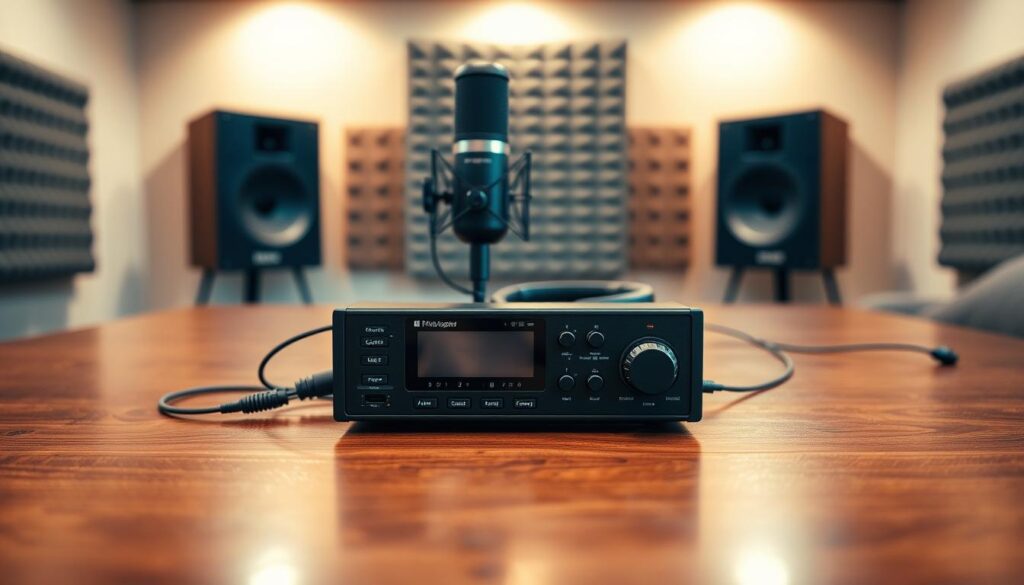
Your hardware shapes the final sound, whether you record a live band or a weekly podcast. Standard devices often struggle with complex multi-track sessions. Choosing the right recording studio equipment helps creators achieve professional results in any setting.
Tailored Features for Music Recording
Musicians need flexible devices during the tracking process. A professional audio recorder should offer multiple inputs for several instruments at once. Overdubbing and real-time monitoring help artists layer sounds and check every take.
The Zoom H5 is a versatile choice for musicians who need portable recording. It supports six-track recording and includes two standard XLR/TRS inputs for external microphones. This control makes it a staple piece of recording studio equipment for capturing high-fidelity audio on the go.
Podcasting Essentials
Podcasters face different challenges, including interviews and panel discussions. With multiple guests, several microphone inputs become necessary, not optional. A professional audio recorder should capture every voice with clarity and balance.
For immersive projects, spatial audio can change the listening experience. The Zoom H2n offers four-channel surround capabilities for VR and 360-degree video production. Selecting the right tool keeps listeners engaged during simple interviews or complex soundscapes.
Accessories to Enhance Your Audio Recording Experience
Often, accessories separate amateur results from professional ones. The right audio recording equipment can turn basic recordings into professional-grade audio productions. The correct tools keep sound clear, stable, and protected wherever you work.
Microphones and Windshields
In busy cafés or windy outdoor spaces, built-in microphones may not isolate your subject well. External clip-on lavalier microphones or shotgun microphones capture crisp dialogue and reduce background noise. These tools are key parts of any high-quality audio recording equipment kit.
“The right microphone placement is often more important than the microphone itself, but the right accessory makes that placement possible.”
Consider these additions to improve your results:
- Windshields (Deadcats): These are vital for cutting out wind noise during outdoor shoots.
- Shock Mounts: These prevent handling noise from vibrating through your recording device.
- Headphones: Always monitor your levels in real-time to catch issues before they ruin a take.
Tripods and Carrying Cases
Stability supports professional production. Many modern recorders, such as the Zoom H5, have standard tripod threads for filmmaking or podcasting setups. A sturdy tripod keeps your recording studio equipment perfectly positioned during each session.
Protect your investment during travel with a durable, padded carrying case. It shields your gear from impacts and moisture. Pack these essentials for every shoot:
- Spare Batteries: Never let a dead battery cut your session short.
- Memory Cards: Always carry extra storage to avoid running out of space.
- USB Cables: Keep high-quality cables on hand for quick data transfers.
Organizing your recording studio equipment in a dedicated case saves time and reduces stress on set. These small steps improve your work’s reliability and quality.
Tips for Achieving the Best Audio Quality
Professional results require more than owning the best audio recorder. Focus on your environment and technical settings for crisp, clear captures.
Refining Your Capture Techniques
Place your microphone close to the sound source to reduce ambient noise. Set input levels near -12 dB on devices like the Zoom H5, preventing clipping and preserving a strong signal. Always wear headphones during the session to catch background hums or distortion.
Use a windscreen outdoors to block gusts of air. Select high-quality formats like WAV to preserve your audio’s depth. These small changes can turn a standard recording into a polished production.
Avoiding Common Pitfalls
Check battery levels and memory card capacity before starting your session. A reliable Audio recorder helps only when it has enough power and space to finish the job. Avoid lost data by checking your settings before pressing record.
Verify local recording-consent laws in your area.
Rules vary across the United States, from one-party to all-party consent requirements. Staying informed protects your work and keeps projects compliant with legal standards. We encourage you to test your gear often to build confidence in your equipment.