
 Zoe Nora
Every sound you hear is a physical vibration that travels through air. These invisible pulses reach our ears and create the music and speech we enjoy each day. Understanding this basic Soundwave principle helps you improve your personal audio experience.
High-quality audio should be available to everyone, whether you enjoy an album or join a professional conference call. Learning how vibrations work with modern hardware helps us choose equipment wisely. This guide helps you focus on improving clarity and depth in every listening setting.
We will show you how to choose the right gear and improve your current setup. Let us explore the science of the Soundwave and change how you experience your digital world.
Key Takeaways
- Sound is a physical vibration that travels through various mediums.
- Understanding audio physics helps in selecting better hardware.
- Clarity in music and calls depends on managing signal quality.
- Modern technology allows for significant improvements in home audio.
- Practical adjustments can elevate your daily listening experience.
What is Soundwave Technology?
Soundwave technology serves as the backbone for how we capture, process, and reproduce sound. By mastering vibration physics, we connect natural acoustic energy with digital signals used by modern devices.
Definition and Overview
At its core, Soundwave technology applies acoustic vibration, transduction, and signal processing. It covers sound’s full life, from wave creation to reproduction through speakers or headphones. You can learn about the basic physics in this guide on sound wave principles.
This audio technology lets us shape sound in ways once thought impossible. By understanding wave behavior, engineers build systems for clear communication and immersive entertainment. It turns invisible energy into an experience we can feel.
How It Works
The process starts when a vibrating source creates compressions and rarefactions. These pressure changes move through air, water, and solids, carrying energy across space. This motion forms the basis of all Soundwave propagation.
When waves reach a receiver, such as a microphone, audio technology converts them into electrical signals. These signals are processed, amplified, or stored for speakers and recording systems to interpret accurately. This chain lets us recreate sound with incredible precision and fidelity.
The Science Behind Soundwaves
To understand audio quality, we first need to explore the nature of acoustic waveforms. These waves show how energy moves through air, water, or solid materials. Understanding these patterns helps us value how devices reproduce high-fidelity sound.
Frequency and Amplitude Explained
Every sound has two key measurements: frequency and amplitude. Frequency shows how quickly a wave cycles, and our ears hear it as pitch. High frequencies create higher pitch, while low frequencies create deeper, bass-heavy sound.
Amplitude measures a wave’s intensity or height, which relates directly to perceived loudness. When we increase the amplitude of acoustic waveforms, we push more energy through the medium. This creates a stronger signal, which our ears hear as greater volume.
The Role of Vibrations
Sound is energy transfer caused by vibrations. When an object vibrates, it disturbs nearby particles in the surrounding medium. These particles do not cross the room; instead, they oscillate locally, bumping into neighbors to pass energy forward.
This chain reaction creates a wave that moves through space at a specific speed. The following table shows key traits of these physical movements:
| Property | Physical Definition | Perceptual Result |
|---|---|---|
| Frequency | Cycles per second | Pitch |
| Amplitude | Wave height/pressure | Loudness |
| Wavelength | Distance between peaks | Tone quality |
| Propagation | Speed through medium | Latency |
Mastering these ideas gives us a clearer view of how acoustic waveforms interact with our environment. This scientific foundation helps anyone optimize an audio setup for the best possible performance.
Benefits of Soundwave Technology
People often mistake high volume for quality, but true audio excellence depends on sound engineering. By studying how sound waves interact with a space, we achieve fidelity beyond simple loudness. This method helps each note and syllable reach listeners clearly and precisely.
Enhanced Audio Clarity
Achieving crystal-clear audio requires careful control of acoustic behavior. Through advanced sound engineering, we solve issues such as unwanted reflections and poor frequency response. Strategic absorption and diffusion keep sound from becoming muddy or distorted.
This process helps the Soundwave system preserve the original recording’s integrity. Rather than simply pushing air, the technology shapes output to match the room’s natural acoustics. The result is crisp, detailed sound that reveals musical layers you may have missed.
Improved Listening Experiences
A superior audio setup values listening comfort and balance more than raw power. When we optimize a system, we make high, mid, and low frequencies work together. This balance prevents ear fatigue and supports longer, more enjoyable sessions.
Furthermore, Soundwave technology improves speech intelligibility in complex environments. Whether you watch a film or join a conference call, clarity remains consistent. By focusing on these technical refinements, anyone can transform daily audio into something truly remarkable.
Applications of Soundwave Technology
Modern soundwave technology changes daily life through entertainment, communication, and healthcare. These systems control frequencies carefully to produce specific results in professional settings.
In Music and Entertainment
In music production, engineers use advanced tools to study sound patterns with great accuracy. One key method is music visualization, which shows frequency patterns, harmonics, and amplitude changes in real time. This feedback helps producers fine-tune mixes for a balanced, immersive listening experience.
Beyond the studio, entertainment systems use these ideas for dynamic light shows and interactive displays. By matching audio vibrations with visual elements, venues create multi-sensory experiences that bring performers and crowds closer.
In Communication Devices
Communication technology depends on differences among audible sound, infrasound, and ultrasound. Human ears usually hear frequencies from 20 Hz to 20 kHz, but devices often work beyond this range for clearer signals. Digital signal processing removes unwanted noise, keeping voice calls clear in crowded places.
Engineers also use ultrasonic frequencies to send data wirelessly over short distances. This method helps devices sync securely and efficiently without affecting standard radio frequency bands.
In Medical Devices
Doctors have long used soundwaves to diagnose and treat patients. Ultrasound is a well-known example, offering non-invasive images of internal structures in real time. High-frequency waves enter the body, and devices record reflections that show vital health information.
| Application Field | Primary Technology | Key Benefit |
|---|---|---|
| Music Production | Digital Signal Processing | Enhanced Audio Clarity |
| Communication | Ultrasonic Data Transfer | Secure Signal Transmission |
| Medical Imaging | Diagnostic Ultrasound | Non-Invasive Diagnostics |
Soundwave vs. Traditional Audio Systems
Standard audio equipment often misses the detail that advanced Soundwave technology can provide. Traditional systems depend on physical parts to shape sound, while modern workflows use smart software to improve listening.
Key Differences
Traditional audio setups focus on mechanical reproduction. Their quality depends mainly on the physical design of speakers and amplifiers. In contrast, Soundwave systems focus on how audio signals interact with the listening space.
These modern systems handle complex signals well. With digital signal processing, they can analyze and adjust audio in real time. This keeps output close to the original recording, whatever the room acoustics.
- Capture: Traditional systems often capture raw, uncorrected audio.
- Processing: Modern setups use algorithms to clean and enhance signals.
- Room Interaction: New technology actively compensates for echoes and dead spots.
Advantages of Soundwave Technology
This technology manages frequencies with great precision. Instead of relying on basic hardware, digital signal processing gives home audio users control that once seemed impossible.
“The future of high-fidelity audio is not just in the hardware we buy, but in the intelligence we apply to the sound waves themselves.”
This method produces more consistent results in different listening spaces. Accurate frequency response creates a balanced soundstage without constant manual adjustment.
| Feature | Traditional Systems | Soundwave Technology |
|---|---|---|
| Signal Handling | Analog/Fixed | Dynamic Digital |
| Room Correction | None/Manual | Automated DSP |
| Consistency | Variable | High Precision |
Overall, these advanced systems move audio toward greater clarity and reliability. By using these tools, we can hear each note as the artist intended.
Innovations in Soundwave Technology
New sound technology depends on better knowledge of how waves move through physical spaces. We are moving beyond simple hardware upgrades toward a broader understanding of acoustic environments. This shift brings unprecedented levels of audio fidelity to professional and consumer settings.
Recent Breakthroughs
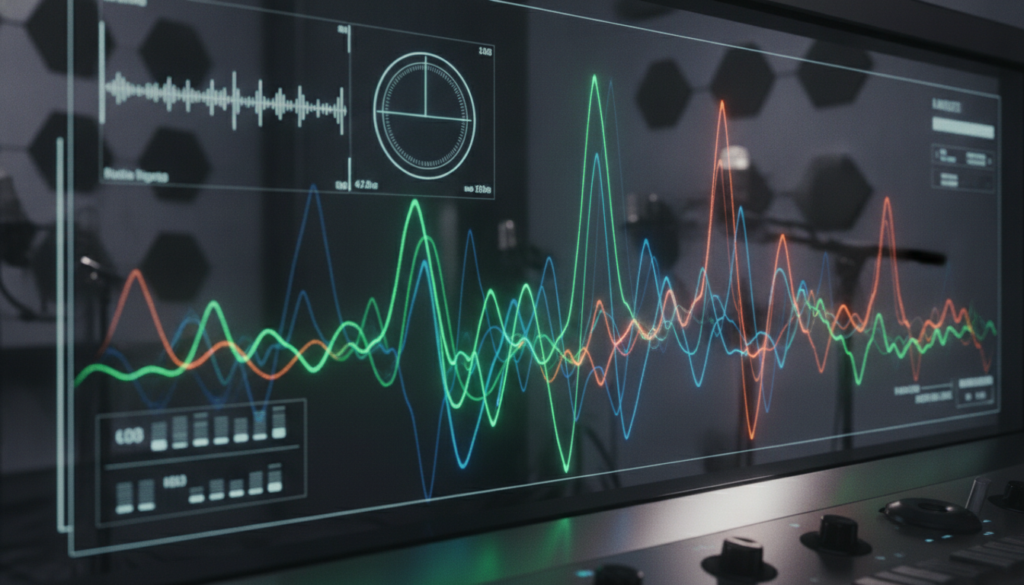
Engineers now use waveform analysis to map sound behavior with great precision. Combined with rigorous anechoic testing, this data helps isolate variables that once limited performance. These methods create advanced transducers with superior frequency response and tighter control over sound dispersion.
Acoustic simulation software now guides much of modern design. Digital models predict room sound before engineers install a single speaker. This process provides improved coverage and reduced reflections for clear sound in complex listening environments.
Future Trends
Future systems will adapt more closely to their surroundings. Integrated sensors may use real-time waveform analysis to find acoustic anomalies. After detection, the system will adjust processing or speaker behavior for the room’s unique features.
This intelligent automation will change how we experience sound in everyday life. With dynamic environmental awareness, high-quality audio can remain consistent in any space. We are entering a period when devices will actively provide the best possible listening experience at all times.
How to Choose Soundwave Devices
Finding the right audio setup means balancing technical details with your personal acoustic needs. When you search for a new Soundwave system, look past flashy marketing and choose gear that fits your space.
Factors to Consider
First, evaluate your room size and how you will use the equipment. A small office needs different directivity and frequency response than a large living room. Professional home audio installation can help produce optimal results.
You should also prioritize audio visualization tools to see how sound behaves in your environment. These measurements can reveal dead spots or echo issues before you buy. Check the manufacturer’s specifications against independent testing to confirm the device meets your standards.
Popular Brands and Models
Several manufacturers offer consistent quality and reliable warranty coverage. KEF and Genelec are known for precision, while Sonos offers excellent integration for modern homes.
When comparing models, consider these criteria for long-term satisfaction:
- Compatibility: Does the device integrate with your existing hardware?
- Frequency Response: Does it cover the full range of sound you desire?
- Build Quality: Is the construction durable enough for your daily use?
Ultimately, the best Soundwave device complements your unique listening environment. audio visualization software can confirm that your chosen model performs as expected after installation.
Setting Up Your Soundwave System
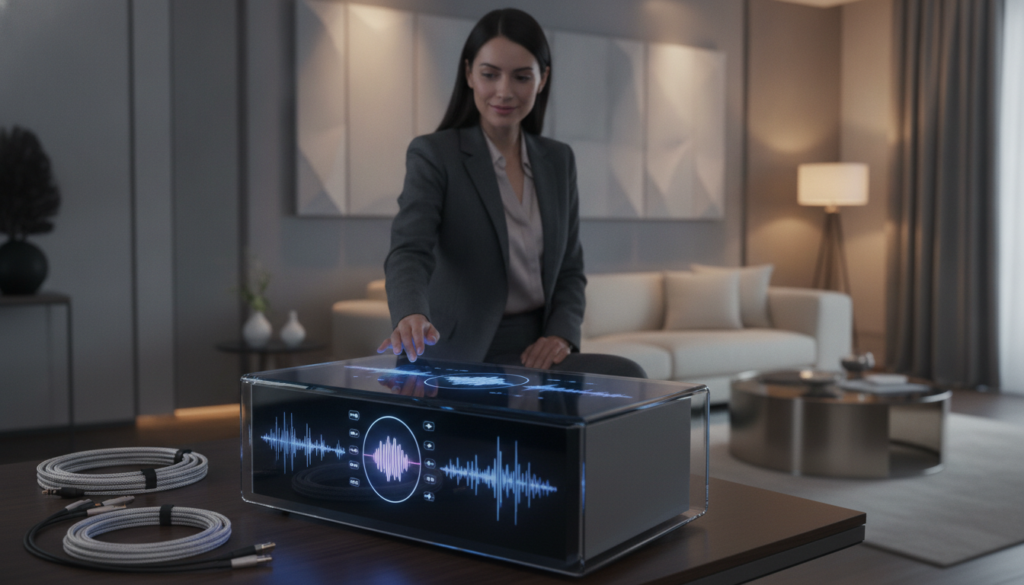
A well-configured system creates a strong foundation for great listening. Before changing digital settings, focus on the room holding your Soundwave equipment. Good room behavior and speaker placement create cleaner output than equalization or high volume alone.
Step-by-Step Guide
Follow these steps to optimize your hardware for your space. Place speakers at ear level and angle them slightly toward your main listening position.
- Positioning: Place speakers away from corners to avoid unwanted bass buildup.
- Connections: Secure all cables firmly to ensure a stable signal path. You can follow this receiver configuration guide for easy setup and to finalize your connections.
- Levels: Use a decibel meter to balance the output of each channel for a uniform soundstage.
- Acoustic Treatment: Add soft materials like rugs or curtains to minimize harsh reflections in the room.
Troubleshooting Common Issues
Even with careful setup, you may face minor performance problems. If you hear distortion or unclear sound, check your cables first. Make sure no wires are pinched or frayed, then find the problem’s root cause.
If bass sounds weak or channels seem uneven, move your speakers a few inches. Often, these small changes improve Soundwave performance by changing how sound interacts with room boundaries. If connectivity problems continue, check that your source components are correctly synced with your receiver.
Patience matters when fine-tuning your audio environment. Address physical placement and room acoustics first to ensure your Soundwave system delivers the high-fidelity audio you expect.
Soundwave Technology in Everyday Life
From living rooms to professional studios, Soundwave technology shapes modern audio. Its engineering brings high-fidelity sound to homes and workplaces. This unseen force affects music, movies, and vital communication.
Use in Home Audio Systems
At home, Soundwave applications create an immersive listening space. High-end home theater systems and premium noise-canceling headphones both aim for clear, deep sound. Modern televisions use these acoustic principles to keep dialogue crisp during intense action scenes.
Home users value convenience and aesthetic integration. These systems offer simple setup without special acoustic training. Advanced signal processing adjusts sound to your living room’s dimensions for balanced listening.
Use in Professional Settings
Professional settings require greater precision and reliability. In recording studios, Soundwave technology captures every performance detail accurately. Engineers use these systems to maintain a flat frequency response across playback devices.
Public-address systems and large venues face challenges, including ambient noise and coverage for large crowds. These systems must be robust enough for high power while maintaining intelligibility and repeatable performance. The table shows key differences between these two main uses.
| Feature | Home Audio | Professional Audio |
|---|---|---|
| Primary Goal | Personal Enjoyment | Accuracy & Coverage |
| Setup Complexity | Low (Plug-and-Play) | High (Calibrated) |
| Environment | Controlled Living Space | Variable/Large Venues |
| Reliability | Standard Consumer Grade | Mission-Critical Grade |
Testimonials and Case Studies
Evidence-based results show how soundwave innovations perform in real settings. We study everyday users and industry professionals instead of trusting marketing claims. By testing specific environments and equipment, we see what this technology delivers.
Real User Experiences
Many people say upgrading to a modern soundwave system changed how they listen. Users often praise the enhanced clarity and hear subtle frequencies missing from standard audio setups. For more consumer feedback, explore an honest review of soundwave performance to see how these devices perform over time.
Users commonly report these benefits:
- Significant reduction in background interference.
- Improved spatial awareness during immersive audio sessions.
- Greater reliability in wireless connectivity compared to older models.
Success Stories in Various Industries
Beyond personal use, professional soundwave systems have improved efficiency and accuracy. Healthcare and telecommunications firms use them to solve complex audio problems. The table shows benefits across different sectors.
| Industry | Primary Benefit | Outcome |
|---|---|---|
| Medical Diagnostics | Signal Precision | Higher accuracy in imaging |
| Telecommunications | Noise Cancellation | Clearer voice transmission |
| Professional Audio | Frequency Range | Superior studio monitoring |
In medicine, clinicians say soundwave integration supports more precise diagnostic monitoring. Communication firms report that these systems have drastically reduced call drop-outs and audio distortion. These stories show that soundwave technology brings consistent results when teams set clear success criteria across professional fields.
The Future of Audio with Soundwave Technology
Soundwave helps shape our daily reality as we enter a new era. Advanced audio technology links raw vibration science with human perception.
Predictions for the Next Decade
Digital signal processing will soon achieve unprecedented precision. Devices from companies like Bose and Sennheiser may adapt instantly to room treatment and environmental noise. These systems will rely on objective measurement, so each listener hears pure, high-fidelity output regardless of location.
Societal Impact of Enhanced Audio Quality
Better sound creates an inclusive world, making shared public experiences more immersive and personal. Clearer communication tools will help people with hearing impairments and improve medical diagnostics through precise acoustic monitoring. Soundwave innovation changes how we connect, learn, and interact with the digital landscape.