
 Zoe Nora
More than 70% of modern cinematic experiences rely on object-based audio to create a realistic sense of space. Choosing the right Dolby Atmos soundbar feels overwhelming because so many options exist today.
No single soundbar suits every living room because each space has unique acoustic needs. You may need a compact unit for a small apartment or a full surround package for a dedicated media room. Finding the perfect fit depends on your goals.
This guide helps you identify the best Dolby Atmos soundbar by explaining complex technical specs in simple terms. We will compare the Sonos Arc Ultra and Samsung HW-Q990H for connectivity, placement, and overall value.
Our goal is to help you choose a Dolby Atmos soundbar for home theaters that transforms movie nights. Let us explore the top Dolby Atmos soundbars that deliver true cinematic immersion.
Key Takeaways
- No single device serves every room size or budget perfectly.
- Compact systems offer great value for smaller living spaces.
- Premium packages provide the most complete surround sound experience.
- Connectivity and supported formats are vital for future-proofing your setup.
- We compare leading models to help you make an informed purchase decision.
What is Dolby Atmos and How Does It Work?
If you have wondered how a slim device fills a room with sound, explore spatial audio. At its core, Dolby Atmos represents a major shift from traditional channel-based audio to object-based sound. Engineers place specific sounds in three-dimensional space instead of assigning them only to left or right speakers.
The Basics of Spatial Audio
Traditional surround systems use fixed channels, which can limit media realism. Spatial audio treats each sound as an object that can move around the listener. With a high-quality Dolby Atmos soundbar, the system calculates where objects should exist, creating a lifelike room.
This immersive effect uses advanced digital processing and precise speaker placement. With upward-firing drivers, sound bounces off the ceiling and returns to your ears. This trick makes your brain believe audio comes directly from above, completing the hemispherical soundstage.
How Dolby Atmos Enhances the Home Theater Experience
The real power of a Dolby Atmos soundbar for home theaters lies in handling complex setups. Consider the Samsung HW-Q990H, with an 11.1.4-channel design and 23 individual speakers. This hardware places effects precisely, making rain seem to fall on your roof or a helicopter circle your head.
This table compares audio formats by immersion and hardware needs:
| Audio Format | Channel Count | Spatial Capability | Best Use Case |
|---|---|---|---|
| Stereo | 2.0 | None | Music Listening |
| Standard Surround | 5.1 | Horizontal Only | Basic Movies |
| Dolby Atmos | 11.1.4 | Full 3D Height | Premium Home Theater |
These advanced channels create a seamless transition between sounds. Whether you watch an action movie or nature documentary, added depth keeps you at the center of the action. This blend of hardware and software defines the modern standard for home entertainment.
Benefits of Using a Dolby Atmos Soundbar
Modern home theaters now favor streamlined audio solutions. The latest Dolby Atmos soundbar benefits offer more than convenience and simplify advanced listening upgrades.
Immersive Sound Experience
These devices create a truly cinematic atmosphere in your living room. A high-quality Dolby Atmos soundbar uses advanced processing to bounce sound off walls and ceilings, creating three-dimensional soundstage around you.
This technology moves sound effects naturally around the room, placing you in the action. These systems also deliver dialogue clarity, so voices stay crisp and distinct during loud action sequences.
Space-Saving Design
A modern Dolby Atmos soundbar delivers premium audio without filling your room with bulky speakers. Multiple drivers fit inside one sleek chassis, preserving a clean, minimalist look at home.
This design suits small living rooms and apartments where floor space is limited. You get the power of a full surround system without floor wires or large amplifiers taking shelf space.
Easy Setup and Connectivity
Traditional receiver-based systems often require technical expertise and hours of cable management. In contrast, a Dolby Atmos soundbar for home theaters offers plug-and-play simplicity, usually needing one HDMI eARC connection to your television.
Many systems, such as the Sonos Arc Ultra, offer a modular audio approach. Start with a standalone unit, then expand your setup later with a dedicated subwoofer or rear speakers for more bass and depth. This flexibility helps you build your dream system at your own pace while enjoying high-fidelity sound from day one.
Top Features to Look for in a Dolby Atmos Soundbar
Knowing which features matter helps you find the right audio setup. When comparing Dolby Atmos soundbar features, consider how the hardware works with your living space. These details help you get more value from your investment.
Surround Sound Configuration
The channel setup forms the core of any Dolby Atmos soundbar. Choose systems with upward-firing drivers that bounce sound off the ceiling for a true sense of height. This spatial audio effect sets a standard bar apart from a cinematic experience.
Advanced models often include room calibration technology. Microphones measure your room’s acoustics and adjust the sound. By balancing frequencies, the system keeps your surround sound crisp and clear despite your furniture layout.
Built-in Subwoofers
Many modern units include built-in subwoofers, which save space and simplify installation. These drivers offer a compact solution for deep bass without extra boxes. For maximum low-frequency impact, a separate subwoofer usually offers better performance and placement flexibility.
Your room size and style help determine whether you need built-in or external bass. Built-in options are incredibly convenient, but dedicated subwoofers can sit where they sound best. This flexibility matters to serious home theater enthusiasts.
Streaming Capability
Strong connectivity is essential for the top Dolby Atmos soundbars available today. Prioritize models with reliable Wi-Fi, which offers more bandwidth than standard Bluetooth. AirPlay 2, Google Cast, and Spotify Connect stream high-fidelity audio from your favorite devices.
Check whether the unit supports multi-room audio. This feature lets your soundbar work with other smart speakers throughout your home. Matching these options with your ecosystem creates a unified entertainment hub that is powerful and easy to control.
Comparing Dolby Atmos Soundbars: Brands and Options
When we assess the top Dolby Atmos soundbars, design, ecosystem, and performance show clear differences. A careful Dolby Atmos soundbar comparison helps us match each system to our home theater needs. Each manufacturer uses a different approach to bring spatial audio into our living rooms.
Sonos Arc
The Sonos Arc is a streamlined, premium option for people who value style and easy use. It fits the Sonos ecosystem, with simple multi-room audio and app-based control. Many Dolby Atmos soundbar reviews praise its wide soundstage from one elegant bar.
We like that the Arc offers a clear upgrade path. Users can add a subwoofer or rear speakers later for full surround sound. This modular design suits people who want to build their system over time.
Samsung HW-Q950T
For a complete, out-of-the-box solution, the Samsung HW-Q950T is a strong reference point. It includes dedicated rear speakers and a subwoofer, making the surround performance robust from the moment we plug it in. Newer models, such as the Q990H, keep advancing channel counts and acoustic precision.
These systems suit users who want a complete cinematic experience without buying extra components. Advanced processing moves audio objects accurately around the room. This remains an effective way to create a theater-like atmosphere at home.
LG SN11RG
The LG SN11RG is a package-focused option that stresses high-fidelity sound through its partnership with Meridian Audio. This Dolby Atmos soundbar includes everything needed for a high-end setup, including wireless rear speakers with up-firing drivers. Its design creates strong height and depth in our favorite movies.
The following table shows key differences between these popular models:
| Model | Primary Strength | Upgradeability |
|---|---|---|
| Sonos Arc | Ecosystem Integration | High (Modular) |
| Samsung HW-Q950T | Channel Count | Low (Complete System) |
| LG SN11RG | Meridian Audio Tuning | Low (Complete System) |
Ultimately, the choice depends on whether we value system flexibility or an all-inclusive package. By weighing these options, we can give our home theater the immersive audio we want.
How to Choose the Right Dolby Atmos Soundbar
Choosing the ideal audio system starts with understanding your room’s specific layout and sound needs. Selecting the best Dolby Atmos soundbar requires checking your floor plan, seating distance, and plans for future upgrades. This clear approach helps your purchase deliver a cinematic experience.
Room Size Considerations
Room size greatly affects how sound waves move through your space. For compact apartments or small bedrooms, a sleek all-in-one unit can create immersion without crowding limited space. These systems use smart acoustic reflection to bounce sound off walls and ceilings.
Open-plan living areas need stronger hardware to fill the space effectively. For a large room, choose a system with dedicated rear speakers and a powerful external subwoofer. This setup keeps the spatial audio effects crisp and impactful, even far from your living room soundbar.
Budgeting for Your Purchase
During a Dolby Atmos soundbar comparison, look beyond the initial price tag. Include mounting hardware and any satellite speakers you may add later. A smart budget helps you avoid overspending while still achieving high-fidelity results.
We suggest three distinct tiers to simplify your search. An affordable Dolby Atmos soundbar suits entry-level setups, while midrange options often balance features and performance. Premium systems serve enthusiasts who want the highest acoustic precision and connectivity.
| System Tier | Ideal Room Size | Key Feature | Budget Focus |
|---|---|---|---|
| Entry-Level | Small / Bedroom | Compact Design | Value-Oriented |
| Midrange | Standard Living Room | Wireless Subwoofer | Feature Balance |
| Premium | Large / Open Plan | Dedicated Rear Speakers | Performance First |
Setting Up Your Dolby Atmos Soundbar
We help you master setup so your audio sounds as creators intended. Proper placement and setup help your Dolby Atmos soundbar create the immersive sound you expect. Follow these simple steps to turn your living room into a high-end home theater.
Ideal Placement Tips
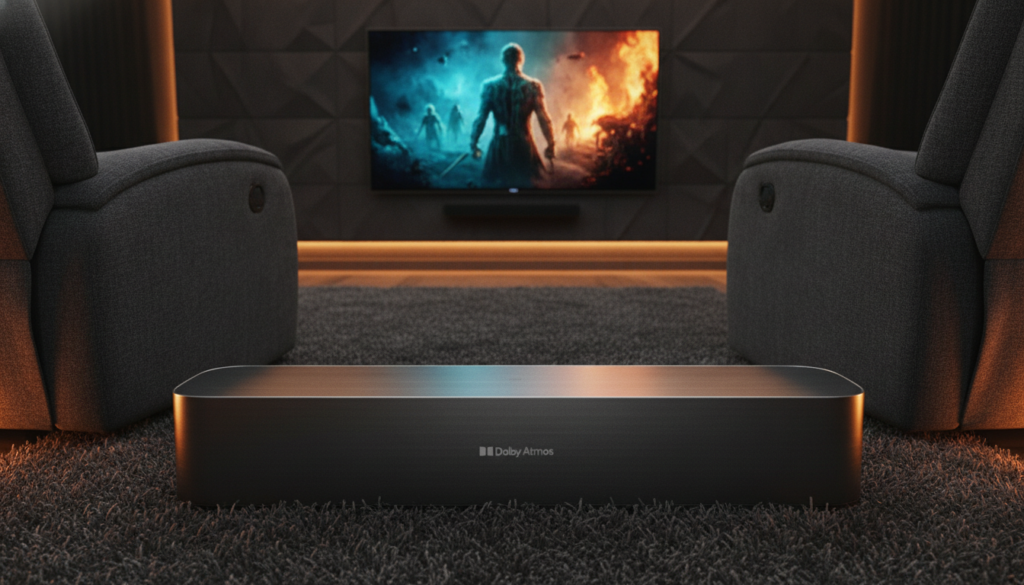
For best results, place your unit directly beneath your television. It is crucial to keep the front-firing and upward-firing drivers clear. Avoid an enclosed cabinet or shelf, which blocks sound waves and ruins height effects.
Keep a clear path between the speakers and your ceiling. This lets sound bounce accurately and creates the signature overhead audio sensation. Centering the unit with your seating area also helps maintain a balanced soundstage.
Connecting to Your TV and Devices
Correct connections are the next step in using advanced Dolby Atmos soundbar features. Use an HDMI eARC port on your television for high-bandwidth audio transmission. This connection supports the high-quality signals needed for a cinematic experience.
After connecting, route source devices through the television or directly into the soundbar if it offers pass-through inputs. Many modern systems, such as the Samsung HW-Q990H, include HDMI 2.1 support, which is perfect for high-end gaming. Configure your wireless network settings for firmware updates and smart features.
Finally, run a calibration process. Tools like Trueplay on the Sonos Arc Ultra measure your room’s unique acoustics and adjust the output. This step helps your Dolby Atmos soundbar perform at its peak in your specific environment.
Audio Formats Supported by Dolby Atmos Soundbars
Not all soundbars process the same audio formats. With a Dolby Atmos soundbar, the output depends on the digital language your device understands.
Surround Sound Formats Explained
To enjoy your system, understand the differences between common audio codecs. Dolby Digital and Dolby Digital Plus are standard on most streaming platforms. Dolby TrueHD offers lossless, high-fidelity sound, often on Blu-ray discs.
Check the specific Dolby Atmos soundbar features before you buy. The Sonos Arc Ultra does not support DTS:X. The Sony BRAVIA Theatre Bar 9 supports both Dolby Atmos and DTS:X. If your movie collection uses DTS-encoded audio, your hardware choice affects how you hear those tracks.
Compatibility with Streaming Services
True spatial audio requires compatibility from the source through your entire system. Your television, streaming device, and service subscription must support the format you want to play. If one link fails, your system may use lower-quality stereo or standard surround sound.
Modern devices offer several ways to stream content beyond HDMI connections. Many premium models include flexible options to help you stay connected:
- Bluetooth: Ideal for quick, wireless music streaming from mobile devices.
- AirPlay 2: Perfect for Apple users who want seamless multi-room audio integration.
- Google Cast: Allows for easy streaming from a wide range of Android-compatible apps.
- Spotify Connect: Enables direct playback from the cloud to your soundbar without draining your phone battery.
Verify that your HDMI connection supports eARC, which passes high-bandwidth signals like Dolby TrueHD. When your setup works together, you can enjoy your high-end audio equipment fully.
Using a Dolby Atmos Soundbar with a TV
When you add a Dolby Atmos soundbar for home theaters, connection matters as much as the hardware. Your TV must communicate well with your audio equipment for immersive sound. Learn the technical needs to help every sound effect reach your ears clearly.
Best TVs for Dolby Atmos Experience
Choose a TV with advanced connection standards, including HDMI eARC (Enhanced Audio Return Channel). It sends high-bitrate audio formats without compression. This keeps spatial audio tracks clear and complete.
Many modern displays include special features that improve listening. Samsung’s Q-Symphony lets TV speakers work with the soundbar, while Sony’s Acoustic Centre Sync uses the screen as an extra channel. Always verify that your specific TV and soundbar models are compatible before you finish setup, because these features often need matching brands.
“The true magic of home cinema lies in the seamless marriage of vibrant visuals and precise, multidimensional sound.”
Syncing Audio and Video
Even with the best equipment, you may face lip-sync issues when audio feels delayed. Complex video processing often takes longer than the audio signal. Open your television’s audio delay or “AV sync” settings and align the timing manually.
Cable quality also affects performance beyond software adjustments. Use high-speed HDMI cables that support the latest Dolby Atmos soundbar features. If lag continues, check source settings and choose “Pass-through” or “Auto,” not a forced format that adds latency.
A stable connection completes your Dolby Atmos soundbar setup. Keep firmware updated on your TV and your Dolby Atmos soundbar so they communicate over time.
Enhancing Your Home Theater with Additional Equipment
While a standalone soundbar delivers great audio, the right accessories can greatly improve your home theater. Knowing the core Dolby Atmos soundbar benefits helps you choose upgrades that suit your space. A few key components can turn a standard setup into an immersive cinematic experience.
Recommended Accessories for Dolby Atmos
For the best results, add a dedicated, compatible subwoofer. Many bars have internal bass drivers, but an external unit adds deep, resonant bass that brings action movies alive. Wireless rear speakers can also improve the sound field behind your listening position.
Proper installation matters as much as the hardware. High-quality HDMI eARC cables provide the bandwidth needed for lossless audio formats. Use sturdy wall-mount hardware to place speakers at the ideal height, and protect your investment with a reliable surge protector against unexpected power fluctuations.
Integrating with a Surround Sound System
One of the key Dolby Atmos soundbar features is the ability to expand your system over time. You can enjoy high-quality sound without buying every component at once. Manufacturers such as Sonos and Sony offer modular expansion paths as your budget permits.
You can start with a primary bar, then add wireless subwoofers or satellite speakers to complete your surround sound environment. This flexible approach lets you build a professional-grade theater without complex wiring or a traditional receiver. A brand with a robust ecosystem keeps your equipment compatible as you upgrade your home theater setup.
Common Misconceptions About Dolby Atmos Soundbars
Many people think soundbars cannot match full-sized speakers, but modern technology is changing that view. Compact units can fill a room, so look beyond hardware size during a Dolby Atmos soundbar comparison.
Sound Quality vs. Traditional Systems
Some people think every soundbar performs worse than a traditional component-based surround system. A dedicated receiver with wired speakers offers unmatched precision, but high-end soundbars use advanced processing to create similar depth. Virtualized height effects can sound convincing, but they may not match ceiling-mounted speakers’ pinpoint accuracy.
“The true measure of an audio system is not just the number of speakers, but how effectively it interacts with the unique geometry of your listening space.”
The main Dolby Atmos soundbar benefits include convenience and easy integration. You do not need a room full of wires for a cinematic atmosphere. Consider these factors when evaluating your setup:
- Content Quality: High-bitrate audio sources are essential for the best results.
- Speaker Count: More drivers generally allow for better soundstage width.
- Calibration: Automatic room correction software can bridge the gap between compact and traditional systems.
The Role of Room Acoustics
Your environment strongly affects how audio reaches your ears. Sound waves bounce off walls, ceilings, and furniture, which can improve or muddy the output. High ceilings or many hard surfaces can change system performance.
Modern solutions like the Samsung SpaceFit Sound Pro help manage these issues by analyzing your room. This technology adjusts system output automatically, keeping audio balanced across different layouts. By accounting for reflective surfaces, these smart systems offer a more consistent experience than older, static setups.
Great sound comes from harmony between your equipment and space. Do not let old myths stop you from enjoying a modern Dolby Atmos soundbar comparison. With proper placement and calibration, you can enjoy major Dolby Atmos soundbar benefits in almost any home environment.
Where to Buy the Best Dolby Atmos Soundbars
Whether you seek a premium system or an affordable Dolby Atmos soundbar, your retailer choice matters. An informed choice balances convenience, hands-on testing, and dependable customer support.
Online Retailers vs. Brick-and-Mortar Stores
Online retailers offer great convenience and often provide the lowest prices. You can use a Dolby Atmos soundbar comparison to compare different models in real time. Many platforms host extensive Dolby Atmos soundbar reviews that show user satisfaction before you buy.
A physical store lets you test audio quality in person. Hearing the soundstage firsthand helps when considering a high-end unit like the Bose Smart Ultra Soundbar. Although stores may charge more, they offer immediate installation advice and personal service online stores cannot match.
“The bitterness of poor quality remains long after the sweetness of low price is forgotten.”
What to Watch for in Warranty and Return Policies
Before buying, verify that you are purchasing from an authorized dealer. An unauthorized source can void your manufacturer warranty if your device fails. Check these details for a smoother ownership experience:
- Return Windows: Look for stores offering at least a 30-day return period to test the device in your own home.
- Restocking Fees: Be aware of any hidden costs if you decide the product does not meet your expectations.
- Component Coverage: Ensure the warranty explicitly covers wireless subwoofers and satellite speakers, not just the main bar.
Ultimately, the best Dolby Atmos soundbar is backed by strong customer support. Research stores online and understand their policies before choosing an affordable Dolby Atmos soundbar. It can elevate your home theater for years.
Conclusion: Elevate Your Entertainment Experience
Turn your living room into a cinema with careful planning and the right hardware. Choosing the best Dolby Atmos soundbar depends on room size, audio formats, and connection needs.
Essential Factors for Your Setup
Evaluate your space before you buy. A Dolby Atmos soundbar for home theaters works best when placement supports sound reflection. Choose an expandable system, such as the Sonos Arc Ultra, or an all-in-one package, such as the Samsung HW-Q990H.
The latter delivers a robust 11.1.4-channel experience, dedicated rear speakers, and a powerful subwoofer out of the box.
Making an Informed Decision
Our goal is to help you find the right match for your lifestyle. A thorough Dolby Atmos soundbar comparison shows that total value matters more than brand names or speaker-count claims.
Check compatibility with your television and streaming services for a smooth setup. Then prioritize your audio preferences for an immersive soundstage at home.