 Zoe Nora
Did you know over 80% of music is now streamed digitally? Yet, most listeners miss out on the full sound of their favorite songs. To get a studio-quality sound at home, you need more than just speakers.
You need a solid digital base. We think picking the best audio streamer is key for anyone wanting to improve their home audio setup this year.
The market is changing fast, with new tech like the Nagra unit leading the way. At $5,000, this high-quality audio streamer is the top of the line. It turns digital signals into a deep, engaging sound that brings your music to life.
We’ll help you find the right audio streamer. The right one keeps your system up-to-date and sounding great.
Key Takeaways
- Digital playback quality depends heavily on the precision of your hardware components.
- The Nagra unit serves as a premium benchmark for performance in the current market.
- Investing in high-end equipment is essential for unlocking hidden details in your music.
- We prioritize signal integrity to ensure a transparent and natural listening experience.
- Understanding your specific needs helps narrow down the vast array of available options.
Understanding the Importance of Audio Streamers
An audio streamer connects your digital music to your speakers. Computers and smartphones can’t always send high-quality sound. A dedicated audio streamer makes sure your music sounds its best.
What is an Audio Streamer?
This device links your music files to your audio system. It handles network connections and turns data into sound. Choosing an audio streamer for home use means you’re getting top-notch sound quality.
These devices offer big advantages over regular playback:
- Seamless integration with popular streaming platforms.
- Advanced network stability for uninterrupted playback.
- Dedicated hardware components designed for audio fidelity.
How Do Audio Streamers Enhance Sound Quality?
Consumer electronics like laptops can add noise to your sound. This can make your music sound flat or distorted. A dedicated device keeps your music clear and detailed.
Also, these units are great at reducing jitter, a timing error in digital audio. Less jitter means better sound quality. You get a more immersive and detailed listening experience.
Key Features to Look for in an Audio Streamer
Understanding the core components of a high-quality audio streamer is key to perfect sound at home. Devices may look the same, but their inside matters most. Focusing on technical benchmarks ensures your device will last and sound great.
Digital-to-Analog Converter (DAC) Quality
The DAC is the heart of any audio streamer. It turns digital data into sound for your speakers or amps. A good DAC keeps the music’s details and feel intact.
Lower-end models might use basic chips that add noise or distortion. But, a high-quality audio streamer has top-notch DACs from ESS Sabre or AKM. These ensure your music stays true to the original.
Streaming Protocols Supported
Your device needs to talk well with your network and music services. It’s important to support modern streaming protocols. Look for devices that work with AirPlay 2, Chromecast, and Roon Ready.
These protocols let you stream high-quality music without the loss found in older Bluetooth. A versatile audio streamer keeps your system up-to-date with new services and updates.
Multi-Room Audio Capability
Multi-room audio lets you enjoy music all over your home. You can play the same song everywhere or different songs in each room. It’s perfect for a fully connected home audio system.
| Feature | Entry-Level | High-End |
|---|---|---|
| DAC Resolution | 16-bit/44.1kHz | 32-bit/768kHz |
| Protocol Support | Basic Bluetooth | Roon, AirPlay 2, UPnP |
| Multi-Room | Limited/None | Full Synchronization |
| Build Quality | Plastic Chassis | Aluminum/Shielded |
Top Audio Streamers for 2024
Finding the best audio gear is all about knowing what sets a device apart. Whether you’re setting up a new system or upgrading, picking the best audio streamer is key. We’ve looked at the latest tech to guide you in choosing the right one for your home.
Comprehensive Reviews of Leading Models
The market has a wide range of choices, from affordable to high-end. For those on a budget, the Wiim Ultra is a top pick. It’s a DAC and preamp in one, offering great value at $329.
For audiophiles, devices like the Nagra Streamer are the top choice. They offer unmatched performance, with top-notch build and tech to reduce noise. Check out the best music streamers to see how they compare.
“The true measure of a digital source is its ability to disappear, leaving only the music behind in its purest form.”
Comparing Price Points and Features
It’s important to understand how cost relates to quality when choosing top audio streaming devices. Budget options are convenient and sound good, but premium devices offer better soundstages and outputs. An streaming amplifier can also be a great all-in-one solution.
| Model | Price Range | Primary Use | Key Feature |
|---|---|---|---|
| Wiim Ultra | $329 | Entry/Mid-Level | Integrated DAC/Preamp |
| Mid-Range Streamer | $800 – $1,500 | Dedicated Hi-Fi | Advanced Clocking |
| Nagra Streamer | $5,000+ | Reference System | Audiophile Build |
The right audio streamer depends on your goals and current setup. Balance your budget with the features you need, like multi-room support or high-res file support. By comparing carefully, you’ll make a choice that brings long-term joy.
How to Connect Your Audio Streamer
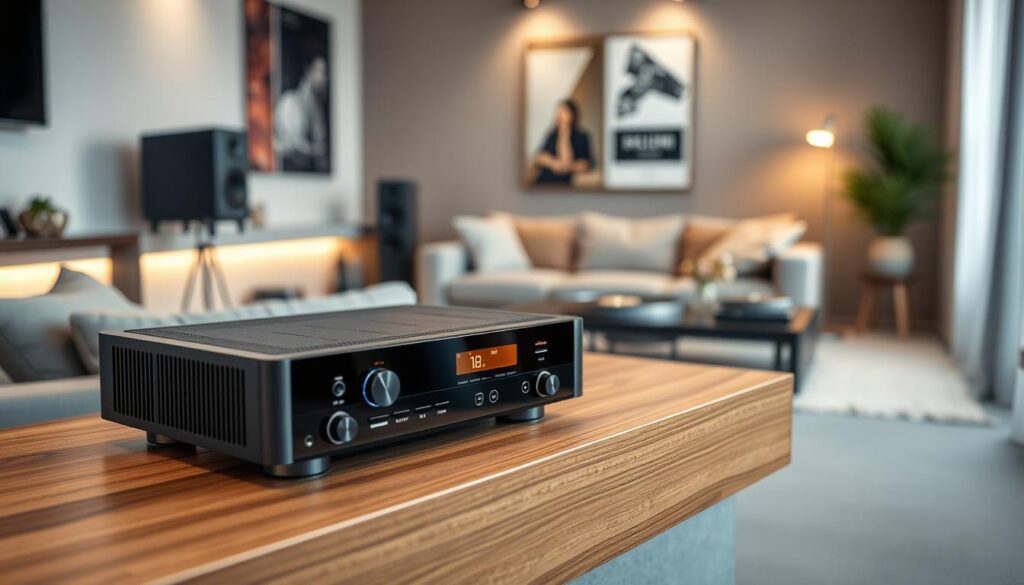
Connecting your audio components right is key to clear sound. It keeps your high-quality audio files playing smoothly. Before you start, check your home network setup.
Wired vs. Wireless Connections
Deciding between wired and wireless depends on your home. Wired connections are stable and avoid signal drops. They’re best for those who want perfect sound without interruptions.
Wireless setups offer more freedom, letting you place devices anywhere. With today’s Wi-Fi, streaming high-quality audio wirelessly is reliable. Make sure your router is close to your device for a strong signal.
| Connection Type | Stability | Ease of Setup |
|---|---|---|
| Ethernet (Wired) | Excellent | Moderate |
| Wi-Fi (Wireless) | Good | High |
| Bluetooth | Fair | Very High |
Setting Up Your Streamer with Other Devices
Connecting your audio streamer to other devices needs careful planning. Most connect it to a DAC or amplifier with RCA or optical cables. This setup improves sound quality by handling digital-to-analog conversion.
After connecting, set up your streamer’s software. Make sure it’s set to output the right resolution for your amplifier. This ensures your music sounds its best.
Streaming Services Compatibility
Finding the right device for your digital music is key. An audio streamer connects your music library to your favorite apps. It’s important to pick a device that works well with your audio streaming services for a smooth listening experience.
Popular Services Supported by Audio Streamers
Many devices support a variety of platforms. But some, like Spotify, Qobuz, and Tidal, are leaders. They offer unique features and high-quality music for different tastes.
Make sure your device supports these services natively. Native support means better connection and interface. This ensures you can switch between your favorite songs without any issues.
Impact of Service Quality on Overall Experience
The quality of your music affects how it sounds. High-resolution streaming adds depth and clarity. An audio streamer with a good DAC can make these differences clear to everyone.
It’s a myth that all digital music sounds the same. Different audio streaming services use different compression levels. This changes the sound of your music. A device that handles high-bitrate streams well will enhance your listening experience.
| Service Name | Audio Quality | Best For |
|---|---|---|
| Tidal | Lossless/Hi-Res | Audiophiles |
| Qobuz | Hi-Res FLAC | Critical Listening |
| Spotify | Compressed | Music Discovery |
Benefits of Using an Audio Streamer
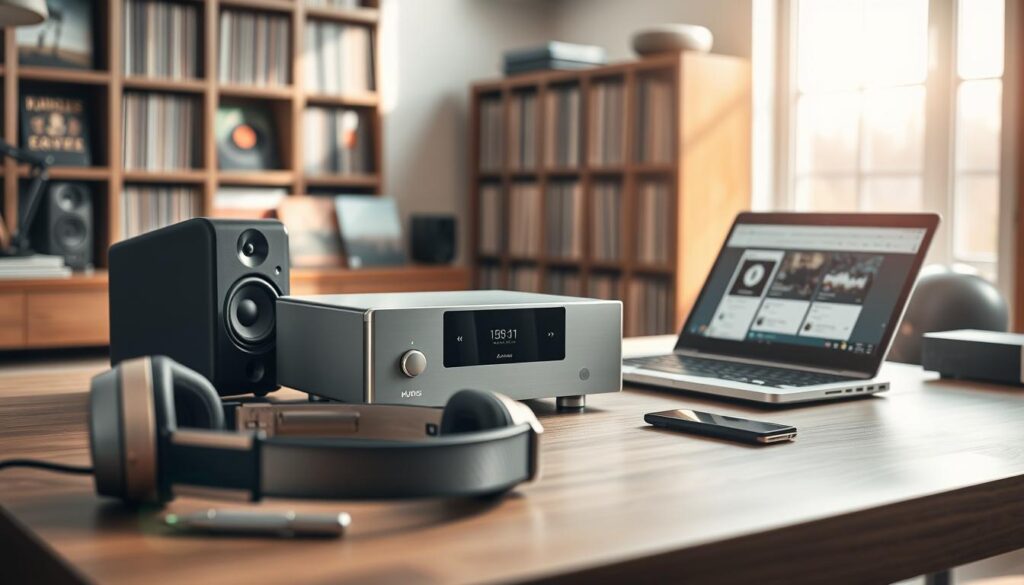
Discovering your sound system’s true potential starts with an audio streamer. It moves you away from using your computer’s outputs. This lets specialized hardware handle your digital music files with care.
Enhanced Sound Experience
A top-notch audio streamer uses advanced parts to cut down on jitter and noise. It has better digital-to-analog converters. These show off music details that regular gear might miss.
“The beauty of modern high-fidelity streaming lies in the ability to hear the artist’s intent exactly as it was recorded in the studio.”
Choosing a dedicated unit keeps your signal path clean and true. This leads to a wider soundstage and clearer instrument separation.
Greater Flexibility in Listening Options
Today’s listeners want access to huge music libraries. An audio streamer gives you just that. You can switch between high-res services, internet radio, and local files without changing your setup.
- Instant access to millions of high-definition tracks.
- Seamless integration with popular cloud-based music platforms.
- Support for various file formats including FLAC, ALAC, and DSD.
This flexibility lets you easily explore new genres and artists. You’re no longer tied to physical media or a single device.
Convenience of Control
Managing your music collection is easy with a dedicated audio streamer. Most makers offer simple smartphone apps. These turn your phone into a powerful remote.
| Feature | Traditional Setup | Streamer Setup |
|---|---|---|
| Library Access | Limited/Physical | Unlimited/Cloud |
| Control Method | Manual/Remote | App/Voice |
| Multi-room | Difficult | Integrated |
You can browse playlists, adjust volume, and manage multi-room audio from anywhere. This convenience lets you focus on the music, not the tech.
The Role of Internet Speed in Streaming Quality
When setting up a new streaming audio player, we often forget about network stability. A reliable network is key to your high-fidelity system. It makes sure data packets arrive smoothly. Without a steady connection, even the most expensive audio streamer can’t deliver clear music.
Minimum Speed Requirements for Optimal Streaming
To enjoy high-quality audio without interruptions, you need to meet certain bandwidth needs. Standard compressed audio uses little data, but high-resolution files need more to stream smoothly.
- Standard Quality: At least 1-2 Mbps is enough for basic streaming services.
- High-Resolution Audio: For lossless files, aim for a stable connection of 10-15 Mbps.
- Multi-Room Setup: Streaming to many devices at once? Make sure your total bandwidth is over 25 Mbps to avoid slowdowns.
How to Test Your Internet Speed
Start by checking your network with a simple diagnostic. Use online tools to measure your download and upload speeds. Always test when your network is busy to get a true reading.
If your speeds are not steady, try these tips:
- Router Placement: Place your router in a central spot, away from walls and metal.
- Wired Connections: Connect your audio streamer directly to your router with an Ethernet cable for better stability.
- Signal Interference: Don’t put your streaming audio player near other devices that could cause wireless interference.
By keeping your network strong, your equipment will work its best. A bit of focus on your internet setup can greatly improve your music listening experience.
Upgrading Your Existing Setup with an Audio Streamer
Turning your old audio setup into a modern streaming system is simple. Whether you love music deeply or just enjoy listening, a high-quality audio streamer can open up a new world of sound. You’ll get to enjoy high-quality music files easily with today’s tech.
Assessing Your Current Audio System
First, check out what you already have. See if your amp and speakers are good enough for you. If you want something simple, consider the Triangle Capella. It’s a single unit with speakers, an amp, a DAC, and streaming all in one.
If you have speakers you love, you might just need a audio streamer as your digital source. This way, you keep your favorite amp and get to use new streaming services. For more help, check out our audio system upgrade guide to make sure everything works well together.
Steps to Transition to an Audio Streamer
Switching to digital should be easy and straightforward. Make sure your home network is strong for uninterrupted playback. Then, connect your new device to your amp with top-notch cables to keep the signal clear.
After setting up the hardware, focus on the software. Download the app from the maker to manage your music and streaming services. Consistency is key in setting up your digital workflow. Take time to organize your playlists and settings. This will make your transition smooth and keep your music listening experience great.
Maintenance and Care for Your Audio Streamer
Keeping your audio streamer in top shape is key to great sound. Simple care steps can protect your device and keep it working well for a long time.
Regular Software Updates
Manufacturers often release updates to make your device better. These updates fix bugs and improve security. They also add new features and support for new streaming standards.
It’s important to check your device for updates regularly. This ensures your audio streamer is always running the latest version.
Tips to Keep Your Streamer Running Smoothly
Physical care is as crucial as digital updates for your equipment. Good airflow is vital to prevent overheating. Overheating can damage your device’s parts.
Make sure your device has enough space around it for air to flow. Also, use a good surge protector to protect it from power surges.
Keep your device clean by wiping it with a soft cloth. This helps keep it cool and looking great.
Consumer Reviews and Experiences
We looked at what music lovers say when they add new tech to their homes. They say the right audio streamer makes a big difference. It gives them clearer sound and deeper bass.
Insights from Daily Listeners
People who own the Bluesound Node love its easy-to-use interface and how well it works with their amps. They say the best streamers make music sound way clearer than Bluetooth. And they want their systems to be reliable, too.
Resolving Common Setup Hurdles
Sometimes, when there’s a lot of internet traffic, you might lose connection. But most people fix this by setting a static IP address in their router. Also, keeping your device’s firmware up to date helps it perform its best.
Choosing the right audio streamer is all about finding what works best for you. We suggest checking out these options to improve your home audio. Your ears will thank you.