
 Zoe Nora
Did you know sound waves can bounce off hard surfaces over 50 times before they fade? This creates a muddy audio environment that hides your music’s true detail. We think every room can be great if you manage these reflections right.
Using professional acoustic treatment is the best way to change your space. It absorbs primary reflections and stops flutter echo, giving you a clearer sound. Whether you’re in a small bedroom or a big studio, you can control your environment.
Let’s explore how proper sound management improves your audio quality. Our guide will teach you to balance your room for professional results. Simple changes can greatly improve your daily work.
Key Takeaways
- Sound reflections can linger in a room, causing significant audio distortion.
- Managing primary reflections is essential for achieving high-fidelity sound.
- Proper room optimization works in any space, regardless of its size.
- Controlling flutter echo leads to a much cleaner and more professional mix.
- Investing in quality sound solutions creates a more accurate listening environment.
Understanding Acoustic Treatment
To improve your listening space, you need to know the difference between blocking noise and enhancing sound. Many think these are the same, but they’re not. They serve different roles in your home or studio.
What is Acoustic Treatment?
Acoustic treatment is about managing sound waves in a room. It’s different from soundproofing, which stops sound from getting in or out. Treatment focuses on making the sound you hear better.
Using acoustic panels helps absorb unwanted echoes and reflections. This makes your sound clearer and more enjoyable.
Why is Acoustic Treatment Important?
Good room acoustics are key for any space where sound quality is important. Without treatment, sound waves bounce off surfaces, causing echoes and muddiness.
By controlling these reflections, you get several benefits:
- Improved clarity: You hear the direct sound from your speakers, not just reflections.
- Reduced fatigue: Your ears don’t have to work as hard to deal with messy sound.
- Professional results: Accurate monitoring helps you make better mixing and recording choices.
Common Misconceptions about Acoustic Treatment
There’s often confusion about the tools for managing sound. It’s important to know that acoustic treatment is not the same as using soundproofing materials to block outside noise.
| Feature | Acoustic Treatment | Soundproofing |
|---|---|---|
| Primary Goal | Refine internal sound | Block external noise |
| Common Materials | Foam, fabric panels, diffusers | Mass loaded vinyl, dense drywall |
| Result | Better room acoustics | Less sound transmission |
Many think adding heavy curtains or egg cartons will fix their sound issues. But, effective soundproofing materials need mass and airtight seals. Treatment, on the other hand, requires placing absorbent or diffusive surfaces to shape the sound in the room.
Types of Acoustic Treatment Materials
Mastering your room’s acoustics starts with understanding the various materials available for sound management. We must choose components that target specific frequency ranges to achieve a balanced environment. By combining different tools, we can effectively manipulate sound energy to suit our needs.
Foam Panels
Acoustic foam panels are a popular choice for both beginners and professionals. These sound absorption panels are great at reducing flutter echoes and controlling mid-to-high frequency reflections. They are lightweight, easy to install, and improve the clarity of your recordings quickly.
Bass Traps
Low-frequency energy often gathers in the corners of a room, causing muddy sound. Bass traps absorb these long wavelengths and prevent resonance buildup. Placing these units in corners is the most effective way to ensure a tight, accurate low-end response for any acoustic treatment project.
Diffusers
While absorption removes energy, sound diffusers scatter sound waves in multiple directions. This prevents harsh reflections while maintaining the “liveness” of a room. Using these tools helps create a more natural and spacious soundstage, which is vital for critical listening environments.
Acoustic Curtains
For those needing a flexible solution, acoustic curtains offer a practical way to manage sound. These heavy-duty fabrics help dampen noise from outside and reduce reflections from glass surfaces like windows. They serve as a great secondary layer to enhance your overall acoustic treatment strategy.
| Material Type | Primary Function | Frequency Range | Best Placement |
|---|---|---|---|
| Acoustic Foam Panels | Absorption | Mid to High | Walls and Ceilings |
| Bass Traps | Absorption | Low | Room Corners |
| Sound Diffusers | Scattering | Mid to High | Rear Walls |
| Acoustic Curtains | Damping | Broadband | Windows and Doors |
Selecting the Right Acoustic Treatment for Your Space
Every room has its own sound signature. This affects how sound moves within it. Before buying gear, understand the physical factors that shape your room acoustics. Analyzing your space ensures your upgrades will work best.
Assessing Your Room’s Acoustics
Start by measuring your space carefully. Wall distance, ceiling height, and floor and wall materials greatly impact sound reflection. Hard surfaces like glass, concrete, or hardwood can cause unwanted echoes, reducing audio clarity.
Look at these physical traits when checking your space:
- Room Dimensions: Small, square rooms often have standing waves.
- Surface Materials: Reflective surfaces need more absorption than soft, porous ones.
- Ceiling Height: High ceilings can affect how bass frequencies build up.
Identifying Treatment Needs
After understanding your space, find specific problem areas. Many rooms have “boxy” shapes that trap sound unnaturally. Notice excessive reverberation or muddy low-end frequencies? Your acoustic treatment plan should target these issues.
Test your room by clapping your hands or playing a reference track. This test shows where sound lingers. It helps you know where to place panels or bass traps for the best effect.
Budget Considerations
Professional solutions vary in cost based on project size. You don’t have to spend a lot to see improvements. Spend wisely, focusing on the most critical acoustic flaws.
| Project Scale | Estimated Investment | Primary Focus |
|---|---|---|
| Entry-Level | Low | Strategic panel placement |
| Mid-Range | Moderate | Bass traps and diffusion |
| Professional | High | Full room calibration |
By evaluating your specific needs, you can focus on the most impactful investments. Whether you opt for a modest setup or a full-scale installation, effective acoustic treatment is always a good investment for serious listeners.
DIY Acoustic Treatment Options
We think anyone can improve room acoustics with a few simple DIY steps. You don’t need to spend a lot on fancy setups. Basic physics can help you make your audio sound better with easy acoustic treatment methods.
Homemade Acoustic Panels
Making your own sound absorption panels is a fun and cost-effective project. Start with a wooden frame and fill it with mineral wool or rigid fiberglass. These materials are great at catching sound waves and stopping echoes.
After filling the frame, cover it with a breathable fabric like burlap or heavy cotton. This lets sound waves pass through instead of bouncing off. Hang these panels on walls to improve your room’s sound quality.
Using Rugs and Carpets
Household items can also help with room echoes. Heavy carpets and rugs work well as natural sound absorbers. They’re best on hard floors like hardwood or tile.
For better results, add thick felt pads under your rugs. This creates a strong barrier against sound reflections. Adding heavy curtains over windows can also enhance your room’s acoustics.
Creative Solutions for Bass Traps
Handling low-frequency sounds is often the toughest part of acoustic treatment. If you don’t have corner traps, use bookshelves filled with books. The books’ uneven depths help break up sound waves.
For a DIY bass trap, stack dense foam or spare cushions in corners. These alternatives can help even out your room’s low-end sound. The table below shows common DIY materials and their uses.
| Material Type | Primary Function | Difficulty Level | Cost Efficiency |
|---|---|---|---|
| Mineral Wool Panels | Broadband Absorption | Moderate | High |
| Thick Rugs | Surface Damping | Low | Very High |
| Bookshelves | Diffusion | Low | High |
| Theater Curtains | High-Frequency Control | Low | Moderate |
Professional Acoustic Treatment Services
DIY methods are a good start, but some spaces need professional acoustic treatment. Spaces with odd shapes or high-end recording needs are too complex for simple solutions. Experts have the technical know-how to handle every sound frequency correctly.
When to Hire an Expert
Consider a pro for rooms with tricky shapes, like vaulted ceilings or non-parallel walls. These features cause unpredictable sound waves that DIY panels can’t fix. Professional guidance is key for commercial studios needing top-notch sound quality.
Choosing the Right Acoustic Consultant
Finding the right consultant means looking for a proven track record and deep room acoustics knowledge. A good expert will analyze your space and suggest the best acoustic treatment. They create custom solutions that match your room’s size and style.
Benefits of Professional Installation
Professional installation ensures materials are placed for maximum sound quality. It also makes sure the setup looks good. This blend of sound quality and style is what top acoustic treatment services offer.
| Feature | DIY Approach | Professional Service |
|---|---|---|
| Customization | Limited to standard sizes | Fully tailored to room |
| Acoustic Analysis | Basic trial and error | Scientific measurement |
| Installation | Manual labor required | Expert precision placement |
| Performance | General improvement | Optimized for specific use |
Acoustic Treatment for Home Studios
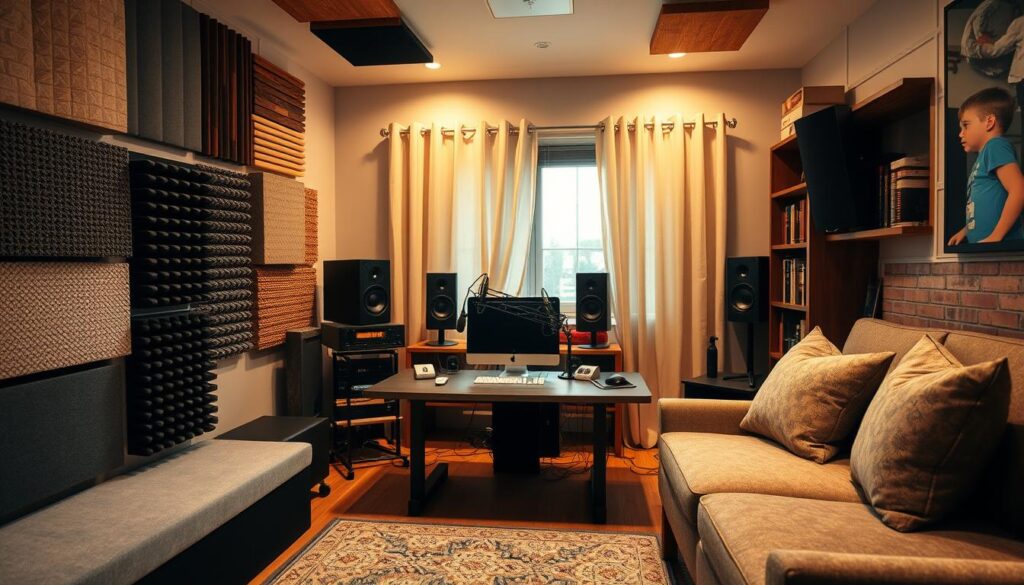
Small rooms can be tough to get a clean sound from. In rooms about 3.1 by 2.9 meters, bass can build up too much. This causes problems with sound peaks and dips. The best way to fix this is to improve your room acoustics.
Essential Elements for Sound Recording
To get great audio, you need to control reflections and low-frequency energy. Use sound absorption panels at key reflection points to improve the stereo image. Bass traps in corners help control low-end energy, common in small rooms.
While acoustic foam panels help with echo, denser materials are better for low frequencies. Adding sound diffusers keeps the room from feeling too closed in. A mix of these tools makes your room sound neutral and good for listening.
Equipment Placement and Treatment
Where you put your desk and monitors matters a lot. Place your speakers away from walls to avoid boundary issues. Positioning them in an equilateral triangle with your listening spot improves soundstage accuracy.
After setting up your gear, treat the first reflection points on walls and ceiling. This stops comb filtering, which can mess up your mix. Good room acoustics come from aligning your equipment and treatment correctly.
Balancing Aesthetics and Functionality
A professional space should look as good as it sounds. You don’t have to choose between looks and sound quality. Many sound absorption panels come in colors and fabrics that match your room.
Use acoustic foam panels with cool designs to make your walls interesting. Mixing bass traps with pretty diffusers makes your studio inspiring. A well-designed studio keeps you focused and creative during long sessions.
Acoustic Treatment for Living Spaces
Turning your home into a peaceful place is more than just picking furniture. It’s about paying attention to room acoustics. Many focus on looks, but sound quality is key to comfort. By controlling sound waves, we make your home quieter and more relaxing for everyone.
Enhancing Your Home Theater Experience
A media room can have harsh reflections that mess up the sound. Using acoustic treatment for home theater makes dialogue clear and sound effects immersive. Panels at key spots stop sound from bouncing, improving your movie nights.
Clarity is the ultimate goal for movie lovers. Less echo means you don’t have to turn the volume up. This makes watching movies more enjoyable and easier on your ears.
Improving Sound in Open Concept Areas
Open-concept homes are stunning but can be noisy. Hardwood floors and glass windows reflect sound, making it hard to talk. Decorative acoustic panels can absorb this excess sound without ruining your decor.
For homes with big windows, Clearsorber panels are a great choice. They soak up sound without blocking light. This keeps your space bright and quiet, improving room acoustics.
Addressing Noise Pollution Issues
City sounds or neighbors can ruin your peace. Acoustic treatment helps block these noises, keeping your home quiet. Sealing gaps and adding mass to walls makes your home a quieter place for rest.
Investing in acoustic treatment for home theater and living areas is good for your health. It blocks out city noise and makes your home a quieter place to relax. We think a well-treated home is the key to a peaceful life.
Acoustic Treatment for Offices
A balanced acoustic environment is key for business success today. When designing a workspace, we must think about how sound interacts with hard surfaces. Proper acoustic treatment reduces harsh reflections, helping avoid listener fatigue and improve focus.

Creating a Productive Work Environment
A productive office needs to minimize distractions and promote deep focus. Sound-absorbing panels help create zones for both loud and quiet work. This layout ensures team members can work well without noise distractions.
For a home office, acoustic treatment for home office is just as important. Heavy curtains or fabric panels can greatly reduce echoes. These simple steps help keep a professional vibe during video calls and focused work.
Importance of Sound Privacy
Sound privacy is crucial in a secure business setting. Sensitive meetings need a space where sound doesn’t leak through walls or open doors. Using acoustic seals on doors and sound-dampening wall treatments keeps conversations private.
Effective sound management safeguards your company’s secrets and builds trust with clients. When employees feel their talks are secure, they share more openly. This privacy is essential for a healthy, professional work culture.
Addressing Noise Pollution Issues
Computers and office equipment often add to unwanted noise. The hum of cooling fans can be distracting over long hours. Replacing these fans with whisper-silent versions can greatly reduce noise.
Structural noise pollution can also be tackled. Installing acoustic ceiling tiles or floor rugs absorbs sound before it spreads. These steps make the office environment calmer and more comfortable for everyone.
Maintenance and Care for Acoustic Treatments
Keeping your acoustic treatment in top shape is key. It’s not just about setting it up once. Regular care keeps your space sounding great. By sticking to a maintenance plan, your room will keep delivering top-notch sound.
Cleaning Acoustic Panels
Sound absorption panels are easy to care for, but they do get dusty. Use a soft brush on your vacuum to clean them. For more tips, check out these acoustic wall panels maintenance tips.
Stay away from harsh cleaners and too much water. For tough stains, a damp cloth with mild soap works well. Always test a small area first to avoid color changes.
Checking for Wear and Tear
It’s important to check your panels often. Mineral-wool slabs can sag if not supported well. Check your sound absorption panels frames every few months to keep everything in place.
“The longevity of your acoustic environment depends entirely on how well you monitor the physical integrity of your materials. A small adjustment today prevents a total replacement tomorrow.”
Watch for fabric damage like fraying or thinning. If the fabric gets loose, you might need to re-stretch or replace it. This keeps your room looking good.
Updating Treatments Over Time
Even with good care, materials wear out eventually. If sound quality drops or echoes increase, it’s time for a refresh. Check your room’s sound every year to see if it still meets your standards.
| Task | Frequency | Action Required |
|---|---|---|
| Surface Dusting | Monthly | Use soft vacuum brush |
| Frame Inspection | Quarterly | Check for sagging wool |
| Fabric Check | Bi-Annually | Look for tears or fading |
| Performance Audit | Annually | Test for sound clarity |
Future Trends in Acoustic Treatment
We are in a transformative era for sound management in our spaces. Acoustic treatment is evolving, moving from static panels to dynamic systems. These new systems adapt to our needs.
Emerging Materials and Technologies
New engineering brings advanced materials for better sound absorption. These materials are thinner and more discreet. High-performance composites replace traditional foam, offering durability and fire safety.
The Role of Smart Acoustics
Smart technology is changing how we use our rooms. Automated systems with sensors adjust sound levels in real-time. They ensure clarity for recording or meetings.
These intelligent solutions were once only for studios. Now, they’re available for home offices and living areas. Software makes adjustments, keeping sound perfect without manual effort.
Sustainable Acoustic Solutions
Design trends now focus on environmental responsibility. Manufacturers use eco-friendly processes for acoustic treatments. These products use recycled fibers and natural materials for sound dampening.
Choosing these green options improves air quality and sound control. Sustainability and performance can go hand in hand. Investing in these solutions makes spaces sound great and eco-friendly for the future.
Conclusion: Transform Your Space with Acoustic Treatment
Getting perfect sound quality needs both tech know-how and creative thinking. Good acoustic treatment is key for any pro audio space. It turns messy sound reflections into clear, precise sounds.
Essential Principles for Success
Understanding how sound waves act in your room is crucial. Fixing unwanted reflections and low-frequency issues lets you control your sound. Tools from brands like Primacoustic or GIK Acoustics can help. But, your ears are the most important tool.
Begin Your Sonic Evolution
Start by finding the biggest sound problems in your space. Even small changes can make a big difference in sound quality. Try different placements and materials to see what works best for you. Your effort will lead to professional sound results.