
 Zoe Nora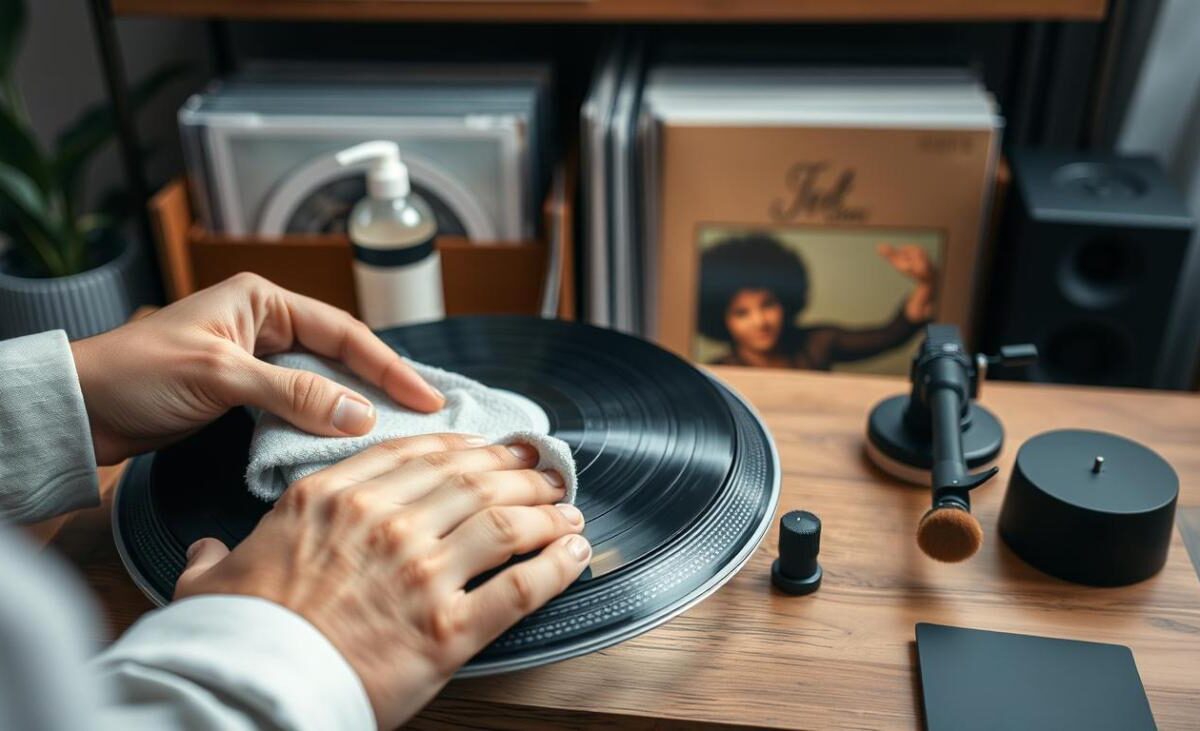
Did you know vinyl record sales have officially surpassed CDs for the first time in over three decades? This massive shift shows music lovers are coming back to the warm, authentic sound of analog audio. Whether you’re new or a seasoned collector, picking the right gear is key for a great listening experience.
Knowing the difference between a simple record player and a dedicated turntable is crucial. A basic vinyl player might seem easy, but a high-quality system makes your records sound just like the artist meant. We’re here to guide you through the market with confidence.
Before buying, think about how your equipment fits into your home. A well-thought-out vinyl setup will keep your records safe and give you years of music. Let’s dive into the details of analog audio to help you make a choice that fits your budget and listening habits.
Key Takeaways
- Vinyl records have seen a massive resurgence in popularity across the United States.
- Distinguishing between a standard record player and a high-fidelity turntable is crucial.
- Proper equipment protects your investment and enhances audio quality.
- Building a great collection starts with understanding your specific listening needs.
- Researching your setup helps you avoid common pitfalls for beginners.
Understanding the Basics of Turntables
A turntable is more than just a piece of equipment; it is a precision instrument for music lovers. By learning how these devices function, you can ensure your records sound their best for years to come.
What is a Turntable?
A turntable is a precision mechanical system for playing music from vinyl records. It uses physical contact between a needle and the record’s grooves to produce sound. This analog process gives a warm, rich sound that many find unmatched.
Key Components of a Turntable
Every high-quality turntable has several key parts working together. The platter spins the record at a steady speed. The tonearm holds the cartridge in place.
The cartridge and stylus track the tiny grooves on the vinyl. Another key part is the phono stage. It amplifies the weak signals from the cartridge to a level your receiver can handle.
How Do Turntables Work?
The process starts when the stylus rests in the record groove. As the record spins, the vibrations are converted into tiny electrical signals by the cartridge. These signals are very weak, often measured in millivolts.
These signals go through the tonearm wires to the phono stage. Without this amplification step, your speakers would be silent or barely whisper sound. After boosting, the signal goes to your amplifier and speakers, letting you enjoy your music in high fidelity.
Types of Turntables
We explore the diverse landscape of modern playback systems to help you find the perfect match for your collection. Selecting the right turntable involves understanding how different mechanical designs impact your listening experience and daily convenience.
Manual vs. Fully Automatic
When choosing a vinyl player, you must decide between manual and automatic operation. A manual system requires you to lift the tonearm and place the needle on the record yourself.
Many enthusiasts prefer this approach because it minimizes mechanical parts that could interfere with sound quality. In contrast, a fully automatic record player handles the start and stop process for you, which is ideal if you prioritize ease of use.
Direct Drive vs. Belt Drive
The motor system is the heart of any turntable. A belt drive turntable uses a rubber belt to connect the motor to the platter, which effectively isolates motor noise from the record.
This design is often favored by audiophiles for its ability to provide consistent, quiet playback. On the other hand, a direct drive turntable connects the motor directly to the platter.
This configuration is the industry standard for a DJ turntable because it allows for quick start-up times and precise speed control. Professionals often rely on this design for its durability and responsiveness during heavy use.
Portable Turntables
If you are constantly on the move, a portable record player might be the best solution. These units are compact and often include built-in speakers for immediate playback.
While they may not offer the same sonic depth as a high-end vintage turntable, they provide an accessible entry point for new collectors. They are perfect for casual listening sessions in different rooms or even outdoors.
Ultimately, your choice should reflect your lifestyle and your commitment to audio fidelity. Whether you choose a simple vinyl player or a complex professional deck, understanding these categories ensures you make an informed investment.
Essential Features to Look For
Understanding what makes a turntable great is key to a top-notch audio system. Looks are important, but it’s the inside that matters most. It’s what makes your records sound good and last long.
Cartridge and Stylus Quality
The cartridge and stylus are the heart of your system. A top-notch stylus tracks your vinyl’s grooves well, giving you accurate sound. Also, an adjustable anti-skate mechanism helps prevent uneven wear by pulling the tonearm back to the center.
Speed Options: 33, 45, and Beyond
Most records are made at 33 1/3 or 45 RPM. A good player should let you switch between these easily. If you’re into DJing, look for a DJ turntable with pitch control for mixing.
Built-in Speakers vs. External Speakers
Many starter models have built-in speakers for quick use. But, they can’t match the quality of external systems. For the best sound, choose a turntable that supports external speakers.
| Feature | Entry-Level | Audiophile Grade |
|---|---|---|
| Cartridge | Fixed/Basic | Upgradable/Moving Magnet |
| Anti-Skate | None/Preset | Fully Adjustable |
| Speed Control | Manual Belt Shift | Electronic/Pitch Control |
| Speaker Setup | Built-in | External Amplified |
Budget Considerations
Understanding how price affects performance is key in the world of vinyl. Prices range from $99 to thousands, showing different engineering levels. Whether you choose a belt drive turntable or a direct drive turntable, finding the right value is crucial for your listening pleasure.
Entry-Level Turntables
For new collectors, entry-level models are a great start. They are simple and easy to use, perfect for beginners. Even without advanced features, they are a good base for enjoying your favorite albums.
Mid-Range Options
Mid-range models offer better build quality and sound. They have improved tonearms and reliable motors, protecting your records. A quality vinyl player at this level ensures your records are well cared for.
High-End Turntables
For serious music lovers, a high-end turntable is the best choice. These use top materials and tech for an unparalleled sound. An audiophile turntable is a worthwhile investment for professional-grade sound at home.
| Category | Typical Price Range | Primary Benefit |
|---|---|---|
| Entry-Level | $99 – $250 | Ease of use and affordability |
| Mid-Range | $300 – $800 | Improved sound and durability |
| High-End | $1,000+ | Precision engineering and fidelity |
Brands to Consider
We think buying from a reputable maker is key for a great listening experience over time. Picking a brand known for quality gives you peace of mind. This is crucial when searching for the best turntable for your collection. Look for companies with a solid engineering philosophy to find the right fit for you.
Audio-Technica
Audio-Technica is known for its wide range in the audio world. They have everything from a reliable DJ turntable to great models for beginners. Their products are easy to use and deliver top-notch sound.
Pro-Ject
For a top-notch audiophile turntable, Pro-Ject is a top pick. This European brand is all about simple design and top-notch parts. They focus on sound quality, making them a hit with those who love vinyl.
Rega
Rega has been making gear for over 40 years and is known for its fresh designs. They introduced the lightweight plinth, which cuts down on vibration and boosts clarity. Their dedication to engineering makes them a top choice for a high-end turntable that lasts.
| Brand | Primary Focus | Best For |
|---|---|---|
| Audio-Technica | Versatility | Beginners & DJs |
| Pro-Ject | Audiophile Precision | Critical Listeners |
| Rega | Engineering Innovation | High-End Enthusiasts |
Where to Buy Turntables
Choosing the right place to buy your turntable is key to a great vinyl setup. A reliable source ensures you get quality equipment and support. Whether you want a simple record player or a top-notch system, your purchase choice affects your happiness in the long run.
Online Retailers
Online shopping is great for those who like to shop from home. You can compare prices, read reviews, and find a wide range of turntables not in your area. Many online stores give detailed specs to help you choose wisely.
Local Record Stores
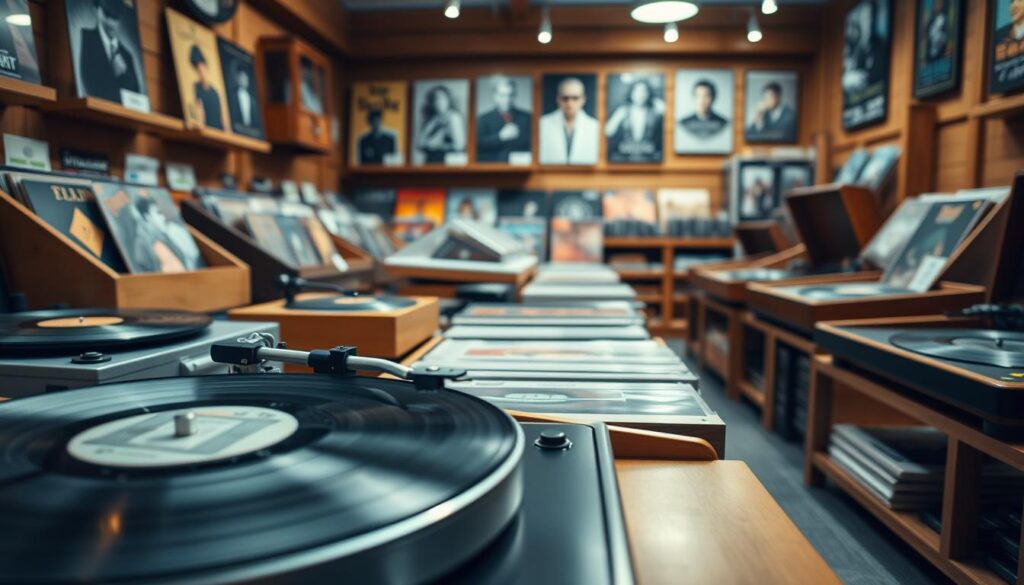
Local record stores offer a special, community vibe that online shopping can’t match. These shops are run by music lovers who can suggest record players based on your tastes. Buying here supports local businesses and helps you find new music.
Specialty Audio Shops
For a top-notch experience, go to specialty audio shops. These places have experts who give personalized advice and can install your system. They ensure your setup is perfect, with the technical know-how to do it right.
| Retailer Type | Best For | Key Advantage |
|---|---|---|
| Online Retailers | Budget & Variety | Wide selection and price comparison |
| Local Record Stores | Community & Discovery | Personalized, local connection |
| Specialty Audio Shops | High-End Systems | Expert setup and technical support |
Turntable Setup and Installation
We think a well-set-up turntable is key to a great home audio system. Getting it right means your records sound great and last longer. It’s worth the effort for years of top-notch sound.
Leveling Your Turntable
Your turntable needs a stable, level surface for accurate sound. An uneven base can cause problems like channel imbalance or skipping. Use a small bubble level to make sure it’s perfectly horizontal.
Also, keep your turntable away from big speakers to avoid vibrations. Stability is crucial to prevent unwanted resonance during playback.
“The beauty of vinyl lies in the physical connection between the needle and the groove; treat that connection with care, and the music will come alive.”
Connecting to Speakers
First, make sure your player is level. Then, connect it to your audio system. Most modern units need an external phono preamp if your receiver doesn’t have a “Phono” input. Make sure the ground wire is securely attached to avoid a humming sound in your speakers.
When connecting your turntable, check that your RCA cables are in the right ports. Use high-quality shielded cables to reduce interference. Keeping your cables organized also makes your listening area safer and neater.
Adjusting Tracking Force and Anti-Skate
Setting the tracking force of your tonearm is crucial. Too little and the stylus skips; too much and you risk damaging your records. Use a digital scale to check the recommended weight for your cartridge.
Next, adjust the anti-skate dial. This counteracts the force on the tonearm as it moves toward the record’s center. Correct anti-skate settings keep the stylus centered for balanced sound on your turntable.
Maintenance and Care Tips
Whether you have a modern or a vintage turntable, regular care is key. We think that keeping up with maintenance is the secret to a great listening experience. By sticking to a few simple steps, you can keep your turntable in top shape and your music sounding clear for years.
Cleaning Your Records
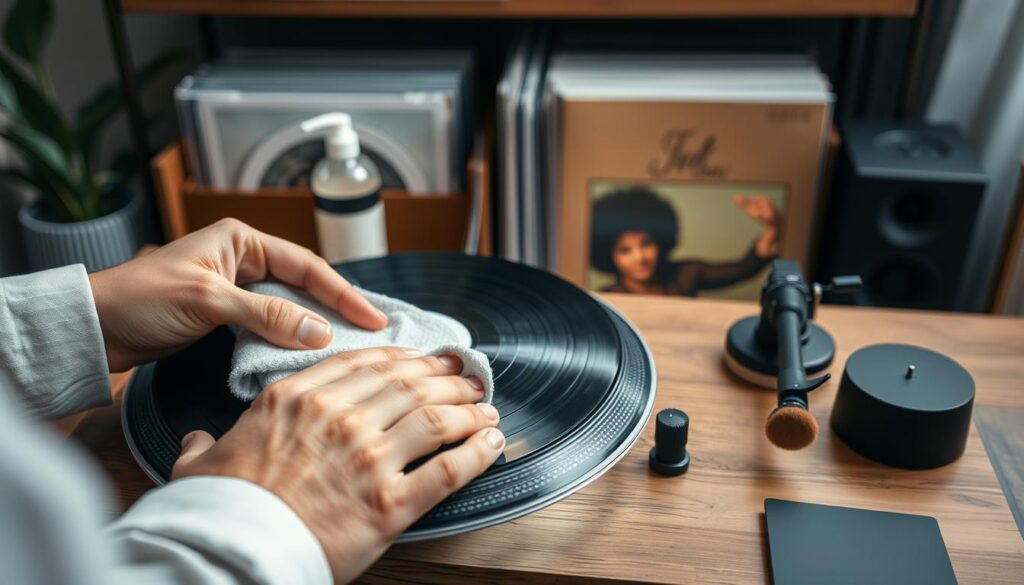
Dust and dirt are the biggest threats to your vinyl. Use a carbon fiber brush before each play to get rid of surface particles. These particles can cause pops and clicks. For a deeper clean, use a record cleaning solution and a microfiber cloth to remove oils and grime.
Always clean your records in a circular motion, following the grooves. This simple step keeps your records looking new. It also helps prevent debris from getting on your needle.
Caring for the Stylus
The stylus is the most delicate part of your turntable. It tracks the grooves, so any dust buildup can harm your sound quality or damage your records. Use a soft stylus brush to gently remove dust from back to front.
It’s also important to keep the stylus aligned right. If your sound is distorted, check that your stylus is clean and properly seated. Replacing a worn-out needle is worth it to protect your records.
Regular Turntable Maintenance
The machine itself also needs care. If you have a belt-driven model, check the belt for signs of wear. A loose belt can cause speed issues that mess up your music’s pitch.
Keep the platter and plinth dust-free with a dry, lint-free cloth. If you have a vintage turntable, check the inside parts for aging signs. These steps help your turntable run smoothly, giving you the sound you love.
Troubleshooting Common Issues
Technical glitches can ruin a good listening session. Even the best turntable can have problems. Knowing how to fix these issues quickly keeps your audio gear working well.
Skipping Records
If your needle jumps, check the tracking force first. An unbalanced tonearm can cause this. Make sure your unit is perfectly level to avoid problems.
Also, clean your stylus regularly. A dirty needle can’t track the grooves right, leading to skipping. For belt drive turntables, check the belt’s fit and if it’s slipping.
Distorted Sound Problems
Distortion can come from a bad cartridge alignment or a worn-out stylus. If the sound is muddy, check your cartridge’s alignment. Proper calibration is key for clear sound.
Humming speakers often mean a loose ground wire. Tightening this usually fixes the problem. This lets you enjoy your record player system without noise.
Power Issues
If your device won’t turn on, check the power cable and outlet. A loose plug is a common problem. Make sure the power switch is on and the cable is good.
For belt drive turntables, check the motor’s power. Slow or uneven spinning might need a belt change or professional help. These steps help keep your turntable in great shape.
Enhancing Your Turntable Experience
If you want to improve your vinyl listening, several upgrades can help a lot. Starting with a basic setup is good, but true fans want to fine-tune their sound. Check out this ultimate guide to turntables and record players for tips on perfecting your system.
Adding External Amplifiers
Many beginners use built-in preamps, but a dedicated external phono stage can boost sound quality. A top-notch phono stage amplifies signals better and cuts down on noise. Getting a separate amplifier means your speakers get a stronger, cleaner signal.
Upgrading Components
Changing your cartridge and stylus is a key way to improve your turntable sound. A high-end cartridge tracks records more accurately, leading to clearer sound and less distortion. Whether you have a direct drive turntable or a belt-driven one, a new stylus will open up new sounds.
Creating a Listening Space
The place where you put your high-end turntable greatly affects sound quality. Placing your gear on a solid, level surface is crucial to avoid sound muddling. Setting up a dedicated listening area without clutter or noise lets you dive deep into music. By improving your room’s acoustics, you can turn your setup into a true audiophile turntable experience.
FAQs About Turntables
We often get questions from people wanting to dive into high-fidelity sound. Knowing your gear well helps you enjoy every song more.
Are Vinyl Records Truly Rare?
Many classic albums are still easy to find, thanks to modern reissues. Even if a vintage turntable can play rare records, most fans find great deals at local stores.
Can I Play Digital Music Through My Setup?
Most record players come with Bluetooth or auxiliary inputs for digital devices. But, a top-notch turntable might need an external receiver to connect to digital formats.
Which Records Should I Buy First?
Begin with albums that really speak to you. Classics from Miles Davis or Fleetwood Mac are great choices. They offer top-notch sound quality for any new collection.
We hope this guide helps you create a system that brings your favorite tunes to life. Enjoy building your library and experiencing the rich sound of vinyl.