
 Zoe Nora
Did you know over 80% of American households now use digital platforms for entertainment? With the move away from traditional cable, the quality of your home setup depends on your hardware. A top-notch network streamer connects your internet to your TV.
Finding the right network streamer can be tough with so many options. We aim to make it easier by showing you the best choices for your viewing habits. The right network streamer ensures a smooth experience, bringing high-quality movies to your living room.
We’ve looked at the latest devices to guide your choice. Whether you want 4K resolution or an easy-to-use interface, our guide has you covered. Let us help you improve your home entertainment system with confidence today.
Key Takeaways
- Understand the essential hardware needed for modern home entertainment.
- Learn how to match device features with your personal viewing habits.
- Discover the top-rated technology currently available in the United States.
- Simplify your shopping process with our expert-led technical advice.
- Ensure your home setup supports high-quality media consumption for years to come.
What is a Network Streamer?
A network streamer connects your internet to your home theater. It links online content to your audio-visual gear. This lets you watch a huge library of digital media on your TV.
Definition and Overview
A network streamer is a special computer for media. It gets data from the cloud and makes it for your TV. For example, the Google TV Streamer (4K) is a top model.
This device is fast and powerful. It makes using apps easy. It turns your TV into a versatile entertainment center.
Key Features of Network Streamers
Modern devices have cool features for better viewing. They focus on high-definition and easy use. Here are the main features of a top network streamer:
- 4K HDR Support: Offers sharp, bright pictures for a movie-like feel.
- Advanced Search: Finds content across platforms with smart tech.
- Customization: Lets you arrange your home screen with your top picks.
To see how basic and advanced models differ, check out this comparison table.
| Feature | Basic Model | Advanced Network Streamer |
|---|---|---|
| Resolution | 1080p HD | 4K HDR |
| Processing Speed | Standard | High-Performance |
| Search Capability | Manual | AI-Powered |
| User Interface | Static | Highly Customizable |
Benefits of Using a Network Streamer
Want to improve your listening and viewing? A dedicated media player is key. Smart TVs have apps, but they can’t match the quality of a standalone device. This ensures your content is delivered with unmatched stability and precision.
Enhanced Audio Quality
Investing in this tech boosts sound quality. These devices use high-quality DACs for better audio processing. Now, we can enjoy high-resolution music with all its details.
Access to Streaming Services
A top-notch media player puts all your subscriptions in one place. No more switching between apps. We can easily find and play our favorite movies and music from one dashboard. This keeps our entertainment smooth and uninterrupted.
Multi-Room Audio Capabilities
Today’s streaming devices make it easy to sync audio across rooms. By linking several units to our network, we create a seamless audio experience. This is great for parties or enjoying music everywhere in the house.
| Feature | Smart TV App | Dedicated Media Player |
|---|---|---|
| Audio Fidelity | Standard | High-Resolution |
| Interface Speed | Variable | Consistent |
| Multi-Room Sync | Limited | Advanced |
| Buffering Issues | Frequent | Minimal |
Types of Network Streamers
The market for a modern streaming device has changed a lot. Now, you can find everything from small sticks to big boxes. Design trends have shifted, moving from simple dongles to more powerful hardware.
For example, the Google TV Streamer (4K) is now as advanced as the Apple TV 4K and Roku Ultra. It focuses on performance, not just being small.
Standalone Network Streamers
Standalone units are for those who want high-performance and reliability. They have more power, making everything run smoothly. They also have more ports, like Ethernet jacks, for a stable connection.
For home theater fans, a dedicated network streamer is the best choice. These devices handle 4K content well, without lag. They are the center of your media library, offering better connectivity than smaller devices.
Integrated System Options
Many modern TVs and audio-visual receivers have built-in streaming. This lets you access your favorite platforms directly from your TV or receiver. It’s great for those who want to cut down on cables and simplify their setup.
But, integrated options might not get updates as often as standalone devices. Still, they offer a seamless experience for casual viewers. You get great sound and video without an extra device.
Smart Speakers with Streaming
Smart speakers are getting more versatile, now supporting video output. They can act as a streaming device in small spaces. They’re perfect for rooms where space is limited and you want to play music and watch videos.
Using a smart speaker as your network streamer brings voice control benefits. It makes managing your media library easy with voice commands. It’s ideal for those who love simplicity and smart home features.
Important Features to Consider
Understanding your device’s core features is key for great audio and video. When looking for a new media player, don’t just look at marketing. Focus on the real technical specs that matter. This way, your device will stay useful for a long time.
Streaming Quality and Formats
The quality of your content depends on your device’s power. Look for a media player that supports 4K HDR for sharp images. Also, check if it supports Dolby Atmos for an amazing sound experience.
Connectivity Options (Wi-Fi, Ethernet, Bluetooth)
Good connectivity is crucial for streaming. Wi-Fi is easy, but an ethernet port gives a stable connection. Devices with USB-C and Bluetooth offer both power and wireless audio ease.
User Interface and Controls
A good user interface makes a big difference. Make sure menus load fast without delay. A well-designed remote or app makes using your media player a breeze.
| Feature Category | Recommended Spec | Benefit |
|---|---|---|
| Video Output | 4K HDR Support | Superior image clarity |
| Network Port | Gigabit Ethernet | Stable high-speed streaming |
| Audio Support | Dolby Atmos | Immersive sound quality |
| Interface | High-speed processor | Smooth menu navigation |
Top Network Streamer Brands to Consider
Choosing a reputable digital media player brand is key for long-term updates and reliable performance. A well-known manufacturer offers consistent support and a stable user experience. If you want to upgrade, consider a high-quality network receiver to enhance your streaming setup.
Brands Known for Quality
Leaders like Google, Roku, and Apple set the standard for digital media players. They focus on user-friendly interfaces for easy content discovery. Some brands have their own stores, while others let you explore various platforms.
Google is great at personalized recommendations. Roku is known for its simple, neutral interface. Apple offers a premium experience that works well with other Apple devices. Each brand provides a unique way to stream high-quality audio and video.
Comparison of Popular Models
When comparing brands, look at how they handle content and search. Some devices are central hubs for all subscriptions, while others push their own services. We’ve made a comparison to help you find the best fit for you.
| Brand | Ecosystem Focus | Search Capability | Best For |
|---|---|---|---|
| Apple | Premium/Closed | Excellent | Apple Users |
| Personalized | Advanced | Smart Home Fans | |
| Roku | Agnostic | Simple | General Users |
Compatibility with Other Devices
A good streaming device connects your digital library to your home theater. It’s all about how well your devices work together. We look for hardware that fits right into your setup.
Integration with Home Theater Systems
Connecting your new device to your sound system is easy. Most use HDMI ARC or eARC for top-notch sound. This seamless connection lets you control everything with one remote, making life easier.
When picking a streaming device, check it supports your speakers’ audio formats. Whether you have surround sound or stereo, it must be compatible. This ensures your audio is perfect and there’s no lag or sync issues.
Smart Home Compatibility
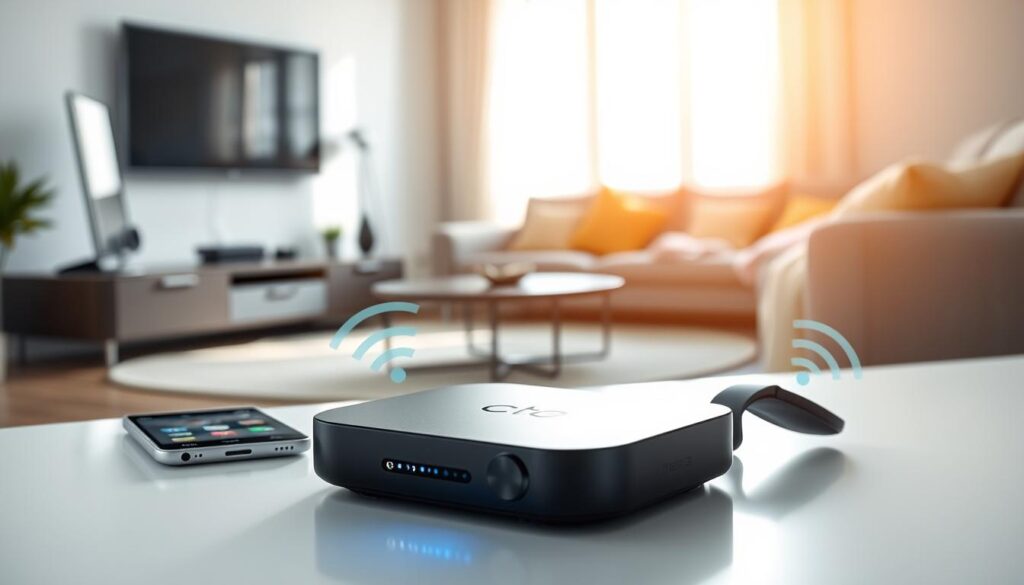
Today’s streaming devices do more than play videos; they manage your smart home. They support Matter and Matter-over-Thread, letting you control lights, cameras, and thermostats from your TV.
This centralizes control, making your streaming device key to your smart home. You can adjust lights or check your camera without leaving the couch. It turns your streaming device into a must-have for your connected home.
Streaming Services Supported by Network Streamers
We think an internet streaming player is only as good as the content it can play. When you buy top-notch audio gear, you want to make sure it works with your favorite services. A device that doesn’t support your go-to platforms can be a big letdown.
Popular Music Streaming Services
Most devices today support big names like Spotify, Tidal, and Qobuz. These services offer high-quality audio that your audiophile-grade equipment can enjoy. If you like a more connected system, many streamers also work with Apple Music and Amazon Music through their apps.
“The future of high-fidelity audio lies in the seamless marriage of hardware performance and cloud-based streaming accessibility.”
But it’s not just about music. Many people use their internet streaming player for live TV and videos too. YouTube TV is a top pick for live TV, with over 100 channels in its basic plan. It’s great for those who want all their entertainment in one place.
Compatibility with Podcasts and Audiobooks
Your device can also handle spoken-word content. Many platforms now work with Audible or Pocket Casts, so you can keep listening wherever you are. This keeps your listening experience uninterrupted, whether you’re at home or out and about.
The table below shows how different services work with a standard internet streaming player:
| Service Category | Primary Examples | Integration Level |
|---|---|---|
| Music Streaming | Tidal, Spotify, Qobuz | High (Native) |
| Live Television | YouTube TV, Hulu Live | Medium (App-based) |
| Podcasts/Audiobooks | Audible, Pocket Casts | Variable |
| Cloud Storage | Dropbox, Google Drive | Limited |
Always check if your internet streaming player supports the codecs your favorite services use. Look on the manufacturer’s website for a list of compatible apps. This way, you’ll have a smooth and fun media experience for a long time.
Setup and Installation Tips
We think setting up your new hardware should be easy from start to finish. When you get a new internet streaming player, you want great sound without hassle. By following a simple plan, you can get your system ready for multi-room streaming in minutes.
Easy Setup Process
Setting up your device starts with connecting it to your network and linking accounts. Most devices offer a plug-and-play setup that guides you through an app. Make sure your Wi-Fi is strong near your player to avoid problems later.
Here’s how to finish your setup:
- Use a good Ethernet cable to connect to your router.
- Download the app from your device’s store.
- Sync your music services and adjust audio settings in the app.
Troubleshooting Common Issues
Even with top-notch gear, you might run into small issues. If you see connectivity drops or app freezes, try restarting your network. A simple reboot of your router and player can fix most problems.
If issues keep happening, look for these common causes:
- Make sure your firmware is current, as updates can fix issues.
- Check that your device and audio hardware are on the same network.
- Clear the app’s cache if you’re seeing crashes or delays.
Following these tips can help you avoid common problems. Being patient during setup means a reliable and great listening experience for years.
Keeping Your Network Streamer Updated
Keeping your digital media player in top shape is more than just cleaning it. The hardware is built to last, but the software needs regular updates. This keeps it running at its best.
Importance of Firmware Updates
Firmware updates are essential for your system’s security and performance. They add new features, speed up the interface, and fix security holes. Without them, your device could be at risk.
By keeping up with updates, your digital media player stays current with streaming protocols. This keeps your music experience smooth and reliable for longer.
How to Update Your Device
Updating your device is usually easy. You can check for updates through the manufacturer’s app or your device’s settings.
- Navigate to the Settings menu on your app or remote.
- Select the System Update or Firmware tab.
- Follow the on-screen prompts to download and install the latest version.
Enabling automatic updates is a good idea if your device allows it. It keeps your system safe without needing you to do anything. This lets you enjoy your music without interruptions.
Price Range for Network Streamers
Choosing a digital media player means finding the right balance between cost and features. Prices vary widely, from simple devices to high-end models. Knowing what you need helps avoid spending on features you won’t use.
Budget-Friendly Options
For beginners, entry-level devices are a great start. They offer basic features like stable Wi-Fi and support for popular music services. You can find a good digital media player for under $150.
These devices may not have fancy internal parts like high-end DACs. But they’re a big step up from standard Bluetooth. They’re ideal for those who want better sound without spending a lot.
High-End Choices
Premium models are for those who want the best sound and build. A top-tier digital media player has advanced features and durable construction. They’re perfect for complex home audio systems.
When thinking about these options, consider your monthly entertainment budget. For example, DirecTV Signature packages cost between $85 and $170 monthly. But a high-end streamer can last for years, making the initial cost worth it.
| Category | Price Range | Best For |
|---|---|---|
| Entry-Level | $50 – $150 | Casual listeners and small rooms |
| Mid-Range | $200 – $600 | Dedicated music enthusiasts |
| High-End | $800+ | Audiophiles and home theater integration |
User Reviews and Recommendations
We think the best way to pick a streaming device is to listen to people who use it daily. Technical specs show what a product can do. But, user feedback tells you how it really works in a home.
Looking at what others say can give you valuable insights. You can avoid issues like remote problems, software bugs, and build quality over time.
Where to Find Genuine User Reviews
To find real feedback, check places where people share their honest thoughts. Look at forums like Audiogon or AVS Forum. There, experts talk about the details of high-end audio.
Also, e-commerce sites with verified purchases are great. Reviews that talk about setup issues or long-term use are very helpful. They give you practical guidance for buying.
“The true test of any high-fidelity component is not how it sounds on day one, but how consistently it performs after a year of daily use in a real home network.”
Top-Rated Models in 2024
Some models are leading this year based on user feedback. They’re known for easy-to-use interfaces and working well with home audio systems.
The table below shows the top choices. They’re liked for their reliability and sound quality.
| Model Name | Primary Strength | User Rating |
|---|---|---|
| Bluesound Node | Software Stability | 4.8/5 |
| WiiM Pro Plus | Value for Money | 4.7/5 |
| Cambridge Audio CXN100 | Audio Fidelity | 4.9/5 |
| Sonos Port | Ecosystem Ease | 4.6/5 |
Picking the right streaming device depends on your needs and budget. We suggest comparing these recommendations with your own needs. This way, you’ll find a device that makes listening enjoyable.
Where to Purchase a Network Streamer
Choosing the right equipment is the first step to better sound. You now know how to pick a media player that suits your listening style and home.
Digital Marketplaces
Amazon and Crutchfield have huge selections of media players. They offer detailed reviews and good prices. You also get easy returns and quick shipping in the US.
Physical Retail Locations
Best Buy stores let you see and touch media players. You can check the build and how it feels before buying. Local experts can also give you advice to help you decide.
Now, you know how to get better sound at home. We hope this guide helps you improve your audio experience today.