
 Zoe Nora
Did you know that nearly 70% of audio clarity is lost because equipment sits on a vibrating desk? Many listeners treat their gear like furniture. But a high-quality speaker stand is a key acoustic tool.
It helps by keeping your hardware away from vibrating surfaces. This stops muddy bass and unwanted vibrations.
Proper placement does more than look good. Using a dedicated studio monitor stand lets you align tweeters with your ears. This small change greatly improves sound quality for your home setup.
We’ll show you how to pick the right support. You’ll learn about height, weight capacity, and material density. These factors ensure your audio system sounds its best. Let us help you improve your listening space with better engineering and smart placement.
Key Takeaways
- Decoupling equipment from desks significantly reduces unwanted vibrations.
- Aligning tweeters to ear level improves high-frequency clarity.
- Material density plays a major role in overall sound stability.
- Weight capacity must match your specific hardware requirements.
- Proper placement minimizes harmful early reflections in your room.
Understanding Speaker Stands and Their Importance
Getting high-quality sound is more than just having good speakers. It’s also about where you place them. A speaker stand is key to connecting your speakers to your room.
What Is a Speaker Stand?
A speaker stand is a special base for your speakers. It lifts them to ear level. This way, sound goes straight to you, not muffled by furniture or floors.
This setup is key for clear sound in any room.
Benefits of Using a Speaker Stand
Using a stand helps avoid sound bouncing off surfaces. This makes your sound clearer and less colored. It’s great for avoiding muddiness, which is common with bass.
Stands keep your speakers stable and sound clean. They’re perfect for any setup, big or small. They help your speakers sound just right, as the maker intended.
Types of Speaker Stands
There are many stands to fit your needs. You can find sturdy metal stands or adjustable mounts for bookshelves. The right stand depends on your room and speakers.
Look for stands that are stable and well-made. They should also help reduce vibrations. The right stand can really improve your home audio.
Factors to Consider When Choosing a Speaker Stand
Choosing the right speaker stand is about finding the right balance. You need to think about the size and strength of the stand. Before buying, check how your room is set up and what your speakers need. The right stand keeps your sound clear and steady.
Height Adjustability
Getting the right listening height is key. You want the tweeters at or near your ear level. An adjustable speaker stand lets you adjust this perfectly, even if your seating changes.
For a studio monitor stand, precision is crucial. Being able to change the height helps you get the best sound. Always measure where you’ll be sitting before setting the height.
Weight Capacity
When it comes to your speakers, safety is essential. Make sure the stand can handle more than your speakers weigh. Choose a heavy-duty speaker stand that’s at least 20% heavier than your speakers.
This extra weight keeps your stand stable and prevents it from tipping. A strong, heavy-duty speaker stand also cuts down on vibrations that can affect sound quality. Always check the stand’s weight limit to protect your investment.
Build Material
The materials used in making your stand matter a lot. You can choose from metal, wood, or acrylic, each with its own benefits. Metal stands are popular because they can be filled with sand to dampen sound.
When picking a studio monitor stand, think about how it will sit on your floor. A solid base stops wobbling, and a good top plate keeps your speakers secure. Here’s a table to help you compare materials.
| Material | Stability | Damping | Best Use |
|---|---|---|---|
| Steel | High | Excellent | Heavy monitors |
| Wood | Medium | Good | Home audio |
| Acrylic | Low | Minimal | Lightweight speakers |
| Aluminum | Medium | Moderate | Portable setups |
Types of Speaker Stands
Looking into different speaker stands helps you find the right one for your home and how you listen to music. The design of your stand affects how your speakers sound in the room.
Floor Stands
A floor speaker stand is great for the best sound at ear level. These stands give your speakers a solid base, away from floor or furniture vibrations.
Use metal spikes on hard floors to keep the stand steady. On hardwood, rubber feet prevent scratches and keep sound clear.
Shelf Stands
Shelf or desktop stands are good for small spaces. They fit on furniture, making sure your speakers face you right.
They’re perfect for bookshelf speakers, improving sound quality. By lifting the speaker, you cut down on unwanted sound and improve overall sound accuracy.
Wall-Mounted Stands
Wall-mounted stands are great for keeping your floor clear. They offer a solid, out-of-the-way spot for your speakers.
Though less flexible than a collapsible speaker stand, they add a clean look. For easy, on-the-go setups, a tripod speaker stand is the top choice, easy to set up and adjust.
| Stand Type | Best For | Portability |
|---|---|---|
| Floor | Living Rooms | Low |
| Shelf | Desks/Tables | Medium |
| Tripod | Events | High |
Best Practices for Setting Up Your Speaker Stand
Setting up your speakers right is key for clear sound. It’s not just about the speakers themselves but how they fit into your room. By paying attention to these details, you can make your music sound better.
Ideal Placement for Sound Quality
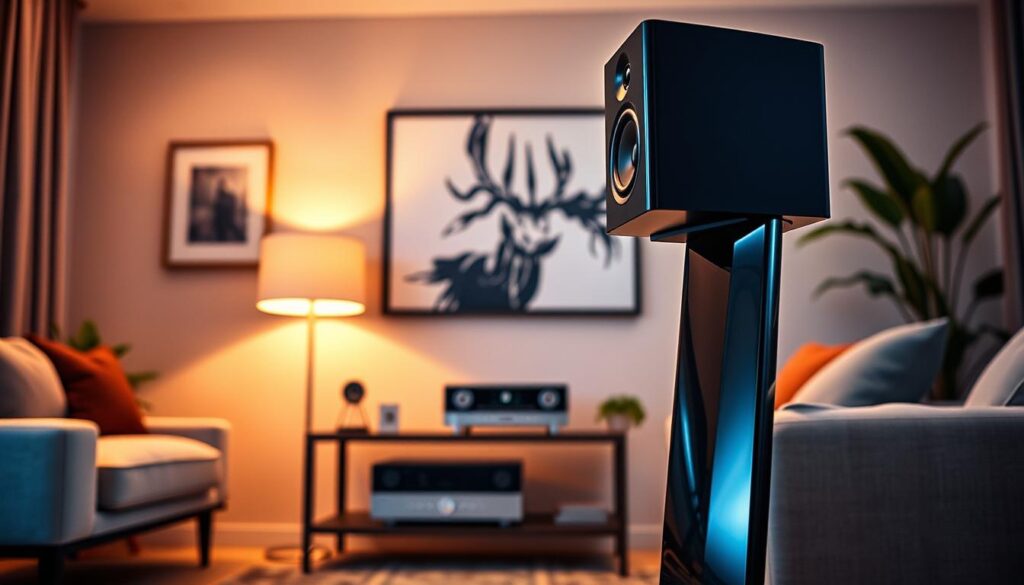
Think about how your speakers spread sound. Tweeters need to be angled towards you for better sound. This makes the music clearer and more detailed.
Also, keep your speakers away from walls. A floor speaker stand should be at least two feet from walls. This stops sound from getting muddled and keeps your music clean.
Avoiding Common Mistakes
Don’t put speakers near corners. Corners can make bass sound too loud and boomy. Move your speakers out to get a balanced sound.
Also, check your floor. If it’s thick carpet, use spiked feet on your stands. This keeps them steady and prevents shaking during loud music.
Ensuring Stability and Security
Stability is crucial for safety and sound quality. Make sure a tripod speaker stand is fully extended and locked. This keeps your sound focused and clear.
Using a speaker stand with cable management keeps things tidy. It also stops wires from causing your speakers to fall. Use the table below to set up your speakers right.
| Feature | Floor Stand | Tripod Stand | Shelf Stand |
|---|---|---|---|
| Stability | High | Medium | Low |
| Adjustability | Fixed | High | Low |
| Best Use | Living Room | Events/Studio | Desktop |
| Cable Routing | Internal | External | None |
Popular Brands of Speaker Stands
Choosing the right speaker stand is more than just picking a brand. We need to look at the technical details like weight capacity and stability. These ensure your speakers sound their best.
Bose Speaker Stands
Bose is famous for its audio systems, and their stands match these perfectly. They have integrated mounting hardware for a secure fit. If you have Bose speakers, their stands will give your setup a clean look.
Sanus Speaker Stands
Sanus is known for durable and versatile stands. They have a heavy-duty speaker stand for big speakers. Their stands also have cable management and adjustable feet for uneven floors.
- Adjustable height for precise tweeter alignment.
- Heavy-duty steel construction for reduced resonance.
- Integrated cable routing to keep your setup tidy.
Atlantic Technology Stands
Atlantic Technology focuses on sound quality. Their stands use advanced materials for better sound. They help prevent resonance for clear sound.
| Brand | Primary Focus | Best For |
|---|---|---|
| Bose | Proprietary Fit | Bose Ecosystem |
| Sanus | Versatility | Heavy-duty speaker stand needs |
| Atlantic Tech | Acoustic Performance | Audiophile setups |
When picking a brand, check the top-plate dimensions fit your speakers. The right speaker stand looks good and works well for years.
Comparing Different Speaker Stand Prices
Understanding the price of audio support is key. The cost often shows the quality and function of the stand. It’s crucial to look for stability and safe load support, not just the cheapest option.
Budget-Friendly Options
For those on a tight budget, entry-level stands are a good choice. A tripod speaker stand is common here. It’s light and easy to move, perfect for small speakers or temporary setups.
Mid-Range Choices
In the mid-range, quality and looks improve. These stands have better materials and cable management. An adjustable speaker stand is popular here for its flexibility.
Premium Stands
Premium stands are for those who want the best. They use heavy materials to reduce resonance. If you need a collapsible speaker stand for shows, these high-end options are durable and stylish.
| Feature Category | Budget | Mid-Range | Premium |
|---|---|---|---|
| Build Material | Plastic/Light Steel | Solid Steel | Cast Iron/Hardwood |
| Stability | Basic | High | Professional Grade |
| Cable Management | None | Included | Integrated/Hidden |
| Adjustability | Manual Pins | Clutch/Locking | Precision Hydraulic |
How to Match a Speaker Stand to Your Speakers
Finding the right speaker stand is all about the tech specs and looks. A good stand keeps your sound clear and fits well in your home.
Size Compatibility
First, check your speakers’ size. A studio monitor stand should match your monitor’s size to avoid wobbling. Always look at the maker’s advice for the best fit.
For universal stands, compare the stand’s top plate to your speaker’s base. Also, make sure the rated load capacity of the stand is right. Too heavy can damage the stand and harm your speakers.
Aesthetic Considerations
The look of your speaker stand for home theater matters too. Choose a stand that matches your speakers’ style. Think about the finish, like matte black or wood, to match your room.
The size of the stand is key for a good look. A big stand might not fit with small speakers, and a small one might not hold up to big speakers. Thoughtful placement of hardware can also make your setup look better.
The aim is to make the stand look like it’s part of the speaker. By choosing the right proportions and finishes, your setup will look and sound great.
Accessories for Your Speaker Stand
Improving your audio setup is more than just picking the right hardware. Adding specific accessories can greatly enhance both sound quality and the look of your home theater or music room.
These small additions can make a big difference. They help protect our furniture and keep wires tidy. The right tools are key.
Speaker Isolation Pads
Isolation pads are crucial for clear sound. They act as a buffer between the speaker and the speaker stand. This helps prevent unwanted vibrations.
These pads absorb vibrations, improving bass and mid-range sound. Many also use rubber feet for extra grip, keeping speakers stable at high volumes.
Cable Management Solutions
A messy room can ruin the look of a high-end audio system. A speaker stand with cable management keeps wires hidden. This makes the room look better.
“Stability and organization are the silent partners of high-fidelity sound; when you remove the clutter, you allow the music to take center stage.”
Hidden cables are safer and protect wires from damage. A speaker stand with cable management also makes cleaning easier. It keeps our living space tidy.
| Accessory Type | Primary Benefit | Best For |
|---|---|---|
| Isolation Pads | Vibration Reduction | Audiophiles |
| Cable Sleeves | Visual Clutter | Minimalist Rooms |
| Rubber Feet | Surface Protection | Stability |
| Cable Clips | Safety/Organization | General Use |
Investing in these accessories makes our speaker stand both functional and attractive. Organizing and isolating our gear improves sound quality and gives us peace of mind.
Where to Buy Speaker Stands
Looking for a floor speaker stand or a mount? Knowing where to shop is key. Think about what you need before buying. The right store can help a lot.
Online Retailers
Online stores have a huge selection. You can compare prices and read reviews. This helps find the perfect speaker stand for home theater for your room.
But, be careful online. Check the load ratings, size, and floor type before buying. Also, make sure you can return it if it’s not right.
Local Electronics Stores
Local stores let you see the quality in person. For a collapsible speaker stand, you can check how it works. This is better than just looking at pictures.
Local stores mean you can take it home the same day. They might not have as much, but getting advice from a pro is worth it for your home theater.
| Feature | Online Retailers | Local Stores |
|---|---|---|
| Selection | Extensive | Limited |
| Convenience | High (Home Delivery) | Immediate Pickup |
| Inspection | Photos/Specs Only | Hands-on Testing |
| Expert Advice | Customer Reviews | In-person Staff |
When buying, check the folded size of any collapsible speaker stand. This ensures it fits in your space. These steps help your floor speaker stand last for years.
Maintaining Your Speaker Stand
Regular upkeep is key to a long-lasting and stable audio experience. By spending a few minutes on your equipment, you keep your sound system secure and looking professional for years.
Cleaning Tips
When cleaning a heavy-duty speaker stand, choose the right materials for the surface. For painted metal or acrylic, a soft, dry microfiber cloth works well to remove dust without scratching.
Wooden stands need a wood-safe polish to keep them shiny. But, avoid using too much water near sensitive parts, as it can cause rust or warping.
Don’t forget the rubber feet, as they collect debris that can affect grip. For a speaker stand with cable management, use compressed air to clean out dust from the channels.
Regular Inspections
Regular checks are crucial to keep your setup safe. We suggest checking all fasteners and bolts every few months to make sure they’re tight.
Look at the rubber or felt pads for wear or compression. If they’re thin, your stand might lose stability or scratch your floor, so replace them if needed.
Check the frame for any damage or stress fractures. If you have a heavy-duty speaker stand, make sure the base is level to avoid tipping.
Lastly, check the wiring paths on your speaker stand with cable management. Look for frayed or pinched cables, as they can be a safety hazard and affect your audio quality.
Customizing Your Speaker Stand
Your home audio system shows off your style and taste. By customizing your speaker stand, you can mix great sound with your home’s look.
Creative Finishing Touches
You can use matte or metallic paints to match your room. A good finish keeps the metal or wood safe from damage. Try non-toxic sprays to keep your space safe while you check out 5 home audio setup upgrades for portable bluetooth.
Balancing Aesthetics and Stability
Adding weight to your speaker stand can make sound clearer. But, don’t fill hollow parts too much. This can make it tip over.
Use clips or sleeves to hide cables for a neat look. Labels or custom decals can add a personal touch without hurting sound quality. Taking good care of your gear makes it a highlight of your home for years.