
 Zoe Nora
Did you know the average American spends over seven hours a day on digital media? This huge increase in screen time means we all want better sound quality. We think your daily listening should be impeccable.
Many people face issues like background noise or hardware problems that mess up their music. Our aim is to guide you through these challenges for a crystal clear sound at home. We focus on distortion-free audio to make sure every note sounds just right.
You don’t need a big budget or engineering skills for top-notch sound. We’ll show you how to improve your setup and cut out unwanted noise. This guide will teach you how to enjoy distortion-free listening for a better experience.
Key Takeaways
- Digital media consumption is at an all-time high, making audio quality essential.
- High-fidelity sound improves your overall media experience at home.
- Simple adjustments can lead to a professional-grade listening environment.
- Eliminating interference is the primary step toward achieving clarity.
- We offer practical solutions to help you optimize your current audio hardware.
Understanding Distortion-free Audio
To truly appreciate high-quality audio, we must first identify common barriers that degrade our listening experience. Many listeners struggle to define why their audio setup sounds less than perfect. They often overlook subtle technical flaws in their hardware and software chains.
Achieving a distortion-free output requires us to look beyond the speakers. We must examine the entire signal path. By identifying these hidden bottlenecks, we ensure the final sound remains as close to the original recording as possible.
What is Audio Distortion?
In technical terms, audio distortion is the unwanted alteration of a sound signal. It degrades the integrity of the original recording. This phenomenon occurs when the waveform is physically or digitally reshaped, resulting in a loss of fidelity.
Windows audio stack often introduces its own artifacts, such as clipping or limiter-induced noise. These software-based issues can mask the nuances of a track. They prevent a crystal clear listening experience, even with high-end hardware.
Importance of Clear Sound Quality
Maintaining an impeccable sound profile is essential for both casual listeners and audio professionals. When audio is free from interference, the listener can perceive the depth, texture, and spatial placement intended by the artist.
We believe that clear audio is not just a luxury but a necessity for accurate sound reproduction. The following table highlights the key differences between compromised signals and high-fidelity output:
| Feature | Distorted Audio | Distortion-free Audio |
|---|---|---|
| Signal Integrity | Altered/Clipped | Preserved/Original |
| Clarity | Muffled/Harsh | Crystal clear |
| Dynamic Range | Compressed | Impeccable |
| Listening Fatigue | High | Low |
By prioritizing distortion-free standards, we create an environment where every note resonates with precision. Striving for this level of quality transforms how we interact with our favorite media. It makes every session feel truly immersive.
Benefits of Distortion-free Audio
Choosing a distortion-free signal brings a new level of sound clarity. It removes unwanted sounds, so we hear exactly what the creator meant. This focus on quality is key for both top-notch entertainment and daily work.
Enhanced Listening Experience
For those who love music and media, the switch to crystal clear sound is huge. Getting rid of signal noise lets us hear music’s hidden details. This minimal distortion opens up a wider sound range and deeper soundstages.
Whether it’s high-res music or movies, clear audio makes everything more real. It cuts down on listener tiredness, which is good for our ears over time. This is important for keeping our hearing sharp, as studies on sound and brain processing show.
Improved Communication and Clarity
Clear audio is also crucial for work, like video calls and remote team meetings. We need distortion-free sound to make sure every word is clear. This makes teamwork more efficient by cutting down on the effort needed to understand each other.
Choosing gear with minimal distortion helps us look professional online. It keeps our message clear, without technical issues getting in the way. Clean sound is essential in today’s digital world.
Key Technologies in Distortion-free Audio
To get clear audio, we need to know the tech behind it. We use special engineering to keep sounds distortion-free and true to the recording.
Digital Signal Processing (DSP)
Digital Signal Processing, or DSP, is the heart of today’s audio gear. It controls the sound output, keeping it high quality on any device.
DSP uses smart algorithms to fix errors on the fly. This keeps the sound minimal distortion even at loud volumes.
“The beauty of digital signal processing lies in its ability to transform raw data into a rich, immersive soundscape that feels both natural and precise.”
High-Resolution Audio Formats
The audio file format also matters a lot for sound quality. High-resolution formats add depth and detail for a immersive experience.
These formats hold more data than regular files, keeping the original sound’s subtleties. With the right hardware, they ensure distortion-free and clear sound.
- Precision: DSP makes real-time adjustments for clean audio.
- Detail: High-resolution formats capture the full sound spectrum.
- Consistency: Both techs work together for high quality sound.
Knowing these tools is key for better audio. By focusing on these technologies, we get minimal distortion and hear music as the artists meant it.
Choosing the Right Equipment
We think that getting high quality gear is key for a great listening setup. Whether you’re a gamer or just love music, your equipment should match your needs. The right tools mean your investment will last and perform well over time.
Headphones and Earbuds
When picking personal audio, look for models that sound clear even at loud volumes. Choose devices with top-notch drivers and strong parts to block out noise. Comfort is key, but the tech inside is what keeps the sound clean.
Try different fits to get a good seal, as it greatly affects sound quality. High-end wired options are often the best, but wireless tech has gotten much better. Always check the frequency range to make sure it covers all your media.
Speakers and Home Audio Systems
Setting up a home system needs careful thought about how parts work together in your space. A high quality amp and matching speakers give a clean sound. Look for systems that let you upgrade parts, so your investment grows with you.
Speakers that are well-powered avoid distortion from clipping. Take your time to find the right sensitivity for your speakers and receiver. This way, every sound is clear and sharp.
Tips for Achieving Distortion-free Sound
Getting great sound is more than just having top-notch gear. It’s about how you set up and manage your equipment. Paying attention to your signal chain details ensures distortion-free sound every time.
Proper Installation and Setup
Start by making sure your connections are right. Keep power and audio cables apart to avoid noise from electromagnetic interference. Good cable management is key for keeping your signal strong.
Then, turn off any extra processing in your devices. Many gadgets have built-in sound tweaks that can mess with your audio. By disabling these, you let the pure, high quality sound flow through your system.
Regular Maintenance
For long-term distortion-free sound, be consistent. Regularly check your connections to make sure they’re tight and clean. Dust and dirt in ports can cause signal loss.
Don’t forget about your software. Keep your drivers and firmware up to date. This simple step helps your hardware and devices work together smoothly, avoiding audio problems.
| Maintenance Task | Frequency | Benefit |
|---|---|---|
| Check Cable Connections | Monthly | Prevents signal noise |
| Clean Input Ports | Quarterly | Ensures stable contact |
| Update Firmware | Bi-annually | Optimizes performance |
| Dust Equipment Vents | Bi-annually | Prevents overheating |
The Role of Room Acoustics
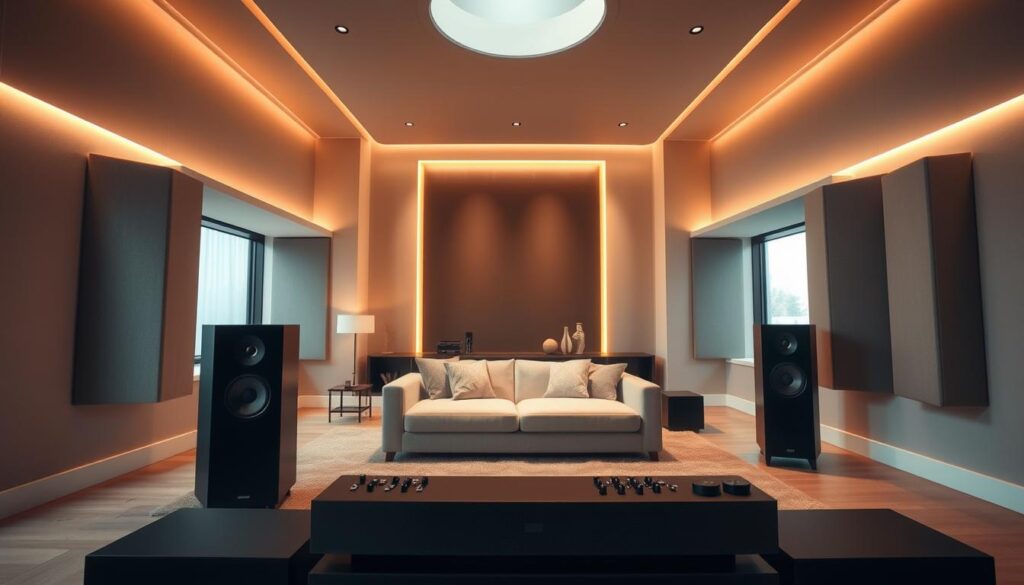
Getting a undistorted sound is more than just having top-notch speakers. It also needs a well-controlled room. Even the priciest audio gear can sound bad if your room’s acoustics aren’t right. Your listening space is like an extra part of your audio system, shaping the sound you hear.
Understanding Sound Reflection
Sound waves act like light when they hit hard surfaces like glass or wood floors. They bounce back into the room, causing reflections that mess with the sound from your speakers. This can lead to standing waves that hide the clarity of your audio, making it hard to get a distortion-free sound.
When these reflections mix, they make your soundstage cluttered and details get lost. It’s key to manage these interactions for an undistorted sound. By cutting down on unwanted echoes, you let your audio’s true sound come through without any interference.
Acoustic Treatments for Your Space
To control your space, use acoustic treatments to absorb or scatter sound. Acoustic panels are great for cutting down on high-frequency reflections. Bass traps help with low-end buildup in corners. Together, they keep your soundstage wide and clear.
By adding these simple changes, you make sure your distortion-free gear works its best. A well-treated room turns your listening area into a pro-grade space. Controlling your environment is the last step to perfecting your audio.
Popular Brands Offering Distortion-free Solutions
When we look for the best sound, we turn to top brands. They offer undistorted sound that’s reliable. These brands spend a lot on research to keep every sound clear and crisp.
Looking to upgrade your home theater or get a wireless subwoofer for better bass? Brand reputation is key. We trust these brands for their commitment to distortion-free sound.
Bose and Their Innovation
Bose is known for its quest for perfect sound. They use digital signal processing to keep sound clean, even at high volumes. This focus on innovation gives them an undistorted sound that many find amazing.
Their engineers work hard to reduce mechanical interference. This focus on distortion-free sound sets a high standard for electronics. Their products are known for being both compact and powerful.
Sennheiser’s Commitment to Quality
Sennheiser is loved by pros for its precise audio gear. Their studio experience shines in their consumer products. They aim for transparency, making audio as close to the original as possible.
They use top-notch components to cut out unwanted noise. This commitment to undistorted sound makes them a favorite among audiophiles. Their consistent quality shows their long-time expertise in sound engineering.
Distortion-free Audio in Professional Settings
Professional settings show us the best of distortion-free audio. These places set the highest standards for sound quality. By studying these environments, we can improve our own audio experiences at home.
Applications in Recording Studios
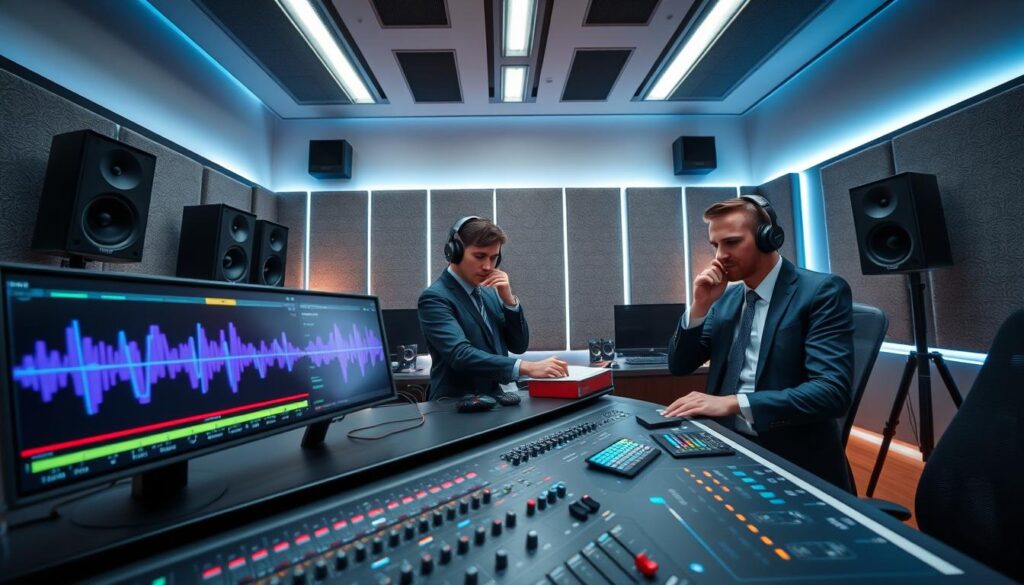
In recording studios, engineers aim for a pristine sound path. They want to catch every detail of a performance. Any unwanted sound can mess up the final mix.
They use top-notch preamps and converters. These tools handle loud signals without adding noise or color. This focus on clear sound lets producers fine-tune their work later.
With distortion-free audio, the final product keeps its natural sound and depth. This is what makes professional recordings stand out from home recordings.
Importance in Live Sound Events
Live sound events face special challenges. Large venues need sound systems that keep the sound clear, even at high volumes. If the system distorts, the audience’s experience drops, leading to tired ears and unclear sound.
Sound engineers pick equipment that can handle the pressure. They use advanced signal processing to keep the audio distortion-free during the show. This ensures every note is heard clearly, from the back to the front of the venue.
Future Trends in Distortion-free Audio
The future of audio engineering is all about clear sound. We’re seeing big changes in how tech works together to give us pristine sound. These changes make sure every sound is just as the creator meant it to be.
Advancements in Technology
Modern tech is breaking past old limits to offer distortion-free sound in small devices. Artificial intelligence is key, filtering out noise and fixing errors as it happens. This is big in cars, where systems make the ride feel like a studio.
We’re expecting these smart systems to become common in gadgets soon. They use machine learning to adjust to any setting. This dynamic adjustment keeps your sound clear, no matter what’s around you.
The Rise of Immersive Sound Experiences
Immersive audio is changing how we enjoy digital content. With spatial audio, you feel like you’re right in the action. Whether gaming or watching movies, the aim is to create a pristine sound that feels real.
This move towards immersive sound needs tech that can handle complex sounds without losing quality. As these experiences grow, the focus is on distortion-free sound to avoid listener fatigue. The table below shows where these trends are making a big difference.
| Technology Trend | Primary Benefit | Application Area |
|---|---|---|
| AI-Driven Filtering | Pristine Clarity | Automotive & Mobile |
| Spatial Audio | Immersive Depth | Gaming & Cinema |
| Adaptive Hardware | Distortion-free Output | Home & Professional |
Conclusion: Embrace Distortion-free Audio
To get high-fidelity sound, pay attention to every detail in your audio chain. Set your Windows audio output to 24 bits to avoid dither artifacts. This simple step keeps your audio clear and accurate.
Achieving Sonic Perfection
Clear resolution is key for high-quality audio. By using the tips from this guide, you can change how you enjoy music and media. Check out the many software and hardware options to improve your listening space.
Your Path to Better Audio
Start with quality gear from brands like Bose or Sennheiser. Try different setups to find what suits you best. Dive into a distortion-free future and enjoy the sound you’ve always wanted.