
 Zoe Nora
Did you know humans can feel vibrations as low as 20 Hz? This feeling turns a regular song into a truly immersive experience. Getting the right low-end sound is key to top-notch audio at home.
We think everyone should have a high-quality listening space. By learning sound engineering basics, you can make your music sound deep and clear. Our guide will show you how to adjust your settings for the best Deep bass on your gear.
Whether you just enjoy music or are a serious audiophile, tweaking your setup matters a lot. Let’s dive into how to fine-tune your system for that professional Deep bass you’ve been dreaming of.
Key Takeaways
- Understand the physical impact of low-frequency sound on your listening experience.
- Learn how to balance audio frequencies for a professional, high-fidelity sound.
- Discover the importance of equipment calibration for optimal performance.
- Transform your home setup into an immersive audio environment.
- Follow our expert steps to achieve the perfect low-end profile.
Understanding Deep Bass and Its Importance
Deep bass is more than just a rumble; it’s the heartbeat of your favorite tracks. When we listen to music, we engage with a complex spectrum of sound. Our ears process this in unique ways. To build a high-quality audio system, we must first understand the technical nature of the low frequency range.
What is Deep Bass?
Human hearing spans from 20 Hz to 20,000 Hz. While the whole range is important, the bass section adds weight and impact. We divide these sounds into specific segments:
- Sub-bass: 20 Hz to 60 Hz, often felt more than heard.
- Bass range: 60 Hz to 250 Hz, which carries the primary rhythm and warmth.
Understanding these divisions helps us use our equipment effectively. By focusing on the 60-250 Hz spectrum, we can ensure our bass response is tight and punchy, not loose or overwhelming.
How Deep Bass Affects Audio Quality
The quality of your listening experience depends on how well your system handles these lower registers. A balanced bass response acts as the foundation for the rest of the audio mix. When managed correctly, it adds a sense of depth and warmth that makes music feel alive.
Poor management of the low frequency output often leads to a muddy sound. This happens when the bass bleeds into the mid-range, causing individual instruments to blur together. By keeping these frequencies distinct, we allow the vocals and higher-pitched instruments to shine without losing the power of the rhythm section.
Essential Equipment for Enhancing Deep Bass
To get a powerful sound, you need the right gear. Software can tweak your audio, but it can’t replace good hardware. The right equipment lets your system handle bass with clarity and precision.
Choosing the Right Speakers
Your main speakers are the heart of your audio system. Look for floor-standing models with large woofers for better mid-to-low frequencies. Quality matters when picking drivers, as they need to be stiff to avoid vibrations.
The Role of Subwoofers
Even top speakers can’t reach the deepest bass notes. A subwoofer fills in those missing low-end frequencies, adding physical impact. It lets your main speakers focus on clearer mids and highs.
When picking a subwoofer, think about your room size and the unit’s power. A bigger driver moves more air, giving you a deeper, more immersive sound. This is key for anyone wanting enhanced bass in their setup.
Amplifiers and Their Impact
A good bass amplifier gives your speakers and subwoofers the power they need without distortion. Without enough power, bass can sound muddy or weak. A strong amplifier keeps your system in control, ensuring tight and accurate sound.
Choose an amplifier with enough power for sudden changes in music. This extra power stops clipping, which can harm your audio. Pairing a strong bass amplifier with your speakers sets up a solid base for enhanced bass that stays clean at any volume.
Adjusting Equalizer Settings for Deep Bass
Mastering your equalizer settings is key to a deep sound. It’s tempting to max out the sliders for bass enhancement. But, this can make the sound muddy and unpleasant. Start with a flat, neutral setting to clean the sound before making changes.
Basic Equalizer Setup
Make adjustments in small steps of 2-3 dB. This careful approach lets you see how each change affects the music. Learn more about what equalizer settings are best by trying these small changes.
Steer clear of the V-curve, which boosts highs and lows but cuts the mids. This can make the sound unnatural and tiring. Instead, focus on small boosts in the 60Hz to 100Hz range for warmth and depth.
Fine-tuning for Different Genres
Different music styles need different bass settings. Electronic music might need a tight, punchy bass. Jazz or acoustic tracks might need a more natural low-end.
| Genre | Frequency Range | Adjustment Goal |
|---|---|---|
| Hip-Hop | 60Hz – 80Hz | Deep, resonant impact |
| Rock | 100Hz – 150Hz | Tight, defined kick |
| Classical | 40Hz – 60Hz | Subtle, warm foundation |
Common Mistakes to Avoid
One big mistake is making the sound booming and overwhelming. If the bass sounds like a constant rumble, you’ve boosted it too much. This can make other sounds like guitars or vocals unclear.
Listen for distortion, which means your settings are too high. If the sound becomes harsh or rattles, reduce your settings. This way, your booming audio stays powerful without losing the original sound’s quality.
Room Acoustics and Bass Performance
Your listening environment is key in every audio setup. Even the most expensive gear can fail if the room doesn’t support it. The physical space affects how sound waves travel and reach our ears.
Understanding these dynamics is crucial for a great listening experience. Before tweaking your equalizer, check how your room’s layout impacts your bass response.
How Room Size Influences Bass
Room size greatly affects low frequencies. Small rooms often have standing waves, causing uneven bass response. This can make bass sound boomy or muddy.
Very large rooms might struggle to hold low-end energy, leading to thin or weak bass. Finding the right balance means identifying these nodes. Moving speakers or seating can often solve these issues without extra gear.
Acoustic Treatments for Improved Sound
Acoustic treatments are key for enhanced bass that’s tight and controlled. Bass traps in corners absorb excess energy, preventing distortion. They help refine the low-end, making sound more precise and powerful.
Room materials also affect sound. Hard surfaces reflect sound, while soft ones absorb it. Balancing these ensures your enhanced bass is clear and impactful.
| Room Feature | Impact on Bass | Recommended Action |
|---|---|---|
| Small Room | Boomy resonance | Add bass traps |
| Hard Surfaces | Harsh reflections | Use soft furnishings |
| Large Room | Weak low-end | Optimize speaker placement |
| Parallel Walls | Standing waves | Install acoustic panels |
Top Music Genres That Benefit from Deep Bass
To get the best deep bass experience, know what your music needs. Each style has its own sound range. By matching your bass response to your favorite music, you’ll enjoy it more.
Hip-Hop and R&B
Hip-Hop and R&B use lots of sub-bass. This makes you feel the music in your chest. Your system must handle these low sounds well to avoid distortion.
Electronic Dance Music (EDM)
EDM is all about high-energy beats and bass. It needs quick and precise bass response to match the fast beats. The right balance makes the bass drive the rhythm.
Rock and Metal
Rock and Metal focus on mid-bass. This gives the rhythm guitar and kick drum their unique sound. A balanced approach is key to avoid muddying the mix.
| Genre | Primary Focus | Bass Characteristic |
|---|---|---|
| Hip-Hop | Sub-Bass | Thunderous bass |
| EDM | Sub-Bass/Mid-Bass | High-impact energy |
| Rock/Metal | Mid-Bass | Tight, punchy definition |
Streaming Services and Their Bass Settings
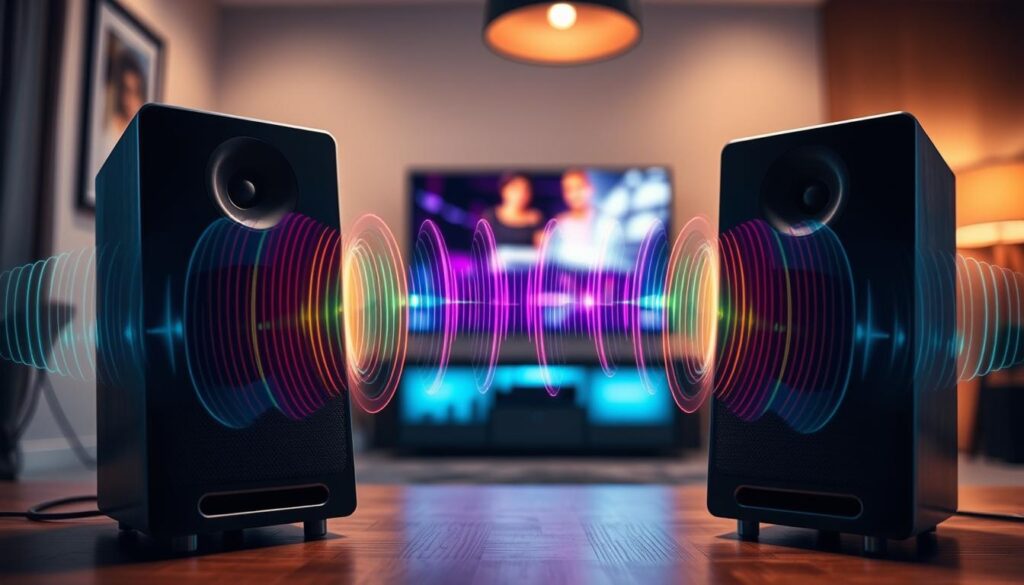
Getting the perfect bass sound starts with your streaming service settings. Many people stick with the default settings. But, today’s platforms offer tools to enhance bass without needing fancy hardware.
By adjusting these digital settings, you can fine-tune the sound for your speakers or headphones.
Comparing Sound Quality Across Platforms
Not all streaming services offer the same sound quality. High-resolution services like Tidal and Qobuz have lossless files. These files keep the original recording’s quality, making them great for any bass amplifier.
On the other hand, services like Spotify use compressed formats. This can lead to lost detail in the bass. While convenient, they might need more equalization to get the bass right. Knowing these differences helps choose the best service for your audio needs.
| Service | Max Quality | Built-in EQ | Best For |
|---|---|---|---|
| Tidal | Lossless/Hi-Res | Limited | Audiophiles |
| Spotify | Compressed | Yes | Casual Listening |
| Apple Music | Lossless | System-wide | Apple Ecosystem |
Customizing Settings in Popular Apps
Most apps have an equalizer to boost certain frequencies. You can find these settings in the app’s settings tab. Adjusting the lower sliders can give you an enhanced bass experience.
If the app’s equalizer isn’t enough, consider using an external bass amplifier or a dedicated DAC. These devices can improve the digital signal better than a phone or laptop. Combining software tweaks with quality hardware ensures every beat is clear and precise.
Don’t forget to turn off “Audio Normalization” to keep the full dynamic range of your music. Normalization can reduce the volume of the loudest parts, affecting the bass. Keeping this setting off lets your system perform at its best.
Practical Tips for Enjoying Deep Bass at Home
Getting great sound at home is more than just buying expensive gear. How you set up your room is key. A few simple changes can make your sound quality better without buying new stuff.
Positioning Your Speakers for Optimal Sound
The right spot for your subwoofer is crucial for sound quality. Avoid corners, as they can make the sound muddy. Corners might seem to make the sound louder, but it’s not clear or clean.
Move your speakers a bit away from walls. This lets sound waves spread out better. You’ll get cleaner, more defined sound. When your speakers are in the right spot, your music will sound deeper and more accurate.
Using Sound Dampening Techniques
Vibrations can ruin your sound, and this is true for thunderous bass. If your bass amplifier is on a hard floor or hollow shelf, it might rattle. Use isolation pads or stands to keep it steady.
These methods keep your bass amplifier stable during loud music. They protect the sound quality from room problems. With these tips, you’ll enjoy powerful, immersive sound that’s tight and controlled.
Troubleshooting Common Deep Bass Issues
Even the best equipment needs tweaking to avoid playback problems. We aim for perfect sound, but technical issues can get in the way. Spotting these problems early keeps our audio setup in top shape.
Overwhelming Bass Distortion
Distortion happens when we push our gear too hard. If you hear a muddy or rattling sound, it’s a sign of trouble. This leads to booming audio that’s not crisp.
To fix this, check your gain staging. Too high an input signal can cause clipping. Here’s how to improve your sound:
- Lower the master gain on your amplifier to reduce strain.
- Adjust your equalizer to cut frequencies below 30Hz if your speakers cannot handle them.
- Ensure your subwoofer crossover is set correctly to prevent overlapping signals.
Inconsistent Bass Levels
Inconsistent sound often comes from room acoustics or wrong calibration. If deep bass sounds great in one spot but not in another, standing waves are likely the cause. This makes it hard to get balanced sound everywhere.
To fix this, we need to manage our room better. By smoothing out sound peaks and valleys, we get a more even experience. Try these changes to stabilize your sound:
- Reposition your subwoofer to avoid corners that amplify unwanted resonance.
- Use acoustic panels to absorb excess energy that creates booming audio.
- Apply room correction software to calibrate your deep bass output automatically.
By making these adjustments, you can bring back clarity and depth to your system. Achieving consistent deep bass requires balancing hardware settings with our listening space. Proper bass enhancement lets every song sound as the artist meant it to.
Recommended Deep Bass Tracks to Test Your Setup
Testing your audio gear needs high-quality recordings. These should push the limits of low frequency reproduction. We recommend using specific tracks to see if your system delivers a powerful sound without distortion.
Classic Tracks That Highlight Bass
Try listening to “Billie Jean” by Michael Jackson or “Another One Bites the Dust” by Queen. These songs show if your speakers produce a tight, controlled response. Or if you get muddy, booming audio that messes up the mix.
Recent Tracks with Incredible Low-End Depth
Modern tracks like “Limit to Your Love” by James Blake or “Bad Guy” by Billie Eilish have deep sub-bass layers. These tracks test even the best subwoofers. They help you see if your equipment can handle a thunderous bass performance at different volume levels.
If your setup can’t catch these details, check out our 12 home audio setup fixes to better your listening space. Proper calibration makes every beat hit with precision. Try these songs to get the best sound in your home theater or music room.