
 Zoe Nora
Did you know the human ear loves sounds between 2,000 and 5,000 Hz? This range is where voices and most music instruments live. If your system can’t play these sounds right, you miss the heart of your favorite songs.
Creating a top-notch sound system needs careful planning. Full-range speakers are easy but can’t mix deep bass with clear vocals well. Adding a midrange driver helps your system shine. It connects your subwoofers and tweeters for a smooth sound.
Upgrading your home theater or car stereo? The right car speaker driver depends on your goals. Think about your power, space, and what you love to listen to. The right choice can turn a basic sound into an amazing experience.
Key Takeaways
- Focusing on the vocal frequency range significantly improves audio clarity.
- Dedicated components provide better balance than standard full-range speakers.
- System complexity dictates the type of hardware you should select.
- Installation space remains a critical factor for successful integration.
- Matching power output ensures your audio remains distortion-free.
What Is a Midrange Driver?
A midrange driver is a key part of a top-notch sound system. It’s designed to play the main sounds in music, like voices and instruments. This speaker driver is crucial for a clear and true sound.
It works between the woofer and the tweeter. The woofer deals with the low sounds, and the tweeter handles the high ones. The midrange driver focuses on the middle sounds.
Definition and Functionality
A audio driver is a special part of a speaker system. It’s the middle ground between the woofer and the tweeter. This is where it shines, capturing the essence of music.
It’s all about the middle sounds that make music real and clear. This way, the system avoids the mess that happens when one driver tries to do it all.
Importance in Audio Systems
Using a midrange driver makes the sound clearer and more focused. A single driver can make music sound muddy or squashed. But with a midrange, you get a better soundstage.
It lets you hear the small details in music, like a singer’s breath or a piano’s texture. Here’s how different drivers work together for a balanced sound:
| Component | Frequency Focus | Primary Role |
|---|---|---|
| Woofer | 20Hz – 500Hz | Deep bass and impact |
| Midrange Driver | 500Hz – 4kHz | Vocals and instruments |
| Tweeter | 4kHz – 20kHz | Crisp highs and detail |
Getting a good audio driver is key for great music. Without it, your favorite songs might not sound as good. They could lose the warmth and clarity that makes them special.
Benefits of Upgrading Your Midrange Driver
When we want to boost our home or car audio, the audio driver is key. Stock systems often use generic parts that can’t handle the middle frequencies well. A specialized component can greatly improve our listening experience.
Improved Sound Clarity
A top-notch audio driver makes our music sound more real. It brings out the details in vocals, guitars, and pianos. This is because it can focus on the midrange without struggling with bass or treble.
This focus leads to less distortion and better precision. Instruments sound more textured, like the artists are right there with us.
Enhanced Dynamic Range
Upgrading to a better audio driver also boosts the dynamic range. This means we can enjoy louder music without losing the small details. Instruments sound clearer, even in busy musical parts.
With better dynamic range, every sound is crisp and defined. This makes the music feel more alive and immersive. Our audio system becomes powerful and balanced at all volumes.
Key Features to Consider
Building a top-notch sound system means looking at key metrics for the best performance. Choosing the right midrange driver is crucial. It’s not just about looks; it’s about how it affects the sound we hear every day.
Frequency Range
The frequency range shows which audio parts our sound system driver can handle well. We must match this range with our crossover settings for a seamless sound transition.
Choosing a driver that misses the crossover point can lead to sound gaps. Always check that the frequency range fits with our other audio components for a balanced sound.
Sensitivity Rating
Sensitivity shows how well a driver turns electrical power into sound. A higher rating means the midrange driver will play louder with less power from our amplifier.
For a low-wattage amplifier, high sensitivity is key to keep the volume up. But, with a powerful system, we can look at drivers with lower sensitivity for better sound quality.
Power Handling
Power handling shows the max energy a sound system driver can handle without damage. We must make sure our amplifier’s output doesn’t go over the driver’s power limit.
It’s smart to find a balance between peak and RMS power ratings. This keeps our system safe during loud parts and clear at softer volumes.
| Feature | Why It Matters | Impact on Performance |
|---|---|---|
| Frequency Range | Crossover alignment | Prevents sound gaps |
| Sensitivity | Amplifier efficiency | Determines volume output |
| Power Handling | System safety | Prevents hardware damage |
| Impedance | Electrical load | Ensures amplifier stability |
We should never rely on just one spec. We need to look at impedance, response, and crossover slopes together. This ensures our midrange driver works its best in our setup.
Types of Midrange Drivers
The design of your speaker system greatly affects how you hear music. Upgrading your component speakers means understanding your midrange woofer is key. This is crucial for getting the sound you want.
Cone Drivers
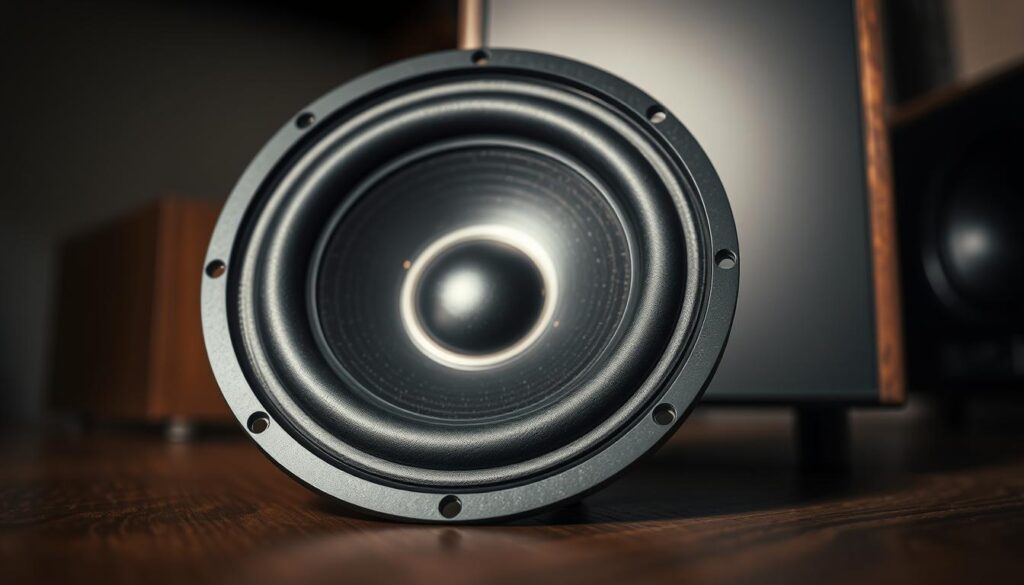
Cone drivers are popular in cars for their sound quality and versatility. They come in different materials, each affecting how they sound:
- Paper: It’s great for a warm, natural sound.
- Polypropylene: It’s durable and keeps sound smooth.
- Aluminum: It’s stiff, which helps keep sound clear at loud volumes.
When picking a midrange woofer, think about whether you want warmth or clear detail in your music.
Horn Drivers
Horn designs aim for high efficiency and loud sound. They use a flared shape to send sound straight to you.
“Efficiency is the hallmark of horn design, allowing for dynamic sound reproduction that remains clear even at high volume levels.”
They’re good at fighting road noise but need to be placed just right for balanced sound.
Ribbon Drivers
Ribbon drivers offer clear sound and fast response. They use a thin metal strip in a magnetic field. They’re loved by those who want the best in sound detail.
| Driver Type | Efficiency | Sound Character |
|---|---|---|
| Cone | Moderate | Warm and Natural |
| Horn | High | Dynamic and Direct |
| Ribbon | Low to Moderate | Detailed and Precise |
Choosing the right midrange woofer depends on your listening preferences. Whether you like the smooth sound of a cone or the sharp detail of a ribbon, picking the right one is key to perfect sound.
Popular Brands and Models
When building a high-fidelity system, we look at brands based on their technical performance, not just their reputation. We avoid relying on marketing claims. Instead, we focus on published measurements and construction quality to find the perfect sound driver for our listening goals.
Focal
Focal is known for its advanced materials and precision engineering. Their drivers use special cone materials like flax or aramid fibers. These materials offer a great balance of rigidity and damping. Focal drivers are perfect for systems where transparency and detail are key.
JBL
JBL comes from the professional audio world and brings quality to the consumer market. Their drivers are known for their power handling and sensitivity. This makes them a great choice for louder environments. With a JBL sound driver, we expect consistent performance and high output across a wide range of frequencies.
Morel
Morel is all about hand-crafted quality and musical accuracy. Their designs use large voice coils and unique magnets to reduce distortion at high volumes. For those who want a natural and smooth sound, Morel is a sophisticated choice for high-end custom builds.
| Brand | Primary Strength | Best Use Case |
|---|---|---|
| Focal | Material Innovation | Critical Listening |
| JBL | High Power Handling | Dynamic Audio Systems |
| Morel | Sonic Accuracy | Audiophile Setups |
The best choice depends on how the sound driver fits into your system. Consider these factors when making your final selection:
- Installation dimensions: Make sure the mounting depth fits your vehicle or enclosure.
- System compatibility: Check that the impedance matches your amplifier output.
- Frequency response: Verify the unit covers the range your current tweeters or woofers miss.
How to Match Midrange Drivers with Other Components
Building a custom audio setup means matching your drivers well. Just picking expensive parts isn’t enough. You need to make sure every sound system driver works well with others. This balance comes from knowing how each part works together.
Compatibility with Tweeters
The connection between your midrange and tweeter is key. You must pick a crossover point that keeps the tweeter safe. If the crossover is too low, the tweeter might sound harsh or get damaged.
Here’s what to check when pairing these parts:
- The tweeter’s resonant frequency should be well below the chosen crossover point.
- The midrange driver’s off-axis response should remain smooth near the crossover region.
- Phase alignment must be maintained to ensure a seamless transition between frequencies.
Matching with Woofer Performance
Pairing an audio equipment driver with a woofer is about balance. You want the midrange and woofer to sound even. If they don’t, you might need to adjust levels or use special settings.
Many think matching impedance is all you need. But it’s the crossover network that really matters. Focus on these important factors:
- Sensitivity: Keep the decibel output even across the crossover.
- Directivity: Match the sound dispersion to create a wide soundstage.
- Power Handling: Make sure the midrange can handle the heat from your amplifier and woofer.
By carefully checking these points, you can make a great-sounding system. A well-matched system sounds cleaner and more immersive than a mix of mismatched, expensive parts.
Installation Tips for Midrange Drivers
The quality of your sound system’s installation can make a big difference. Where you place your speaker driver affects how sound waves move in your space. It’s important to mount it right and wire it securely to avoid problems.
DIY vs Professional Installation
Choosing between DIY and a pro install depends on your comfort with tech. If you like tinkering with your car, installing a car speaker driver can be fun. Just remember to get the polarity right and set up your crossover points correctly.
On the other hand, pros have the tools and know-how for tricky installs. They can make sure your speaker driver sounds great in your car. For complex setups, like custom enclosures, their skills are unbeatable.
Tools You May Need
For a clean install, you’ll need the right tools. You’ll need basic tools like screwdrivers, wire strippers, and crimpers. For custom installs, like putting a car speaker driver in a custom door panel, you might also need a heat gun and a drill.
| Feature | DIY Installation | Professional Installation |
|---|---|---|
| Cost | Low (Labor is free) | Higher (Labor fees apply) |
| Time Required | High (Learning curve) | Low (Expert efficiency) |
| Equipment | Basic hand tools | Advanced tuning gear |
| Risk Level | Moderate | Minimal |
Common Mistakes to Avoid
Even the best midrange woofer can fail if not installed right. People often pick based on price or brand, not what their system needs. Looking good over checking how it sounds is a big mistake.
Overlooking Tweeter Compatibility
Not matching the crossover points between your midrange woofer and tweeters is a big error. This can cause gaps in sound or harsh sounds at the transition. Always check that your crossover settings are right to get a clear sound.
Ignoring Power Ratings
Many think more power is always better. But pairing a sensitive driver with too much power can damage it. Also, ignoring how it affects your amp can cause it to overheat.
Here’s a table to show how mistakes can hurt your system’s sound and life.
| Common Error | Primary Impact | Recommended Fix |
|---|---|---|
| Mismatched Crossover | Frequency gaps | Check spec sheets |
| Excessive Power | Voice coil damage | Match RMS ratings |
| Incorrect Polarity | Phase cancellation | Verify wiring (+/-) |
| Poor Enclosure | Muddy bass response | Use sealed volumes |
Maintaining Your Midrange Driver
Keeping your speakers in top shape is key to enjoying clear sound for years. A little time each day for care can prevent dust, loose connections, and wear. This care keeps your audio driver sounding great. Regular upkeep is crucial for your audio system upgrade to perform well.
Regular Cleaning
Dust and dirt are big enemies of audio equipment drivers. They can settle on the cone or surround, changing how the speaker sounds. Use a soft, dry microfiber cloth to clean the driver gently.
Stay away from liquid cleaners or harsh chemicals. They can harm the driver’s materials or the glue holding it together. For tough dust, compressed air at a safe distance works well. Be gentle to avoid damage.
Performance Checks
Do more than just clean your speakers. Check them visually for damage or loose wires. Also, make sure they’re working in phase to avoid bad sound.
Listen to your speakers regularly to catch problems early. Look out for rattles, harsh sounds, or weak volume. If you find a big issue, you might need to get it checked by a pro. Use tools like a multimeter or signal generator to test your audio driver.
If your tests show big problems, it might be time for a repair or a new driver. Regular checks keep your sound experience consistently immersive and clear.
Conclusion: Making Your Final Decision
Building a top-notch audio system starts with knowing what you want to hear. Choosing the right parts changes how you enjoy music every day.
Prioritizing Your Personal Taste
Your ears are the best guide when picking a new midrange driver. Some like the warm sound of Focal, while others prefer JBL’s sharpness. Try out different setups to find the sound that fits your music tastes.
Managing Your Financial Plan
Good audio gear is available at all price levels. Set a budget before shopping to avoid spending too much. Morel offers great value for those seeking high quality without a high cost.
Don’t rush when choosing your gear. The right part will bring joy to your music space for years. If you’re unsure, ask local audio experts for help.