
 Zoe Nora
Did you know that nearly 70% of modern audio fans now care about how their rooms look as much as sound quality? You can have a clean living space and great sound at the same time. In-wall home speakers let you make any room sound like a pro studio without the mess of big speakers.
These systems have a special perk. They cut down on wall echoes, making the sound clearer and more immersive. Many people ask, do in-wall in-ceiling speakers sound as good as regular speakers? We say yes, if you set them up right.
Our guide helps you pick the best speakers for your space. We’ll show you how to test them, check if they work with your devices, and check for distortion. By testing them for a week, we make sure you get consistent, cinema-like audio quality.
Key Takeaways
- Modern audio setups prioritize both high-fidelity sound and minimalist interior design.
- Strategic placement of these units helps reduce unwanted wall reflections for better clarity.
- Proper installation techniques are essential to bridge the performance gap with traditional cabinets.
- Our testing methodology includes device compatibility and long-term distortion analysis.
- Choosing the right equipment allows for a professional soundstage without occupying floor space.
What Are In-wall Home Speakers?
Modern audio technology lets us add high-fidelity sound to our homes. We can ditch big speakers and get a clean, simple look. This fits any home design.
Definition and Overview
Built-in wall speakers are audio parts hidden in the wall. They don’t stick out like old speakers do. This makes your room look neat and simple.
These speakers are great for keeping your space clean while still enjoying good sound. They’re perfect for a home theater or just some tunes in the kitchen. They give you a seamless sound experience.
Key Features
In-wall home speakers have special parts that work together. Each one has a top-notch driver, a strong frame, and a grille that matches your wall. This makes them almost invisible.
They’re installed with a strong mount that holds them tight in the wall. This keeps the sound clear and stops any shaking. You can pick one speaker for background music or many for a movie theater feel.
These built-in wall speakers are hidden, making your home look fancy and sound amazing. Choosing the right in-wall home speakers means your home stays stylish and sounds great.
Benefits of In-wall Home Speakers
High-end home audio setups often go unseen. Choosing an in-wall audio system removes the clutter of traditional speakers. This lets you enjoy top-notch sound while keeping your space open and clean.
Space-saving Design
This tech is great for saving space. Drivers are mounted in your walls, so you don’t need big stands or cabinets. This is really helpful for small places or modern homes where space is key.
These systems work well for many setups. You can have a home theater or a multi-zone music system. They offer seamless integration for a full surround sound experience without blocking your way or messing up your furniture.
Enhanced Aesthetics
Hidden home speakers also improve your home’s look. They have paintable grilles that match your walls, making them almost invisible. This lets your home’s design shine, not your speakers.
We think a great space should feel, not look, good. With these hidden speakers, your home stays stylish and professional. They work just as well as visible speakers, keeping your home looking great and sounding amazing.
Sound Quality Considerations
Choosing flush mount speakers means more than just looking at specs. Your room’s setup greatly affects how you hear music. For tips on improving your space, check out this guide to achieving the best sound.
Frequency Response
Frequency response shows what sounds a speaker can play, in Hertz. For example, the Mission M-MI781A can play sounds from 63–20 kHz. But, specs don’t always match real-life sound because of room materials and furniture.
Many flush mount speakers have adjustable tweeters for better high sounds. If your room is very echoey, you might need to tone down the highs. Also, adding a subwoofer is key for deep sounds that regular speakers can’t handle.
Power Handling Capacity
Power handling shows how much power a speaker can take from your amp. It’s crucial to match your amp’s power to the speaker’s needs to avoid damage. This ensures your sound stays clear and consistent, even when it’s loud.
Think about your room’s size when picking speakers. Bigger rooms need more power to fill the space well. Here’s a table to help you see how different specs affect your system.
| Feature | Impact on Sound | Recommendation |
|---|---|---|
| Frequency Range | Depth and Clarity | Look for 60Hz-20kHz or wider |
| Power Handling | Volume Threshold | Match to amplifier RMS |
| Impedance | System Stability | 8 Ohms is standard for most amps |
| Tweeter Adjustment | High-end Detail | Essential for reflective rooms |
The best flush mount speakers blend tech with your taste. By matching your amp and thinking about your room, you can get top-notch sound at home.
Types of In-wall Home Speakers
Knowing the different types of audio hardware is key to a top-notch in-wall sound system. Each type has its own benefits, depending on your room and sound goals.
Passive vs. Active Speakers
Passive speakers need an outside amp or receiver to work. They get their power through speaker wire. This lets you change your amp later without affecting the speakers.
Active speakers have their own amp built in. This makes setup easier by not needing a big receiver. But, they need a power source near the wall.
Architectural vs. Traditional Models
Architectural speakers are made to fit into your home’s design. They look clean but can have sound issues because of the open space in walls.
Using a back box helps fix these sound problems. It encloses the speaker, improving sound quality. This makes your in-wall sound system sound like traditional speakers.
“The integration of a back box transforms an architectural speaker from a simple background noise source into a high-fidelity instrument capable of true soundstage depth.”
| Feature | Passive Speakers | Active Speakers |
|---|---|---|
| Power Source | External Receiver | Internal Amplifier |
| Installation | Requires Wiring | Requires Power & Signal |
| Flexibility | High Upgrade Path | All-in-One Convenience |
Choosing the right hardware is crucial for a clear in-wall sound system. Whether you want something easy to use or flexible, knowing the differences is the first step to great sound.
Speaker Placement Strategies
Placing your speakers right can turn any room into a sound paradise. When setting up your audio, think about how wall-mounted speakers fit into the room.
Ideal Locations for Installation
For top sound, mount your main speakers at ear level when sitting. This ensures high sounds hit your ears straight, without bouncing off things.
For a balanced sound, place your left and right wall-mounted speakers the same distance from where you sit. If you’re setting up a surround system, put the center channel above or below your screen. This keeps dialogue clear and tied to the action.
Don’t put your speakers too near corners or hard spots. These can cause sound to bounce back in ways that mess up the clarity. Keeping a little space from corners helps keep your sound clear.
Room Acoustics Impact
Every room is different, based on its size and what it’s made of. Big rooms need more power to fill them, while small ones might echo too much if speakers aren’t placed right.
Hard surfaces like wood floors or glass windows can make sound harsh. Adding soft things like rugs or curtains near your wall-mounted speakers can help. This simple change can make your sound warmer and deeper.
Top Brands of In-wall Home Speakers
Starting your journey to better sound means learning about top audio brands. When you look for hidden home speakers, you’ll see brands with their own ways of making sound. Each brand has its own approach to meet different tastes.
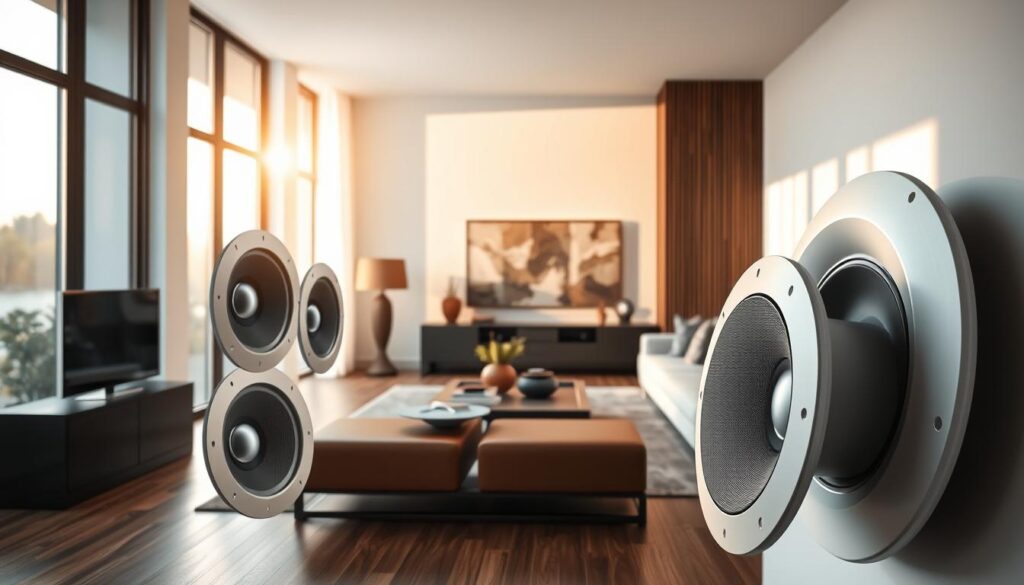
Klipsch: Premium Performance
Klipsch is known for its horn-loaded technology. This tech makes their in-wall home speakers sound powerful and clear. They’re built to give you a concert-like sound in your living room, even with less power.
Polk Audio: Affordable Quality
Polk Audio offers a wide range of speakers, from budget-friendly to high-end. They make hidden home speakers that fit any room without costing too much. Their speakers are known for their tonal matching, creating a unified sound in your home.
MartinLogan: Luxurious Sound
MartinLogan is for those who want the clearest sound and style. They use their electrostatic tech in in-wall home speakers. These speakers offer a luxurious, high-end experience that’s also discreet.
When picking a brand, think about a few key things:
- Driver Technology: See how each brand handles high-frequency sound.
- Installation Depth: Make sure the speaker fits your wall.
- Warranty Coverage: Choose brands with good warranties.
- Tonal Matching: Make sure the speakers match your current setup.
By looking at these points, you can pick a system that meets your needs. Whether you go for Klipsch’s power, Polk’s value, or MartinLogan’s finesse, you’ll get top-notch sound.
Best In-wall Home Speakers for Budget Buyers
Many people think you need to spend a lot to get good sound. But, you can get a professional sound in your living room with the right recessed speakers. These speakers focus on sound quality, not fancy looks. This way, you get great value for your money.
Value Picks Under $200
When looking for affordable audio, check if the price is for one or two speakers. Many recessed speakers are sold singly, which can surprise you if you want a surround sound system. Always compare prices online, as deals change often.
Choose entry-level models from well-known brands for solid build quality. Even at lower prices, you can find speakers that sound clear and balanced. Make sure the speaker works with your amplifier to avoid sound issues.
Features to Look For
To make your money count, focus on technical features, not just brand names or looks. A well-made speaker lasts longer and sounds better in any room. Here are key features to look for:
- Dedicated Tweeter: A pivoting or adjustable tweeter helps direct high sounds to you.
- Paintable Grille: This lets you match the recessed speakers to your wall color for a clean look.
- Moisture Resistance: If you’re putting them in a kitchen or bathroom, this is crucial for lasting quality.
- Secure Mounting Hardware: Good dog-leg mounting systems make installation easy and keep the speaker in place.
By focusing on these key features, you get a reliable and great-sounding system. Investing in these features means you can enjoy top-notch sound without spending too much.
Premium In-wall Home Speakers
Looking to improve our home theater? We often choose high-end audio that fits our homes perfectly. Custom wall speakers give us top-notch sound without the bulk. They’re perfect for those who want uncompromising clarity and a full sound experience.
High-End Picks for Audiophiles
Audiophiles seek out gear that supports formats like Auro 3D and IMAX Enhanced. These systems offer a cinematic feel at home. With top components, every sound is stunningly accurate.
The Polk Vanishing 255C-RT is a top pick for performance and looks. It has advanced bass venting for deep sound. Its paintable grille keeps it hidden while the sound is bold and dynamic.
Unique Features of Luxury Models
Luxury speakers stand out with their quality and tech. Look for adjustable tweeters for better sound control. This is key for balanced sound in any room.
Many custom wall speakers have magnetic grilles that blend with the wall. This design cuts down on sound loss. Below, we compare standard and luxury in-wall speakers.
| Feature | Standard Models | Premium Luxury Models |
|---|---|---|
| Tweeter Design | Fixed position | Adjustable/Aimable |
| Grille Style | Visible frame | Magnetic/Invisible |
| Bass Technology | Basic porting | Advanced PowerPort/Venting |
| Format Support | Stereo/Surround | Auro 3D/IMAX Enhanced |
Premium systems offer a big upgrade to our home entertainment. Look for models with consistent sound across all channels. Investing in quality means creating an exceptional acoustic environment.
Installation Tips for In-wall Speakers
Getting top-notch sound at home starts with a good in-wall home speaker installation. It’s a rewarding task but needs careful attention. This ensures your walls stay safe and your sound quality is perfect.
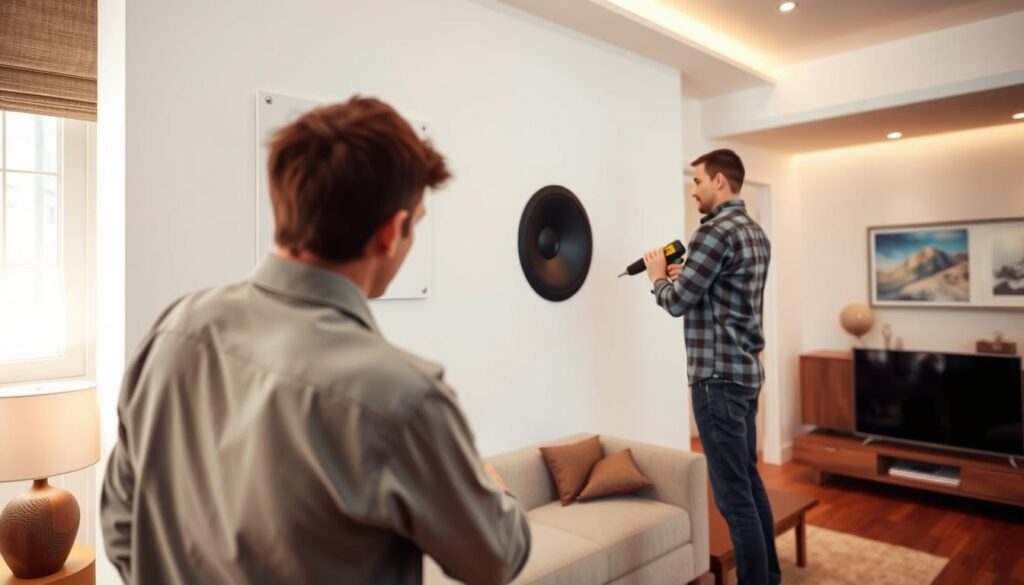
DIY vs. Professional Installation
Choosing to do it yourself depends on your comfort with home projects. If you know your way around electrical systems and drywall, DIY might work for you. But if you face tough structural issues, thick insulation, or a complex setup, a pro is better.
“The quality of your sound is only as good as the precision of your installation.”
Experts have the skills to tackle tricky wiring and sound dampening. If you’re unsure about cutting into your walls, it’s safer to get a pro. This avoids expensive errors.
Tools Required for Installation
To do a clean in-wall home speaker installation, you need the right tools. The right gear makes sure your speakers fit well and look good in your walls.
Here are the key tools for most jobs:
- Stud finder to find safe spots to mount.
- Drywall saw for cutting the template right.
- Wire strippers for neat cable connections.
- Measuring tape and pencil for marking accurately.
- Screwdriver set for fixing the brackets in place.
Some speakers, like the Focal 300 IW6, have easy tool-free mounts. These make the job easier by letting you secure the speaker without a drill or screwdriver. Always check your walls and sound before finishing to get the clear, immersive audio you want.
Wiring Options for In-wall Speakers
Setting up your audio system means choosing between wired and wireless options. Each has its own benefits, depending on your home and sound quality needs. Think about how these choices affect installation and your system’s long-term sound quality.
In-wall Rated Speaker Wire
For a wired setup, picking the right in-wall speaker wiring is key for safety and quality. Always go for cables with a UL-listed rating, like CL2 or CL3. These ensure the cable is fire-resistant and safe for use behind drywall.
Plan your cable routes carefully to avoid electrical line interference. Keep speaker cables at least six inches from high-voltage lines to avoid hum. Labeling both ends of your wires will save you time when connecting them.
Wireless Speaker Systems
Wireless in-wall speakers are great for rooms where cables are hard to run. They need a power source nearby but offer the advantage of no long wire runs. Make sure your home network can handle high-quality audio streaming without drops.
Wireless systems might have latency issues, which can be a problem with video and audio syncing. Look for systems with dedicated transmitters to reduce delay. Always check the power needs of your equipment to ensure your outlets can handle it.
| Feature | Wired Connection | Wireless System |
|---|---|---|
| Reliability | High (Constant) | Moderate (Network Dependent) |
| Installation | Complex (Requires Routing) | Simple (Power Only) |
| Latency | Zero | Minimal to Noticeable |
| Maintenance | Low | Requires Firmware Updates |
Maintaining Your In-wall Speakers
Regular care for your speakers helps avoid common problems. By following simple steps for in-wall speaker maintenance, your system will keep playing clear audio. This care protects your investment and keeps your home theater sounding great.
Routine Cleaning Tips
Keeping your speakers clean is easy with a regular routine. Use a soft, dry microfiber cloth to dust the grilles. This prevents debris from muddling the sound.
- Don’t use liquid cleaners or wet cloths, as excess moisture can harm internal parts.
- Check the visible trim for any signs of looseness or gaps from wall vibrations.
- Make sure all external connections are tight without needing to remove the speaker.
Troubleshooting Common Issues
Even with good care, technical issues can pop up. Effective in-wall audio troubleshooting begins with identifying the problem. This helps avoid unnecessary hardware changes.
If sound quality drops or distorts, check your amplifier settings first. Often, issues come from loose wiring or an overloaded amplifier, not a speaker defect.
Here are common fixes for typical problems:
- Channel Imbalance: Adjust your receiver’s balance settings to ensure both speakers get equal power.
- Weak Bass: Make sure speaker wires are not reversed, as this can cause phase cancellation.
- Bluetooth Connectivity: If using a wireless adapter, check that it’s not blocked by furniture or metal objects.
Always test with a different audio source if you suspect a problem. This simple step helps figure out if the issue is with your device or the speakers.
Conclusion: Choosing the Right In-wall Speakers
Changing your living space needs a mix of looks and sound quality. Our in-wall home speaker buying guide shows you the trade-offs. You can now pick the best speakers for your room and listening needs.
Balancing Performance and Aesthetics
Your choice depends on what matters more to you: saving space or getting deep bass. Brands like Klipsch and MartinLogan have different sounds for different tastes. Think about your skill level when picking between passive or active systems.
Getting the wiring and placement right is key for top-notch sound. Use this guide to make sure your speakers meet your expectations. Your home theater or music room will look great and sound amazing for years.