
 Zoe Nora
Did you know over 70% of modern home studios now use integrated audio solutions? This change shows a growing need for simplicity without losing high-quality sound. Finding the right audio gear can be tough, but the right choice makes all the difference.
Active powered speakers are a great mix of amplification and sound engineering. They have the amplifier inside the cabinet, so you don’t need big external receivers. This makes sure the sound path is clean and efficient.
Whether you’re mixing tracks or listening to your favorite records, these systems offer a premium audio experience. We’ve put together this guide to help you find models that are easy to use, affordable, and connect well. Let’s see how these compact speakers can change your listening space today.
Key Takeaways
- Integrated amplification removes the need for external receivers.
- Modern designs prioritize both professional accuracy and home aesthetics.
- Proper placement significantly enhances your overall listening clarity.
- Connectivity options vary, so check your source compatibility first.
- Investing in these systems saves space while maintaining sonic integrity.
Understanding Active Powered Speakers
More and more people are choosing active powered speakers for their ease and sound quality. These systems change how we set up audio at home and work. They do away with the need for big external equipment.
What are Active Powered Speakers?
These units are versatile audio equipment that work as a single unit. Unlike passive speakers, they don’t need a separate receiver or amplifier to play sound. They have everything needed inside the speaker itself.
This makes them perfect for those who want great sound without extra cables and heavy amps. They’re great for both home offices and professional studios, offering a simple setup.
How Do They Work?
The secret is the built-in amplifier that powers the speakers directly. This ensures the speakers work at their best and use energy efficiently.
Many also have wireless connectivity, letting you stream music from your phone or computer. This means no messy wiring and a clear, high-quality sound.
Benefits of Using Active Powered Speakers
Using these speakers has many benefits for your listening space. Below, we compare them to traditional setups.
| Feature | Active Speakers | Passive Speakers |
|---|---|---|
| Amplification | Built-in amplifier | External amplifier required |
| Setup Complexity | Plug and play | Requires wiring and matching |
| Connectivity | Wireless connectivity options | Wired only |
| Space Usage | Compact and efficient | Requires extra shelf space |
These speakers are also loved for their portability and ease of use. They let you enjoy top-notch audio without needing to be a sound engineering expert.
Key Features to Consider
Starting your journey to better sound means looking at key features. These features are what make modern audio great. Whether you’re setting up a home studio or upgrading your living room, knowing these details is crucial.
Size and Portability
The size of your speakers is very important. Compact desktop models are great for small offices. Larger bookshelf units offer the depth needed for immersive listening.
Think about the space you have before choosing a speaker size. Larger drivers need more room to sound their best. Also, consider how easy the speakers are to move if you need to.
Even the smallest speakers need to be placed right to sound their best. Proper placement is key, no matter the size.
Connectivity Options
Today’s audio systems offer many ways to connect your devices. Wired inputs are best for pros and turntables. But, wireless connectivity is popular for casual use. Many love Bluetooth speakers for streaming music from phones.
It’s important to have a variety of input options. Look for systems with optical, RCA, and USB ports. This makes setting up your system easy and convenient.
Sound Quality Factors
Getting high-quality sound relies on the speakers’ internal parts. A built-in amplifier is a big plus. It’s tuned to match the drivers, giving clean power and less distortion.
Active systems often beat passive ones because of this. They offer better efficiency and clarity.
When checking out speakers, look at these common types:
| Speaker Type | Primary Use | Connectivity | Setup Difficulty |
|---|---|---|---|
| Desktop Monitors | Home Office | Wired/USB | Low |
| Bookshelf Speakers | Living Room | Wired/Bluetooth | Medium |
| Portable Units | Travel/Outdoor | Bluetooth | Very Low |
| Studio Monitors | Professional Audio | XLR/TRS | High |
Focus on these key features to find a system that works well and is easy to set up. Whether you want wireless connectivity or a built-in amplifier, the right choice will improve your listening experience. Remember, even the best Bluetooth speakers need the right placement for high-quality sound.
Top Active Powered Speakers for Home Use
Upgrading your home sound system is a great investment for your daily entertainment. Finding the right active powered speakers is more than just looking at specs. It’s about matching your listening goals with your living space’s acoustics.
Best Rated Options
For a premium audio experience, high-end models offer unmatched clarity and depth. If you want immersive sound without external amplifiers, look at advanced all-in-one units. The Cambridge Audio Evo One, priced at $1,799, is a top choice for those who want more functionality and style.
Investing in these systems means you’re getting superior engineering that brings your music to life. Check out more expert insights on the best powered speakers to see how they compare to others.
Budget-Friendly Picks
You don’t have to spend a lot to enjoy high-quality sound at home. Many compact options work well for smaller rooms or desktops. They often come with wireless connectivity, making them great Bluetooth speakers for daily use.
Here are some affordable options that offer great value:
- Ruark Audio MR1 MK3 ($599): Ideal for those who need a small footprint without losing audio quality.
- Cambridge Audio L/R S ($549): A reliable choice for casual listening.
| Model | Price | Best For |
|---|---|---|
| Ruark Audio MR1 MK3 | $599 | Small Rooms |
| Cambridge Audio L/R S | $549 | Desktop Audio |
| Cambridge Audio Evo One | $1,799 | Premium Living |
The best choice depends on your needs. Whether you pick a budget-friendly pair or a high-end system, consider your environment. This will help you get the most from your audio setup.
Top Active Powered Speakers for Professional Use
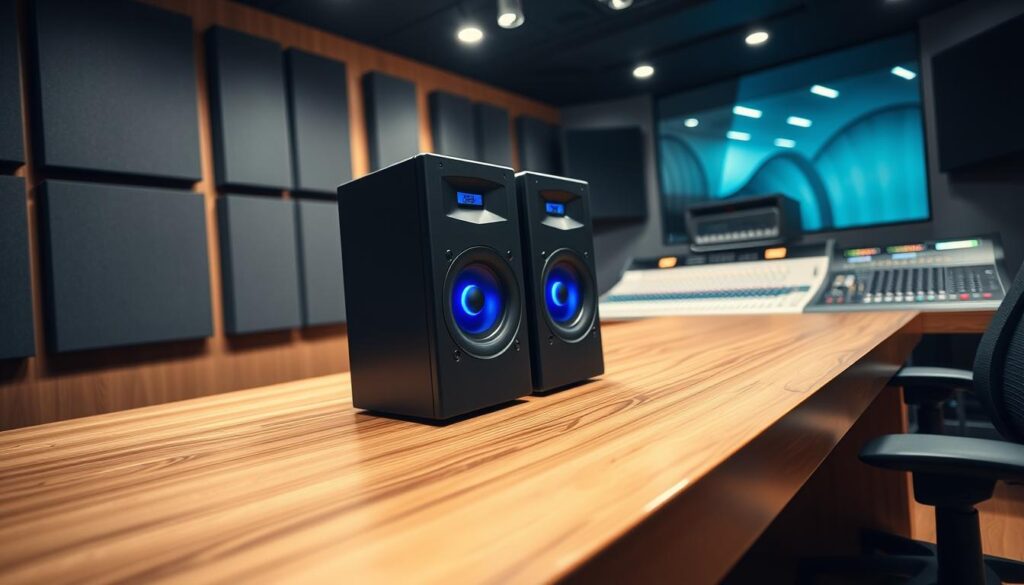
In the world of professional audio, the need for equipment is different. It’s about accuracy and reliability, not just for fun. Professional settings need neutrality, lots of headroom, and precise sound. This helps engineers make precise mixing decisions without the equipment affecting the sound.
Studio Monitors Essentials
Studio monitors show audio signals as they really are. They have a built-in amplifier for nearfield listening, where every detail counts. High-end systems like the Grimm Audio LS1 series, priced from $16,850 to $28,850, offer unmatched sonic clarity.
“The goal of a professional monitor is not to make music sound good, but to make it sound true. If you can hear the flaws, you can fix them.”
This versatile audio equipment is key in modern production. It uses advanced digital signal processing for high-quality sound in different settings. It’s a must-have for anyone serious about audio quality.
PA Systems Versus Standard Speakers
Studio monitors focus on detail, while PA systems aim for coverage and volume for big crowds. These active powered speakers can handle high sound levels without losing quality. They’re built for durability and consistent performance in live settings.
| Feature | Studio Monitors | PA Systems |
|---|---|---|
| Primary Goal | Accuracy | Volume/Coverage |
| Listening Distance | Nearfield | Far-field |
| Amplification | Integrated | Integrated |
| Best Use Case | Mixing/Mastering | Live Events |
Choosing between these systems depends on your professional needs. You might need the precision of a monitor or the power of a PA. The right versatile audio equipment is crucial. Always pick gear with a reliable built-in amplifier for consistent high-quality sound during long sessions.
Comparisons of Popular Brands
Exploring the market for active speakers shows us different philosophies from major brands. Each brand has its own way of delivering a premium audio experience. It’s important to look at how they perform and what they’re made for, not just their price.
JBL vs. Yamaha: Sound Quality
JBL and Yamaha take different paths to high-quality sound. JBL is known for its strong bass, great for parties and live music. For more options, check out the best powered speakers available.
Yamaha, on the other hand, aims for a balanced sound. Their speakers are perfect for those who want to hear every detail in music without extra color. Yamaha is ideal for those who value accuracy in their sound.
KRK vs. Mackie: Pricing and Features
KRK and Mackie compete on price and features for home producers. KRK is famous for its yellow monitors, offering a warm sound that beginners love. They’re a great choice for a premium audio experience without spending too much.
Mackie focuses on being versatile and durable. Their speakers have lots of connections and can handle daily use. The choice between KRK and Mackie depends on what you value more: sound quality or features.
| Brand | Primary Focus | Best For | Price Range |
|---|---|---|---|
| JBL | Dynamic Range | Live & Home Audio | Mid to High |
| Yamaha | Neutrality | Studio Production | Mid to High |
| KRK | Warmth | Home Studios | Budget to Mid |
| Mackie | Durability | General Utility | Budget |
Setting Up Your Active Powered Speakers
Setting up your speakers is key, whether in a studio or living room. To get immersive sound, you need more than just a power cord. You must think about your space carefully.
Recommended Placement in Different Rooms
In a studio or office, place your speakers at ear level. This ensures high frequencies hit you straight on. Keep them at least six inches from walls to avoid bass buildup.
In living rooms, try a toe-in angle for your speakers. This directs sound to your main listening spot. Adjust the speakers until the bass feels right and balanced.
“The placement of your speakers is the single most important factor in how your room sounds, often outweighing the cost of the equipment itself.”
Integrating with Home Theater Systems
Today’s systems make setting up easy, letting you add great sound to your home theater without cables. Many choose Bluetooth speakers or streaming units for a clean look.
For top-notch sound, look at systems like the Cambridge Audio L/R X Advanced Active Stereo Streaming Speakers. They offer wireless connectivity for immersive sound without clutter.
Make sure your input matches your source device to avoid signal issues. Also, check that your volume is even on both channels for a balanced sound in your home theater.
Maintenance Tips for Longevity
Keeping your audio equipment in top shape is key. It involves regular care for both its physical and digital parts. This way, your versatile audio equipment will keep playing clear sounds for years.
Regular Cleaning Practices
Dust is a big problem for electronic parts inside. Use a soft, dry microfiber cloth to clean your speakers’ outside every week.
For the speaker grilles, a vacuum on a low setting can help remove dust. Never use liquid cleaners on the drivers or the cabinet. Moisture can harm the delicate inside parts.
Good air flow is also crucial to avoid overheating. Make sure there’s at least six inches of space around the rear heat sinks for air to move.
Check your cables often for fraying or rust. A tight connection is key for clear signals and less noise.
Software Updates and Firmware
Today’s speakers use software for audio and network tasks. Keeping your firmware up to date is the best way to ensure wireless connectivity and better streaming.
Manufacturers often release updates to fix issues and add new features. Check the official website often to see if your model needs an update.
Before you consider replacing or fixing your unit, check if it’s still supported. Product availability can change. Checking the latest support info ensures you have the right info for your versatile audio equipment.
Keeping up with digital updates will keep your wireless connectivity strong. Consistency is the key to enjoying your high-end audio to the fullest.
Troubleshooting Common Issues
Often, small audio problems come from simple setup mistakes, not broken parts. By using an easy setup guide, you can fix most issues on your own. We aim to help you figure out if the problem is with your source, cables, or speaker settings.
Sound Distortions and Solutions
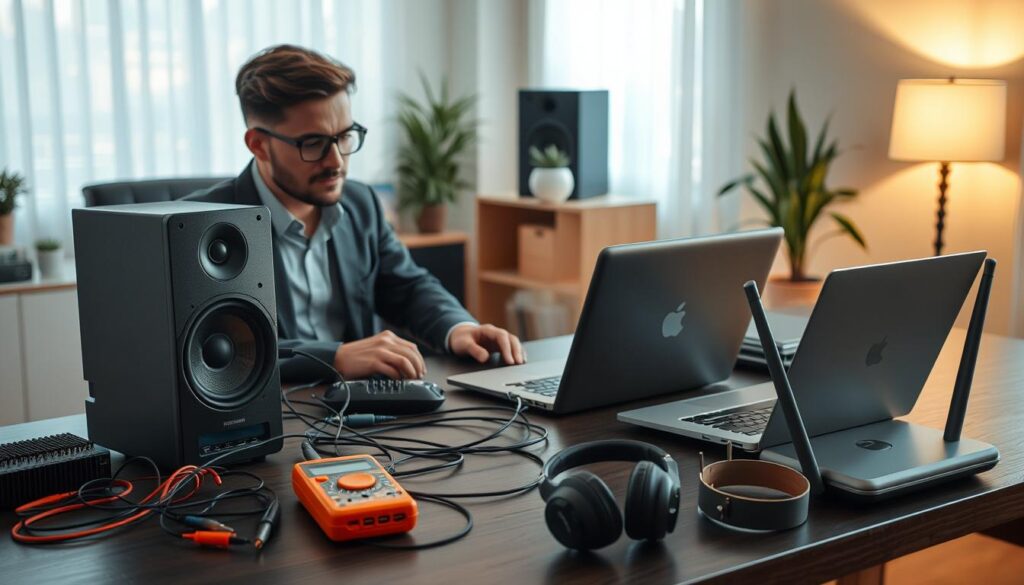
Unwanted hums or crackling? First, check your connections. Loose cables can cause signal problems. Make sure all plugs fit snugly in their ports. Always check that your volume levels are right to avoid distortion.
Missing channels or low sound might mean a setup error. Look at your input settings to make sure the speaker is getting the right signal. If the problem stays, try swapping your audio cables to check for a bad wire or connector.
Connectivity Problems Explained
Speakers with wireless connectivity stream audio from phones or computers. If pairing fails, turn off and on Bluetooth on both devices. Sometimes, other electronics can mess with the signal. Try moving them closer during pairing.
For systems that use the internet, keep your software up to date. An easy setup often uses an app. This app can also show error codes if you have trouble. If problems persist, resetting the speaker to its original settings might fix it.
| Issue | Primary Cause | Recommended Fix |
|---|---|---|
| Audible Hum | Ground Loop | Check power outlets |
| Signal Dropout | Range/Interference | Reduce distance |
| No Sound | Input Mismatch | Verify source selection |
| Distorted Audio | Gain Staging | Lower source volume |
Customer Reviews and Feedback
Real-world experiences show how equipment works in everyday spaces. While specs give a starting point, actual performance depends on room acoustics and personal taste. It’s wise to look at many reviews to get a full picture.
What Users Love About Active Powered Speakers
Many fans love the immersive sound these systems offer in small sizes. They say setting them up is easy, unlike traditional systems that need separate amps. This ease is a big plus for those seeking top-notch sound without extra cables.
Also, the flexibility of Bluetooth speakers gets a lot of praise. People like being able to switch between wired and wireless modes. When a product combines great sound with modern tech, it usually gets great reviews.
Common Complaints and Concerns
It’s smart to be cautious with online ratings. For example, some products get perfect scores, but these might be based on few reviews. Relying on just one glowing review can be misleading, as people have different sound expectations.
Some common worries are about wireless issues. Users sometimes face signal drops or pairing problems in noisy areas. Others might find the bass on smaller speakers not deep enough for movie sound.
Before deciding, check these things:
- Warranty terms and return policies to protect your investment.
- Consistency across multiple review platforms rather than just one site.
- Installation expectations, as some active powered speakers need specific placement to sound their best.
Finding the Right Active Powered Speaker for You
Choosing the right audio setup means knowing what you need and where you’ll use it. Look at your listening habits and room size. Compare different options, from basic to high-end like the Grimm Audio LS1c.
Assessing Your Needs and Environment
Your speakers should fit your space and how you use them. Small rooms need compact speakers, while big rooms need more power for sound. Think about your devices and volume levels to find the perfect match.
Making an Informed Purchase Decision
Check the amplifier specs and connectivity before buying. Knowing return policies and support from the maker can give you confidence. Focus on these to get speakers that offer great sound and are easy to set up.