
 Zoe Nora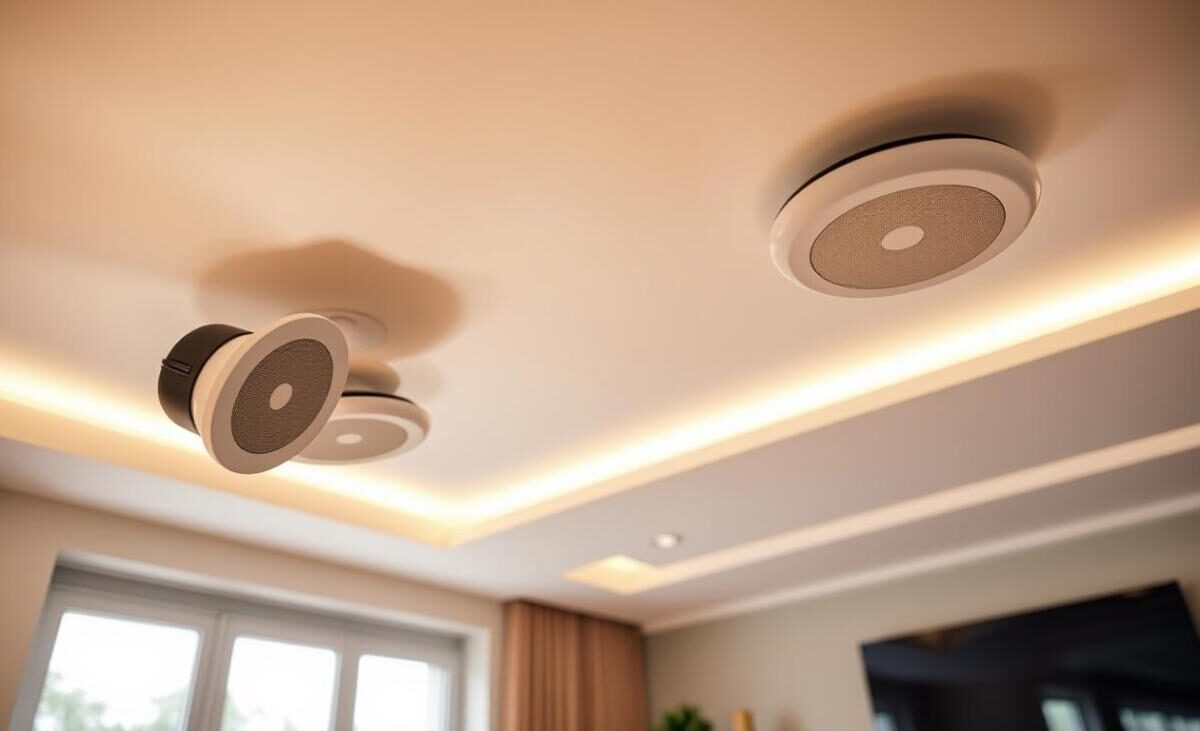
Did you know over 70% of smart home renovations now focus on hidden sound solutions? Homeowners want a clean look without losing sound quality.
When we check in-ceiling audio speakers, we look at clarity, coverage, and how easy they are to install. They’re key for a great home audio system or whole house audio setup.
We test these speakers based on room size, how you listen, and if they work with your gear. We aim for a smooth experience, whether you’re cooking or relaxing. Finding the right in-ceiling audio speakers means balancing your budget and needs for your home audio system. This way, your whole house audio will sound amazing and look great.
Key Takeaways
- Prioritize sound clarity and room coverage during your selection process.
- Consider your specific room size to determine the necessary hardware density.
- Ensure compatibility with your current receiver or amplifier setup.
- Balance your total budget against the long-term performance of the units.
- Think about how your listening habits influence the placement of your gear.
What Are In-ceiling Audio Speakers?
In-ceiling audio speakers are a smart way to enjoy music and movies at home. They offer clear sound and a sleek design. These speakers are integrated audio components hidden in your ceiling, making your space look tidy.
They are different from big speakers you see on the floor. These speakers stay hidden, keeping your room looking neat. They work like in-wall speakers, but they send sound down to you.
Definition and Overview
When we talk about ceiling mounted speakers, we mean speakers that fit right into your ceiling. They look like they’re part of the ceiling, making them hard to see.
“The best audio systems are those that you can hear clearly, but struggle to locate visually.”
These speakers are great for modern homes and theaters. They turn your room into a immersive soundstage without taking up much space.
Types of In-ceiling Speakers
There are two main types: active and passive. Active models have built-in amps, making setup easy.
Passive models need an outside amp. They might seem more work, but they’re better for big spaces. They let you use high-quality speakers with a dedicated receiver for superior sound performance.
Choosing between active and passive depends on your needs. Both offer great sound, but passive is better for some setups. The right choice ensures a great audio experience in your home.
Benefits of In-ceiling Audio Speakers
Home audio often faces a big challenge: finding space for bulky equipment. Traditional speakers can clutter your living area. Ceiling speakers solve this by freeing up floor and wall space while keeping sound quality high.
Space Saving Design
The main benefit of ceiling speakers is their ability to blend into your home’s design. They are installed in the ceiling, eliminating the need for bulky stands. This minimalist approach is great for small rooms or open-concept homes where space is limited.
“True luxury in home design is found when technology serves the environment without dominating the visual landscape.”
Enhanced Aesthetics
Modern flush mount speakers are designed to be almost invisible. They have low-profile, paintable grilles that match your ceiling’s color. This makes your audio system blend seamlessly with your decor, whether it’s modern or traditional.
The clean lines of flush mount speakers add a sophisticated look. You won’t see tangled wires on your floor. Everything is neatly hidden, keeping your room tidy and uncluttered.
Improved Acoustics
These systems also offer great sound quality. High-end models, like those with KEF Uni-Q drivers, spread sound evenly across the room. This prevents “dead zones” where sound quality drops.
| Feature | Traditional Speakers | In-ceiling Speakers |
|---|---|---|
| Floor Space | Occupied | None |
| Visual Impact | High | Minimal |
| Sound Dispersion | Directional | Broad/Uniform |
| Installation | Simple | Professional/Integrated |
By placing ceiling speakers strategically, you get a more immersive sound experience. The sound seems to come from all directions, perfect for music and movies. This uniform coverage is a big improvement over traditional speaker placements.
Key Features to Look For
We think informed buyers make the best choices. Knowing the key features of your gear is important. Before you buy, check out some technical details to make sure your audio setup is right for you. Whether you want flush mount speakers or traditional wall units, knowing these specs is key for happiness.
Speaker Size and Style
The size of the driver affects the sound quality. 8-inch drivers are great for big rooms or if you love deep bass. Smaller drivers are better for small spaces where you want soft background sounds.
Also, think about how the speaker looks and works. Many flush mount speakers have pivotable tweeters. This lets you aim high sounds where you sit, keeping the sound clear and sharp.
Frequency Response
Frequency response shows what sounds a speaker can play, in Hertz (Hz). A wider range means better sound quality. Look for speakers that play both deep and high sounds well.
Adjustable EQ settings are also important. These let you tweak the sound to fit your room’s acoustics. This helps avoid sound that’s too muddy or too bright.
Power Handling
Power handling is how much energy a speaker can handle from an amp. It’s key to pair your speakers with the right amp. Check the sensitivity and impedance to make sure your system works well.
Matching your gear right prevents distortion and protects your equipment. Good hardware means your sound stays strong and clear over time. Checking these details carefully will give you a great home audio experience.
Top Brands in the Market
We’ve looked at the top makers to help you pick the best gear for your home. The right equipment is key for a solid surround sound system or top-notch audio setup. Whether you seek high-end quality or affordable options, these brands have something great for your home.
Sonos
Sonos is known for easy integration into smart homes. Their ceiling speakers pair well with the Sonos Amp. This combo uses TruePlay tuning to automatically calibrate sound to your room’s acoustics.
Klipsch
Klipsch is great for those who want efficient sound and a lively listening experience. Their horn-loaded tech offers exceptional clarity and punch. Many fans choose Klipsch for a strong home theater sound.
Polk Audio
Polk Audio strikes a perfect balance of quality and price for whole house audio. Their gear is built to last and sound great in any setting. They’re perfect for both casual tunes and serious listening.
Bose
Bose is all about sleek design and simplicity. Their tech aims for a wide, balanced sound from small devices. This makes them ideal for those who want discreet yet high-quality whole house audio.
When picking a brand, think about your main goal. A surround sound system needs specific drivers, while general music listening might focus on easy setup. Always check how each brand fits with your current setup before deciding.
How to Choose the Right System
Creating a top-notch home audio system begins with knowing your space and listening habits. First, check your room’s layout to make sure sound reaches all corners well. Learn more about your choices by reading this guide on how to pick between in-wall, on-wall, or in-ceiling speakers for your home.
Assessing Room Size
The size of your room decides how many ceiling mounted speakers you need for even sound. Small rooms might only need one pair, while big spaces might need more to avoid dead spots. It’s key to space speakers right to keep sound even across the room.
Understanding Your Audio Needs
Your budget and what you want to hear will guide your choice of in-ceiling audio speakers. Use this table to sort out your needs:
| Category | Best For | Performance Level |
|---|---|---|
| Budget | Casual listening | Standard clarity |
| Mid-Range | Home theater | Enhanced frequency |
| High-Range | Audiophile setups | Premium precision |
Think about whether you want background music or a full movie sound. High-end models give better sound quality, which is great for serious listeners. If you’re setting up a serious home audio system, spending more on quality speakers will pay off in the long run.
Wiring and Installation Considerations
Before you start installing, check your amplifier’s power and impedance. Wrong impedance can harm your gear or sound quality. Make sure your wiring is safe for in-wall or in-ceiling use.
- Positioning: Place your ceiling mounted speakers evenly from the main listening area.
- Amplification: Make sure your receiver can power all speakers at once.
- Planning: Plan your wire paths to avoid electrical problems from power lines.
Spending time on planning your in-ceiling audio speakers setup avoids costly errors later. A well-planned install means your home audio system will sound great for years.
Installation Tips for In-ceiling Speakers
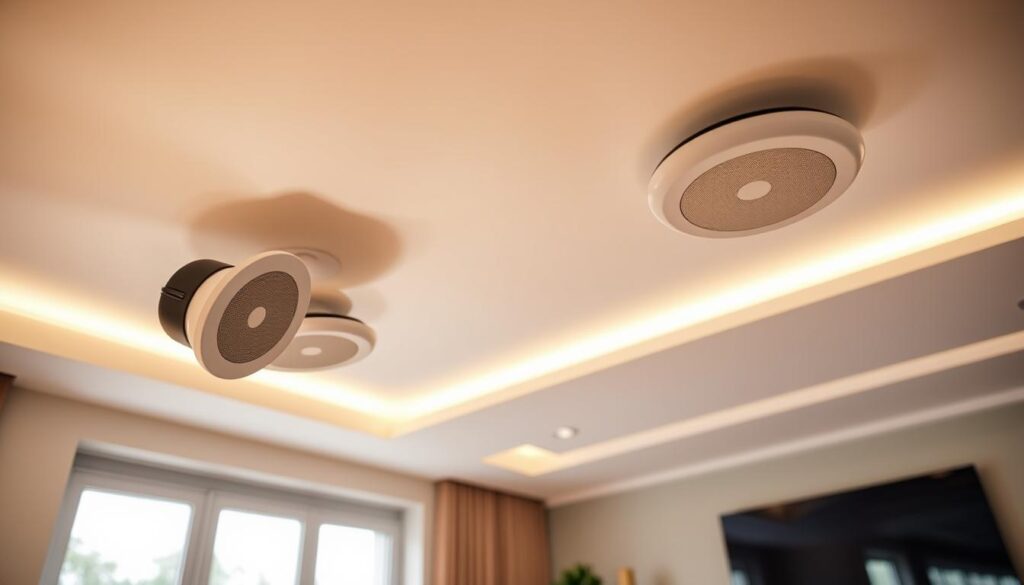
Setting up ceiling speakers needs careful planning. You must detect joists and ensure cable routing is right. This is true whether you’re a DIY expert or new to installation.
DIY vs Professional Installation
Choosing between DIY and a pro depends on your comfort with home projects. If you’re good with basic electrical work, installing flush mount speakers can be fun. But, if your ceiling has complex wiring or beams, get a pro.
Experts ensure your setup is safe and meets local codes. They also keep your home’s structure sound.
Tools Needed for Installation
For a clean look, you’ll need specific tools. Having them ready saves trips to the store.
- Stud finder for finding joists safely.
- Drywall saw for precise cuts.
- Wire strippers and quality speaker cable.
- Masking tape for marking spots.
- Power drill with the right bits.
Common Mistakes to Avoid
Don’t forget to check the mounting depth of speakers. Make sure there’s enough space behind the drywall. Also, avoid areas with pipes or wires.
Ignoring speaker wire polarity can ruin sound quality. Always plan for future upgrades. Choose a spot that’s easy to reach and maintain.
| Factor | DIY Installation | Professional Installation |
|---|---|---|
| Cost | Low (Labor is free) | Higher (Labor fees apply) |
| Time Required | Moderate to High | Low (Efficient) |
| Risk Level | Higher (Structural/Electrical) | Minimal (Expertise) |
| Tools Needed | Must purchase/rent | Provided by expert |
Budget Considerations
When you buy ceiling speakers, the real cost is more than the price of the speakers. You also need to think about amplifiers, cables, and installation. If you don’t install them yourself, you’ll need to pay for professional help.
Price Ranges for Quality Models
The audio market has something for everyone, no matter your budget. Basic ceiling speakers cost between $50 and $150 per pair. They’re good for background music.
Mid-range speakers, priced from $200 to $500, offer better sound. They’re perfect for dedicated listening areas. High-end systems, over $1,000 per pair, have advanced materials and engineering. They provide exceptional soundstage depth.
Remember, your total budget should include the cost of amplifiers to power these speakers.
Value vs. Performance
Choosing between value and performance depends on your goals. Cheap options save money but might not have the best sound. Better quality speakers last longer and sound better.
Think about upgrading your system. Passive systems are more flexible, while active ones are easier to set up. The table below shows the main differences in cost and complexity.
| System Type | Initial Cost | Installation Complexity | Upgrade Potential |
|---|---|---|---|
| Passive Speakers | Moderate | High | Excellent |
| Active Speakers | High | Low | Limited |
| Entry-Level Kits | Low | Low | Minimal |
Maintenance of In-ceiling Speakers
Keeping our in-ceiling audio speakers in top shape is easy with a bit of care. Regular maintenance ensures our home audio system sounds great all the time.
Regular Care Tips
For the best sound, check your system often. Dust on the grilles can dull the sound, so vacuuming them gently is a good habit.
- Check connections: Make sure all speaker wires are tight and not corroded.
- Ventilation: Check that nothing is blocking the speaker’s back.
- Software updates: Keep your active system’s firmware up to date for the best performance.
In humid places like bathrooms, use speakers made for wet conditions. They last longer than regular ones.
“Regular calibration is the secret to perfect sound. Using tools like Sonos TruePlay allows your system to adapt to the unique acoustics of your room, ensuring balanced output regardless of furniture placement.”
Troubleshooting Common Issues
Even with good care, problems can still happen. If your speakers sound weak or distorted, check the amplifier settings. Make sure the gain is right for your in-ceiling audio speakers.
Intermittent sound usually means a loose wire or bad connection. Look for any damage or pinching in the wiring.
If sound is off balance, try swapping the left and right speaker cables. If the problem stays on one side, it might be in the driver. If it’s the same on both sides, it’s likely a receiver or amplifier issue.
Popular In-ceiling Audio Speaker Models
Choosing the right speakers is key for great sound. Whether it’s a home theater or a multi-room setup, picking the right gear is crucial. Looking at technical specs helps ensure our speakers meet our sound quality goals.
Model Comparisons
When comparing models, consider driver size, power needs, and how deep they fit. These details affect how well speakers fit into your walls or ceiling. Sometimes, in-wall speakers are better if your ceiling or walls make regular speakers hard to install.
| Brand/Model | Driver Size | Power Handling | Best Use Case |
|---|---|---|---|
| KEF Ci Series | 6.5 inch | 100W | High-fidelity music |
| Sonos In-Ceiling | 8 inch | 130W | Smart home integration |
| JBL Studio 2 | 6.5 inch | 80W | Home theater surround |
Customer Reviews and Ratings
When looking at reviews, focus on common themes rather than just star ratings. Reliability and easy installation are key to long-term happiness. If many users have the same problems with mounting or sound, it’s a red flag.
The aim is to create a surround sound system that sounds amazing. By mixing professional specs with real user feedback, we make smart choices. Careful planning is the best way to get top-notch sound in your home.
Enhancing Your Home Audio Experience
Modern technology lets us blend sound into our daily lives. We can turn our homes into a connected environment that meets our needs. Whether it’s a party or a quiet night in, the right setup makes a big difference.
Integration with Smart Home Systems
To create a strong home audio system, we need to link our hardware with our digital lives. Many people like Sonos for its easy-to-use interface. It lets you manage music in different rooms from one app.
Active Wi-Fi models offer integrated streaming functionality without the need for big receivers. They connect straight to your network for clear audio without taking up space. Picking the right platform keeps your ceiling mounted speakers easy to control.
Tips for Optimal Sound Distribution
Getting a balanced sound needs careful planning. Make sure speakers are evenly spaced to avoid audio drops. This way, you can adjust sound levels and content for different areas.
For a whole house audio setup, use multiple speakers for even sound. Proper placement of stereo channels is key for the right soundstage. When done right, your home audio system becomes a seamless part of your home.
The aim is to create a cohesive atmosphere that moves smoothly from room to room. By planning your ceiling mounted speakers layout, you ensure quality sound everywhere. This approach to whole house audio makes every part of your home sound great.
Conclusion: Best Practices for Enjoying In-ceiling Audio Speakers
Choosing the right audio gear makes your home sound like a pro studio. Make sure your in-ceiling speakers fit your room size and sound levels. Plan the installation depth and amp power to get the best sound.
For casual music, budget-friendly speakers are great. But for serious sound, Sonos or Klipsch are top choices. They offer clear sound for movies and music lovers.
Before you start, check your wiring and speaker spots. Keep your gear in good shape with regular care. Test your sound often to match your taste.
Spending time on setup is worth it for better sound. If you need help, local audio experts can assist. Create a custom sound experience that enhances your favorite media.