
 Zoe Nora
Did you know that nearly 80% of viewers struggle to hear dialogue clearly because of weak speakers in modern TVs? This problem often ruins the movie experience. It turns a relaxing night into a constant fight with the remote.
We think upgrading your setup should be easy and rewarding. You might want a compact Vizio 2.1 soundbar for about $140. Or, you might prefer a robust home theater system with Klipsch and Onkyo components. The right choice depends on your room size and how you like to listen.
Finding the perfect Home audio system means balancing your budget with your desire for great sound. We’re here to guide you through these choices. We want to make sure every whisper and explosion sounds just right, as the director meant.
Key Takeaways
- Most television speakers lack the clarity needed for modern dialogue.
- Budget-friendly soundbars offer an immediate upgrade for smaller spaces.
- Expandable setups provide a more professional, immersive experience.
- Room size plays a critical role in choosing the right equipment.
- Connectivity options should match your existing media devices.
Understanding Home Audio Systems
Creating an immersive sound environment starts with understanding the core elements of your audio equipment. A well-designed setup brings your favorite music, television shows, and films to life with clarity and depth.
What Is a Home Audio System?
A home audio system is a collection of sources, amplification, and speakers. It acts as the central hub for your media. This setup lets you enjoy high-fidelity sound in your living space.
Whether you’re setting up a simple stereo or a complex theater, the goal is the same. It’s to deliver an accurate and engaging listening experience.
You can learn more about the fundamentals of high-quality sound by exploring this home stereo system guide. Understanding these basics helps you choose the right gear for your specific needs.
Key Components of a Home Audio System
Every reliable speaker system relies on several interconnected parts working in harmony. These typically include:
- Amplifiers or Receivers: These power your speakers and manage signal distribution.
- Sources: Devices like turntables, streaming players, or Blu-ray decks that provide the audio signal.
- Speakers: The transducers that convert electrical energy into the sound waves you hear.
- Subwoofers: Specialized units designed to handle low-frequency bass.
- Cables: High-quality wiring that ensures signal integrity between components.
“The best audio systems are not just about volume; they are about the emotional connection between the listener and the sound.”
Advantages of Home Audio Systems
Investing in a dedicated audio equipment setup offers significant benefits over standard television speakers. You gain the ability to customize your soundstage, whether you prefer a traditional two-channel stereo or a modern surround sound configuration.
Modern setups often utilize five or more channels, plus dedicated subwoofers and Dolby Atmos height channels, to create a three-dimensional soundscape. This level of control ensures that every note and sound effect is reproduced with stunning precision. By building a thoughtful speaker system, you elevate your home entertainment to a professional standard.
Factors to Consider Before Buying
Finding the perfect sound experience starts with understanding your home environment. The best setup complements your lifestyle and fits your living area well. Before buying, think about how your space will work with your new equipment.
https://www.youtube.com/watch?v=CCyUJu-7aOs
Room Size and Acoustics
The size of your room affects sound waves. Large rooms need powerful speakers, while small rooms do well with soundbars or bookshelf units. Always consider the distance between your seating and speakers for balanced sound.
Wall materials and ceiling shapes also matter. Hard surfaces can cause echoes, while soft furniture absorbs sound. For the best home sound, consider these factors for clarity.
Connectivity Options
Modern tech offers many ways to connect devices. Make sure your TV or projector supports HDMI ARC and eARC for high-quality audio. Optical cables work for older hardware, and RCA inputs are key for vintage turntables.
Wireless options are also crucial. Bluetooth is great for quick pairing with mobile devices, while Wi-Fi offers stable, high-resolution streaming. Always verify that your primary display supports the inputs you plan to use before buying.
Your Listening Preferences
Your main use case should guide your choice. Music lovers might prefer a stereo system for its accuracy and immersion. Since music is usually recorded in two channels, a dedicated pair of speakers is best for purists.
“The most important component of any audio system is the room itself, as it acts as the final instrument in the playback chain.”
For cinematic immersion, surround sound might be better. Try different setups to find what sounds best to you. Your home audio system should match how you enjoy media every day.
Types of Home Audio Systems
Exploring home audio means knowing the strengths of each setup. Whether you love music or movies, your choice affects your experience.
Stereo Systems
A traditional stereo system is best for music fans who love clear left-right sound. It uses two speakers to create a precise soundstage.
For small spaces, bookshelf models like the Elac Debut 2.0 B6.2 are great. They have a front-facing bass port, so you can place them near walls without losing sound quality.
Surround Sound Systems
For a home theater feel, you need a surround sound system. It uses many channels for directional sound effects, making you feel part of the action.
The Klipsch Reference Cinema System 5.1.4 is a top choice. It has five satellite speakers and a wireless subwoofer for an immersive experience.
Smart Speakers
Today, many people value ease and convenience. Smart speaker systems let you control your music with voice commands. They’re great for casual listening.
These speakers are small but offer great connectivity and integration with other devices. If you prefer, a soundbar system offers simplicity and boosts your TV’s sound with one device.
Popular Brands in Home Audio
Finding the best audio experience often means looking for brands that fit well into our daily lives. We seek seamless ecosystem compatibility and easy control. Whether it’s a home theater system or a simple setup, the right brand makes a big difference.
Sonos: Quality Meets Innovation
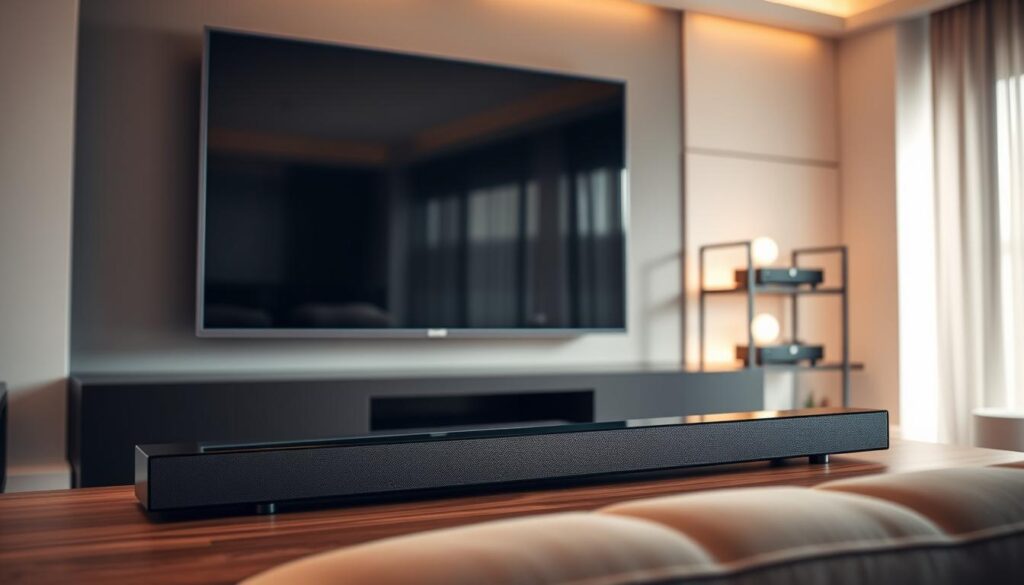
Sonos is known for making devices that work together smoothly. Their Sonos Arc Ultra is a standout with Trueplay for room-tuned audio. It also supports Android QuickTune, Bluetooth, and Wi-Fi, making it great for expanding your setup with optional rear speakers.
Bose: Renowned Sound Clarity
Bose is a leader in exceptional sound clarity and user-friendly systems. Their products often come with Dolby Atmos and reliable Wi-Fi and Bluetooth. With features like Alexa, your soundbar system becomes the heart of your smart home entertainment.
Yamaha: Versatility and Performance
Yamaha offers flexible home theater systems like the True X Surround 90A. This system uses MusicCast to connect devices across your home. It’s perfect for growing your setup with rechargeable surround speakers.
Installation and Setup Tips
We think a great sound experience comes from both the right hardware and setup. Arranging your audio equipment well ensures clear sound for every note and effect.
Choosing the Right Placement for Speakers
The key to a top-notch speaker system is how you place your speakers. Use your main seat as a reference. Here’s how to set up for the best sound:
- Left and Right Speakers: Put these at ear level, angled slightly inward for a balanced sound.
- Center Channel: Place this above or below your screen to keep dialogue clear.
- Surround Speakers: Mount these to the sides or slightly behind for immersive sounds.
- Height Speakers: Install these near the ceiling for more depth in your sound.
- Subwoofer: Put this on the floor, in a corner, for even bass.
Setting Up a Wireless Audio System
Today’s tech makes enjoying great sound easy, without the mess of cables. Start by making sure your home network is strong where you’ll be listening.
First, download the app for your wireless audio system. Check for updates and pair your devices as the app guides you. Make sure each part connects to the network before you fine-tune.
Calibrating Your Sound System for Optimal Experience
Even the best audio equipment needs tweaking for your room’s acoustics. Use built-in room correction tools to improve sound clarity and balance.
Run the auto-calibration, then test your speaker system with movies, music, and games. This ensures sound quality across all media. If sound is off, adjust your wireless audio system until it feels right from every seat.
Wireless vs. Wired Audio Systems
The debate between wireless and wired audio systems often comes down to looks versus sound quality. Your choice depends on your room’s layout and what matters more to you: convenience or top-notch performance.
Benefits of Wireless Systems
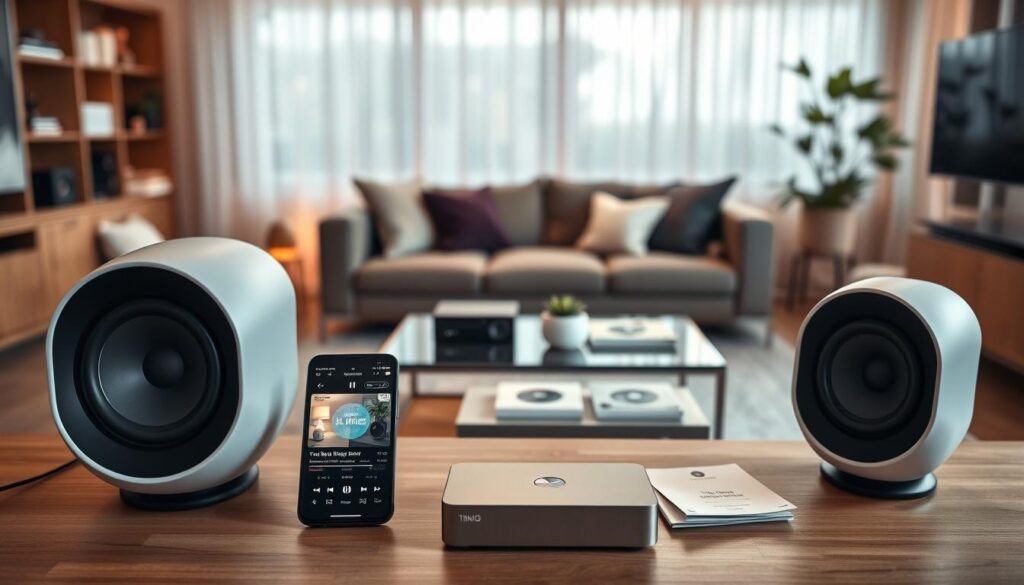
A wireless audio system brings unmatched flexibility to modern homes. It eliminates the need for long cables, keeping your space tidy and simple.
These systems use Wi-Fi or Bluetooth to stream high-quality audio without any cables. This makes them great for renters or anyone who doesn’t want to mess with cables.
Advantages of Wired Connections
For those who need maximum reliability and the least delay, wired connections are the best. A traditional surround sound system has a direct signal path, avoiding the interference found in wireless signals.
Wired setups also offer better upgrade flexibility over time. High-quality cables keep your audio signal clean. HDMI connections let you carry both video and audio through your receiver.
Best Use Cases for Each Option
For a permanent home theater, a wired surround sound system is the best choice. It ensures your audio and video stay perfectly in sync, crucial for gaming and movies.
On the other hand, a wireless audio system is ideal for casual listening or multi-room setups. It’s great for those who like to move their speakers around. Here’s a quick guide to help you choose:
- Wired: Ideal for dedicated media rooms, competitive gaming, and audiophiles who want zero-latency sound.
- Wireless: Perfect for keeping your living room clean, small apartments, and for those who often change their furniture layout.
Budget-Friendly Home Audio Systems
Creating a top-notch audio setup doesn’t need to break the bank. Often, small upgrades can make a big difference in how you enjoy music and movies. By focusing on value, you can turn your home into a sound paradise without spending too much.
Affordable Options for Small Spaces
If you live in a small place, a stereo system is a great choice. These systems are small but offer much better sound than TV speakers. You can find bookshelf speakers that sound great but cost less than big floor-standing speakers.
Great Value Systems Under $300
A soundbar system is perfect for those who want something easy to use. The Vizio 2.1 soundbar is a great example, priced around $140. It gets high marks for making dialogue and music sound clearer and louder, all for a low price.
Performance vs. Price: What to Expect
When buying on a budget, don’t expect too much. A system under $300 will improve your TV and music experience but might not have the deep bass or wide soundstage of more expensive options. For a full home theater system with deep bass, you’ll need to spend at least $500.
A high-end Klipsch 5.1.4 setup costs about $549. It offers bigger sound and more channels than smaller systems. Use the table below to see which option is right for you.
| System Type | Estimated Price | Best For | Key Benefit |
|---|---|---|---|
| Compact Stereo | $100 – $200 | Small Rooms | Space Saving |
| Entry Soundbar | $140 – $250 | TV/Movies | Easy Setup |
| Full Home Theater | $500+ | Large Spaces | Cinematic Bass |
Enhancing Your Home Audio Experience
We think small changes can make a big difference in how you enjoy your media. By adding the right hardware and tweaking software, you can get the most out of your setup.
Adding Subwoofers for Deep Bass
Want to feel the bass of a song or the boom of an explosion? A subwoofer is key. Small speakers can’t handle low sounds well, making music sound thin. A subwoofer adds depth and scale, making your sound system feel more real.
Integrating with Smart Home Devices
Today’s tech lets you control your sound with voice commands or apps. Link your wireless audio system to Wi-Fi for easy multiroom play. Make sure everything stays connected to avoid sound drops.
Many systems work with voice assistants, making it easy to change what you’re listening to or adjust the volume. This turns your audio into the heart of your smart home.
Optimizing Sound Settings for Different Genres
Not all music or movies sound the same. For songs with lots of vocals, keep the bass low to keep the sound clear. But for electronic beats, a strong bass is better to feel the music.
For action movies, adjust your sound to handle quiet and loud parts well. Using Dolby Atmos settings can help. This ensures your wireless audio system performs its best for every listening experience.
Maintenance and Troubleshooting
Keeping your audio equipment in top shape ensures it sounds great for years. Make sure to clean your devices and keep them cool to avoid overheating.
Regular Upkeep for Longevity
Wipe down your speakers and receiver regularly to keep them cool. Check your cables for damage and make sure all connections are secure. Also, don’t crank up the volume too high to protect your speakers.
Common Issues and How to Fix Them
Missing sound or wireless dropouts can happen. Check your input settings and restart your router to fix these issues. Adjusting your settings can also help with low dialogue or an unbalanced subwoofer.
When to Seek Professional Help
Some problems need a pro to fix them to avoid damage. If you see electrical issues or a constant hum, call a technician. For complex setups or advanced calibration, it’s best to get professional help.
We hope this guide helps you enjoy your music and movies. If you need more help, reach out to local experts. Start your journey to perfect sound with these easy steps.