
 Zoe Nora
Did you know that nearly 70% of home audio problems come from bad cable management and loose connections? Tangled wires behind your entertainment center are not just messy. They can cause signal interference and accidental disconnections. We think that to get professional-grade sound, you need a clean and organized setup.
Installing a banana plug wall plate is the best way to clean up your space and keep the signal stable. These special connectors turn exposed speaker wires into a safe, permanent connection. This makes it easy and reliable to connect your receiver or amplifier to your speakers.
In this guide, we’ll show you how to do it all, from start to finish. We’ll focus on keeping the right polarity and making sure every wire is securely attached. This will give you the best audio experience. Let us help you make your home theater neat and high-performing.
Key Takeaways
- Organizing speaker cables prevents signal loss and improves system longevity.
- Using a dedicated interface creates a professional look for your home audio setup.
- Proper polarity control is essential for balanced and accurate sound reproduction.
- Secure terminations eliminate the risk of short circuits behind your equipment.
- This guide simplifies the installation process for beginners with clear, actionable steps.
What is a Banana Plug Wall Plate?
A banana plug wall plate is a clean interface for your high-fidelity audio equipment. It’s a mounted panel that secures your speaker wires. This hides messy cables inside your walls.
Using this hardware, you get a permanent, organized connection point. It connects your amplifier or receiver to your loudspeakers. This setup reduces cable clutter and keeps your signal path stable and reliable.
Definition and Purpose
A banana plug wall plate is a wall-mounted terminal block for 4 mm banana plugs. It connects your internal wiring to your audio components’ cables.
“Organization is the silent partner of high-quality sound; when your cables are managed, your system performs at its absolute best.”
This device provides a durable and aesthetic way to end speaker wires. Instead of loose wires, you get a flush-mounted port that looks like an electrical outlet.
Key Features of Banana Plug Wall Plates
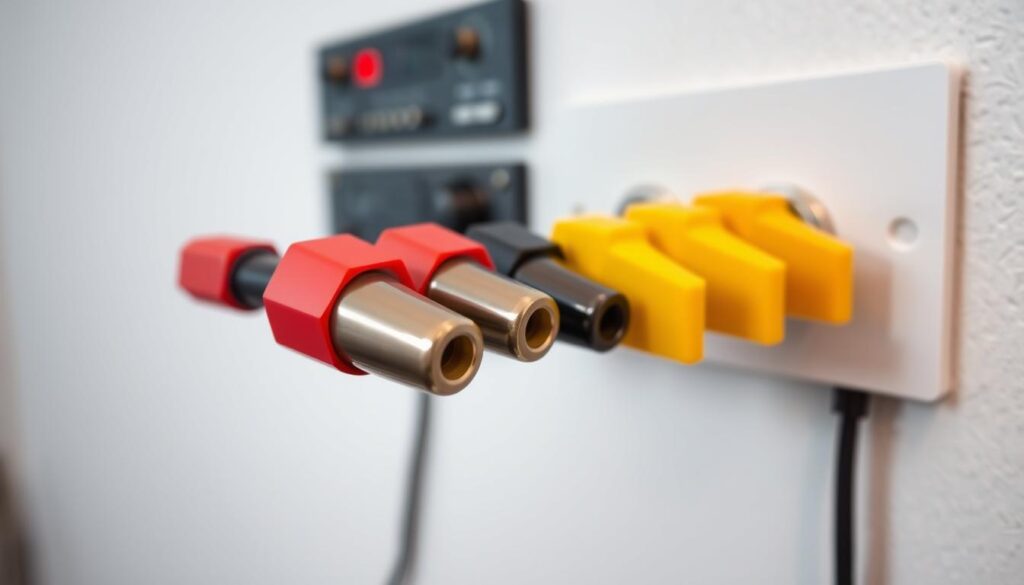
When choosing a banana plug wall plate, look for certain design elements. High-quality plates have clear polarity markings, like red and black rings, to avoid phase issues.
They also have standardized spacing for different plug types, including dual or stackable designs. Proper insulation prevents short circuits and protects your audio equipment from interference.
| Connector Type | Primary Benefit | Best Use Case |
|---|---|---|
| Standard | Universal fit | Basic home audio |
| Shrouded | Enhanced safety | High-power systems |
| Right-Angled | Space saving | Tight wall clearances |
| Dual/Stackable | High density | Multi-channel setups |
Knowing these features helps you pick the right banana plug wall plate for your needs. Whether it’s a simple stereo system or a complex surround sound setup, these plates are key for a professional installation.
Benefits of Using Banana Plug Wall Plates
Organizing a top-notch entertainment space is easier with reliable wall plate connections. By picking premium audio accessories, your home theater stays both useful and good-looking.
Improved Audio and Video Quality
A wall plate doesn’t boost your signal on its own. But it’s key in keeping the signal strong. High-quality audio connectors make sure your speaker wires and equipment terminals stay connected well.
This keeps your setup tight and avoids the common problem of loose wires. Firm connections mean no signal drops, which can ruin your sound experience.
Convenient Connectivity Options
These plates also make your life easier with cable management and upkeep. They help keep your entertainment area neat by hiding cables.
They also make swapping out gear easier. With clear labels, you can change receivers or speakers without getting tangled up in cables.
| Feature | Standard Wiring | Banana Plug Plate |
|---|---|---|
| Connection Stability | Low (Prone to fraying) | High (Secure contact) |
| Ease of Access | Difficult | Very Convenient |
| Cable Management | Cluttered | Organized |
| Polarity Clarity | Often Confusing | Clearly Labeled |
Adding these high-quality audio connectors to your setup is smart. It makes your system reliable and easy to handle for a long time. Investing in premium audio accessories is a wise choice for your home theater.
Tools and Materials Needed for Installation
Before starting, make sure you have everything for an easy installation wall plate. Good preparation helps avoid problems and ensures your audio system works well. It’s best to gather these items in a well-lit area before you begin.
Essential Tools for DIY Installation
You’ll need some basic tools for a clean finish. A Phillips head screwdriver is key for attaching the plate. Also, a good wire stripper is important to avoid damaging cables.
Working behind an entertainment unit can be dark. A compact torch is great for lighting up the area. This makes it easier to work on the easy installation wall plate.
Recommended Materials for Compatibility
Choosing the right materials is as crucial as having the right tools. You’ll need a quality wall plate, speaker cables, and reliable connectors. Our banana plug guide helps ensure a secure connection.
When stripping wires, about 12 mm is best for most plugs. Always check the polarity colors to avoid audio issues. Keeping the copper strands together prevents short circuits and keeps the signal clear.
| Tool or Material | Primary Function | Importance |
|---|---|---|
| Wire Stripper | Removing cable insulation | High – Prevents wire damage |
| Screwdriver | Mounting the plate | High – Ensures stability |
| Compact Torch | Providing visibility | Medium – Improves safety |
| Banana Plugs | Connecting speakers | High – Ensures signal flow |
Organizing these materials ensures an easy installation wall plate process. Proper preparation saves time and effort in the final steps.
How to Choose the Right Banana Plug Wall Plate
Choosing the right hardware for your home theater is key. Not all wall plates are the same. You need one that looks good and lasts for years.
Compatibility with Your Equipment
Make sure your wall plate fits your gear. Check the speaker cable gauge first. It should fit the wire without causing problems.
Also, measure the terminal spacing on your receiver or amplifier. If it’s too tight, you might have trouble with multiple plugs. The connector should fit well to avoid signal loss or disconnections.
Types of Banana Plug Wall Plates Available
There are many designs to fit your space and setup. The right entry style helps manage cables, which is important if your speakers are close to the wall.
Here are some common types for your audio system:
- Rear-entry plates: Great for standard setups where cables go through the wall.
- Side-entry or right-angled designs: Good for tight spots where you want a low profile.
- Dual or stackable options: These group multiple channels together for a neater look.
If you need something special, like a certain number of channels or color scheme, go for a customizable wall plate option. These systems let you mix connectors to fit your exact needs. Planning your layout now will save you a lot of trouble later.
Step-by-Step Installation Process
Getting your speaker wires organized starts with installing a banana plug wall plate. Follow a simple step-by-step guide to keep your home theater looking good and working well.
Preparing the Wall and Equipment
First, turn off all your audio gear to avoid any electrical issues. Pick the spots where you’ll run your speaker cables through the wall. Use a stud finder to find studs and mount the banana plug wall plate securely.
Installing the Wall Plate
After running your cables, attach them to the mounting bracket. Then, connect the wires to the back of the wall plate. Make sure the plate is aligned right before screwing it into place.
Making the Connections
Strip about 15 mm of insulation from each wire end. Twist the copper strands to keep them from fraying. Then, connect them to the banana plug wall plate terminals, keeping the wires’ polarity correct.
Next, plug your speaker cables into the front of the wall plate. Use high-quality banana plugs and make sure they fit snugly for a secure connection.
| Wire Gauge | Stripping Length | Best Practice |
|---|---|---|
| 16 AWG | 15 mm | Twist strands tightly |
| 14 AWG | 15 mm | Check for stray wires |
| 12 AWG | 15 mm | Ensure full insertion |
Common Installation Mistakes to Avoid
Getting great sound is more than just using top-notch cables. It’s about setting things up right. Even small mistakes can mess up your sound or harm your gear. We’re here to guide you to avoid these common errors.
Over-tightening Connections
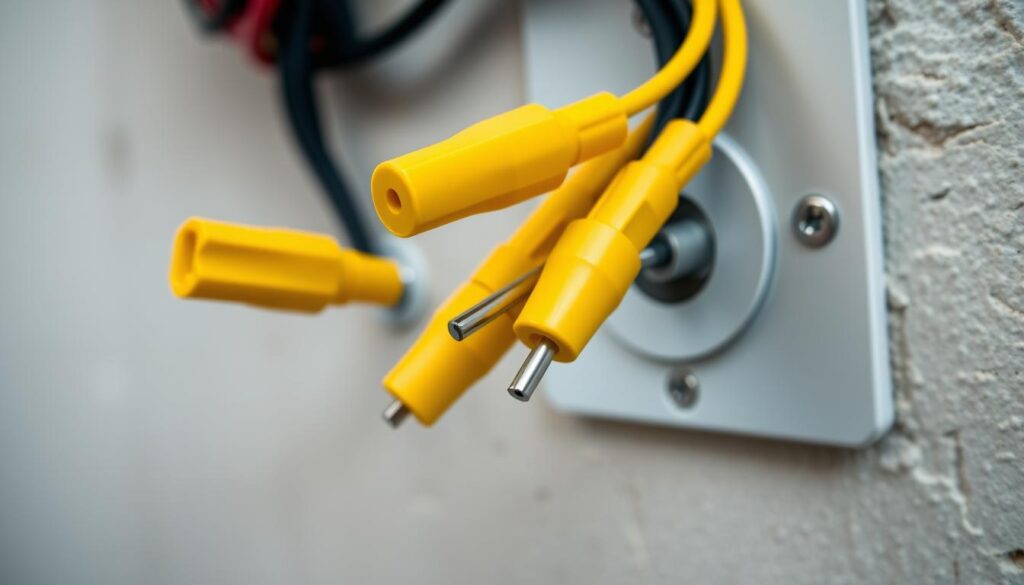
One big mistake is using too much force when tightening cables. It’s easy to get carried away, but too tight can damage your connectors. Just tighten enough to keep the cable in place.
By focusing on secure banana plug connections, you keep your signal strong without risking damage. If you’re not sure about the right way to do it, check out this 90-degree banana plug guide. It shows what’s important for lasting quality. A light touch is usually enough for a good connection.
Neglecting Proper Wiring Techniques
How you handle the wire before connecting it is also key. Make sure to strip the insulation carefully to avoid damaging the copper inside. Also, twist all strands together tightly to prevent short circuits.
Keeping the speaker wire polarity right is crucial for a balanced sound. Swapping the positive and negative leads on a speaker can mess up your sound. Always check your color codes before finishing your setup to keep your audio clear and rich.
Tips for Maintaining Your Banana Plug Wall Plate
Even the most durable wall plate needs some care to keep your home theater sounding great. These parts are made to last, but they can still be affected by the environment and daily use. Simple checks can help prevent signal loss and keep your audio system working well.
Regular Inspections and Cleanings
Check your connections every few months. Look for corrosion, discoloration, or loose screws that might mean a bad connection. Also, watch for cracked insulation or bent contacts, as these can cause sound problems.
If you see dust or dirt, use a soft, dry cloth to clean it off. Even though many units have gold-plated brass connectors, the area around them can still get dirty. Keeping the contact points clean helps keep your signal clear and free from interference.
When to Replace Your Banana Plug Wall Plate
Even a top-quality, durable wall plate can eventually need to be replaced. If the sockets don’t hold your plugs well, causing them to fall out, it’s time for a new one. A loose fit can lead to annoying audio dropouts or static.
Also, watch for signs of damage like melted plastic or scorched terminals, which mean heat stress. If cleaning the contacts doesn’t fix the problem, the internal parts might be too worn out. Replacing it quickly will fix your audio setup and protect your equipment from damage.
Troubleshooting Common Issues
If you find yourself facing unexpected silence or a weak signal, we’re here to help. Finding a good audio connection solution often means checking each part carefully. This way, you can quickly find where the problem lies.
No Sound or Video Output
First, check your amplifier or receiver settings. Make sure the right input is chosen and the volume isn’t muted. Sometimes, just turning the power on or off or checking the source device fixes it.
Then, look at your cables for any damage. Make sure the red and black wires are correctly connected at both ends. If the problem continues, test each cable and speaker separately. Also, ensure the plug is fully inserted, as a loose plug can break the circuit.
Loose Connections
Loose connections often cause audio or signal issues. Check the back of your wall plate to see if all wires are tight. If they’re not, tighten the screws or binding posts for a solid audio connection solution.
If the wires are frayed or dirty, consider reterminating them for better contact. If a plug or socket looks damaged, it’s best to replace it. Regular maintenance keeps your system running smoothly for a long time.
| Issue | Primary Check | Recommended Action |
|---|---|---|
| Silent Speaker | Receiver Settings | Verify input and mute status |
| Intermittent Audio | Plug Insertion | Ensure firm, deep connection |
| Signal Loss | Wire Terminals | Retighten or reterminate strands |
| Damaged Socket | Physical Inspection | Replace the wall plate component |
Conclusion: Enjoy Your Enhanced Setup
Turning your living space into a top-notch sound area needs focus and the right tools. A high-quality banana plug wall plate is key for a tidy, efficient entertainment system.
Investing in top-notch audio accessories makes a big difference in your listening experience. These parts shield your cables from harm and keep your sound path clear.
Maximizing System Longevity and Performance
Right connections stop common wear that harms your sound over time. Using these plates protects your wiring and keeps your setup looking great. Check out best wall mount speakers for your home or office to go with your new setup.
Keep your connections right and check them when you clean. A well-kept banana plug wall plate makes adding new gear easy and worry-free. Your dedication to quality ensures your audio equipment works its best for years.