
 Zoe Nora
Did you know over 16 million vinyl records were sold in the United States in one year? This shows a big move back to physical media. Many are finding the richness in traditional ways of listening again.
Understanding the differences between digital and analog audio is key for music lovers. Modern tech is convenient, but nothing beats the warmth and depth of a well-set system.
Our guide shows how to set up your home for the best sound. By choosing quality parts, you can make your favorite songs come alive with authentic, high-quality sound. Let us help you create a space that truly honors your music.
Key Takeaways
- Vinyl sales keep rising as people want a more hands-on and immersive sound.
- The warmth of traditional sound comes from physical circuitry, not digital processing.
- Keeping your gear in top shape is crucial for the best sound and clarity.
- Spending on quality parts greatly enhances your listening experience.
- Finding the right balance lets you enjoy the best of old and new formats.
What is Analog Audio?
Analog audio connects the recorded performance directly to the listener. It captures the full essence of a performance, unlike modern systems. These systems break sound into small pieces.
This format captures sound through continuous electrical signals. Analog recording keeps the original waveform. This ensures the final sound is as close to the source as possible.
Definition and Characteristics
Analog sound is continuous. It mirrors the soundwaves from instruments or voices. This is its main characteristic.
Because it’s continuous, it keeps a natural texture. This is why vintage audio fans love it. They find it more satisfying than modern systems.
Comparison with Digital Audio
Digital and analog technologies differ in how they process sound. Digital formats break sound into binary data. They sample the sound at specific intervals.
Analog music is a continuous stream of data. This is why many think it sounds warmer and more authentic. It provides a unique listening experience.
| Feature | Analog Audio | Digital Audio |
|---|---|---|
| Signal Type | Continuous Waveform | Binary Data (Samples) |
| Sound Quality | Natural and Warm | Precise and Clean |
| Storage Medium | Vinyl, Tape | CD, Streaming, Files |
| Complexity | High Maintenance | Low Maintenance |
Knowing these differences helps us value vintage audio gear. By choosing analog music, you prefer the original performance’s integrity.
The Benefits of Analog Audio
Choosing analog music is more than a hobby. It’s a deep way to hear sound. Switching from digital to physical media uncovers hidden details.
Warmth and Depth of Sound
Analog sound is known for its warmth. It feels organic and full, unlike digital sounds that can seem cold. An analog recording captures the true sound of instruments.
This makes the soundstage feel big and alive. Listening to vinyl, the music seems to be right there with us.
Listening Experience and Engagement
Handling physical media is special. It makes us focus and listen to whole albums. This is different from skipping tracks on digital players.
“The ritual of playing a record forces you to slow down and appreciate the artistry of the music in a way that skipping tracks on a playlist never will.”
This engagement makes listening a meaningful event. It lets us dive deep into the analog audio world, free from digital distractions.
Nostalgia and Authenticity
Many love analog music for its history and authenticity. It’s a format that has stood the test of time, keeping music true to its roots.
| Feature | Analog Audio | Digital Audio |
|---|---|---|
| Sound Profile | Warm and Natural | Precise and Clean |
| User Interaction | Tactile and Ritualistic | Convenient and Instant |
| Storage | Physical Media | Cloud or Local Files |
Choosing analog sound keeps alive a tradition that values the bond between artist and listener. It celebrates the skill behind every analog recording.
Key Components of an Analog Audio System
Mastering analog sound starts with picking the right hardware. A high-fidelity system needs understanding how each audio equipment piece works together. Choosing parts that complement each other brings out the best in your vinyl.
Turntables: Choosing the Right One
The turntable is key for your analog audio journey. You must choose between belt-drive and direct-drive models. Belt-drive units are often preferred for their ability to reduce motor vibrations, leading to a cleaner signal.
The cartridge and stylus are crucial. They connect the physical groove to your electronic signal. A high-quality cartridge greatly improves sound clarity and detail.
Amplifiers: Types and Their Importance
After the turntable, the signal needs amplification to power your speakers. You’ll decide between tube and solid-state amplifiers. Tube amplifiers are loved for their warmth and rich sound, perfect for a classic listening experience.
Solid-state amplifiers are reliable and precise, offering a neutral sound. Your choice depends on your sound preference and speaker power needs. Matching them ensures your analog technology performs well without distortion.
Speakers: The Heart of Analog Sound
Speakers are the last link, turning electrical energy into music. Choosing the right pair means considering room size, sensitivity, and frequency response. A well-matched system brings your analog technology to life with depth and presence.
| Component | Primary Function | Key Consideration |
|---|---|---|
| Turntable | Signal Extraction | Drive type and cartridge quality |
| Amplifier | Signal Powering | Tube vs. Solid State design |
| Speakers | Sound Reproduction | Sensitivity and room acoustics |
By carefully choosing each audio equipment piece, you create a balanced system. This system honors the original recording’s integrity. Remember, the synergy between components is as important as each unit’s quality. Take your time to research and test combinations for the perfect analog sound in your home.
Setting Up Your Analog Audio System
Your listening room is key to your audio equipment experience. A good setup is crucial for clear sound. Even the best gear won’t sound great in a bad room.
By arranging your equipment well, you can enhance the sound quality. This includes the analog sound you love.
Room Acoustics and Speaker Placement
Speaker placement and room acoustics are very important. Place your speakers at ear level for the best sound. This way, high frequencies reach you straight without bouncing off walls.
Don’t put speakers in corners. It can make bass sound unnatural. Hard surfaces like glass or wood can also affect sound. Adding rugs or curtains can help absorb unwanted reflections.
This keeps your warmth in high-quality analog audio. A well-balanced room lets your system sound wider and more accurate.
Essential Accessories for Optimal Sound
Some accessories are crucial for protecting your gear. Isolation pads keep your turntable from vibrating. This prevents vibrations from affecting the stylus.
Keeping your records clean is also essential. Dust can ruin your listening experience.
- Anti-static brushes to remove dust before playback.
- Spirit levels to ensure your turntable platter is perfectly flat.
- Stylus force gauges for precise tracking weight adjustments.
Cable Quality: What’s the Difference?
Many wonder if expensive cables make a difference in analog sound. While you don’t need to spend a lot, good cables matter. Shielded cables protect your signal from interference.
Quality connectors also prevent signal loss. This keeps your audio equipment working well. Investing in good cables is smart. It keeps your analog audio signal clean from start to finish.
Choose cables for their durability and shielding, not looks. The table below shows how different setup factors affect your listening experience.
| Setup Factor | Primary Benefit | Impact Level |
|---|---|---|
| Speaker Positioning | Soundstage Accuracy | High |
| Surface Isolation | Reduced Vibration | Medium |
| Cable Shielding | Signal Integrity | Medium |
| Room Treatment | Frequency Balance | High |
Best Practices for Vinyl Care and Maintenance
We think that keeping your music collection in top shape is key. Analog audio can wear out over time. A regular care routine helps keep your records sounding great.
Cleaning Your Records Properly
Dust and dirt can ruin your sound. They can also harm your stylus. Start by brushing your records with a carbon fiber brush before playing.
For a deeper clean, follow these steps:
- Use a specialized cleaning solution and a microfiber cloth.
- Wipe in a circular motion, following the grooves.
- Let the record dry completely before playing it again.
Proper Storage Techniques
How you store your records matters a lot. Keep them upright to avoid warping. This is crucial for analog audio quality.
Store them in a cool, dry place, away from sunlight. High heat can damage the vinyl. Use anti-static sleeves to protect against dust and humidity.
Dealing with Scratches and Wear
Accidents can still happen, even with the best care. Minor scratches might not be the end. Audio restoration can help.
If you hear pops or clicks, try these:
- Check your stylus pressure to avoid making scratches worse.
- Use a professional record cleaning machine for deep cleaning.
- Remember, some records have unique sounds that are part of their charm.
Understanding Sound Quality Metrics
We often focus on how our gear looks, but the real magic of analog audio is in the data. To master your listening space, learn about the technical specs that define top-notch sound. These metrics show us what our setup can do well and what it can’t.
What is Frequency Response?
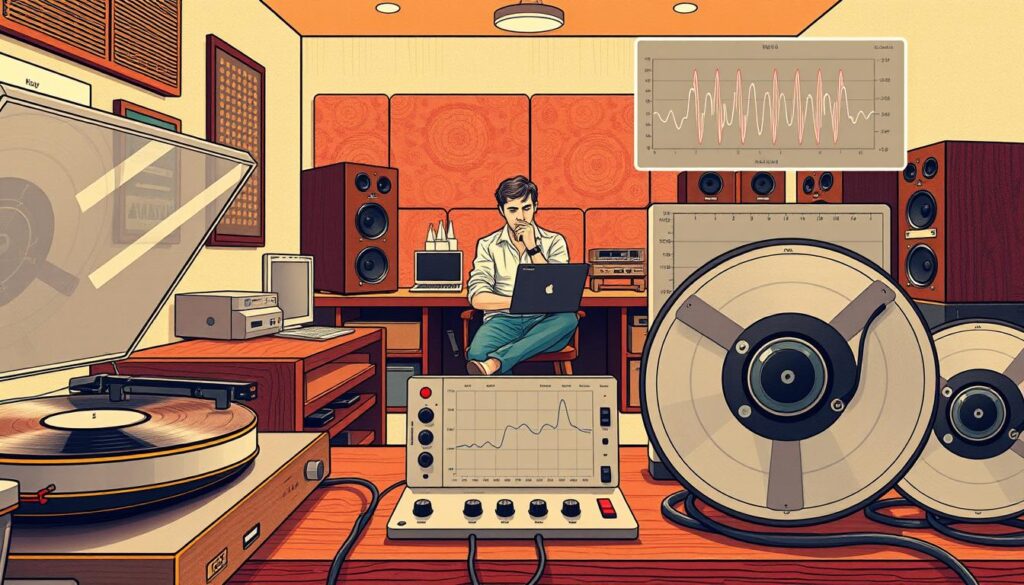
Frequency response is the range of sounds a system can play back, from 20 Hz to 20 kHz. This range covers all sounds humans can hear, from deep bass to high treble. A system with a flat frequency response plays all sounds evenly, without boosting or cutting any.
When checking your analog sound, look for gear that plays sounds well across this range. If a turntable or amplifier struggles at the extremes, you might miss the fine details in a complex analog recording. Getting a balanced response is key for a true listening experience.
The Role of Total Harmonic Distortion
Total Harmonic Distortion, or THD, shows how much unwanted noise your gear adds. Ideally, your equipment should play the signal perfectly without adding any extra noise. But, all electronic parts add some distortion when they amplify the signal.
Lower THD percentages mean a cleaner and more accurate sound. While some people like the warmth of certain distortions, too much can mess up the clarity of your music. Keeping THD low is crucial for the purest analog sound.
Signal-to-Noise Ratio Explained
The Signal-to-Noise Ratio (SNR) compares the audio signal to background noise. A higher SNR means your music will sound clearer, with less noise. This is key when listening to quiet parts of a analog recording.
If your SNR is low, you’ll hear constant hiss or hum in quiet parts of tracks. By using high-quality cables and shielded components, you can boost your system’s SNR. Knowing these metrics helps you make better choices for your analog audio setup and ensures your system sounds its best.
Analog Audio Formats: A Brief Overview
From vinyl’s spinning grooves to tape’s magnetic pull, analog audio formats give unique listening experiences. Each medium has its own character, needing special hardware to shine. Whether you’re a seasoned collector or new, knowing these formats is crucial for your perfect sound setup.
Vinyl Records: Sizes and Types
Vinyl records are a top choice for those who love authentic sound reproduction. They come in 7-inch, 10-inch, and 12-inch sizes, each playing at different speeds. To enjoy your collection fully, get a good record player system that handles these speeds well.
Reel-to-Reel Tapes: Vintage Appeal
Reel-to-reel tapes are the top pick for vintage audio lovers. This analog technology captures sound deeply and with little loss, loved by studio pros and audiophiles. Though they need more care, they offer a rich, open sound that feels real.
Cassette Tapes: A Retro Revival
Cassette tapes are back in style, thanks to a new wave of listeners who love their portability and charm. This analog technology brings a warm, nostalgic feel to vintage audio. While not as clear as high-end vinyl, cassettes offer a hands-on, engaging way to enjoy music on the move.
Building a Collectible Analog Library
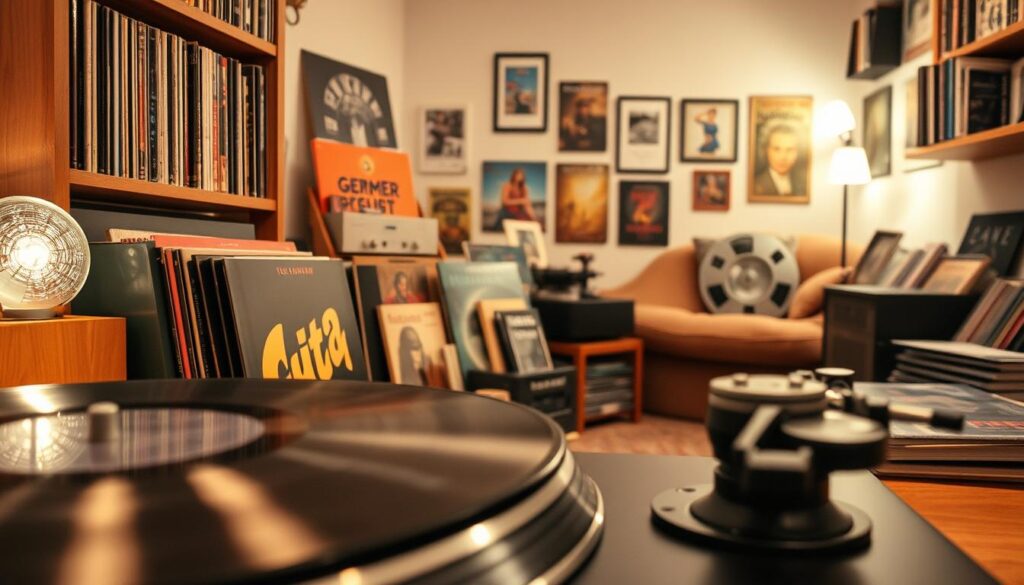
Collecting physical media gives us a tactile connection to our favorite artists. It’s something digital files can’t offer. As we fill our shelves, we turn our listening space into a personal archive of sound history.
This journey is more than just owning music. It’s about celebrating the artistry behind each release.
Finding Rare and Classic Records
Finding rare records takes patience and a sharp eye. We often start by visiting independent record stores. These shops are the heart of the analog music world.
They offer curated selections you won’t find elsewhere. Online marketplaces like Discogs are also great for finding rare records. They help us track down specific pressings and connect with sellers worldwide.
Always check the seller’s rating to make sure your analog audio arrives in good condition.
Tips for Thrifting and Buying Used
Thrifting for records is an exciting adventure. Always check the record for scratches or warping before buying. This ensures it will play well.
Carry a small microfiber cloth to clean the record before playing. Knowing the grading system helps you make smart choices. Condition is key when building a lasting library.
Digital vs. Analog Releases: What’s Worth Collecting?
The debate between digital and analog often focuses on the master source. Many collectors prefer original pressings, cut directly from master tapes. These versions often have a warmth and depth that digital transfers can’t match.
Yet, high-quality modern reissues can offer a cleaner sound. Focus on albums that mean a lot to you. Whether it’s vintage or new, your collection should show your love for analog music.
Troubleshooting Common Analog Audio Problems
Even the most advanced audio equipment can sometimes have issues. Whether you’re an expert or new to the scene, knowing how to fix problems is key. Keeping your system in top shape for years is easier with a proactive maintenance approach.
No Sound or Distortion Troubleshooting
When you lose sound or hear unwanted noise, check your cables first. Loose or corroded connections can harm analog sound quality. For help with fixing playback issues, visit this resource to keep your signal clear.
If cables are fine, look at your cartridge and stylus. A worn stylus can cause distortion or skipping. Replacing the stylus or adjusting your tonearm can greatly improve your sound.
Maintaining Consistent Performance
A consistent analog audio setup is key. Regularly check your turntable belt and platter speed to avoid pitch problems. Also, keep your area dust-free and static-free to protect your records.
Cleaning your stylus with a special brush helps prevent damage. Spending a few minutes on these tasks keeps your audio experience clear and immersive.
Upgrades: When and Why to Consider Them
Even with good care, you might outgrow your current setup. If your system lacks detail or fails to capture music nuances, it’s time to upgrade. Upgrading your cartridge or phono preamp can significantly improve sound quality.
Think about upgrading if you’re always fixing your gear to get basic performance. Better cables or a stable turntable base can turn your room into a high-fidelity haven.
| Common Issue | Primary Cause | Recommended Action |
|---|---|---|
| Humming Noise | Grounding Fault | Check ground wire connection |
| Distorted Audio | Worn Stylus | Replace or clean needle |
| Channel Imbalance | Poor Alignment | Adjust cartridge tracking |
| Speed Instability | Stretched Belt | Replace drive belt |
The Future of Analog Audio
The world of high-fidelity sound is always changing. People are coming back to the joy of physical media. Vinyl’s popularity is rising, showing that high-quality sound still matters in our digital age.
Modern Trends and Innovations
New tech makes high-fidelity systems easier for everyone to enjoy. Brands like Pro-Ject and Rega keep improving turntable designs. They make sure sound is clear and precise, blending old-school quality with today’s ease.
The Power of Community
Talking with other fans deepens our love for vintage audio. Local record stores and online forums are key places to share tips. They help keep the analog audio culture alive and growing.
Staying Involved
We urge you to keep diving into the history and beauty of your sound system. Your dedication to quality listening keeps this hobby alive. Join local collectors or go to audio shows to stay up-to-date with the latest trends.