
 Zoe Nora
Did you know the average American spends over four hours daily on digital media? Yet, many of us stick to the thin speakers in our TVs. We miss the rich sounds and deep layers that creators meant for us to hear.
Adding smart home sound can turn your living space into a high-fidelity haven. Moving beyond basic speakers, we can make movies and music come alive. Upgrading your current setup is simpler than you think, following today’s standards.
Our guide will lead you through the latest tech to create a top-notch listening space. We’ll show you how to pick the right parts for a crystal-clear audio experience. Embracing this smart home sound evolution keeps your entertainment system up-to-date for years.
Key Takeaways
- Standard TV speakers often fail to capture the full range of modern audio production.
- Upgrading your equipment creates a more immersive and enjoyable media experience.
- Modern technology allows for seamless integration with existing household devices.
- High-fidelity setups provide better clarity for both music and cinematic content.
- Following industry best practices ensures your investment lasts longer and performs better.
Understanding Smart Home Sound Systems
Turning your home into a sound paradise begins with smart home sound tech. It’s a mix of connected speakers and amplifiers that talk wirelessly. They work together to bring top-notch sound to every room.
With home automation audio systems, you can control your music from one place. This makes your life easier by cutting down on wiring and remote controls.
What is a Smart Home Sound System?
A top-notch audio system is your go-to for all media. It lets you play music in different rooms or zones at once.
The big plus of these systems is the unified control app. This app makes your system easy to use, no matter your tech skills.
Key Features to Look For
When setting up your audio space, look for reliable and flexible hardware. Here are key features to keep your system up-to-date:
- Seamless Network Integration: Make sure your devices connect well to Wi-Fi or Ethernet to avoid sound breaks.
- Multi-Room Synchronization: Find systems that let you group speakers easily for a unified sound experience.
- Broad Streaming Compatibility: Pick platforms that work with your favorite music services like Spotify or Apple Music.
- Scalability: Choose brands that let you add more speakers or zones as your needs change.
Benefits of Upgrading Your Audio Setup
When you choose to upgrade your whole home audio system, you enter a new world of sound. Modern smart home sound tech boosts both sound clarity and system speed. You get features once only found in pro recording studios.
Enhanced Sound Quality
Upgrading brings crystal-clear fidelity to your music and media. High-resolution streaming needs top-notch hardware to shine. Modern systems use advanced tech to keep every note sharp, no matter the volume.
Convenience and Control
Managing your media is now super easy. With a smart home sound system, you can control music in different rooms at once. Want jazz in the kitchen and podcasts in the den? These systems let you do it all with a tap on your phone.
Integration with Other Smart Devices
Your audio gear should be the heart of your smart home. Linking speakers with lights and climate control makes your home feel complete. Picture your lights dimming and your favorite tunes starting as you enter.
| Feature | Traditional Audio | Smart Home Sound |
|---|---|---|
| Control Method | Physical Buttons | Voice & App |
| Multi-Room | Wired/Limited | Wireless/Seamless |
| Automation | None | Full Integration |
| Sound Quality | Standard | High-Resolution |
Popular Smart Home Sound Brands
Exploring modern audio equipment means understanding the unique ecosystems of top brands. When setting up a home audio system, we must think about how different connected sound devices work together in our homes.
Choosing a brand affects the flexibility of your system over time. Some users value ease of use, while others seek high-fidelity performance.
Sonos: A Leader in Wireless Sound
Sonos has been a leader in wireless speakers for years, offering a seamless music experience. Their system is known for reliability and high-quality sound in multiple rooms.
In 2020, Sonos introduced an S1 and S2 software split. This change meant older hardware might not support the latest features. So, it’s wise to check compatibility before adding new devices to your setup.
Amazon Echo and Alexa Integration
For those who love voice commands, Amazon Echo devices are a great choice. These connected sound devices work perfectly with Alexa, allowing for hands-free control of your home.
The wide range of Echo products makes it easy to grow your audio system. Whether you need a small speaker for your bedside or a larger one for the living room, there’s something for every budget.
Google Nest Audio Systems
Google Nest Audio aims to provide balanced sound for both casual listeners and tech fans. These wireless speakers are designed to work well with the Google Assistant, making them a top pick for smart home automation.
This system’s strength is its ability to create a seamless multi-room experience with little effort. We love how easy it is to group these devices for a synchronized listening experience across the house.
Types of Smart Speakers for Home Audio
Choosing the right audio hardware depends on your room layout and listening goals. Modern smart speaker technology lets us customize our audio settings for any lifestyle. Whether you’re relaxing in a bedroom or hosting guests in a large living area, there’s a perfect fit.
Stand-Alone Smart Speakers
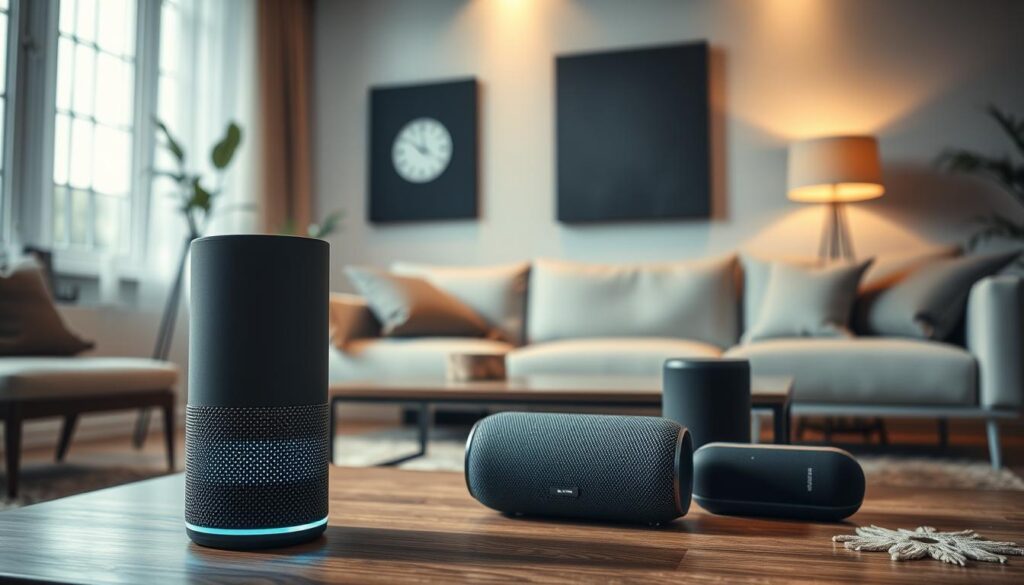
These compact units are great for starting your home audio setup. They are very versatile. They offer plug-and-play convenience, making them perfect for kitchens, offices, or bedside tables.
- Portability: Easily move them between rooms as needed.
- Voice Integration: Control your entire home with simple voice commands.
- Connectivity: Most models function as reliable wireless speakers that sync with your existing network.
Soundbars for Home Theaters
Soundbars are a great way to improve your movie-watching experience. They offer wide, immersive audio that fills the room. This is without the clutter of multiple bulky components.
Many high-end soundbars come with advanced Digital-to-Analog Converters (DACs). These improve sound clarity from PCs and media players. So, every detail of your favorite soundtrack is crisp and clear.
In-Ceiling and In-Wall Speakers
Architectural speakers are perfect for those who want a minimalist look. By mounting them directly into your walls or ceilings, you get a clean, professional aesthetic. This keeps your floor space completely clear.
These systems are ideal for dedicated media rooms or open-concept living areas. You get high-quality sound without visible equipment. While installation might be more involved, the result is a seamless audio experience that feels like part of your home architecture.
Creating a Multi-Room Audio Experience
We can make every room in our house a personal concert hall. By linking our audio devices, our favorite music follows us everywhere. This is thanks to IoT audio solutions that keep the beat going from kitchen to bedroom.
Setting Up Multiple Speakers
The key to a great system is where we place wireless speakers. We should put them in corners or on bookshelves. This helps sound waves bounce well around the room.
For top-notch audio, remember these tips:
- Make sure your Wi-Fi signal is strong everywhere.
- Use a mesh network to avoid lag.
- Group speakers in the app for a unified sound.
Using Zones for Different Audio
Modern setups let us create different audio zones. We can set it so everyone listens to their own stream in different rooms.
For example, kids can listen to podcasts in the playroom while we enjoy jazz in the living room. This way, everyone gets to enjoy their music without any hassle.
Control Options for Each Room
Controlling your home audio should be easy and natural. Modern IoT audio solutions offer us a single app for all control. We can adjust volume or change tracks from our phone.
Whether using voice commands or a touch interface, we’re in charge. This seamless integration keeps our home in perfect sync, no matter how many rooms we add.
Voice Control and Smart Assistants
We now use our voices to control our home audio. Voice control audio lets us manage our media without touching anything.
How Voice Control Enhances Listening
A voice activated sound system makes life easier. You can play music with just your voice, whether you’re cooking or relaxing.
This tech makes switching between activities smooth. No need to search for music for your dinner or workout.
Integrating with Smart Home Devices
Modern audio systems link your music to your smart home. They connect to a hub, syncing with lights, climate, and security.
This integration makes your home respond to you. Your morning news can start playing when your blinds open, making mornings better.
| Feature | Voice Control Audio | Manual Control |
|---|---|---|
| Hands-Free Operation | High | None |
| Multi-Room Sync | Instant | Requires App |
| Smart Home Linking | Seamless | Limited |
| Ease of Use | Excellent | Moderate |
Best Smart Home Sound Products of 2023
We looked at the top audio products of 2023. This year, smart speaker technology became more accessible. Whether you’re updating a small apartment or a big family room, there’s a lot to choose from.
Top Picks for Small Spaces
In small places, size matters but sound quality doesn’t. The Apple HomePod Mini and Nest Audio are great for their clear voice control audio. They show you don’t need a big setup for great sound.
Best for Large Living Areas
Big rooms need more power and sound to fill them. The Sonos Era 300 is perfect for this, offering an immersive sound experience. It makes sure every part of the room gets rich, balanced sound.
Budget-Friendly Options
Good sound doesn’t have to cost a lot. Many smart speaker technology options are affordable. The Amazon Echo Dot is a top pick for its incredible versatility and ease of use. These options let you build a system over time, without spending too much.
Sound Quality Considerations
Your home audio setup is only as good as the environment it’s in. Many focus on speaker brands, but the room matters more. To get the best out of voice control audio, think about both tech and room design.
Importance of High-Resolution Audio
High-resolution audio files offer more detail than standard formats. They capture the studio’s nuances, making your music crisp and immersive. Quality hardware and high-res tracks reveal instruments and vocals with clarity.
Researching Acoustics for Your Home
Many use thin foam panels for room treatment. But foam doesn’t absorb low-frequency sound well. Instead, use dense materials like rock wool for better sound absorption.
Good acoustic treatment stops sound from bouncing off hard surfaces, avoiding muddy audio. Place these panels strategically to turn any room into a listening space. This upgrade boosts any high-end speaker system’s performance.
Customizable Sound Profiles
Today’s tech lets you adjust your sound to fit your room. A voice activated sound system often comes with apps for EQ settings. You can tweak bass and treble to your liking.
Save presets for different activities, like movies or dinner parties. This control keeps your audio balanced, no matter what you’re playing. Tailoring your sound completes your professional home audio setup.
Installation Tips for Smart Audio Systems
Getting your home automation audio systems set up right is key. Modern tech makes it easier, but your space affects sound quality. Plan your layout well to get the best sound.
DIY vs. Professional Installation
Choosing DIY or a pro depends on your tech skills and home setup. Wireless speakers are easy to set up yourself. But, for complex systems, hiring pros for home audio installation saves time and stress.
Experts use special tools and know-how for perfect speaker setup. They can also hide cables for a clean look. Here’s a quick guide to help you choose:
| Feature | DIY Installation | Professional Service |
|---|---|---|
| Cost | Low (Labor is free) | Higher (Includes labor) |
| Complexity | Best for simple setups | Best for whole-home audio |
| Aesthetics | Visible wires likely | Hidden, custom integration |
| Calibration | Manual/Basic | Advanced acoustic tuning |
Placement Strategies for Optimal Sound
Where you place speakers is crucial for great sound. Avoid corners for clear bass and sound. Use an equilateral triangle for balanced sound.
“The room is the most important component of your audio system. If you ignore the physics of your space, even the most expensive speakers will fail to reach their full potential.”
Network Requirements for Smart Speakers
A strong voice activated sound system needs a solid network. High-res audio streaming requires steady bandwidth. Use a mesh Wi-Fi system for a reliable signal in every room.
For better performance, connect your hub to the router with an Ethernet cable. This boosts your home automation audio systems performance. A stable network means your voice activated sound system works smoothly.
Outdoor Smart Sound Solutions
Bringing your music outside to the garden or deck makes your living space bigger. Many people love listening to their favorite songs while enjoying the sun or having dinner outside. With some planning, your backyard can become a part of your home’s entertainment area.
Best Practices for Outdoor Audio
Think about your space’s layout to get sound evenly. Place speakers in shaded spots or under eaves to avoid sun and rain damage. This way, your patio’s sound is balanced.
It’s key to keep the volume down to respect your neighbors and keep the sound clear. Using many small speakers instead of one big one helps. This method keeps the sound even and prevents it from being too loud in one place.
Choosing Weather-Resistant Speakers
When picking speakers for outside, durability is key. Look for high IP ratings to ensure they can handle dust and water. These IoT audio solutions are made to handle temperature changes and humidity without losing quality.
Choosing marine-grade materials will make your speakers last longer. Look for speakers with rust-proof parts and UV-resistant covers. These features help your speakers work well even in harsh weather all year.
Enhancing Outdoor Gatherings with Music
Music makes any event better, from casual barbecues to fancy parties. By adding connected sound devices to your yard, you can control the music from your phone. You can play different songs in different areas, like the pool or dining space.
Modern IoT audio solutions connect easily with your indoor setup. This means your music can follow you everywhere, making your outdoor events unforgettable. With the right setup, your gatherings will be something your guests will always remember.
Future Trends in Smart Home Audio
The world of home entertainment is changing fast. We’re moving toward smarter, more personal listening experiences. Home automation audio systems will soon understand and adapt to our daily lives.
Innovations on the Horizon
Engineers are working on making connections between devices smoother. Soon, smart speakers will guess what we need before we ask. This is the future of smart home audio.
Sustainability in Audio Tech
Companies like Sonos and Google are making eco-friendly products. They use materials and designs that save energy. This green trend will shape the future of electronics.
The Role of AI in Audio Customization
Artificial intelligence is key in making audio systems smarter. It will adjust sound to fit each room perfectly. Stay ahead of the curve by exploring these new technologies. Share your thoughts on how these changes will impact your listening habits.