
 Zoe Nora
Over 80% of modern television sets produce sound without the depth and clarity needed for an immersive experience. Most built-in speakers cannot handle the dynamic range of today’s high-quality media.
Your living room deserves better sound. Adding a dedicated home audio amplifier can transform your space into a vibrant soundstage. This key component becomes the heart of your stereo system, connecting your favorite streaming devices to your speakers.
You may be building a high-fidelity amplifier setup for music. You may also need a robust amplifier for home theater for home theater applications. We will guide you through power, connectivity, and speaker matching to help you choose a stereo amplifier for your needs.
Key Takeaways
- Upgrading from TV speakers significantly improves audio clarity and depth.
- A dedicated unit acts as the central hub for all your media sources.
- Proper power matching is vital for achieving high-fidelity sound quality.
- Consider your room size and budget before making a final purchase.
- Strategic speaker pairing ensures your equipment performs at its peak.
What is a Stereo Amplifier?
At the heart of every high-fidelity sound system sits the stereo amplifier. It takes low-level audio signals from sources, such as a turntable or digital streamer, and boosts them to drive speakers. Although people often use these terms alike, a dedicated amplifier differs from an audio receiver.
A standard stereo receiver usually includes a radio tuner for listening to FM or AM broadcasts. By contrast, a pure stereo amplifier focuses only on amplification and control of your audio inputs. Without tuner circuitry, manufacturers can often provide cleaner power and better signal integrity for music.
The Role of a Stereo Amplifier in Audio Systems
The device bridges your music sources and speakers. It ensures delicate electrical signals from your media are amplified without unwanted noise or distortion. This process is vital for the clarity and depth audiophiles crave.
You might consider an amplifier for home theater setup if music quality matters most. Surround sound systems handle many channels, but a high-quality stereo unit can improve your front left and right speakers. This approach gives the channels that matter most for stereo music playback more power and precision.
Types of Stereo Amplifiers Explained
There are several ways to configure amplification, based on your space and budget. An integrated amplifier is most common because it combines the pre-amplifier and power amplifier stages in one convenient chassis.
Those seeking ultimate performance often prefer separate components. A standalone pre-amplifier controls volume and source selection, while a dedicated power amplifier drives the speakers. This separation minimizes interference and offers more flexibility when you upgrade your system over time.
Key Features to Look For
Understanding the core features of an audio amplifier helps create a great listening experience. Marketing numbers can distract, but performance depends on how well the device matches your speakers and room.
Power Output and Wattage Considerations
Many buyers assume higher wattage always means better sound quality. Instead, consider speaker sensitivity and impedance when choosing the right match for your system.
A high-quality home audio amplifier delivers enough clean power to drive speakers without distortion. Low-sensitivity speakers need more power to reach comfortable listening levels. Check your speakers’ impedance rating to ensure the unit can safely handle the load.
Connectivity Options: Wired vs. Wireless
Modern systems offer several ways to connect your favorite music sources. Choose the reliability of a wired connection or the convenience of wireless streaming.
Wired inputs, such as RCA, optical, or balanced XLR ports, provide a stable signal for high-resolution audio. Conversely, wireless features such as Bluetooth or Wi-Fi let you stream music from your smartphone or tablet. A versatile audio amplifier often includes both types for compatibility with legacy and modern devices.
Size and Design Compatibility with Your Space
Equipment dimensions matter as much as internal components. Ensure your chosen home audio amplifier fits comfortably inside your media console or on your shelf.
Proper ventilation is essential for hardware longevity. Leave several inches of clearance around the unit, allowing heat to escape during operation. Also consider front panel controls; easy access to volume and input selection improves daily use.
How to Choose the Right Size of Amplifier
Finding the right match for home audio means balancing room physics with your listening habits. Many people think small rooms need tiny units, but that is not always true. A well-configured stereo system needs enough headroom for dynamic peaks without distortion, whatever the floor plan.
Understanding Room Size and Listening Preferences
Room dimensions affect how sound waves travel through and interact with your space. Larger rooms often need more power, especially when you sit far from the speakers. Even in compact rooms, a high-quality stereo amplifier can give better control and clarity at lower volumes.
Your listening habits also shape your needs. If you prefer energetic music at high volumes, you need more power for clean output. People who enjoy quiet background listening may value the signal-to-noise ratio more than raw wattage.
Matching Output Power with Speaker Sensitivity
Do not judge equipment by wattage labels alone. Speaker sensitivity, measured in decibels (dB), often matters most. High-sensitivity speakers need little power for loud levels, while low-sensitivity models need a stronger stereo amplifier to perform well.
Think of this relationship as a partnership between your speakers and your stereo system. Matching these components brings effortless dynamics and a more immersive soundstage. Check your speaker specifications to ensure your hardware can drive them comfortably without straining internal components.
Top Brands in Stereo Amplifiers
Selecting the perfect audio equipment means looking beyond brand recognition to find what fits your specific needs. While many companies offer hardware, the best stereo amplifier for your home should match your speakers, room, and listening habits. We encourage you to prioritize technical specifications and your own ears over marketing hype.
A Look at Iconic Brands: Yamaha and Marantz
Yamaha and Marantz have long held a reputation for excellence in the high-fidelity market. Yamaha is celebrated for its natural sound signature and robust build quality. Yamaha’s history in musical instruments and audio engineering offers a unique view of sound reproduction.
Marantz, on the other hand, is frequently praised for its warm, musical presentation. Many audiophiles prefer this brand when they want an audio receiver that reveals subtle textures in complex recordings. Both companies offer strong support and solid warranty coverage, adding value to your long-term investment.
Emerging Brands to Consider: Denon and Onkyo
Denon and Onkyo have earned a strong place in the market through modern connectivity and feature-rich designs. These brands offer excellent value for buyers who want new technology without paying extra for legacy status. They are especially skilled at adding wireless streaming to a traditional stereo receiver setup.
When evaluating these options, consider how their features match your daily use. An audio receiver from these manufacturers might offer more inputs or advanced room correction software compared to more traditional models. Ultimately, the best stereo amplifier balances your budget with the performance you demand for your home audio needs.
Budgeting for Your Stereo Amplifier
Smart spending can help you create a truly immersive listening experience. While shopping for a home audio amplifier, you may get lost in specifications and high prices. Focus on your needs instead of buying the most expensive unit, and you may find better value.
Many listeners find a dedicated stereo receiver sounds better for music than a multichannel AV receiver at the same price. Without extra video processing, manufacturers can put more into the power supply and internal circuitry that improve sound quality.
Entry-Level Options: Affordable Amplifiers
Entry-level gear suits people building their first serious system. These units focus on reliable power and essential connections instead of fancy digital features. You can often find a solid high-fidelity amplifier with clean, steady sound at an affordable price.
“The bitterness of poor quality remains long after the sweetness of low price is forgotten.”
When shopping at this level, look for models that offer:
- Basic analog inputs for turntables or CD players.
- Robust build quality that avoids excessive plastic.
- Enough wattage to drive your specific speakers comfortably.
Mid-range Choices for Serious Enthusiasts
As you enter the mid-range, component quality and versatility improve significantly. This is often where you find the best stereo amplifier for an average home setup. These models often include advanced DACs (Digital-to-Analog Converters) and better shielding to reduce interference.
Spending a little more improves speaker compatibility and helps prepare your system for the future. You gain wireless streaming and refined power stages that handle complex musical passages more easily. This range suits people who want noticeable clarity without diminishing returns.
High-End Models: Worth the Investment?
High-end audio equipment suits listeners who demand absolute precision. These units often use hand-selected components, massive power supplies, and heavy-duty chassis construction. Although they cost more, they offer longevity and sonic transparency.
Whether these models are worth the cost depends on your ears and source material. With high-resolution audio files and high-sensitivity speakers, you may hear a profound difference in detail. Before spending your entire budget on the amplifier, ensure your room acoustics can support it.
Setup and Installation Tips
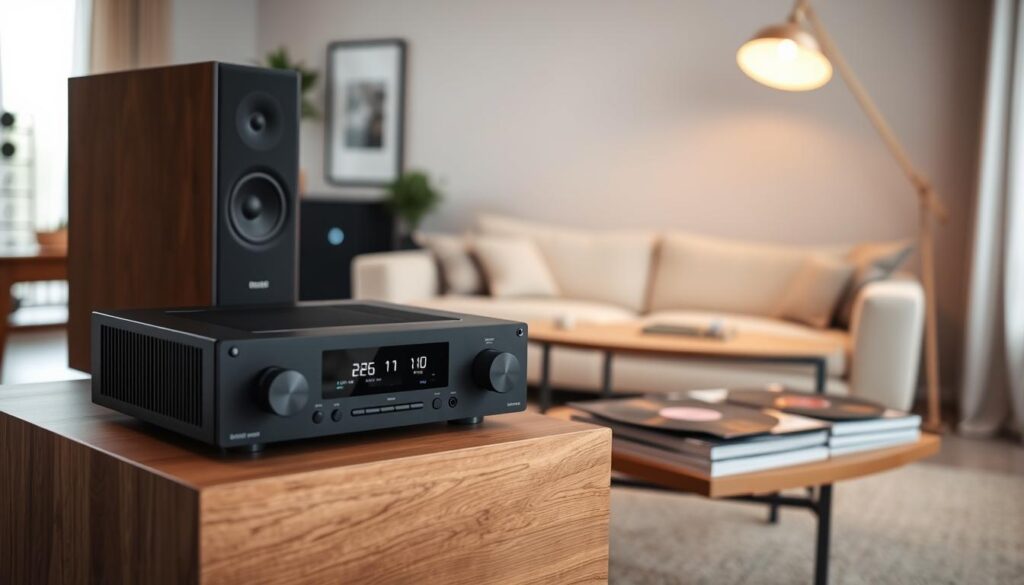
Setting up your sound system can improve your listening experience. Whether you install a dedicated audio amplifier or versatile stereo receiver, follow a clear order for strong performance. Start in a clear, open space to prevent overheating and make cable management easier.
Basic Setup for Beginners
Start by placing your components on a stable, flat surface. Connect sources, such as a disc player or streaming device, to the correct inputs on your unit. For an amplifier for home theater, connect your television through the correct HDMI or optical port to route audio signals.
Next, connect your speakers with high-quality wire. Match the positive and negative terminals on each speaker and the unit. Before powering on, check your input selections to prevent sudden volume spikes.
Common Mistakes to Avoid During Installation
Rushing can cause problems, even for experienced users. Avoid these common mistakes to save time and protect your equipment from wear.
- Reversing speaker polarity: Always verify that the red and black terminals align correctly to maintain proper sound imaging.
- Blocking ventilation: Never place items on top of your audio receiver, as these units require airflow to prevent overheating.
- Input errors: Double-check that your source is plugged into an “Input” rather than an “Output” port.
- Subwoofer limitations: Before adding a bass unit, confirm if your audio amplifier features a dedicated subwoofer output or if your sub supports high-level speaker inputs.
When using a stereo receiver, read the manual about impedance settings. Match your speakers with the correct power output for long-term reliability. For an amplifier for home theater, use long cables to prevent connection-point tension and signal loss over time.
Key Accessories to Complement Your Amplifier
Your listening experience depends on the small details that connect your components. Your amplifier is the heart of your stereo system, while cables carry signals to your speakers. Quality accessories help your equipment perform at its best.
Speaker Cables and Their Importance
Choosing the right speaker cables helps protect signal quality. Choose a suitable length to reduce clutter, and use wire thick enough for your power needs. Always verify that you maintain correct polarity by matching positive and negative terminals on the amplifier and speakers.
Secure terminations, such as banana plugs or spade connectors, create reliable connections and slow oxidation. They make component changes easier without harming delicate copper strands. A clean, tight connection matters more than costly, exotic cabling.
Audio Interconnects: What You Need to Know
Knowing the difference between line-level and speaker-level connections helps you build a successful setup. Audio interconnects usually carry low-voltage signals between source components, such as CD players or streamers, and your amplifier. These shielded cables prevent interference, which is crucial for maintaining a quiet background in your listening room.
If your amplifier lacks a dedicated subwoofer output, you can often use high-level inputs to add your bass module. This method uses standard speaker wire to bridge the connection and keep your stereo system balanced and cohesive. These practical accessory choices create a strong foundation for years of high-fidelity enjoyment.
Maintenance and Care for Longevity
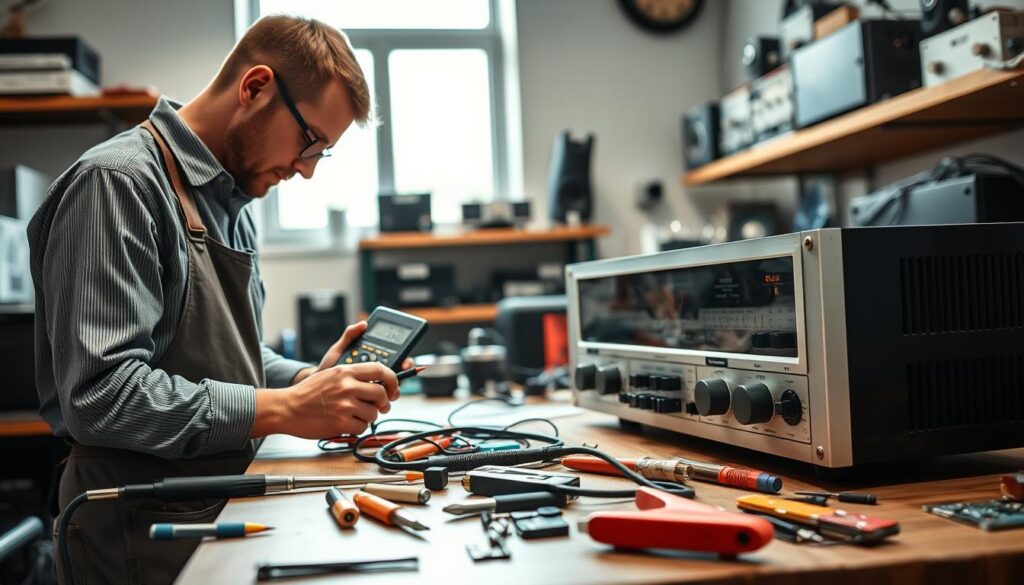
Protecting your investment starts with proactive equipment care. Respect your gear, and your audio amplifier can deliver high-fidelity sound for many years. Regular care prevents common problems that can cause early hardware failure.
Routine Checks and Cleaning Your Equipment
Good amplifier maintenance begins with a clean environment. Dust is the primary enemy of internal electronics because it blocks airflow and causes overheating. Use a soft, dry microfiber cloth to clean exterior surfaces often.
Make sure your unit has enough ventilation space on every side. If it runs hotter than usual, check for blocked vents or built-up debris.
Also, inspect cables regularly to ensure they stay secure and free from oxidation. For detailed hardware care, explore these tips for longevity to keep your system performing well.
“The quality of your sound is only as good as the care you put into your equipment.”
Upgrading Components Over Time
When you want better sound, avoid impulse purchases. Choose strategic amplifier upgrades that fix the weakest link in your current chain. The bottleneck may be the speakers or room acoustics, not the power unit.
Review these steps before changing your setup:
- Evaluate your current speaker sensitivity and room size.
- Identify if your audio amplifier provides enough headroom for your listening habits.
- Consider if your source components or cables are limiting the overall fidelity.
Prioritizing amplifier maintenance and making informed choices helps create a balanced system. A well-maintained audio amplifier remains the heart of a great home theater or music room. Thoughtful amplifier upgrades produce better results than replacing working gear without a clear goal.
Final Thoughts on Your Stereo Amplifier Purchase
The right audio equipment can transform how you experience sound in your living space. A high-fidelity amplifier acts as the heart of your listening space, turning raw data into immersive music.
Making the Best Choice for Your Home Audio
Your ideal stereo amplifier should match your room size and speaker sensitivity, not just its price. A balanced stereo system brings clear sound to records and depth to movie nights. Choose equipment that fits your listening habits for lasting satisfaction.
Enjoying Your Music: Final Tips for Beginners
A quality setup takes patience and careful planning. Begin with stable connections and place speakers to improve sound spread.
You can use an amplifier for home theater as a flexible tool for your media library. As you learn your gear, make gradual upgrades to refine your audio journey.
The best stereo amplifier brings you closer to the artists you love each day.