
 Zoe Nora
More than 70% of home cinema enthusiasts miss their system’s full potential by overlooking its central processing unit. Your home theater equipment acts as the entertainment space’s brain and manages signals from every source to your display.
Choosing the right AV receiver 4K means more than buying the most expensive model. A mid-range unit may work better when it matches your room size and speaker layout.
We help you understand power needs, HDMI connectivity, and ways to future-proof your gear. By focusing on 4K Ultra HD audio standards, you can keep your setup immersive for years. Let us guide you toward the right choice for your living space.
Key Takeaways
- The central hub determines the overall performance of your entire media system.
- Matching hardware to your specific room size is more important than buying the priciest model.
- Proper power management ensures your speakers deliver clear and balanced sound.
- Future-proofing requires checking for the latest high-definition video and audio standards.
- Strategic planning helps you avoid overspending on features you will never actually use.
What is an AV Receiver and Why You Need One?
An AV receiver is the central brain of your media setup. It connects devices, sends video to your display, and processes audio for your speakers.
Without this piece of audio visual equipment, managing game consoles, streaming boxes, and Blu-ray players creates cable chaos. It lets you switch sources with one remote.
Definition and Functionality
An AV receiver routes video, decodes complex audio signals, and powers your speakers. It translates raw data from media sources into high-quality sound and pictures.
Think of it as your home theater’s traffic controller. It sends the right signal to the right place at the right time, maintaining perfect synchronization between sight and sound.
Key Benefits of an AV Receiver
A dedicated receiver helps you build a strong surround sound system. Centralized audio processing gives you control over speaker setup and sound balance.
These units also amplify sound better than most modern television speakers. This creates a richer, more dynamic soundstage that fills your room completely.
| Feature | Standard TV Audio | AV Receiver System |
|---|---|---|
| Audio Quality | Basic Stereo | High-Fidelity Surround |
| Device Inputs | Limited | Multiple HDMI/Analog |
| Amplification | Low Power | High Power Output |
| Sound Customization | Minimal | Advanced EQ Settings |
How AV Receivers Enhance Your Media Experience
Modern home entertainment uses object-based audio formats. A high-quality Dolby Atmos AV receiver lets you hear sound move through three-dimensional space, including overhead effects.
This creates a truly immersive environment that places you inside the movie or music. A capable Dolby Atmos AV receiver helps your surround sound system handle the latest cinematic standards with ease.
This hardware suits anyone who values high-performance media. It transforms a standard living room into a professional-grade theater experience for daily enjoyment.
Features to Look for in a 4K AV Receiver
Start by identifying the features that best fit your home cinema setup. Choosing the right AV receiver 4K keeps your system ready for new media formats and gaming consoles. Focus on a few key technical features for a smooth experience.
https://www.youtube.com/watch?v=bZD9ySSyadY
HDMI Ports and Compatibility
Your receiver’s connections support your entire entertainment system. Choose an HDMI input/output AV receiver with enough ports for current devices. Leave room for future additions, such as next-generation gaming consoles or high-end media players.
Look for current HDMI standards that support high-bandwidth 4K and 8K signals. Also, eARC (Enhanced Audio Return Channel) is vital. It sends high-quality audio from your television to the receiver through one cable, which simplifies cable management.
Audio Formats and Sound Quality
Immersive sound matters as much as a sharp picture. A high-quality Dolby Atmos AV receiver can turn your living room into a cinema. Object-based audio creates a three-dimensional soundscape.
Beyond Atmos, make sure the unit supports DTS:X for broader compatibility with movie soundtracks. Built-in room correction software is also useful. It analyzes room acoustics and adjusts output for the best 4K Ultra HD audio experience in your space.
Video Processing Capabilities
Your receiver controls the video chain, so its processing power matters. Modern units should support HDR formats, including Dolby Vision and HDR10+, which improve color depth and contrast.
A capable HDMI input/output AV receiver passes these signals without quality loss, so your display receives the best image. When paired with a strong Dolby Atmos AV receiver, it balances visual clarity and sonic depth. Verify that the unit handles high frame rates for smooth motion in fast gaming and sports broadcasts.
Top Brands for 4K AV Receivers
Four brands stand out for innovation and reliability in home theater technology. Choosing a manufacturer helps you find top rated AV receivers for lasting home use.
Each brand offers strengths in room calibration, amplification, and connectivity. Knowing these differences helps match your choice to your room size and speaker needs.
Yamaha
Yamaha is respected for its proprietary YPAO room calibration technology. It studies room acoustics and adjusts output for better sound quality.
The Yamaha A2A shows this focus on performance. It ranks among the best 4K AV receivers for easy use and steady, high-fidelity audio.
Denon
Denon is an industry powerhouse known for robust amplification and advanced features. Its units often include Audyssey room correction, which creates a detailed soundstage in any listening environment.
The Denon AVR-X3700H has 9.2 channels and 105 watts per channel. It is also a versatile AV receiver with Bluetooth, allowing easy wireless music streaming from any mobile device.
Onkyo
Onkyo has gained traction by adding DIRAC Live, premium room correction software with great precision. This technology helps users achieve professional-grade audio in their living rooms.
The Onkyo TX-RZ50 is a flagship choice for enthusiasts, with 9.2 channels and 120 watts per channel. It expands to 11.2 channels, offering exceptional flexibility for future system upgrades.
Marantz
Marantz is famous for elegant, slim-line designs that keep their power and function. It suits users seeking a Dolby Atmos AV receiver for small media cabinets or minimalist setups.
The Marantz NR1711 reflects this design philosophy. Despite its compact 7.2-channel frame, it supports 4K video and includes HEOS streaming. You can access all your favorite digital content without cluttering your space.
Budgeting for Your AV Receiver Purchase
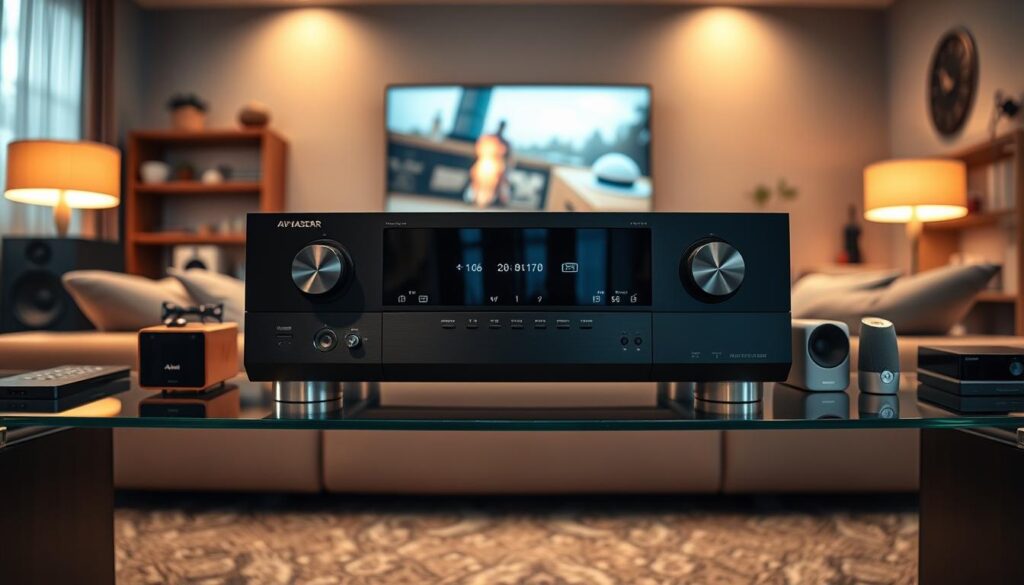
Choosing the best 4K AV receivers can feel overwhelming without a clear budget plan. Set your priorities early, so your purchase matches your entertainment needs. Group your spending to avoid paying for features you may never use.
Understanding Price Ranges
The market for home theater equipment has three main price tiers. Entry-level models offer basic connections and surround sound for smaller rooms. Mid-range units provide more power, room correction, and HDMI inputs for growing systems.
Premium receivers sit at the top, with high-end components and extensive multi-zone capabilities. They suit enthusiasts who want the highest audio fidelity and video processing. Your room size and speaker count should guide your choice.
Cost vs. Features Analysis
Higher prices do not always guarantee better performance. Models focused on core functions can offer excellent value without needless extras. The Onkyo TX-NR5100 is standout audio visual equipment with 80 watts of power at an accessible price under $600.
“The bitterness of poor quality remains long after the sweetness of low price is forgotten.”
Compare each receiver’s channel count and power delivery with your speaker setup. Prioritize features like dynamic room correction and modern HDMI standards over secondary aesthetic additions. This approach helps you find the best 4K AV receivers without wasting money.
Long-Term Value Considerations
Investing in quality home theater equipment involves more than its initial purchase price. Consider future upgrades, such as adding more speakers or new streaming technologies. A receiver with a strong build and regular firmware updates will last longer than a cheaper, disposable alternative.
Consider total ownership costs, including cables, mounting hardware, and possible professional calibration services. Choosing a versatile unit now can prevent the frustration of replacing it within a few years. Smart budgeting turns your audio visual equipment into a lasting foundation for your home cinema.
Best 4K AV Receivers for Different Needs
Whether you love music or watch casually, the market offers gear for many media setups. Your choice depends on listening habits, room size, and future upgrades. We grouped the best 4K AV receivers to help you choose wisely.
For Audiophiles
If pure, detailed sound matters most, choose a receiver with strong audio and streaming features. The NAD T 758 V3i is a top choice for serious listeners. This AV receiver 4K model uses HybridDigital amplification for clean, powerful sound.
It also includes BluOS streaming for easy access to high-resolution audio files. Support for IMAX Enhanced and DTS:X helps keep your experience current for years.
For Home Theater Enthusiasts
Enthusiasts need systems that can grow with changing home theater setups. A quality Dolby Atmos AV receiver creates an immersive, three-dimensional soundstage throughout your room.
These users often want more channels and room for additional speakers. Strong processing power handles complex soundtracks without losing clarity during intense action scenes.
For Casual Users
If you want a simple surround sound system, choose gear without professional-level complexity. Models like the Yamaha RX-V385 offer reliable 5.1-channel sound for smaller living rooms or bedrooms.
The Yamaha A2A offers a more flexible 7.2-channel setup while remaining easy to use. Both models focus on simple installation and steady performance for everyday entertainment.
| Model | Primary User | Key Strength | Channel Count |
|---|---|---|---|
| NAD T 758 V3i | Audiophiles | HybridDigital Amp | 7.1 |
| Yamaha A2A | Enthusiasts | Atmos Expansion | 7.2 |
| Yamaha RX-V385 | Casual Users | Ease of Use | 5.1 |
How to Set Up Your AV Receiver
Setting up new equipment can seem daunting, but this guide walks you through each step. A well-installed system keeps audio and video signals clear for your family.
Connecting to Your TV and Speakers
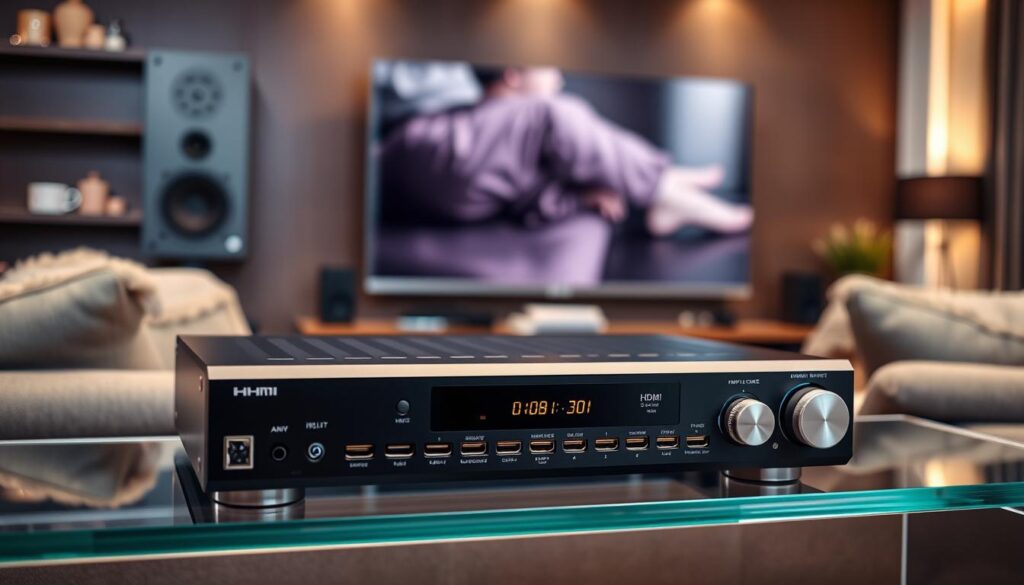
A great home theater starts with physical connections between its components. Find the primary HDMI input/output AV receiver ports on the unit’s back. Connect gaming consoles or streaming boxes to the inputs, then use ARC or eARC to link the receiver and television.
Next, connect each speaker to its matching terminal. Ensure your surround sound system stays balanced by matching the positive and negative leads. For a powered subwoofer, use a dedicated RCA cable with the LFE or subwoofer pre-out port.
Configuring Settings for Optimal Performance
After securing the hardware, calibrate the software for your room’s unique acoustics. Most modern units use an automated microphone test to measure speaker distance and channel levels. Follow our receiver configuration guide for easy setup to set crossover frequencies for your speaker size.
If you own an AV receiver with Bluetooth, open the network or wireless menu to pair mobile devices. Then stream music directly to your speakers. Choose the listening mode, such as Dolby Atmos or DTS:X, for the content you watch.
“Calibration is not just about volume; it is about creating a cohesive soundstage where every detail is heard exactly as the director intended.”
Troubleshooting Common Issues
Even with careful planning, minor technical problems may appear during startup. If sound is missing, check that the selected input matches the active device. For lip-sync problems, adjust audio delay in the video menu to match sound with on-screen action.
| Issue | Potential Cause | Recommended Fix |
|---|---|---|
| No Audio | Incorrect Input | Verify source selection |
| Sync Delay | Processing Lag | Adjust Lip-Sync setting |
| Weak Bass | Crossover Error | Check subwoofer phase |
| No Signal | HDMI Handshake | Power cycle all devices |
If issues continue, update your firmware to the latest version. Persistent problems often come from outdated software or loose cables, so inspect connections before restoring factory defaults.
Enhancing Your Home Theater with Additional Accessories
A great cinematic experience often depends on small details. While the core unit guides your system, the right home theater equipment creates a professional-grade cinema.
Speakers and Subwoofers
Choosing the right speakers helps create balanced sound. Check speaker sensitivity and your receiver’s channel capacity so your audio visual equipment delivers clear, distortion-free sound.
Subwoofer placement matters for deep, powerful bass. Test different corners to match your room’s unique dimensions. Physical boundaries strongly affect how low-frequency waves travel through your space.
Streaming Devices
Modern entertainment depends on easy connectivity. Many users prefer an AV receiver with Bluetooth to connect mobile devices and high-fidelity sound systems.
Dedicated streaming hardware provides advanced features, such as HEOS and built-in Wi-Fi. These tools support voice-assistant support and make music and movie control easier.
Universal Remotes
Managing many components can become a chore without central control. A quality universal remote puts your setup in one interface and replaces five controllers on your coffee table.
A programmable remote lets you create custom macros. One button can power on your AV receiver with Bluetooth, your television, and your streaming device. This helps your audio visual equipment work in perfect harmony.
Customer Reviews and Ratings to Consider
We believe real-world experiences from other users guide shoppers seeking audio gear. Technical specifications set a baseline, but daily home use reveals how top rated AV receivers perform.
Where to Find Reliable Reviews
For a clear picture, consult professional audio publications and verified customer feedback. Professional reviews examine technical benchmarks, while user forums reveal long-term reliability and common quirks.
Check multiple sources to see whether feedback stays consistent. Choose platforms that verify purchases because those reviews face less bias and fewer promotional incentives.
Analyzing User Feedback
When evaluating the best 4K AV receivers, study recurring themes in user comments. Many owners highlight pain points that manufacturers may overlook in marketing materials.
Study these critical areas in your research:
- Setup Difficulty: Is the interface intuitive or overly complex?
- Connectivity: Does the AV receiver with Bluetooth maintain a stable connection?
- Thermal Management: Do users report excessive heat during long sessions?
- HDMI Behavior: Are there handshake issues with modern gaming consoles?
Understanding Ratings
Ratings offer a starting point, not a final verdict. A high score may show excellent sound quality, yet hide problems with room correction software or firmware updates.
| Review Metric | What to Look For | Why It Matters |
|---|---|---|
| Sound Quality | Clarity and Depth | Core performance |
| Setup Ease | User Interface | Initial frustration |
| Reliability | Long-term durability | Investment value |
Look for patterns instead of individual complaints. If many users report one issue, it is likely a real design flaw. However, isolated negative reviews may result from user error or incompatible equipment.
Comparing Receiver Specifications and Performance
We often overlook fine print when choosing a centerpiece for our media room. Understanding your gear’s technical abilities helps keep your home theater ready for modern media. Focus on key performance measures to choose an AV receiver 4K for your needs.
Frame Rates and Resolution Support
Modern displays need high bandwidth for crisp images. When choosing an HDMI input/output AV receiver, check support for 4K at 120Hz or 8K at 60Hz. These features matter to gamers and movie fans seeking smooth motion and clear, detailed visuals.
Also, choose a device that supports modern HDR formats, such as Dolby Vision and HDR10+. These technologies widen the color range and improve contrast. A strong AV receiver 4K connects source devices smoothly to your display.
Audio Channel Configuration
The channel count shapes your soundstage. Most systems range from 5.1 to 11.2 channels and support immersive 4K Ultra HD audio experiences. Look for preamp outputs if you plan to add external amplifiers for more power.
- 5.1 Channels: Ideal for smaller rooms and standard setups.
- 7.1 Channels: Adds rear surround speakers for better depth.
- 9.2+ Channels: Supports advanced formats like Dolby Atmos and DTS:X.
Power Output and Efficiency
Wattage figures can mislead you unless you consider speaker sensitivity and room size. A high-quality HDMI input/output AV receiver delivers steady power across all channels at once. Match your power needs to your listening area to prevent distortion at high volume.
| Feature | Entry-Level | High-End |
|---|---|---|
| Resolution | 4K 60Hz | 8K 60Hz / 4K 120Hz |
| Audio Processing | Standard Surround | Advanced 4K Ultra HD audio |
| Power Output | 50-80W per channel | 100W+ per channel |
Always value all-channel performance over peak power ratings for one channel. This gives your speakers clean, steady energy during intense action scenes. Reviewing these specifications carefully can provide better entertainment for years to come.
Final Thoughts on Choosing the Right AV Receiver
Choosing the right hub for your media room means balancing technical specifications with your lifestyle. Consider your room dimensions and speaker layout when building a high-quality experience.
Recap of Key Considerations
Choose an AV receiver 4K for long-term value instead of short-term savings. Mid-tier models from Denon or Yamaha often balance power and future-ready connections. These units easily manage your home theater equipment and support modern high-resolution formats.
Making an Informed Decision
Compare current needs with possible upgrades to your surround sound system. Room correction software and HDMI bandwidth help protect signal quality. Map your speaker channels before choosing a model to ensure full compatibility.
Enjoying Your Home Entertainment Experience
A well-configured setup changes how you enjoy movies, music, and gaming. Time spent on initial calibration can deliver immersive audio and crisp visuals for years. We hope this guide helps you build a reliable system that brings favorite content to life.