 Zoe Nora
Did you know that nearly 40% of signal interference in home studios comes from bad connections? Many people don’t realize how important professional sound equipment links are. These links are like the nervous system for your music, making sure every note reaches your ears clearly.
We think keeping pristine audio signal integrity is key to better listening. Some ads promise magic fixes, but the real goal is to cut down on noise and ensure your gear lasts long. You can find a complete guide to audio cables to learn how different materials and shielding affect your gear.
In this guide, we’ll cover the basics you need to know. We’ll talk about connector types, length, and budget-friendly care tips. By learning these technical basics, you can create a system that works well every time you play music.
Key Takeaways
- Proper connections are essential for maintaining signal purity and reducing background noise.
- Understanding the difference between balanced and unbalanced lines helps prevent interference.
- Material choices, such as copper or silver, influence the tonal character of your output.
- Compatibility between your hardware and plug types is the first step toward a successful setup.
- Objective testing remains the best way to determine which gear works best for your unique environment.
Understanding Audio Cables and Their Importance
We often focus on speakers and amplifiers, but the quality of your audio signal integrity relies heavily on the cables you choose. These components act as the essential bridge between your devices. They ensure that sound travels from the source to your ears without unnecessary loss.
What Are Audio Cables?
At their core, audio cables are conductors and assemblies designed to transfer analog or digital signals between compatible hardware. They provide the physical path for electrical currents to move through your system. Without these reliable links, your high-end equipment would remain silent.
How Do Audio Cables Affect Sound Quality?
Many people mistakenly believe that the most expensive product is always the best choice. In reality, superior sound depends on finding the right specifications for your specific setup. A secure connection is far more important than a high price tag.
Maintaining audio signal integrity requires cables that are built to handle your equipment’s power and frequency needs. When you use interference-resistant cables, you protect your audio from external noise and hum. This ensures that the final output remains clean and accurate to the original recording.
Different Types of Audio Cables
The market offers a wide variety of options tailored to specific tasks. Whether you are setting up a home studio or a professional stage, choosing the correct category is vital for performance.
- Analog Cables: Used for traditional signals like those from turntables.
- Digital Cables: Designed to carry binary data for modern processors.
- Balanced vs. Unbalanced: Balanced options are better at rejecting noise over long distances.
- Multicore Cables: These bundles are preferred by nearly 85% of surveyed audio professionals for complex setups.
| Cable Category | Primary Use | Key Benefit |
|---|---|---|
| Instrument | Guitars and Keyboards | High durability |
| Microphone | Vocal recording | Balanced signal |
| Speaker | Amplifier to speaker | High power handling |
| Multicore | Professional live sound | Efficient cable management |
A Closer Look at Cable Types
Choosing the right cable is key to a top-notch audio setup. The market offers many audio cables, each with its own design. Knowing these details helps keep your sound clear from start to finish.
Balanced vs. Unbalanced Cables
Balanced and unbalanced cables differ in how they fight noise. Unbalanced cables, with just two wires, can pick up interference over long distances. Balanced cables, with three wires, cancel out noise, making them great for studios.
For big stages or complex studios, balanced cables are a must. They keep the signal clean by blocking hum and buzz. But for short distances in a tidy space, unbalanced cables work just fine.
Digital vs. Analog Cables
It’s important to know if you need analog or digital cables. Analog cables send sound as a continuous wave, while digital cables send data as pulses. Make sure your cables match your devices’ needs to avoid signal problems.
For more on these details, check out this guide on audio cable types. The right cable is crucial for the best sound.
Common Connector Types Explained
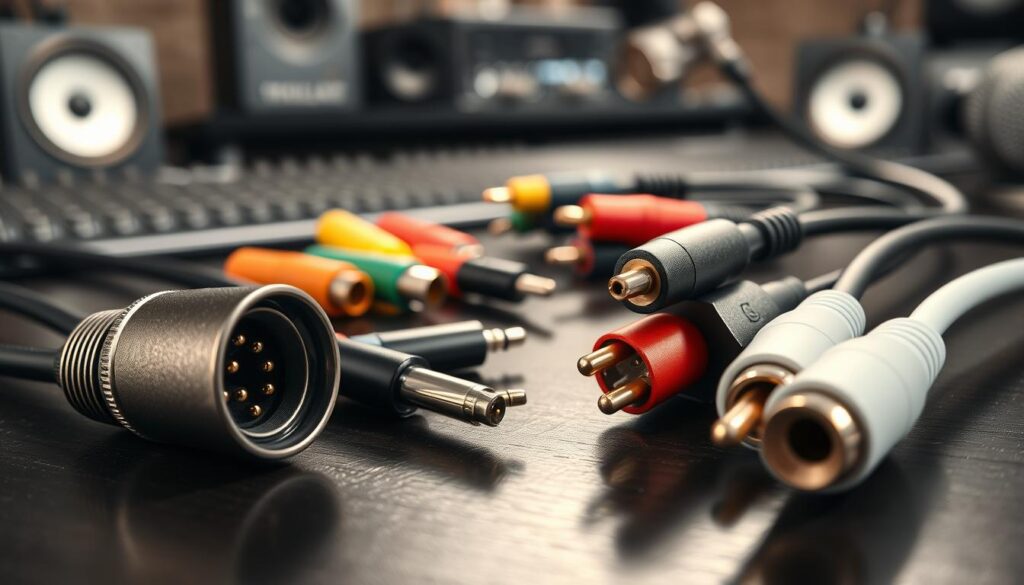
The type of connector your gear uses determines the cable you need. XLR is for balanced mics, TRS and TS for instruments, and RCA for home audio. Home theaters use HDMI and optical for digital audio.
It’s essential to use high-quality connectors for long-lasting performance. These, along with shielded cables, prevent damage. Good hardware keeps your sound clear for years.
Key Features to Consider When Buying Audio Cables
When we pick cables, we often ignore the technical details. These details are key to a clear sound. To get the best sound, we need to focus on the cable’s construction.
Cable Length and Its Impact
Choosing the right length for your audio cables is crucial. Too long and it’s hard to manage. Too short and it might not reach.
Measure the distance between your devices carefully. You want enough length to avoid tension but not so much it picks up interference. This keeps your system organized and working well.
Shielding and Noise Reduction
Outside noise can mess up your sound. That’s why we look for interference-resistant cables. These cables have layers to block out noise.
- Foil shielding: Great against high-frequency noise.
- Braided shielding: Strong and blocks low-frequency noise well.
- Layered shielding: A mix of materials for all-around protection.
Also, look for durable construction. Good cables have strong points where they connect. This keeps the wires from breaking easily.
Material Quality: Copper vs. Other Metals
The material inside your cable matters a lot. Copper is the top choice for most. About 65% of pros use it for studios because it’s reliable.
There are three main types of conductors:
| Material | Conductivity | Best Use |
|---|---|---|
| Standard Copper | Good | General home use |
| Oxygen-Free Copper (OFC) | Excellent | Professional recording |
| Silver | Superior | High-end audiophile systems |
Oxygen-free copper is popular because it’s pure. Silver is better but costs more. Copper is the best value for most of us.
Matching Cables to Your Audio Equipment
Choosing the right cables for your audio gear is key. It’s not just about buying expensive equipment. Every cable must work well together for a clear sound.
Check your devices’ technical needs. This ensures your system works its best.
Cable Compatibility with Devices
Before plugging in, check your setup’s needs. Look at the connector type and plug format for a good fit. Make sure it’s tight for audio signal integrity.
Know the signal type your devices need. Balanced and unbalanced signals must match. This avoids noise and damage to your professional sound equipment.
Impedance Matching Explained
Impedance matching is crucial for power transfer between components. It’s like an electrical handshake. When it’s right, you get clear sound without distortion.
This is key for microphones, instruments, and professional sound equipment. Wrong impedance can make sounds weak or noisy. Keeping it consistent keeps your sound quality high.
Recommendations for Home Audio Systems
You don’t need to spend a lot for good sound at home. Choose the right cable length to avoid clutter and signal loss. Opt for high-quality connectors for a secure connection.
Choose durable cables over fancy claims. Keep your cables organized and away from power cords. This setup helps your music sound great.
Prominent Brands in Audio Cables
Choosing the right audio equipment is crucial. The brand you pick affects your listening experience. Knowing audio wiring basics is key to a reliable system.
Overview of Leading Manufacturers
Many companies are known for their top-notch products. Mogami is famous for its clear, low-noise cables. Belden is known for its durable, high-performance cables.
Monster Cable is a well-known name for its consumer-friendly, high-quality cables. These brands set the standard for professional sound equipment. But, always check if the specs fit your needs.
What Sets Top Brands Apart?
Top brands stand out through thorough testing and design. They focus on durable construction to last through daily use. What makes them special includes:
- Advanced shielding to reduce interference.
- High-purity copper for better signal.
- Precision high-quality connectors for a secure fit.
- Strong warranty support.
Budget vs. Premium Brands: Making a Choice
Choosing between budget and premium audio accessories depends on your needs. For casual listening, a mid-range cable might be enough. But, for professional sound equipment, you need the best to avoid signal loss.
Think about how often you’ll use the cables and where. Premium cables are more durable and can save money in the long run. Use the table below to help decide.
| Feature | Budget Cables | Premium Cables |
|---|---|---|
| Material Quality | Standard Copper | Oxygen-Free Copper |
| Shielding | Basic Foil | Multi-Layer Braided |
| Connectors | Molded Plastic | Gold-Plated Metal |
| Best Use Case | Occasional Home Use | Studio & Live Sound |
Audio Cables for Specific Uses
Getting the best audio signal integrity means choosing the right cables for your needs. The needs of a live concert are different from those of a quiet room. The right gear keeps your sound clear and free from noise.
Professional Audio Production
In professional sound equipment, reliability is key. Engineers use flexible, shielded cables for complex setups. For example, a 24-channel cable has 25 AWG copper and aluminum foil shielding to block noise.
These interference-resistant cables handle daily studio or tour use well. High-quality parts ensure signals reach the mixing console without losing quality. Investing in these premium audio accessories is crucial for serious productions.
Home Theater Setups
Setting up a home theater needs a different approach. You must use the right digital standards, like HDMI or optical cables, for high-definition audio. It’s important to ensure your receiver and speakers work well together.
Use shielded cables for long runs to prevent signal loss. Keeping your cables organized protects your system from interference. Always check that your cables meet your hardware’s bandwidth needs.
Music Playback: Best Cables for Audiophiles
Audiophiles aim to preserve every detail of music. They look for cables with superior conductivity and low resistance. These premium audio accessories offer a clear listening experience, letting the music’s true character shine.
Building a high-end system focuses on material quality and precise terminations. Using high-purity copper or silver-plated conductors improves high-frequency detail. Choosing interference-resistant cables keeps your audio pure from source to ear.
| Application | Primary Focus | Key Feature |
|---|---|---|
| Professional Studio | Durability & Shielding | Multicore Assemblies |
| Home Theater | Digital Standards | Connector Compatibility |
| Audiophile Playback | Signal Purity | High-Purity Conductors |
Essential Accessories for Audio Cables
We often overlook the small accessories that protect our investment in professional audio gear. While the wires themselves are the backbone of your sound, the right support tools ensure they remain functional for years. Integrating premium audio accessories into your workflow helps maintain signal integrity and keeps your workspace tidy.
Cable Management Solutions
Effective organization prevents unnecessary stress on your audio cables. Using the right tools ensures that your setup remains clean without creating sharp bends or excessive tension that could damage internal wiring.
- Hook-and-loop straps: These are ideal for bundling cables without crushing the outer jacket.
- Floor ramps: Use these in high-traffic areas to protect wires from foot traffic and prevent tripping hazards.
- Routing channels: These keep cables neatly tucked away along walls or desks.
- Labels: Clearly marking both ends of a cable saves time during troubleshooting.
Quality Connectors and Adapters
When your equipment requires different interfaces, using high-quality connectors is non-negotiable. You must ensure that every adapter or coupler matches the specific signal format and impedance requirements of your hardware. Using mismatched parts can lead to signal loss or unwanted noise interference.
Always prioritize components that feature durable construction to withstand frequent plugging and unplugging. Whether you need a simple 1/4-inch to XLR adapter or a complex signal coupler, choosing reliable parts prevents connection failures during critical listening sessions.
Benefits of Cable Cases and Organizers
Investing in protective cases is one of the smartest moves for any audio enthusiast. These premium audio accessories act as a shield against environmental factors like moisture and dust, which can degrade performance over time.
Proper storage also prevents tangling, which is a leading cause of internal wire breakage. By keeping your shielded cables coiled correctly in a dedicated case, you preserve their durable construction and ensure they are ready for use whenever you need them. A well-organized kit not only looks professional but also extends the lifespan of your audio cables significantly.
Common Mistakes to Avoid When Buying Audio Cables
Many people unknowingly ruin their sound systems with simple mistakes. The difference between a top-notch setup and a bad experience often comes down to a few key choices. These choices are made when picking out audio cables.
Overlooking Compatibility Issues
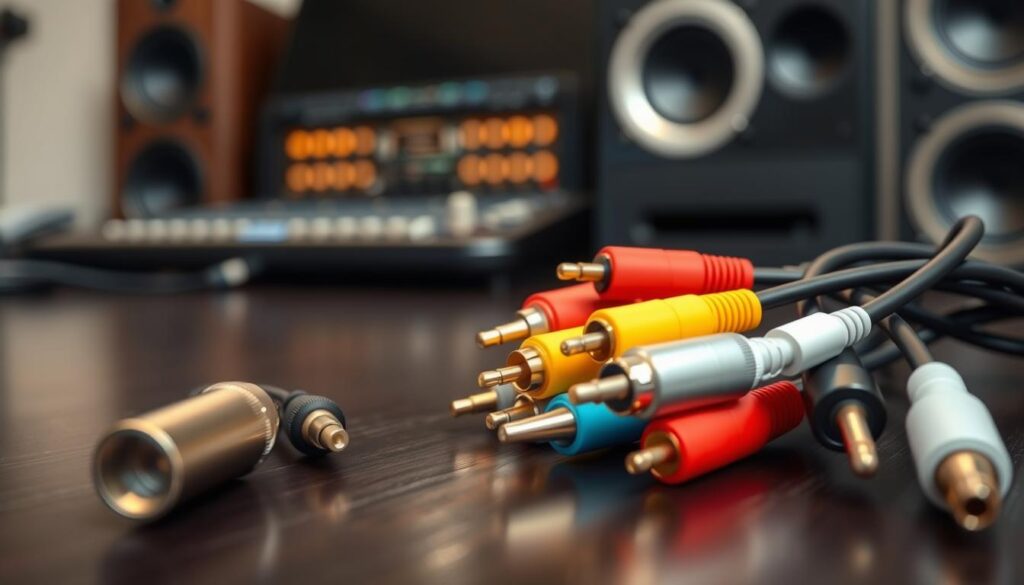
One big mistake is not checking technical specs before buying. It’s easy to get confused by similar-looking connectors. But using the wrong one can cause problems right away.
Make sure to check if your equipment needs balanced or unbalanced connections. Also, not matching impedance can cause signal issues. Always match your digital standards with your hardware to keep audio signal integrity strong.
Ignoring the Importance of Quality
Going for cheap construction often leads to regret later. About 68% of users are unhappy with the durability of low-cost options. Almost 50% of pros face connector failures when using them a lot.
Low-quality cables often have loose high-quality connectors, bad shielding, or broken conductors. Spending more on durable materials helps keep your audio signal integrity safe. Don’t let cheap cables ruin your sound system.
Choosing Length Without Consideration
Choosing the wrong length is a common mistake. It affects both how your system looks and how it sounds. Buying the longest cable might seem easy, but it can cause signal loss.
Measure your space carefully to avoid clutter and interference. Using high-quality connectors on the right length cable makes your setup look professional. Short, well-shielded audio cables are usually better for clear sound.
Maintenance Tips for Audio Cables
Keeping your audio cables in good shape is key. Always unplug your gear before cleaning to avoid damage.
Cleaning and Storage
Use a soft, dry cloth to wipe your cables. This removes dust. Check the plugs for dirt and keep liquids away to protect your equipment.
Coil your cables correctly to avoid damage. Store them in a cool, dry spot or use protective cases. This keeps them durable for a long time.
Recognizing Wear
Check your cables often to keep sound quality high. Look for signs like exposed wires, cracked jackets, or bent contacts. Replace any damaged cables to avoid sound issues.
Proactive care helps avoid problems during important sessions. Share your cable management tips with us. Tell us about your favorite brands for studios or home theaters. Your input helps others build better systems.