
 Zoe Nora
Did you know over 80% of home audio fans don’t get true high-fidelity sound? It’s because their gear doesn’t match their room’s acoustics. Getting a balanced, immersive soundstage is more than just buying expensive speakers. It’s about how your audio gear works with your living space.
Finding the best floorstanding speakers is a journey. It’s about balancing technical specs with your listening habits. The right setup turns your room into a private concert hall. Our guide helps you understand amplification, placement, and room size to get the most from your speakers.
When you check out our floorstanding loudspeakers tower, you’ll see how clarity and depth matter. Precision engineering lets these speakers deliver impact without losing the fine details of your favorite songs. Let us help you create a system that brings your music to life with unmatched authority and grace.
Key Takeaways
- Room dimensions significantly influence how your audio equipment performs in your home.
- Matching your amplifier to your speakers is essential for maintaining sound clarity.
- Proper placement within your listening area creates a more balanced and immersive soundstage.
- High-quality audio gear provides both deep bass and crisp, detailed high frequencies.
- Personal listening preferences should always guide your final selection of audio hardware.
Understanding Floorstanding Loudspeakers
Floorstanding speakers are more than just tall. They are a lesson in sound physics. Known as top tower speakers, they offer a sound experience that smaller speakers can’t match.
What Are Floorstanding Loudspeakers?
Floorstanding loudspeakers are tall, vertical speakers that sit on the floor. Their height lets them have a bigger inside. This is essential for deep bass sounds.
These speakers can hold many drivers in one. This means they can move more air. So, they produce a strong sound that fills big rooms well.
Key Components of Floorstanding Speakers
These speakers use special drivers for clear sound. Woofers handle the low sounds, while midrange drivers focus on vocals and instruments.
Tweeters bring the high sounds that make music sparkle. A crossover circuit splits the audio signal. This way, each driver only plays the sounds it’s made for.
Benefits of Using Floorstanding Speakers
Investing in top tower speakers brings deep sound immersion. The main benefit is the depth and impact of the bass. This solid foundation is key for any music or movie.
Also, the separation of drivers improves vocal clarity and high sounds. This means every note is clear. These speakers are a top choice for those who want the best sound from their systems.
How to Choose the Right Floorstanding Tower
Starting your journey to better sound means understanding how your space affects your listening. Choosing the right Floorstanding loudspeakers tower isn’t just about the price. It’s about finding the perfect mix of your space, taste, and the speaker’s tech.
Consider Your Room Size
The size of your room affects how much sound you need. A big speaker in a small room can make the sound muddy. Keep your speakers 6 to 8 feet apart for a balanced sound.
“The room is the most important component of your audio system, as it dictates the final sound that reaches your ears.”
In small rooms, choose speakers that are compact but still sound great. In bigger rooms, you can go for speakers that move more air without distorting.
Assess Your Listening Preferences
Think about what kind of music you like. If you love movies, look for a Floorstanding loudspeakers tower that works well with a center channel and subwoofer. Music fans might prefer speakers that focus on mid-range and vocals.
Here’s a table to help match your preferences with speaker types:
| Usage Type | Key Priority | Recommended Feature |
|---|---|---|
| Home Theater | Dynamic Range | High Sensitivity |
| Jazz/Classical | Detail/Clarity | Soft Dome Tweeters |
| Rock/Pop | Bass Impact | Large Woofer Array |
Evaluate the Speaker’s Specs
Even the best floor standing speaker reviews might not fit your setup. A speaker that sounds great in a studio might not work with your amp. Always check the sensitivity and impedance to make sure it fits with your gear.
Don’t just look at marketing numbers. Focus on how well the speaker performs across all frequencies. By carefully reading floor standing speaker reviews, you can find the right speaker for your needs and room.
Popular Brands of Floorstanding Loudspeakers
When we start looking for the perfect sound, we meet many top names. The world of floorstanding speaker brands can be huge. But, focusing on a few key makers helps us know what to look for.
Klipsch: An Overview
Klipsch is known for its horn-loaded technology. This tech makes their speakers high sensitivity and dynamic. It’s a hit with home theater fans.
These speakers bring a lively, energetic sound. They’re great for making music and movies feel real and immersive.
Bowers & Wilkins: Premium Sound
Looking for high-end tower speakers? Bowers & Wilkins is often at the top. They use top materials like diamond domes and continuum cones.
They aim for acoustic accuracy, giving a detailed soundstage. Though pricey, the quality and sound are worth it for audiophiles.
Polk Audio: Budget-Friendly Options
Want great sound without spending a lot? Polk Audio has you covered. They offer high-end tower speakers that are affordable.
Polk’s speakers are versatile and fit many home setups. They balance cost and quality, making them a top floorstanding speaker brand for practical listeners.
Features to Look for in Floorstanding Speakers
Starting a floorstanding speaker comparison can be confusing with all the technical terms. We aim to simplify by focusing on key engineering details that affect your listening experience. Understanding these elements will help you choose the right speakers for your home.
Driver Configuration
The driver layout is crucial for your speaker’s sound quality. Most towers have a multi-way design, with different drivers for high, mid, and low frequencies. Tweeters handle the highs, while mid-range and woofers cover the body and bass of your music.
Look for speakers made with quality materials like silk domes or metallic cones. A well-designed crossover network is also important. It ensures each driver gets the right frequency range without distortion. This creates a seamless soundstage that fills your room well.
Frequency Response Range
Frequency ranges listed by manufacturers need context to be meaningful. A speaker might claim to produce deep bass, but your room’s acoustics and distance from the speakers affect this. Always consider sensitivity and impedance, as they determine how much power your amplifier needs.
When comparing floorstanding speakers, don’t just look at the frequency chart. Think about how the speaker sounds in your specific environment. A balanced, natural sound is often more enjoyable than extreme bass numbers.
Build Quality and Design
The cabinet’s construction greatly affects sound clarity. Look for cabinets with internal bracing to reduce unwanted vibrations and resonance. A rigid enclosure ensures the sound comes from the drivers, not the box.
Consider the benefits of bass-reflex designs, which use ports to improve low-frequency output. Also, pay attention to the finish and overall build quality. A solid, well-made speaker looks great and provides long-term reliability for years of music enjoyment.
The Impact of Speaker Placement
Mastering speaker placement is key to getting the most out of your audio system. Even the most expensive gear won’t perform well if it’s not placed right. When setting up tower speakers for home theater, where you put each speaker affects how sound waves move in your room.
Ideal Placement for Optimal Sound
Start with an equilateral triangle setup. Place speakers so the distance between them matches the distance to your listening spot. This creates a balanced soundstage and clear imaging for movies and music.
Here are more tips for great sound:
- Tweeter Height: Try to have tweeters at ear level when seated.
- Wall Clearance: Keep speakers 1 to 2 feet from walls to avoid muddy bass.
- Toe-in Angle: Angle speakers slightly toward you for better high-frequency clarity.
Common Placement Mistakes to Avoid
Many people ruin their sound by ignoring room physics. A big mistake is placing tower speakers for home theater against walls. This can make bass sound boomy and distorted, hiding the soundtrack’s details.
Avoid these common mistakes for a clean, immersive sound:
- Corner Placement: Avoid placing speakers in corners for even bass and to prevent room resonances.
- Asymmetrical Setup: Make sure both speakers have similar surroundings for a balanced stereo image.
- Ignoring Reflections: Watch out for large reflective surfaces like glass or bare floors that can smear sound.
By experimenting with different positions, you can make sure your tower speakers for home theater sound their best. Even small changes can make a big difference in your listening experience.
Comparing Active vs. Passive Floorstanding Speakers
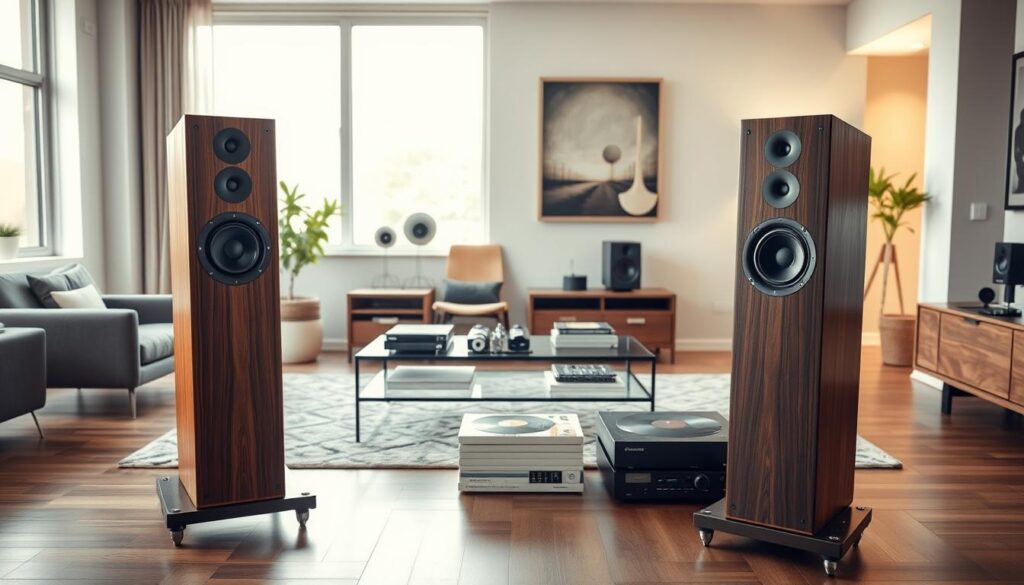
When you decide to buy floorstanding speakers, you face a big choice. It’s between active and passive designs. Each type has its own way of handling sound. Knowing the difference helps you pick the right fit for your home and listening needs.
What Are Active Speakers?
Active speakers, also known as powered speakers, have built-in amplification. This means they work well right out of the box. Just plug in your music source, and they take care of the rest.
They’re great for those who want a simple, modern setup. You don’t need big external amps or complicated wiring.
Passive Speakers Explained
Passive speakers need an external amp or receiver to work. They don’t have their own power source. You connect them to a separate unit using speaker cables.
This setup lets you pick your own amplifier. It’s perfect for those who like to tweak their sound over time.
Which Is Better for You?
Choosing between active and passive speakers depends on what you value more. Active speakers are easy to use and plug-and-play. But if you like to tinker with your setup, passive speakers offer more flexibility.
| Feature | Active Speakers | Passive Speakers |
|---|---|---|
| Amplification | Internal | External |
| Setup Complexity | Low | High |
| Upgrade Path | Limited | High |
| System Control | Integrated | Modular |
Bi-wiring and bi-amping are advanced techniques for passive systems. They help improve sound quality by separating signals. Your choice should reflect whether you prefer a simple system or one you can customize.
How to Set Up Your Floorstanding Loudspeakers
Unpacking your speakers is just the start. Creating a perfect soundstage is a journey. It’s not just about the speakers; it’s about how you set them up in your space. When you choose top-rated tower speakers, careful installation is key to hearing every detail.
Basic Setup Steps
First, place your speakers on a flat, stable surface. If your floors are carpeted, use spikes to keep the cabinet rigid. Leveling the speakers is crucial to avoid sound distortion.
Think about where you’ll sit to listen. Aim for an equilateral triangle between you and the speakers. For more tips, check out this guide on positioning floorstanding speakers for better room acoustics.
Connecting to Your Amplifier
Before connecting, make sure your amplifier is off to avoid damage. Use high-quality speaker wire and pay attention to polarity. Connect the positive terminal on the amplifier to the positive terminal on the speaker, and vice versa for the negatives.
Double-check your connections to avoid short circuits. A short can harm your equipment. Once wired, check that your top-rated tower speakers are correctly phased.
Tweaking Settings for Better Sound
Start playing music at a moderate volume. Listen for balance and clarity. If the sound feels thin or too bright, adjust the speakers’ angle slightly.
Your room’s acoustics greatly affect the sound. Don’t hesitate to try small changes in placement or amplifier settings. Finding the perfect sound takes patience and careful listening.
Adjusting Your Floorstanding Speakers for Better Sound
Refining your audio system is key to unlocking its full potential. After setting it up, your environment affects how sound waves play out. Making small changes can greatly improve your listening experience.
Utilizing Equalization
Speaker equalization is a great tool for fixing sound issues. It’s best used to tweak specific sound problems caused by your room acoustics. Always try to improve your room’s acoustics first before using EQ.
“The goal of any audio system is to reproduce the original performance with as little interference as possible from the listening environment.”
Don’t overdo EQ settings to change the sound too much. Instead, make small tweaks to even out the sound. This keeps your speakers’ natural sound while fixing sound issues.
Positioning Tweaks for Clarity
Where you place your speakers is crucial for better stereo imaging and clarity. Make sure your speakers are evenly spaced from your listening spot. Even a small difference can affect the soundstage.
Try adjusting the speakers’ angle to improve high-frequency sound. Pointing them slightly toward you can make vocals sound more real. If the sound is too sharp, try angling them away from you.
Also, think about how far your speakers are from walls. Moving them away from walls can reduce bass muddiness and enhance sound depth. By making these physical changes, you can achieve a clearer sound without needing fancy electronics.
The Importance of Proper Amplification
Proper amplification is key to any top-notch audio system. The cabinet and driver set the sound’s character. But, the amplifier gives it life. Without the right power, even the priciest speakers won’t perform well.
Matching Amplifiers with Speakers
When choosing components, watch the speaker impedance. It shows how much resistance the speaker has to the current from your amplifier. Too low, and your amplifier might struggle, causing distortion or damage.
Speaker sensitivity is also crucial. It shows how loud a speaker gets with a certain power. High sensitivity means less amplifier power is needed for loud sounds. Low sensitivity requires more power for the same volume.
Choosing the Right Wattage
Many focus too much on wattage. But, the quality of the current matters more. Think about your room size and listening volume to pick the right amplifier.
Bi-amping is a smart choice for more control. It uses separate channels for high and low frequencies. This improves clarity and reduces distortion. It lets you fine-tune your speakers for your room’s acoustics.
The aim is to find an amplifier that gives clean, stable power without clipping. Prioritize dynamic headroom over high wattage. This keeps your music clear and powerful at any volume.
Floorstanding Speakers vs. Bookshelf Speakers
Choosing between tower and bookshelf speakers depends on your room’s layout. A detailed floorstanding speaker comparison shows each type has its own role in your space.
Size and Sound Differences
Floorstanding speakers have bigger cabinets. This means they can produce deeper bass and sound more authoritative. They often use more drivers to cover a wider range of sounds.
Bookshelf speakers, on the other hand, are made for smaller spaces. They offer great imaging and clarity but might need a subwoofer for low sounds. For more on these differences, check out professional audio guides.
When to Choose Floorstanding
Choosing the right speaker depends on your space and goals. For a dedicated media room, tower speakers for home theater are often the best choice. They fill the room with sound, making movies and music more immersive.
Think about these points when deciding:
- Room Size: Big rooms need the power of floorstanding units.
- Listening Distance: Towers work well for listeners far from the speakers.
- Bass Requirements: Towers offer full-range sound without needing a subwoofer.
- Upgrade Plans: Starting with towers sets a strong base for a future home theater.
If you have enough floor space, towers are a great choice. But for small apartments or desktops, bookshelf speakers are a smart pick.
Maintaining Your Floorstanding Loudspeakers
Keeping your audio system in top shape is easy with a bit of routine care. Regular audio equipment care keeps your sound system performing well for years. Simple habits can shield your speakers from damage.
Regular Cleaning Tips
When cleaning your loudspeakers, safety comes first. Use a soft, dry microfiber cloth to wipe down the cabinets. This removes dust without harming the finish.
For the grilles, gently remove them and use a soft brush or vacuum to clean. Never let liquids get into the drivers or electrical parts. Moisture can harm the voice coils inside.
Speaker Care for Longevity
Speaker maintenance is more than just dusting. Check the floor-contact hardware often to keep it tight and level. This ensures accurate sound and prevents vibrations.
Keep your speakers out of direct sunlight and humid places. This prevents damage to the cabinet materials. Also, check the binding posts and cable connections for oxidation and loose connections. These steps help maintain your speakers’ performance and sound quality over time.
Loudspeaker cleaning should be gentle. If you see buildup in the bass ports, use compressed air carefully. Regular speaker maintenance protects your sound and keeps your equipment looking great.
Conclusion: Choosing Your Perfect Floorstanding Loudspeaker
Choosing the right audio equipment changes how you enjoy music and movies at home. Think about your room size, speaker setup, and cabinet quality. Also, consider how they match your listening habits.
The best floorstanding speakers work well with your specific amplifier and space. This ensures a great listening experience.
Refining Your Selection Process
Specifications are a good start, but your ears are the best judge. Try out different speakers to see how they sound with your favorite music. Once you find the right match, you can buy with confidence.
Make sure your budget fits the quality you want. This way, you’ll enjoy your music and movies to the fullest.
Taking the Next Step
Many top-rated tower speakers are available from brands like Klipsch, Bowers & Wilkins, and Polk Audio. Each offers a unique sound. Explore these options to find the perfect fit for your home.
Your journey to high-fidelity sound begins with knowing your acoustic needs. Take the time to find the right speakers for your home theater or music setup.
# Best Floorstanding Loudspeakers Tower for Clear Sound
When building a high-fidelity audio system or a home theater, floorstanding loudspeakers are key. Clear sound isn’t just about the price. It’s about how the speakers fit your space. We’ll explore how room size, technical specs, and amplification affect your system’s sound.
Whether you want powerful bass, nuanced midranges, or crisp highs, the right floorstanding speakers deliver. They offer depth and impact that smaller speakers can’t match.
## Understanding Floorstanding Loudspeakers
### What Are Floorstanding Loudspeakers?
Floorstanding speakers, or tower speakers, are tall cabinets for the floor. Unlike bookshelf speakers, they have more room for drivers and crossovers. This makes them great for large rooms and media spaces.
### Key Components of Floorstanding Speakers
Inside these speakers, you’ll find woofers for low sounds, midrange drivers for vocals, and tweeters for high notes. The crossover circuit divides the audio signal for each driver. This ensures clear sound at all volumes.
### Benefits of Using Floorstanding Speakers
The main advantage of top tower speakers is their full sound range without a subwoofer. Their large size gives deeper bass and a more immersive sound. Listening to high-quality music, the speakers make the music feel real and up close.
## How to Choose the Right Floorstanding Tower
### Consider Your Room Size
Room size is crucial when choosing speakers. A big speaker in a small room can sound boomy. A small speaker in a big room might struggle to fill the space. Measure your room and consider speaker spacing for the best sound.
### Assess Your Listening Preferences
Your music taste affects your speaker choice. If you love jazz or movies, pick speakers that match. For home theater, look for speakers with a wide dynamic range. For music, focus on balance and detail.
### Evaluate the Speaker’s Specs
When reading reviews, focus on sensitivity and impedance. Sensitivity shows how loud the speaker can get with power. Impedance affects how much work your amplifier does. A speaker might look good on paper but not work well with your setup.
## Popular Brands of Floorstanding Loudspeakers
### Klipsch: An Overview
Klipsch is known for horn-loaded technology. Their speakers are efficient and sound “live.” They’re great for home theaters because they’re easy to power.
### Bowers & Wilkins: Premium Sound
Bowers & Wilkins is top for high-end speakers. Their Continuum cone drivers and decoupled tweeters offer refined sound. These speakers are perfect for those who want precise sound.
### Polk Audio: Budget-Friendly Options
Polk Audio offers great value for those on a budget. Their Reserve and Signature Elite series are highly rated. They provide balanced sound for various genres and rooms.
## Features to Look for in Floorstanding Speakers
### Driver Configuration
Driver layout is key in speaker comparison. Two-way designs have a tweeter and woofer. Three-way or four-way designs add midrange or sub-bass drivers. We prefer at least three-way for better midrange and bass.
### Frequency Response Range
Look for wide frequency response for full sound capture. But remember, lab numbers don’t always match real-world sound. Room acoustics play a big role.
### Build Quality and Design
Quality cabinets use bracing to reduce vibrations. Look at the finish and port design. Practical features like binding posts and floor spikes are important.
## The Impact of Speaker Placement
### Ideal Placement for Optimal Sound
For the best sound, use an equilateral triangle setup. The distance between speakers should match the distance to your seat. A slight “toe-in” can improve clarity.
### Common Placement Mistakes to Avoid
Don’t push speakers against walls for muddy bass. Avoid uneven placement near corners for an immersive experience.
## Comparing Active vs. Passive Floorstanding Speakers
### What Are Active Speakers?
Active speakers have built-in amplifiers and crossovers. They’re popular for a simple setup. Just connect a source to the speaker.
### Passive Speakers Explained
Passive models need an external amplifier. They offer flexibility for upgrading. Passive is best for those who enjoy system building.
### Which Is Better for You?
Active is simple. Passive offers more flexibility. Choose based on your preferences and needs.
## How to Set Up Your Floorstanding Loudspeakers
### Basic Setup Steps
First, level the speakers. Most come with adjustable spikes or feet. This prevents wobbly bass.
### Connecting to Your Amplifier
Always power off before connecting. Double-check the polarity to avoid bass loss. A phase error will ruin the sound.
### Tweaking Settings for Better Sound
Start with moderate volume. Listen for the phantom center. Adjust speaker placement for the best sound.
## Adjusting Your Floorstanding Speakers for Better Sound
### Utilizing Equalization
Use Room EQ for frequency balance. But, physical placement is always better than digital correction.
### Positioning Tweaks for Clarity
Small changes can make a big difference. Adjusting speaker position can improve high frequencies. Use rugs or curtains for better sound.
## The Importance of Proper Amplification
### Matching Amplifiers with Speakers
Choose an amplifier that matches the speaker’s impedance. A weak amplifier can make speakers sound lifeless.
### Choosing the Right Wattage
Wattage depends on room size and speaker sensitivity. Highly sensitive speakers need less power. Aim for an amplifier with enough headroom.
## Floorstanding Speakers vs. Bookshelf Speakers
### Size and Sound Differences
Tower speakers offer deeper bass and a larger soundstage. Bookshelf speakers are better for small rooms or near-field listening.
### When to Choose Floorstanding
Choose towers for rooms over 8 to 10 feet. They provide a more immersive experience.
## Maintaining Your Floorstanding Loudspeakers
### Regular Cleaning Tips
Use a soft cloth for cleaning. Avoid harsh chemicals near driver surrounds. Vacuum grilles gently with a brush attachment.
### Speaker Care for Longevity
Check terminal connections yearly. Keep speakers away from sunlight and heat to prevent damage.
## Conclusion: Choosing Your Perfect Floorstanding Loudspeaker
### Recap of Key Considerations
Choosing the right speakers is about matching technology to your space. Room size, brand, and amplification are key for a great sound.
### Encouragement to Explore Options
Trust your ears when choosing speakers. Every room is different. The best speakers make your music and movies come alive.
## FAQ
### Q: What is the benefit of a Floorstanding loudspeakers tower over a bookshelf model?
A: Towers have more volume for deeper bass and a wider soundstage. They’re great for large rooms and home theaters without needing a subwoofer.
### Q: Which floorstanding speaker brands are best for high-end audio?
A: For high-end, consider Bowers & Wilkins for precision or Klipsch for efficiency. Compare these brands to find the sound you prefer.
### Q: What should I look for in floor standing speaker reviews before I buy floorstanding speakers?
A: Look at sensitivity, impedance, and sound signature in reviews. Consider how speakers handle different rooms for the best fit.
### Q: Are top-rated tower speakers difficult to set up?
A: Setting up towers requires some care but is straightforward. Focus on placement and ensure proper amplification for the best sound.
### Q: How do I choose the best floorstanding speakers for a home theater?
A: For home theaters, look for speakers with good dynamic range and clear midrange drivers. Polk Audio offers great value, while high-end options provide cinematic depth.