
 Zoe Nora
Did you know over 70% of home theaters don’t reach their full potential? This is because of mismatched power components. Finding the best amplifier for home entertainment is more than just picking a brand. It’s about matching your gear to your unique living space.
High-fidelity sound can feel overwhelming. Whether you need a simple stereo unit for music or a complex home theater amplifier for movies, we’re here to help. Our guide shows how to balance your budget with your listening goals.
We’ll look at key criteria like channel counts, wireless connectivity, and future-proofing your system. By the end of this guide, you’ll feel confident in choosing the perfect audio receiver amplifier for your needs.
Key Takeaways
- Identify the difference between two-channel stereo and multi-channel surround sound systems.
- Match your power requirements to your room size and speaker sensitivity.
- Prioritize essential connections like HDMI 2.1 for modern gaming and video needs.
- Consider wireless features like Bluetooth and Wi-Fi for seamless streaming.
- Plan for future expansion by choosing units with pre-out capabilities.
Understanding Audio Receiver Amplifiers
Building a great sound system starts with the right foundation for your speakers. The receiver is key, acting as both a signal processor and a power source.
Whether it’s a home theater or a music station, a high-quality audio amplifier makes your media sound right. It’s the brain of your entertainment setup.
What is an Audio Receiver Amplifier?
An audio receiver amplifier manages inputs and outputs. It takes signals from devices like gaming consoles and TVs, then sends them to your speakers.
It simplifies your setup by combining connections. A stereo receiver amplifier is great for two-channel music. These units handle complex signals and power your speakers well.
Benefits of Using an Audio Receiver Amplifier
The main benefit is seamless integration of your media. Switching between movies and music is easy, thanks to the receiver’s work.
Modern units have tools like Audyssey or Dirac Live. They adjust sound based on your room’s acoustics for the best quality.
Key Features to Look For
When choosing, focus on features that fit your lifestyle. A stereo receiver amplifier is ideal for music fans. Cinema lovers should look for surround-sound models.
| Feature | Benefit | Why It Matters |
|---|---|---|
| Room Calibration | Optimized Sound | Corrects acoustic flaws |
| Power Output | Volume & Clarity | Drives speakers effectively |
| Input Versatility | Device Support | Connects all your gear |
| Digital Processing | High-Resolution Audio | Ensures high-quality audio amplifier performance |
Types of Audio Receiver Amplifiers
Choosing the right hardware for your home audio setup starts with identifying which type of receiver best fits your lifestyle. Whether you prioritize music clarity or cinematic immersion, the market offers a variety of designs to meet your needs.
Stereo vs. Surround Sound Units
If your primary goal is listening to music, a stereo receiver amplifier is often the best choice. These units focus on two-channel audio, providing high-quality sound reproduction for your favorite albums.
Conversely, if you want to build a home theater, you should look for a digital audio receiver capable of multi-channel output. These units support surround sound formats, allowing you to place speakers around the room for a truly immersive experience.
Integrated Amplifiers vs. Separate Components
Integrated amplifiers combine the pre-amplifier and power amplifier into a single chassis. This design is space-efficient and simplifies the setup process for most users.
For those who demand maximum performance, separate components offer a modular approach. By using a dedicated pre-amp and a separate power amp, you gain greater control over your sound signature and future upgrade paths.
Bluetooth and Wireless Options
Modern technology has transformed how we interact with our sound systems. Many units now feature an audio amplifier with Bluetooth connectivity, allowing you to stream music directly from your smartphone or tablet.
Beyond basic wireless pairing, some models include Wi-Fi and network streaming capabilities. These features turn your digital audio receiver into a hub for online music services and multi-room audio setups.
| Receiver Type | Primary Use | Key Advantage |
|---|---|---|
| Stereo Receiver | Music Listening | High Fidelity |
| AV Receiver | Home Theater | Surround Sound |
| Integrated Amp | General Audio | Compact Design |
| Wireless Unit | Streaming | Convenience |
Choosing the Right Power Output
When looking for an audio receiver amplifier, knowing about power is key. Many think more watts means better sound. But, power is just one part of the whole picture.
How Many Watts Do You Need?
Figuring out how much power you need involves several factors. Think about your room size, speaker sensitivity, and how far you sit from them. A big room needs more power than a small one.
“Power is not just about volume; it is about the ability of the amplifier to maintain control over the speaker drivers during complex musical passages.”
If you’re far from your speakers, you’ll need more power for clear sound. Efficiency matters here. Sensitive speakers need less power to sound as loud as less efficient ones.
Impedance and Its Importance
Impedance, in ohms, shows how much resistance your speakers have. Make sure your receiver can handle your speakers’ impedance to avoid problems. Most gear works well at 8 ohms, but some speakers are 4 ohms.
- Check the manual: Always verify the minimum impedance rating supported by your receiver.
- Avoid mismatching: Running low-impedance speakers on an incompatible unit can cause the system to shut down.
- Stability: A robust power supply ensures consistent performance even when impedance fluctuates.
Matching with Speaker Specifications
For a true surround sound experience, you need at least five channels. Make sure your receiver’s power matches your speakers’ to avoid damage. You don’t need a 500-watt amp for 100-watt speakers.
Look at the dynamic headroom for sudden sounds. By balancing these, you get a reliable amplifier for surround sound system for great sound for years.
Brand Comparisons: Best Audio Receiver Amplifiers
Choosing the right receiver can be tricky. It depends on what you need for your setup. Whether it’s a simple living room or a full home theater, the brand you pick matters. You can check out top-rated stereo amplifier options to see what’s best.
Top Picks for Home Use
For most homes, Denon is a great choice. They offer a range of products that grow with you. Their S-Series is perfect for a simple, high-quality audio amplifier.
As your system gets bigger, the X-Series has more channels and advanced tools. This ensures your sound stays crisp and immersive.
Brands for Audiophiles
If you love pure sound, look at brands like Marantz and NAD. They’re known for their warm, detailed sound. These brands use audiophile-grade capacitors and strong power supplies to reduce distortion.
Choosing a high-end model means your music will sound natural and rich.
Budget-Friendly Options
You don’t have to spend a lot for a good stereo receiver amplifier. Brands like Yamaha or Sony offer great value. They focus on what matters most: good connectivity and power.
These units are perfect for beginners. They handle streaming and TV audio well. Think about these things when you decide:
- Build Quality: Metal is better than plastic for cooling.
- Future-Proofing: Make sure it supports the latest HDMI standards.
- Ease of Use: Look for a brand with a user-friendly app.
Connectivity Options Explained
Building a strong home audio system starts with checking your equipment’s ports. Before buying, list all devices you’ll connect. This makes sure your digital audio receiver fits all your media needs without extra adapters.
HDMI, Optical, and RCA Inputs
HDMI is key for high-definition video and sound. Choose units with the latest HDMI for 4K and 8K displays. Optical and coaxial inputs keep sound quality high for older devices.
Analog connections are still important for vintage fans. RCA inputs connect CD players, and phono stages are for vinyl lovers. USB and Ethernet ports stream digital files from networks or drives.
Wireless Connectivity: Wi-Fi and Bluetooth
Wireless streaming has changed home music listening. An audio amplifier with Bluetooth connectivity lets you instantly pair devices. Wi-Fi streaming from services like Spotify offers high-quality sound without compression.
Multi-room Audio Capability
Modern systems can send sound to every room. Multi-room tech lets you play different music in each area. Control it all with a single digital audio receiver.
| Connection Type | Primary Use | Signal Quality |
|---|---|---|
| HDMI | Video & Surround Sound | Excellent |
| Optical/Coaxial | Digital Audio Only | Very Good |
| RCA/Phono | Analog Audio | Variable |
| Bluetooth | Wireless Streaming | Good |
Essential Features for Modern Users
Finding the best amplifier for home entertainment means more than just sound quality. It’s about how easy it connects to your digital world. We look for devices that make your daily listening easier with smart tech.
Built-in Streaming Services
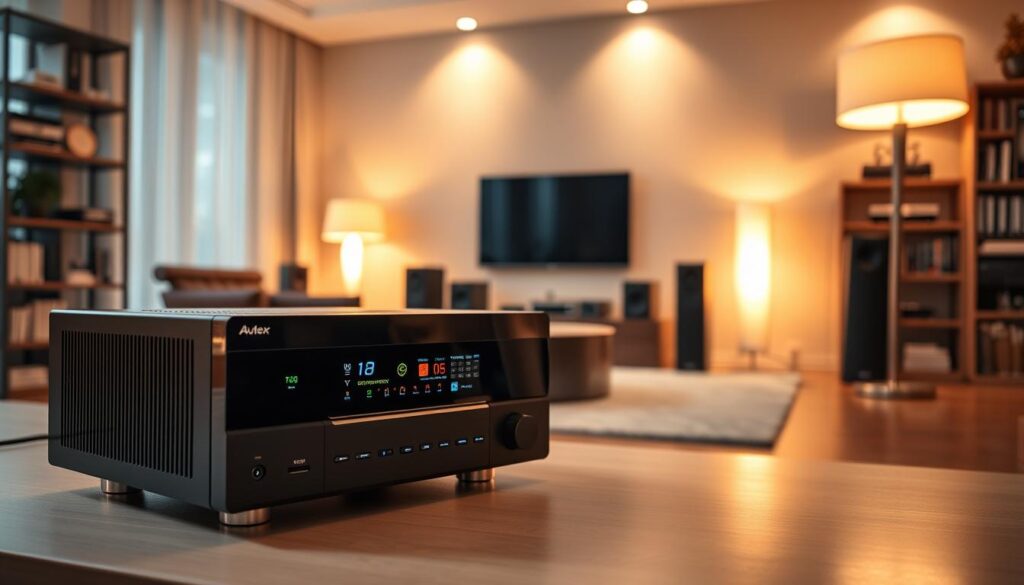
Today’s receivers are like standalone media players. You can stream from Spotify, Pandora, and Deezer right from the unit. They also support high-quality streaming from Tidal or Qobuz.
Wireless options are key for today’s buyers. An audio amplifier with Bluetooth connectivity lets you stream music from your phone or tablet. Features like AirPlay 2, DTS Play-Fi, and Chromecast built-in make audio sync across rooms easy.
Compatibility with Smart Home Devices
Working with your smart home is now standard. Many receivers work well with Amazon Alexa, Google Assistant, or Apple Siri. This lets you control volume or change inputs with voice commands.
Mobile apps also offer a user-friendly interface for managing your system. These apps let you rename inputs, adjust settings, and manage zones from your phone. This makes the best amplifier for home entertainment easy for everyone to use.
User Interface and Remote Control
A good system is only useful if it’s easy to use. We look for receivers with simple menus and clear input organization. A good remote should have easy-to-read buttons and a layout that feels natural.
Some makers are moving to app-based controls, but a physical remote is still a big plus. It’s great for quick changes. Here’s a table of key features to think about when choosing your next unit.
| Feature Category | Standard Capability | Premium Capability |
|---|---|---|
| Streaming | Bluetooth & Spotify | AirPlay 2, Chromecast, Tidal |
| Smart Control | Basic App Support | Voice Assistant Integration |
| Interface | Text-based Menu | Graphical User Interface (GUI) |
| Connectivity | Standard Bluetooth | Bluetooth with aptX HD |
Installation and Setup Tips
Turning your living room into a concert hall begins with careful setup. It might seem hard, but doing it right ensures your system works its best. This is key to enjoying your investment fully.
DIY vs. Professional Installation
Setting up a home theater amplifier can be a weekend project for many. If you’re good with basic wiring and following instructions, you can do it yourself. This is best for simple setups or basic surround sound.
But, complex systems need a pro. If you’re not sure about wiring or your room’s setup, getting a professional is a wise investment. It helps avoid damage to your equipment.
Common Setup Mistakes to Avoid
One big mistake is ignoring speaker polarity. Make sure the positive and negative terminals on your amplifier for surround sound system match your speakers. Wrong polarity can make your sound sound thin and hollow.
Another mistake is not checking input assignment. Make sure your HDMI or optical cables are in the right ports. Also, label your cables well to avoid future headaches.
Optimizing Your Listening Environment
Your equipment needs space to work well. Place it on a sturdy shelf with six inches of clearance above. Also, make sure there’s about 20 inches of depth for airflow and cable management.
Good airflow is key to avoid overheating. This can damage your equipment. By following these tips, you create a great environment for your audio system. It will deliver clear sound for years.
Audio Formats and Researching Compatibility
Getting your home theater setup right means knowing about audio and video standards. When you buy a digital audio receiver, it’s more than just a box of wires. It’s a key that connects your TV and streaming devices. Taking the time to learn about these details now will save you from future headaches.
Supported Formats: Dolby Atmos, DTS:X, etc.
Modern audio formats create sound that moves around you. Dolby Atmos and DTS:X use special technology to place sounds in your room. A good high-quality audio amplifier can decode these signals for a movie-like experience at home.
“The future of home audio lies in the ability of your hardware to interpret complex, object-based sound data accurately.”
Checking Audio Codec Support
Your receiver also needs to handle the latest video standards for clear pictures. Formats like HDR10 and Dolby Vision improve contrast and color. Plus, HLG support keeps your system ready for future broadcasts.
Make sure your receiver supports these codecs before you buy. If it doesn’t match your TV’s features, you’ll miss out on the display’s best qualities.
Understanding 4K Passthrough
4K passthrough is key for modern 4K TVs. It lets your receiver send high-quality video signals to your screen without losing quality. Your device needs HDCP 2.2 to protect 4K content.
| Feature | Standard | Benefit |
|---|---|---|
| Audio Format | Dolby Atmos | Immersive 3D Sound |
| Video HDR | Dolby Vision | Enhanced Color/Contrast |
| Copy Protection | HDCP 2.2 | 4K Content Security |
| Broadcast | HLG | Future Compatibility |
By checking these specs, you make sure your digital audio receiver is a reliable part of your system. A high-quality audio amplifier connects your media to your senses. Choose one that matches your other devices.
Best Practices for Maintenance
Following simple maintenance routines can extend our audio equipment’s lifespan. Regular care keeps our amplifier for surround sound system working well. This way, we avoid expensive repairs and keep our home theater’s value high.
Keeping Your Equipment Clean
Dust harms sensitive electronics. Use a soft, dry microfiber cloth to clean the outside of our units often. Make sure ventilation slots are clear to avoid overheating.
Don’t spray cleaners directly on the device. If spots are hard to clean, lightly dampen a cloth. Always turn off power before cleaning. Clearing the area around the unit helps with airflow, which is key for any amplifier for surround sound system.
Firmware Updates and Upgrades
Modern receivers need regular software updates. Check the manufacturer’s website or the device’s settings for updates. These updates improve compatibility and fix bugs.
If our receiver is over five years old, consider upgrading. New models support modern standards and codecs. Upgrading is often better than trying to fix old technology.
Troubleshooting Common Issues
Sound drops or connectivity failures often start with HDMI cables. Check if cables are loose or damaged. Make sure all connections are tight and use high-speed cables.
For network issues, try a power cycle. Also, test speaker levels to ensure balance. If problems continue, look up error codes in the user manual. This might indicate if the amplifier for surround sound system needs professional help.
Price Ranges and Where to Buy
Looking for a budget-friendly unit or a premium piece of gear? The path to a great sound system starts with smart shopping habits. Understanding the cost vs. performance is key. By focusing on your needs, not just brand prestige, you can find a home theater amplifier for years of enjoyment.
Budget vs. High-End Models
Entry-level models offer basic power and connectivity, great for small rooms or casual listeners. Mid-range and high-end models bring advanced processing, better build quality, and more power. A top-rated stereo amplifier in the premium range has better components for clearer sound.
“The bitterness of poor quality remains long after the sweetness of low price is forgotten.”
When comparing, think about the total cost, including cables, speakers, and installation. Here’s a table to show the differences:
| Category | Typical Use Case | Key Advantage |
|---|---|---|
| Entry-Level | Small living rooms | Affordability |
| Mid-Range | Dedicated media rooms | Feature balance |
| High-End | Audiophile setups | Superior fidelity |
Finding Deals and Discounts
Watch for seasonal sales like Black Friday or end-of-year clearances for big savings. Make sure to buy from an authorized dealer to keep your warranty valid. Buying from unauthorized sources might save money but can void your warranty.
Top Retailers for Audio Equipment
Choosing the right retailer is crucial. Look for stores with good return policies and technical support. A reliable retailer can help with setup and ensure your top-rated stereo amplifier works well with your speakers and smart devices.
Final Thoughts and Recommendations
Choosing the right gear turns your home into a concert hall or cinema. Think about what you need and what modern tech offers. This way, you’ll be happy with your choice for a long time.
Summary of Key Features
Start by considering your speakers, room size, and how many channels you want. A good audio amplifier is key for clear sound. Also, think about the inputs and formats your system can handle.
For music fans, a stereo unit is perfect. But, an audio receiver amplifier is better for gaming and movies.
Building the Perfect Audio Setup
Make sure your amplifier’s power matches your speakers to avoid distortion. Look at current models from Denon, Marantz, or Yamaha. A solid system now means less need for upgrades later.
Encouragement for Shoppers to Explore
Finding the right amplifier takes time and comparing specs carefully. Visit local stores or check websites to hear the sound quality. Your dream audio setup begins with smart choices and clear goals for your home theater.