
 Zoe Nora
Did you know over 80% of modern TV viewers struggle to hear dialogue clearly? This is because of thin, downward-firing internal audio drivers. It often leaves listeners missing the depth and nuance of their favorite media.
We think building a strong sound system should be easy, not a big challenge. By choosing satellite speakers, you start with a flexible base that grows with you. These small units let you use a traditional setup, keeping your sound clean and strong.
Buying high-quality satellite speakers is a smart choice. They offer great sound and save space. Whether you’re watching a movie or listening to music, they deliver the precision you want. We’ll show you how to set up, connect, and calibrate your gear for a full, immersive sound.
Key Takeaways
- Compact audio units offer a scalable path for home theater growth.
- Traditional amplification ensures better sound clarity than standard TV hardware.
- Proper placement is essential for achieving a balanced soundstage.
- Modular setups allow you to upgrade components over time.
- High-quality hardware transforms basic listening into a cinematic event.
What Are Satellite Speakers?
The best sound systems often mix size with quality. Satellite speakers are perfect for this. They handle midrange and high sounds, leaving deep bass to a subwoofer. This way, they keep the sound clear and precise, even in a small space.
Definition and Overview
In home audio, satellite speakers are key parts of big systems. They focus on details like dialogue and sound effects. This makes them essential for surround sound, adding depth to your listening experience.
Key Features
The main advantage of these speakers is their compact design. They don’t need big woofers, so they’re small enough to hang on walls. Yet, they use top-notch drivers for clear, detailed sound.
How They Differ from Other Speakers
It’s good to know how satellite speakers compare to others. Unlike floorstanding speakers, they use a subwoofer for the full sound. Here’s a quick comparison:
| Speaker Type | Size | Frequency Focus | Primary Use |
|---|---|---|---|
| Satellite | Small | Mid/High | Surround Sound |
| Bookshelf | Medium | Full-Range | Stereo Music |
| Floorstanding | Large | Full-Range | High-Fidelity Audio |
Benefits of Using Satellite Speakers
Changing your home audio doesn’t mean you need big, floor-standing speakers. The best sound systems are often small and fit right into your home. They give you clear, sharp sound without taking up too much space.
Space Saving Design
Satellite speakers are great because they save space. They’re smaller than big tower speakers and can go on shelves, desks, or walls.
With compact satellite speakers, you don’t need big, bulky speakers. This lets you keep your room looking clean and simple. You can still enjoy great sound without cluttering your space.
Enhanced Sound Quality
Many think small speakers sound bad, but today’s tech proves them wrong. These speakers are made for near-field listening. They give you a clear, detailed sound that big speakers can’t match in small spaces.
When you add a good subwoofer, these systems offer a full sound experience. You get clarity and precision for music and movies. Every sound is clear and distinct.
Versatility in Placement
These speakers are super flexible. They’re light and small, so you can place them anywhere. You can put them at ear level or in corners for an immersive soundstage.
Whether it’s for a home theater or a small office, satellite speakers fit any room. They work well with any setup, giving you the best sound no matter the room’s shape or size.
Choosing the Right Satellite Speakers
We think a top-notch sound system starts with the right parts for your space. Forget the marketing buzz. Look at the tech specs to make sure your audio fits with what you already have.
Factors to Consider
When looking for the best satellite speakers, think about your room size. Big rooms need speakers that can handle loud sounds clearly without getting fuzzy.
Don’t overlook impedance. It shows how well your amp can power your speakers. Make sure your receiver matches your speakers’ ohm rating to avoid damage and get the best sound.
“The secret to great sound is not just the price tag, but how well the speakers integrate with the acoustics of your room and the power of your amplifier.”
Popular Brands to Explore
Many top brands are known for their compact audio gear. Klipsch and KEF are leaders in making speakers that sound big despite their small size.
For reliable sound, check out SVS and Polk Audio. They offer a range of speakers that are both affordable and powerful. These brands make it easy to find the best satellite speakers for your needs.
Price Range Insights
Knowing the market helps you spot the difference between basic and premium speakers. Affordable satellite speakers are great for small spaces, but top models have better materials and tech.
Going for a higher-end model means better sound and more features. Here’s a table to show how price relates to quality and features.
| Category | Typical Price Range | Build Quality | Best Use Case |
|---|---|---|---|
| Entry-Level | $100 – $250 | Standard Plastic | Small Bedrooms |
| Mid-Range | $300 – $600 | Composite/Wood | Living Rooms |
| Premium | $700+ | High-Grade Metal/Wood | Dedicated Theaters |
Your choice should match your audio goals. Whether you want affordable satellite speakers for gaming or top-notch sound for a home theater, do your homework.
Installation Tips for Satellite Speakers
Getting a professional sound in your home is more than just good equipment. Whether you use wired or wireless satellite speakers, how you install them matters a lot. Make sure your receiver and TV connections match before starting to set up.
Wall-Mounting Options
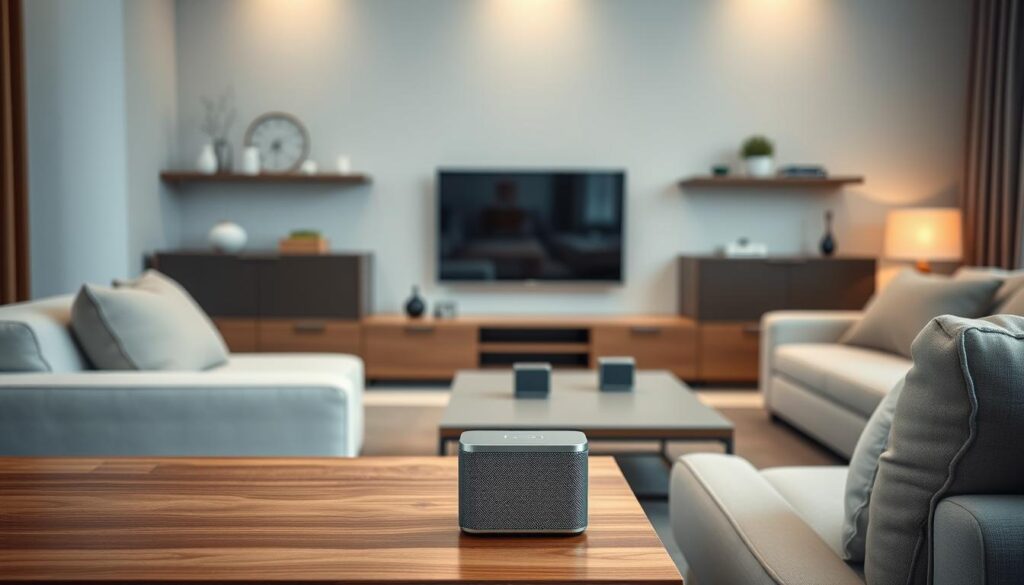
Most satellite speakers are light, perfect for hanging on walls. Use special wall brackets for your model to keep them stable. Always attach these to wall studs to avoid damaging your drywall.
Best Positions for Optimal Sound
For the best sound, place speakers at ear level when sitting. If you mount them higher, angle them down to keep sound clear. A symmetrical setup ensures sound spreads evenly across the room.
Wiring and Connectivity Advice
For wired speakers, plan your cable routes to keep things neat. You can hide wires or use cable channels. With wireless satellite speakers, make sure outlets are near your mounts to avoid cords.
After setting up, check your receiver settings match your speakers. Taking time to calibrate will give you superior sound and a home theater feel.
Satellite Speaker System Configurations
The right placement of satellite speakers can make a big difference. It ensures your audio fills the room well and sounds clear. Whether you’re setting up a music station or a home theater, the layout is key to your enjoyment.
2.1 vs. 5.1 Surround Sound
A 2.1 system has two main speakers and a subwoofer. It’s great for small spaces where quality matters. The subwoofer lets the satellite speakers focus on mid and high sounds, making the audio cleaner.
A 5.1 setup adds a center channel and two rear speakers. This creates a 3D soundstage. It’s perfect for movies and games, with the center channel for dialogue and the rears for atmosphere.
Compatibility with Other Audio Equipment
Choosing the right receiver is crucial. It should match the number of channels you want. Modern receivers often have tools to fine-tune your setup. Make sure your amplifier can power all channels without distortion.
If you might add more speakers later, look for Dolby Atmos support. This lets you add height channels to your satellite speakers. Always check the impedance of your equipment for safe connections.
Integrating Satellite Speakers with Smart Home Systems
We can now connect high-quality sound with smart home ease. By adding wireless satellite speakers to your network, you control your home’s sound. This makes your audio setup as flexible as your life.
Compatibility with Smart Devices
Knowing the difference in connections is key for a smooth experience. Bluetooth is quick and easy for pairing mobile devices with speakers. But Wi-Fi is better for streaming music across rooms.
Before buying new speakers, check if they work with your smart system. Look for app support and voice-control integration. Also, make sure they get updates to stay secure and work well.
Streaming Music and Content
Good network speed is crucial for streaming. Test your Wi-Fi in speaker areas for a strong signal. This avoids annoying drops and lets you enjoy music or movies.
Choose systems with regular updates for the best performance. Checking these specs before buying ensures your gear works well with TVs and streaming services. This approach gives you a great listening experience at home.
Maintaining Your Satellite Speakers
Looking after your home audio gear is key. Regular checks help keep your speakers sounding crisp and clear in your home.
Cleaning and Care Tips
Dust is a big problem for clear sound. Use a soft, dry microfiber cloth to clean your speakers every few weeks.
For the grilles, a vacuum with a soft brush on low works well. It keeps dust out of the drivers and prevents sound from getting muffled.
Make sure your speakers breathe well to avoid overheating. Don’t put them in tight spots or near heat sources. Too much heat or moisture can harm them.
Check your cables and connections often for wear or corrosion. A secure connection is crucial for clear sound and avoiding noise.
Troubleshooting Common Issues
Even with good care, problems can still happen. If you hear missing audio or distortion, first check your cables.
For a hum, move your speaker wires away from power cables. For wireless systems, check if your router is causing signal problems.
Test your setup with different types of media. This helps find out if the problem is with the source, amplifier, or speakers.
| Issue | Potential Cause | Recommended Action |
|---|---|---|
| Distorted Sound | Overdriven signal | Lower the volume or gain |
| Audible Hum | Ground loop | Check power cable shielding |
| Intermittent Audio | Loose connection | Tighten or replace cables |
| No Sound | Source failure | Verify input settings |
Enhancing Acoustic Performance
We can make our audio better by adjusting our listening space. Small speakers are great for highs but lack in bass. By setting up our satellite speakers for surround sound right, we get the best sound.
Adding Subwoofers
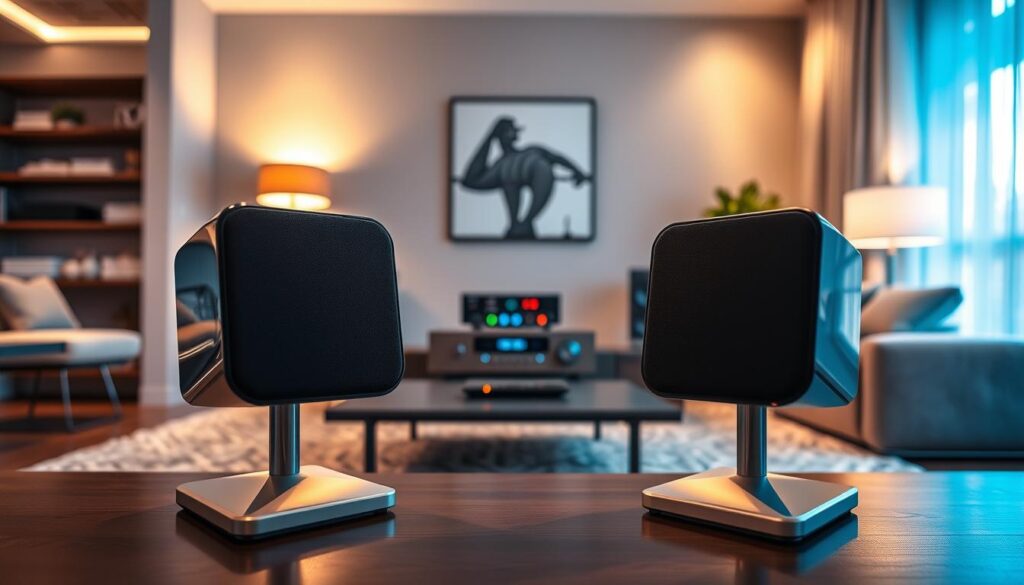
Adding a subwoofer boosts low sounds. This lets our main speakers handle mid and high sounds better. This makes clearer dialogue and richer soundscapes.
Getting the crossover right is key to avoid too much bass. Try different phase settings and volumes for the best sound. A sub in a corner can boost bass, but test spots for the best sound in your room.
Acoustic Panels and Room Treatments
Even top satellite speakers for surround sound can be affected by room reflections. Hard surfaces bounce sound, causing muddy audio. Using acoustic panels can help absorb this excess sound.
Soft items like rugs and curtains also help. They reduce reflections, making our audio gear sound better. Here’s a table to see how different treatments can improve your sound:
| Treatment Type | Primary Benefit | Best Placement |
|---|---|---|
| Bass Traps | Reduces low-end buildup | Room corners |
| Acoustic Panels | Absorbs mid/high reflections | First reflection points |
| Heavy Curtains | Softens window echoes | Over glass surfaces |
| Area Rugs | Prevents floor bounce | Between speakers and seating |
Satellite Speakers for Different Environments
Choosing the right audio setup depends on where you plan to listen. We think matching your hardware to the room size and purpose is key. Whether it’s a small apartment or a dedicated media room, the right setup makes a big difference.
Home Theaters
Satellite speakers for home theater systems offer a great balance. They let you place audio sources behind and to the sides of your seats. This creates an immersive soundstage. Mount them at ear level for clear dialogue and realistic effects.
In bigger rooms, adding a dedicated subwoofer is a good idea. It handles low-frequency effects that smaller drivers can’t. This combo ensures your cinematic experience is balanced and impactful. Make sure to align your speakers with your screen for a better audio-visual experience.
Gaming Setups
For gamers, space is often limited. That’s why compact satellite speakers are perfect for desk setups. They fit around monitors without cluttering your space and provide the audio cues you need for gaming. Placing them at a slight angle improves the stereo image.
Immersion is key in gaming. Using a 2.1 or 5.1 configuration lets you hear sounds with stunning clarity. These small speakers blend well into even the most crowded gaming stations.
Music Listening Spaces
Music lovers need a different approach to speaker placement. In a dedicated listening room, experiment with speaker distance to find the perfect soundstage. Using compact satellite speakers in a casual music space offers high-quality audio without taking over the room.
If you’re setting up a casual listening area, consider wall-mounting your speakers. This saves floor space and keeps your room looking clean. It also provides rich, detailed sound throughout. Always take the time to calibrate your system for the best results.
Reviews of Top Satellite Speaker Models
Finding the right sound system means balancing tech specs with your room’s needs. When searching for the best satellite speakers, think about how they fit in your space. Good sound should be affordable if you know the trade-offs between size, power, and cost.
Popular Choices
Many fans choose well-known brands for reliable sound in small sizes. For example, the Klipsch Reference series is a top choice for a full surround setup. These systems often include special height channels for Dolby Atmos, making sound feel like it’s all around you.
When looking at these options, remember that high-quality satellite speakers work best with a powered subwoofer. For more info, check out this guide on surround sound satellite. It explains how different setups affect your listening.
Comparing Features and Prices
When comparing top-rated satellite speakers, look at both price and features. You don’t need to spend a lot to get great sound. Here’s a comparison to help you choose based on common standards.
| Model Series | Sound Profile | Best Use Case | Price Tier |
|---|---|---|---|
| Klipsch Reference | Dynamic/Bright | Home Theater | Premium |
| Entry-Level Compact | Balanced | Small Rooms | Budget |
| Pro-Grade Satellite | Neutral/Precise | Studio/Music | High-End |
Your choice should match your room’s needs. Think about these points before buying:
- Room Size: Bigger rooms need stronger drivers.
- System Expandability: Make sure it can grow with you.
- Connectivity: Check if it works with your current gear.
Future Trends in Satellite Speaker Technology
Audio technology is changing fast. We’re looking forward to new satellite speaker designs. They will focus on easy wireless connections and smart software.
Innovations on the Horizon
Companies like Sonos and Bose are leading the charge. They’re making small systems that sound amazing. Soon, these speakers will adjust the sound based on the room they’re in.
This means everyone can enjoy great sound, no matter how tech-savvy they are.
Market Predictions and Consumer Demand
People today want easy setups that stream high-quality audio. They don’t want to deal with complicated wiring. Modular systems are becoming popular because they’re easy to upgrade.
Think about how your speakers fit your home. Make sure they work well with your other devices. Also, consider where you’ll put them for the best sound. Choosing quality speakers means your audio setup will stay great for years.