
 Zoe Nora
Did you know over 80% of viewers feel more engaged with the right audio setup? Creating a custom home theater is more than just buying expensive gear. It’s about balancing room acoustics, seating, and lighting.
Turning a standard room into an immersive viewing experience needs careful planning. Use tools like the interactive planning tools to see your layout before buying. This way, every part works together for a cinematic feel at home.
Key Takeaways
- Effective planning balances room dimensions with high-quality equipment for superior sound and visuals.
- Digital visualization tools help you map out seating and screen placement before installation begins.
- A truly immersive environment relies on proper acoustic treatment and strategic speaker positioning.
- Comfort is essential, requiring careful attention to sightlines and riser height for every seat.
- Professional guidance helps avoid common pitfalls that often ruin the final cinematic result.
Understanding the Basics of Home Theater Design
We think every great home theater starts with good design basics. Whether it’s a dedicated cinema or a media room design, the aim is the same. We want to make a space that feels like the movies are right there with you.
What Is a Home Theater?
A home theater is a special area for top-notch sound and video. Some people want a dedicated cinema with comfy seats and dark walls. Others prefer a media room design that’s also a living area during the day.
“The best home theater is one that reflects the personality and viewing habits of the people who use it most.”
Choosing between these options depends on your space and how you’ll use it. A dedicated room gives you control over sound and light. A media room is great for both watching movies and hanging out.
Key Components of a Home Theater System
At the center of every system is a strong home entertainment system. This set of devices works together to give you a smooth viewing experience. It connects your video sources, display, and sound processors.
To create a great home entertainment system, pick parts that fit your room well. We suggest focusing on three main areas:
- Visual Display: Decide between a high-definition projector or a big TV.
- Audio Processing: Add surround sound speakers for a truly cinematic sound.
- Control Interface: Use unified remotes or smart home tech to make things easy.
Your choices should match your viewing habits. By picking the right tech for you, your system will bring joy for years.
Room Selection and Layout Considerations
Turning a spare room into a movie theater needs careful planning. We look at every detail of the space to meet our high standards. This way, your home theater design works perfectly.
Choosing the Right Room for Your Theater
We pick rooms with few windows to control light. If there are windows, we use blackout curtains or shades. Ceiling height is also key for better sound and overhead speakers.
It’s important to choose a room away from noisy areas like kitchens. Solid walls and few shared surfaces help block outside sounds. This keeps your media room design quiet and immersive.
Optimal Layout for Seating and Viewing
After picking the room, we focus on its shape. We figure out the best viewing distance for your screen to avoid eye strain. Speaker placement is also crucial for balanced sound at every seat.
We use digital tools to plan your layout before moving furniture. These tools help us test different setups for smooth traffic. Here’s what we check during planning.
| Evaluation Factor | Primary Goal | Impact on Experience |
|---|---|---|
| Room Dimensions | Balanced Acoustics | Reduces standing waves |
| Window Placement | Light Control | Enhances contrast ratios |
| Seating Distance | Visual Comfort | Prevents pixel visibility |
| Traffic Flow | Safety and Access | Ensures easy movement |
By mapping out these elements, we create a space that’s both professional and welcoming. A well-planned layout keeps your home theater design functional for years. Thoughtful preparation is key to a great media room design.
Essential Equipment for Your Home Theater
Choosing the right equipment is key to a great audiovisual setup. We need to match our display with sound quality for a cinema-like experience. Quality components ensure your system lasts for years.
When picking out your home entertainment system, your choices matter a lot. It’s important to think about how each piece works together for a smooth experience.
Projectors vs. TVs: Making the Right Choice
Deciding between a projector and a TV depends on your room. TVs are better for bright rooms because they have superior brightness. Projectors, on the other hand, offer a big screen feel that TVs can’t match.
Before buying a projector, use throw-distance and screen-size calculators. They help figure out if your space is right for a projector. Also, think about maintenance. Projectors need bulb changes, while LED or laser TVs are more reliable over time.
Audio Systems: Sound Quality Matters
A great picture is just the start; sound makes it real. Invest in a home entertainment system with a good receiver and speakers. This ensures clear sound and deep bass without any distortion.
When setting up your audiovisual setup, think about your room’s layout. Place speakers at ear level and add a subwoofer for better sound. Quality cables and connections also matter for a clear signal in your theater.
Acoustic Treatments for Enhanced Sound Quality
We often overlook the physical environment when building a home theater. Yet, it’s the most critical factor for audio clarity. Sound waves bouncing off hard surfaces create echoes and muddy dialogue. Low-frequency energy in corners can overwhelm the bass, hiding subtle details.
Effective soundproofing solutions are key to peak audio system performance.
Importance of Acoustic Panels
Acoustic panels control reflections in your viewing space. They absorb mid-to-high frequency sounds, preventing harsh reverberations. Clarity is significantly improved when placed at primary reflection points on walls.
High-quality panels also enhance the soundstage. They let you hear a film’s soundtrack as the director intended. Professional-grade materials ensure your room sounds tight, controlled, and immersive.
Tips for Soundproofing Your Theater Room
Achieving a truly isolated environment needs a multi-layered approach. Household items like heavy curtains and thick carpeting offer minor improvements. For better results, consider these soundproofing solutions to minimize noise leakage:
- Seal the gaps: Use weather stripping around doors and windows to prevent sound from escaping or entering.
- Add mass: Incorporate mass-loaded vinyl or double-layered drywall to block low-frequency vibrations from traveling through walls.
- Decouple surfaces: Use resilient channels or isolation clips to physically separate your wall surfaces from the studs.
- Utilize soft furnishings: Place plush rugs and acoustic foam in corners to dampen standing waves and reduce unwanted echoes.
While DIY methods are a good start, professional acoustic analysis offers more predictable results. By combining structural modifications with targeted absorption, you create a sanctuary for sound quality. Taking these steps ensures your home theater delivers a truly cinematic experience every time you press play.
Lighting Solutions for a Comfortable Viewing Experience
We think lighting is key to a great home theater. It’s not just about the screen and sound. The right lighting sets the mood and keeps you in the action.
Types of Lighting to Consider
For a pro look, mix different lights. Ambient lighting lights up the room, while task lighting helps you move around. Pathway lights on the floor are a good idea to avoid tripping and not dim the screen.
Accent lighting brings your space to life. Soft lamps or LED strips behind the screen ease eye strain. Some people even use twinkle lights on the ceiling for a starry feel, adding to the immersive viewing experience without glare.
Dimming Options for Perfect Ambiance
Light control is crucial in a theater. We recommend dimmable fixtures to adjust light levels for different scenes. This adds a touch of cinema to your home.
Don’t forget about physical light blockers. High-quality blackout curtains are essential to keep sunlight out. With the right dimming and lighting, your room stays cozy and bright for all visitors.
Choosing the Right Seating for Comfort
The right chair can turn a regular room into a cozy sanctuary. When you pick a custom home theater, the furniture is key. It makes sure you’re comfy during long movie nights.
Types of Theater Seating
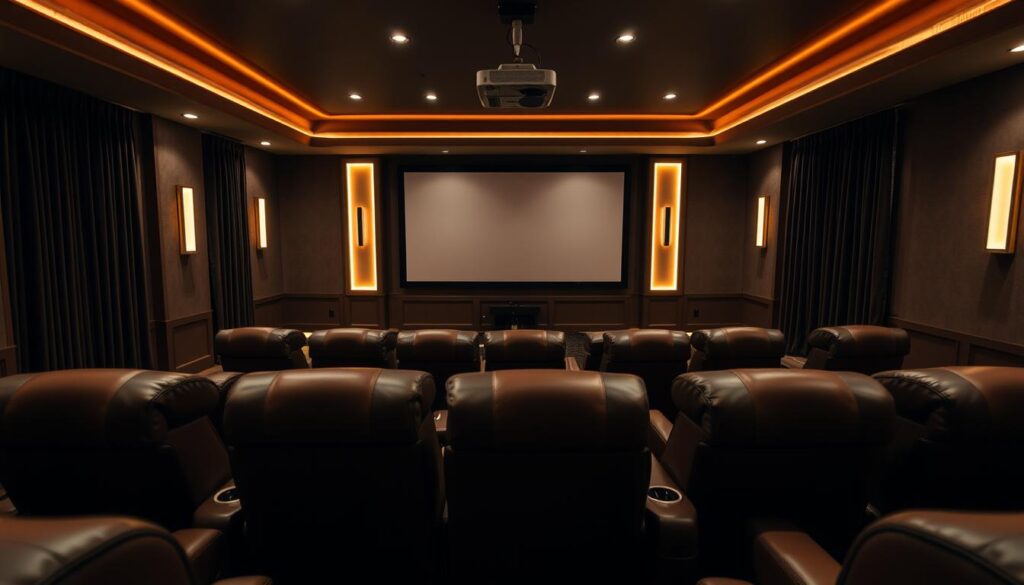
There are many options for different needs. Traditional recliners are loved for their individualized comfort and built-in cup holders. Plush sofas or loveseats are great for a cozy, social vibe.
For a deeper experience, consider haptic seating. These chairs vibrate with the sound, making your viewing immersive. Choose durable, easy-to-clean materials, whether you go for motorized recliners or stationary chairs.
Arranging Seats for Optimal Viewing Angles
Where you place your seats is as crucial as the furniture. Make sure everyone can see the screen clearly. Use risers for back rows to avoid blocking views.
Think about the space needed for reclined chairs. They shouldn’t hit the wall or the row in front. A well-planned layout ensures everyone enjoys the immersive viewing experience in your custom home theater.
Strategic spacing also adds to the look. Leave enough room for easy movement, even in big rooms. A well-arranged space feels like a luxury cinema, not just a living room.
Color Schemes and Aesthetics in Home Theater Design
When planning your media room design, the look is as key as the sound. The colors and textures you pick affect how light acts in the room. This, in turn, changes your movie-watching experience.
By picking the right finishes, we make sure the room enhances the screen, not distracts from it.
Popular Color Palettes for Theaters
Dark, matte colors are best to cut down on light reflection. Bright colors or shiny surfaces can make the screen look washed out. Shades like charcoal, navy, or forest green work well for walls and ceilings.
Here are some color tips for your space:
- Matte Finishes: Flat or eggshell paint absorbs light well.
- Neutral Bases: Dark grays offer a modern vibe and keep the focus on the screen.
- Accent Tones: Use deep colors in textiles to add warmth without taking away from the screen.
The Role of Décor and Style
The last touches in your media room design should show your style but still be practical. Choose simple decorations that don’t overwhelm the space. Adding movie memorabilia or framed posters can add charm without making it too busy.
Textiles are key for both looks and sound. Velvet curtains or plush carpeting look great and also help with sound. Pick items that serve more than one purpose, like acoustic panels that are also wall art.
Think about your lighting when picking furniture and accessories. Use simple decorative lighting, like dimmable LED strips, to add a professional feel. By mixing style with practicality, we make a space that feels like a real cinema.
Technology Integration in Your Home Theater
The magic of a cinema room comes from how devices talk to each other. By using smart home technology integration, you turn your room into a responsive space. This control makes sure everything is just right for you.
Smart Home Integration Options
Today’s automation lets you connect your display and receiver with lights, shades, and climate. With one command, you can dim lights, close blinds, and adjust the temperature for movie nights. Automated viewing scenes make your room feel like a real cinema.
You can also link your security to your home entertainment system. This lets you watch doorbell cameras or alerts on your main screen without getting up. It’s convenient and keeps you safe while watching movies.
Streaming Devices and Their Importance
Even though many TVs have apps, dedicated streaming devices offer a better experience. They have faster processors, more updates, and easier interfaces. Reliable network connectivity is key for smooth streaming of high-definition content.
Hardwire your streaming devices to your router for the best speeds. A strong connection is needed for 4K and high-bitrate audio. Centralizing your devices makes accessing your media library easy through one interface.
The aim of smart home technology integration is to make your downtime hassle-free. When everything works together, you enjoy your stories more. A well-connected room is the essence of a modern viewing space.
Remote Control Options for Convenience
We think a top-notch audiovisual setup needs an easy-to-use control system. It should make managing your entertainment space simple. This way, you can enjoy your movie without worrying about the tech.
Having all controls in one place means no more fiddling with multiple devices. It makes your movie nights much smoother.
Universal Remotes: What to Look For
When picking a universal remote, look for ones with activity-based commands. This lets you start a sequence of actions with one button. For example, you can turn on the projector and dim the lights with just one touch.
Reliability is key. Choose remotes that work with both infrared and radio frequency signals. This ensures they function even if your equipment is tucked away.
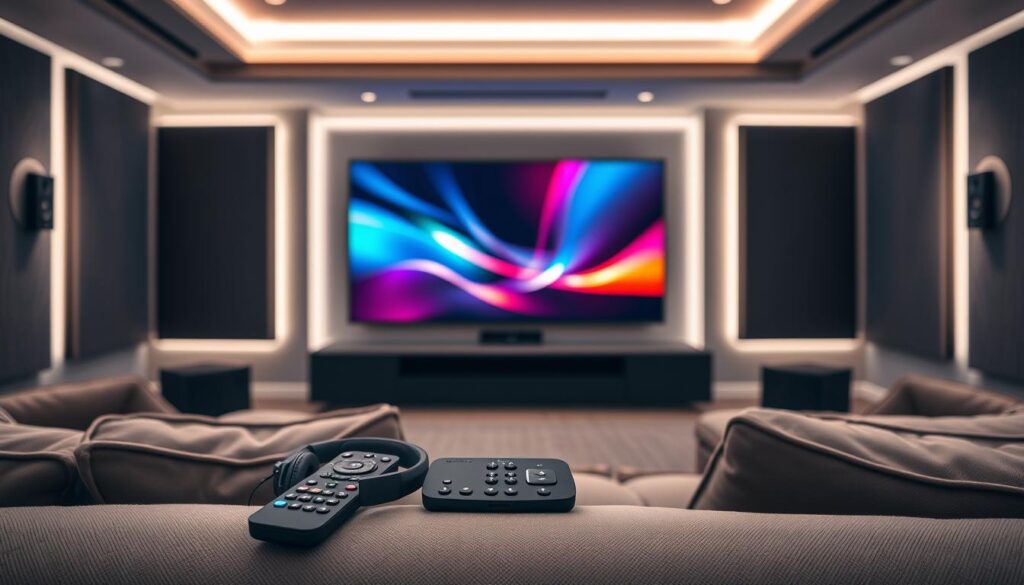
It’s important to make sure the remote works with all your devices. This includes gaming consoles and sound systems. Also, opt for a model with backlit controls. This makes it easier to use in a dark room.
Smartphone Control Apps
Today’s mobile apps have changed how we control our media centers. They offer a clean interface that turns your phone into a command center. For example, you can control an Apple TV from your iPhone, giving you a touch experience better than traditional remotes.
These apps are crucial for smart home technology integration. By linking your theater to your home network, you can sync your settings with other smart devices. This creates a fully immersive and automated viewing experience.
Creating a Personalized Viewing Experience
We think the best home theater design is one made just for you. By focusing on what you like, we can turn any room into your own special space.
True comfort means choosing tech that fits your life. Whether you watch movies often or just sometimes, your space should meet your needs.
Scaling Your Theater to Fit Your Needs
When planning, we must think about your home’s size. A big basement can have huge screens and lots of seats. But a smaller room might need a more compact audiovisual setup.
How much you can spend also affects your setup. We suggest starting with key items like a good projector or display. Then, add extras like lights or special sound treatments later.
The size of your family affects the layout. For movie nights, consider modular seats. They can change to fit any group size, keeping the immersive viewing experience great.
Customizing Sound and Video Settings
Getting it just right is key. Adjust your screen’s brightness and contrast to match your room’s light. This keeps colors bright, day or night.
“The magic of cinema is not just in the picture, but in the way sound and vision work together to transport the audience to another world.”
For sound, tweak speaker and subwoofer levels for your room’s acoustics. Use special modes for clear dialogue or deep bass in action scenes.
To make your immersive viewing experience even better, try haptic seating. It vibrates with the movie. With thousands of coded titles, every home theater design choice is meaningful and enjoyable.
Maintenance Tips for Your Home Theater
Keeping your home theater in top shape is key. A little time each week can make a big difference. This way, your investment stays in great condition for years. Whether it’s a custom setup or an affordable home theater, regular care avoids expensive fixes.
Regular Cleaning and Care for Equipment
Begin by dusting your screens and projector lenses with a microfiber cloth. Never use harsh chemicals as they can harm the coatings. Vacuum around your speakers and seats to stop dust from getting stuck.
Make sure your receiver and projector have enough air to cool down. Too much heat can damage your equipment. Also, check your cables often to avoid frays or tangles.
Troubleshooting Common Issues
Sometimes, even with good care, problems can pop up. If you hear vibrations or rattles, check your soundproofing solutions. Tightening loose parts or adding pads under speakers can fix these issues fast.
For audio problems like missing sounds or wrong inputs, try restarting your devices. Most systems fix connectivity issues by simply refreshing the connection. If streaming stops, check your network before messing with settings.
Issues with projector images, like tilt or focus problems, can be fixed in the device’s settings. Keep your firmware up to date for the latest streaming and video support. Proactive troubleshooting ensures your system works well, so you can enjoy the movie.
Future-Proofing Your Home Theater
Creating a space for entertainment means thinking ahead. We design our rooms to keep up with new trends in the industry.
Planning carefully makes sure your home theater design stays current for years. We focus on easy wiring paths and modular racks for simple upgrades. This way, your investment stays safe while you can easily update your tech.
Managing Equipment Lifecycles
Technology changes quickly, but a well-chosen foundation lasts. We advise swapping out streaming devices every few years for the latest software. Investing in top-notch gear like Sony projectors or JBL Synthesis speakers pays off in the long run.
Adapting to New Standards
Today’s entertainment needs smart home tech to stay up-to-date. We recommend choosing automation systems that can update their software. A custom home theater grows with you, supporting new formats like Dolby Atmos.