 Zoe Nora
Did you know that nearly 40% of signal loss in home theaters occurs because of poor connections? Many people spend a lot on speakers but forget about the important cable that carries their music.
Choosing the right audio cable is key for top-notch sound in any setup. We look at different connectors to help you pick the best for your gear.
Knowing about connectivity helps keep your signal clean and free from interference. This guide is your go-to for understanding interconnects and accessories. We aim to help you find the perfect audio cable to improve your listening.
Key Takeaways
- Signal integrity depends heavily on the quality of your physical connections.
- High-fidelity sound requires matching the right wire type to your specific hardware.
- Proper shielding prevents unwanted electromagnetic interference from ruining your playback.
- Investing in durable materials extends the lifespan of your entire sound system.
- Navigating the market is easier when you understand basic technical specifications.
Understanding Different Types of Audio Cables
Getting into audio connectivity means knowing your cables. Whether for a pro studio or home sound, the right audio cable is key. It keeps your sound clear and true.
Analog vs. Digital Audio Cables
Analog cables send sound as continuous electrical signals. An analog audio jack cable goes straight from source to speakers. It’s loved for its natural sound.
Digital cables send data as binary code. They need a converter to make sound. They’re good for long distances in home theaters because they fight off interference.
Unbalanced vs. Balanced Connections
Unbalanced cables use one wire and a ground. They can pick up noise from power lines. This is common in basic gear.
Balanced cables use two wires and a ground. They cancel out noise. This is key for clear sound in pro settings with long cables.
Optical Cables Explained
Optical cables send audio as light. They’re not affected by electromagnetic interference. They’re great for TV to soundbar connections in modern setups.
Choosing a good headphone cable or digital link means your gear lasts longer. Knowing these differences helps you set up for the best sound. See the table below for a quick comparison.
| Cable Type | Signal Method | Noise Immunity | Primary Use |
|---|---|---|---|
| Analog Unbalanced | Electrical Voltage | Low | Home Audio |
| Analog Balanced | Electrical Voltage | High | Professional Studio |
| Digital Optical | Light Pulses | Very High | Home Theater |
Factors to Consider When Choosing an Audio Cable
Your sound system’s quality depends on its weakest link, often the aux cord. Choosing the right cable means balancing physical needs with technical specs of your gear. This helps avoid issues like signal loss and wear.
Cable Length and Flexibility
Length is key for signal travel from source to output. For unbalanced connections, keep your audio cable under six feet to avoid interference. Longer cables can pick up noise, ruining your sound.
Flexibility is crucial for home use. A stiff cable can damage ports over time. Choose a cable that’s flexible yet not too long for tight spaces.
Material Quality and Durability
The quality of your gear affects its lifespan. Good shielding is vital to block outside interference. Look for cables with strong outer jackets to resist damage.
Investing in durable materials keeps your sound clear. Cheap cords often break at stress points. Better materials protect your investment in quality sound.
Connector Types
The connector type is crucial for device connections. The wrong one can harm audio quality. Make sure your aux cord fits well for a reliable connection.
| Feature | Standard Cable | Premium Cable |
|---|---|---|
| Shielding | Basic Foil | Multi-Layer Braided |
| Connector | Nickel-Plated | Gold-Plated |
| Flexibility | Moderate | High |
| Signal Integrity | Good | Excellent |
Popular Audio Cable Brands to Explore
When you’re setting up your sound system, picking a good audio cable maker is key. The market has many choices, but look for brands known for quality. They should focus on keeping your signal clear and their products durable.
Monster Cable
Monster Cable is well-known for showing how important a good audio cable is. They make cables that are easy to use but still offer big improvements. People like their cables because they last long and block out noise.
AudioQuest
For top-notch sound, AudioQuest is the go-to. They use special materials and designs to keep your audio signal clean. This makes their cables a favorite among music lovers who want the best sound.
Mogami
Mogami is the top choice for pros in recording studios. They’re known for their balanced XLR cables, which have a strong lock since the 1950s. These cables are built to last, perfect for studios and live shows.
- Monster Cable: Great for home theater and consumer audio upgrades.
- AudioQuest: Ideal for audiophiles seeking premium material quality.
- Mogami: The top choice for professional-grade durability and balanced connections.
Choosing the right audio cable depends on what you need and how much you can spend. By looking at these well-known brands, you can be sure your gear will work well for a long time.
How to Determine the Right Length of Cable
Choosing the right length for your aux cord or audio cable is key. It affects how well your setup works. To avoid signal loss and keep things neat, plan carefully.
Measuring Your Space
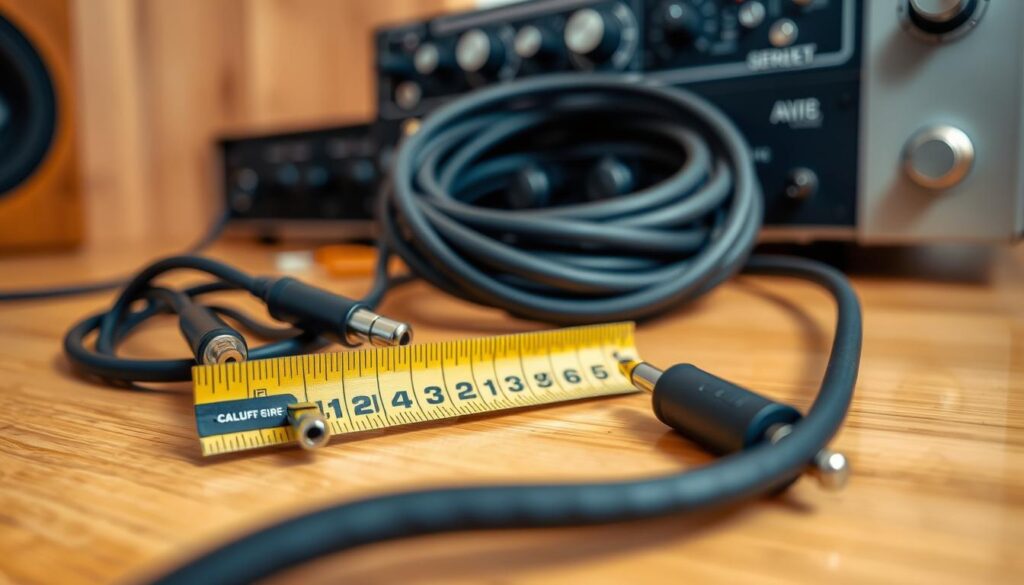
First, map out where your wires will go. Don’t just measure straight lines. Use a tape measure to follow the actual path, including bends and corners.
Always account for corners and obstacles that might force the wire to bend or deviate. This way, you won’t end up with a cable that’s too short.
Allowing for Movement
Adding extra slack to your measurements is smart. Equipment often needs to be moved for cleaning or upgrades. A tight cable can get damaged over time.
Adding 10 to 15 percent extra length is a good rule. This extra length lets you move your gear without losing your connection.
Avoiding Signal Loss
Long cables can cause signal loss. For distances up to 7.5 meters, use a 2.5sq.mm cross-section oxygen-free copper cable. This keeps your sound quality high.
| Cable Run Distance | Recommended Gauge | Material Type |
|---|---|---|
| Under 3 Meters | 1.5sq.mm | Oxygen-Free Copper |
| 3 to 7.5 Meters | 2.5sq.mm | Oxygen-Free Copper |
| Over 7.5 Meters | 4.0sq.mm | Shielded Copper |
The Impact of Cable Quality on Sound
Getting top-notch sound starts with the connection between your devices. Many people focus on speakers and amps, but the audio cable is key. A bad wire can add noise, hurting even the best gear’s sound.
Understanding Signal Interference
Every sound cable faces issues like electromagnetic and radio frequency interference. These signals can mess with your sound, causing hum or static. Good cables use special shielding to keep these problems out, keeping your music clear.
The Role of Gold Plating
Many top cables have a shiny, gold finish. It’s not just for looks; gold fights corrosion. This keeps your connection strong and your sound clear for a long time.
The Long-Term Benefits of Investing
While cheap cables might seem good at first, they often need to be replaced. Spending more on quality means your cable lasts longer. A good cable keeps your system running smoothly, avoiding annoying sound drops.
| Feature | Standard Cable | Premium Cable |
|---|---|---|
| Shielding | Basic/Minimal | Multi-Layered |
| Connector Material | Nickel/Steel | Gold-Plated |
| Signal Clarity | Prone to Noise | High Fidelity |
| Lifespan | Short-Term | Long-Term |
Where to Buy Quality Audio Cables
Finding the right audio cable for your setup is key. The best place to buy depends on what you need. For a detailed home audio installation, look for a vendor with expert advice and a wide range of products.
Online Retailers
Online stores have a huge selection of audio cables. Cable Matters is a great example, offering many specialized cables. You can find specific types like an XLR to RCA cable or a 3.5mm to RCA cable easily.
Specialized Audio Shops
For top-notch sound, visit specialized audio shops. These places have staff who know a lot about audio cables. They can help you choose the best audio cable for your gear. Even though it might cost more, the service and quality are worth it.
Local Electronics Stores
Local stores are perfect for quick fixes. You can see the quality of an RCA cable before buying. They might not have as much as online stores, but they offer fast service for urgent needs.
| Retailer Type | Best For | Key Advantage |
|---|---|---|
| Online Retailers | Rare configurations | Massive inventory |
| Specialized Shops | High-end systems | Expert technical advice |
| Local Stores | Immediate needs | Instant availability |
Common Audio Cable Connectors and Their Uses
Your audio setup needs the right hardware to connect your devices. Knowing the correct connector is key for compatibility with your audio cable. The wrong plug can cause signal loss or harm your equipment.
RCA Connectors
The RCA cable is well-known in home entertainment. It comes in pairs, with red and white for right and left audio. These are used for analog signals in devices like CD players and old TVs.
XLR Connectors
In professional audio, you’ll see XLR connectors a lot. They’re balanced and use three pins to carry audio, reducing noise. Their locking mechanism keeps them secure during live shows or studio recordings.
1/4-Inch TRS Connectors
The 1/4-inch TRS connector is used in many professional settings. It’s also known as an audio jack cable and a headphone cable. It has an extra ring for stereo or balanced mono signals, unlike guitar cables.
Professionals also use SpeakOn cables for high-power needs. These are the standard for professional speakers because they handle high currents safely and efficiently.
| Connector Type | Primary Use | Signal Type | Key Feature |
|---|---|---|---|
| RCA | Home Audio | Unbalanced | Color-coded |
| XLR | Professional Audio | Balanced | Locking mechanism |
| 1/4-Inch TRS | Instruments/Headphones | Balanced/Stereo | Versatile design |
| SpeakOn | Professional Speakers | High Current | Twist-lock safety |
Pricing Ranges for Audio Cables
When you look for a new sound cable, you’ll see many prices. It’s common to think more expensive means better, but not always for home audio. Knowing the different prices helps you spend wisely without overpaying for what you don’t need.
Budget-Friendly Options
Basic cables are great for simple setups. They have standard PVC jackets and basic shielding. This is enough for short distances where interference is low. If you’re starting out, learn how to pick the right speaker to get the most for your money.
Mid-Range Choices
In the mid-range, you’ll find better build and more shielding. These cables use oxygen-free copper and durable connectors. They last longer and are reliable for most home systems.
“The bitterness of poor quality remains long after the sweetness of low price is forgotten.”
Premium Audio Cables
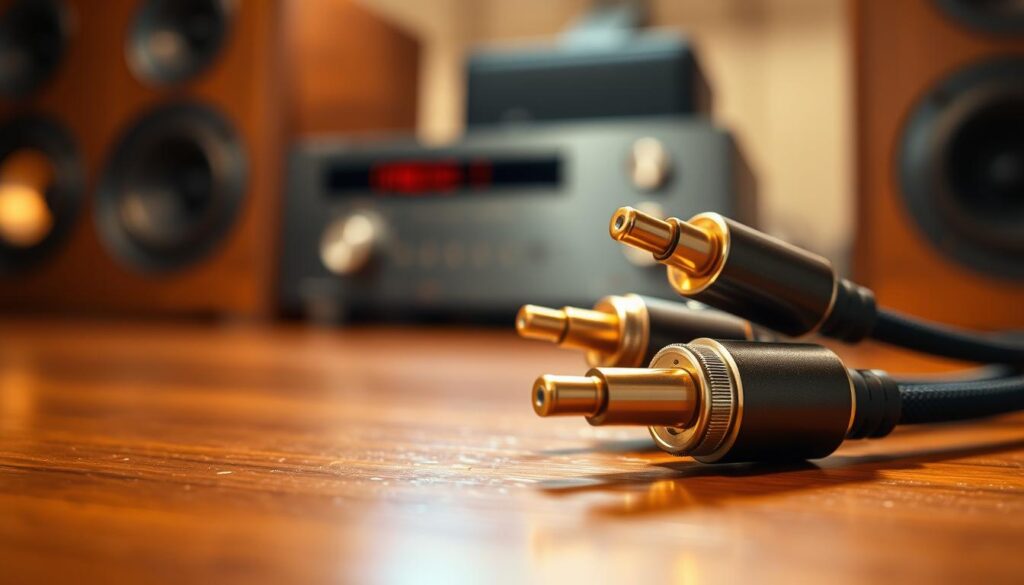
Premium cables use exotic materials and have heavy-duty braiding and gold-plated connectors. They look great and protect against interference. But, for most listeners, the sound difference is small. Choose this tier if you have a high-end system or want specific looks for your home theater.
Your sound cable choice should match your system’s quality. Focus on durability and shielding to find an audio cable that’s worth the investment for your needs.
Maintenance Tips for Your Audio Cables
Looking after your audio gear starts with your cables. Keeping them in good shape helps them last longer. Simple habits can make your equipment reliable for years.
Proper Storage Techniques
How you store your gear matters a lot. Don’t wrap cables tightly around your elbows. This can cause wire damage. Instead, use the over-under method to keep wires relaxed.
- Use Velcro ties to keep coils neat and organized.
- Store cables in a cool, dry place away from direct sunlight.
- Avoid hanging cables over sharp edges that could damage the outer jacket.
Cleaning and Upkeep
Dust and oxidation can harm your signal. Clean your audio cable connectors with a soft cloth. For metal contacts, a bit of contact cleaner can help.
Keep your workspace clean to prevent dust from getting into your ports. Use protective caps for your connectors when not in use. This keeps them dust-free and maintains connection quality.
Signs of Wear and Damage
Cables will show signs of aging over time. Look for fraying, exposed shielding, or bent pins. USB cables, in particular, can be more prone to damage.
Intermittent sound or crackling means your wires are tired. Don’t ignore these signs. A faulty connection can harm your speakers or amplifiers. Replacing a damaged audio cable right away is best.
Frequently Asked Questions About Audio Cables
Choosing the right gear for your sound system can be tricky. You might wonder about performance and how long it will last. We’re here to help you make the best choices for your home setup.
How Long Should My Audio Cables Last?
High-quality gear can last for decades if you take care of it. Avoid sharp bends and keep your connectors clean. This way, your audio cable will serve you well for a long time.
Are Expensive Cables Worth It?
Premium cables have better shielding and materials. They’re great for professional settings. XLR cables are the top choice because they reject interference well.
Can I Use Any Cable with My Sound System?
Not all cables work with every system. Make sure the cable fits your hardware ports. The wrong cable can harm your equipment or sound quality. Always check before plugging in a new cable.
We hope this guide makes choosing sound equipment easier. Start improving your listening experience today. Pick the right components for your needs.