
 Zoe Nora
Did you know over 30% of American households now value media rooms more than living rooms? This change shows a growing need for top-notch entertainment at home. We think making a DIY home theater is the best way to make movie nights special.
Our guide is a comprehensive roadmap to turn any spare room into a pro-grade space. We cover the key planning and doing steps for success. By using our structured guide, you can make sure your project looks good and works well.
Whether you’re new to DIY or have done it before, this guide is for you. Let us guide you in creating a DIY home theater that brings the cinema to your home.
Key Takeaways
- Understand the importance of room selection and acoustic planning.
- Learn how to balance technical equipment with interior design.
- Follow a step-by-step roadmap for professional results.
- Discover cost-effective ways to upgrade your viewing experience.
- Ensure your space meets all safety and comfort standards.
Understanding the Basics of DIY Home Theaters
A great home theater mixes technology and setting perfectly. When we create a DIY home theater, we aim to bring cinema magic home. We plan carefully to make sure every detail is clear.
Defining a Home Theater Experience
A home theater is more than just a big screen. It’s about feeling the story deeply. The lights go down, and the sound wraps around you. This is what makes a movie feel real.
Key Components of a Home Theater System
To make a top-notch DIY home theater, you need key parts. Start with a great display, like a 4K projector or OLED TV. Then, add an AV receiver to handle your surround sound speakers for clear audio.
| Component | Primary Function | Key Benefit |
|---|---|---|
| AV Receiver | Signal Processing | Centralized Control |
| Projector | Visual Projection | Large Screen Scale |
| Surround Speakers | Audio Delivery | Immersive Sound |
Importance of Room Selection
The room’s features are crucial for your setup. Even top gear won’t work well in a bad room. Choose a space with good lighting and enough room for speakers. This ensures your DIY home theater shines.
Planning Your Home Theater Space
Turning a spare room into a movie theater needs careful planning. Before buying expensive equipment, check your room’s size and shape. Effective planning is key for a great DIY home theater project.
Assessing Available Space
First, measure your room’s square footage. Think about how the room’s shape affects sound and seating. A rectangular room usually offers the best sound.
Also, consider the room’s entry points and windows. You’ll need to control light levels. Proper assessment helps avoid buying too much or too little equipment for your space.
Measuring and Mapping Your Room
Use a tape measure to get your room’s exact dimensions. Create a scale map on graph paper or digital software. Include power outlets, vents, and doors on your map.
Find the best spot for your screen for perfect views from every seat. Precision is vital in planning your floor layout. This helps avoid costly mistakes later.
Designing the Layout
Modern home theater design trends mix comfort with tech. Aim for a layout that keeps the screen at eye level. Make sure there’s enough room for comfy seating and speakers.
Think about how people move through the room to avoid blocking the screen. Using current home theater design trends helps create a space that’s both professional and welcoming. A well-planned DIY home theater feels like a luxury in your home.
Selecting the Right Equipment
Creating the perfect home theater setup begins with picking the right display and sound gear. It’s key to match your equipment to your room’s size for a top-notch experience. You can find the best gear for your home by focusing on quality and compatibility.
Choosing the Ideal TV or Projector
Choosing between a big TV and a projector depends on your space and light control. TVs work better in rooms with light, while projectors give a big-screen feel. Think about your viewing distance to avoid a too-big screen.
If you choose a projector, make sure your mount is strong and in the right spot. A pro projector installation will make images clear and sharp. Make sure your display tech can handle the resolution you want for movies.
Understanding Sound Systems and Speakers
Good visuals are just half the battle; sound is key for full immersion. Invest in a surround sound system that fills your room well. Clear dialogue and deep bass are signs of a great sound setup.
When picking speakers, think about your room’s layout. Proper placement makes sound travel naturally, creating a real soundstage. Don’t forget a good receiver to power your speakers right.
Additional Accessories to Consider
Small details can make a big difference in your daily use. A high-quality mount like the Sanus VLT7 keeps your TV safe and at the right angle. It’s flexible for different seating setups.
If you watch local TV, the Channel Master FLATenna is a great add-on. It’s a passive, easy-to-install antenna for reliable channel reception. These upgrades complete your home theater setup and ensure everything works well.
Acoustic Treatments for Optimal Sound
Your home theater’s sound quality depends on how sound waves interact with your room. Even the best equipment can sound bad if your room has too much echo. By controlling these factors, you can make your living room sound like a pro home audio system.
The Role of Acoustic Panels
Acoustic panels soak up sound energy that would bounce around. This stops harsh echoes during loud scenes. Putting them on side walls sharpens your surround sound setup.
Positioning Speakers for Best Performance
Where you place your speakers is as important as their quality. Keep them at ear level and angled toward you for direct sound. Use Monoprice 2747 12 gauge speaker wire for a clean signal.
Carpet and Curtains for Sound Quality
Hard floors and bare windows harm clear sound. Thick carpeting and area rugs reduce floor reflections. Heavy curtains absorb sound waves on glass. These changes improve your surround sound setup a lot.
| Treatment Type | Primary Benefit | Best Placement |
|---|---|---|
| Acoustic Panels | Reduces Echo | Side Walls |
| Heavy Curtains | Absorbs High Frequencies | Windows |
| Thick Carpeting | Dampens Floor Reflection | Under Seating Area |
| Speaker Wire | Signal Consistency | Behind Walls/Baseboards |
Lighting Solutions for Your Home Theater
Lighting is key to turning a regular room into a top-notch cinema. It’s crucial for setting the mood and avoiding glare on your screen. By trying out different home theater lighting methods, you can make your space both useful and immersive.
Importance of Dimmable Lighting
Dimmable systems are essential. They let you smoothly change from bright to cinematic dark. With control over light levels, you can adjust the room for any movie. Gradual dimming makes it easy on your eyes, avoiding sudden darkness.
Ambient vs. Task Lighting
It’s important to know the difference between ambient and task lighting. Ambient lighting gives a soft glow, avoiding a dark cave feel. Task lighting, on the other hand, focuses on specific areas for safety and utility.
- Ambient: Uses wall sconces or LED strips for a warm glow.
- Task: Places focused lights near seats or equipment for safety.
Smart Lighting Options
Smart home entertainment lighting offers great convenience. These systems let you set scenes that change with your activity, like dimming lights when you start a movie. You can control these settings with voice commands or a smartphone app, making your experience better.
| Lighting Type | Primary Function | Best Usage |
|---|---|---|
| Dimmable LEDs | Mood Control | General cinematic viewing |
| Smart Home Entertainment | Automation | Scene-based adjustments |
| Task Lighting | Safety | Stairways and equipment |
Setting Up Your Home Theater
Turning a room into a cinema needs careful steps to ensure everything works well. Take your time to avoid mistakes that could ruin your viewing experience. A detailed approach keeps your home theater setup reliable and professional.
Installation Tips for Equipment
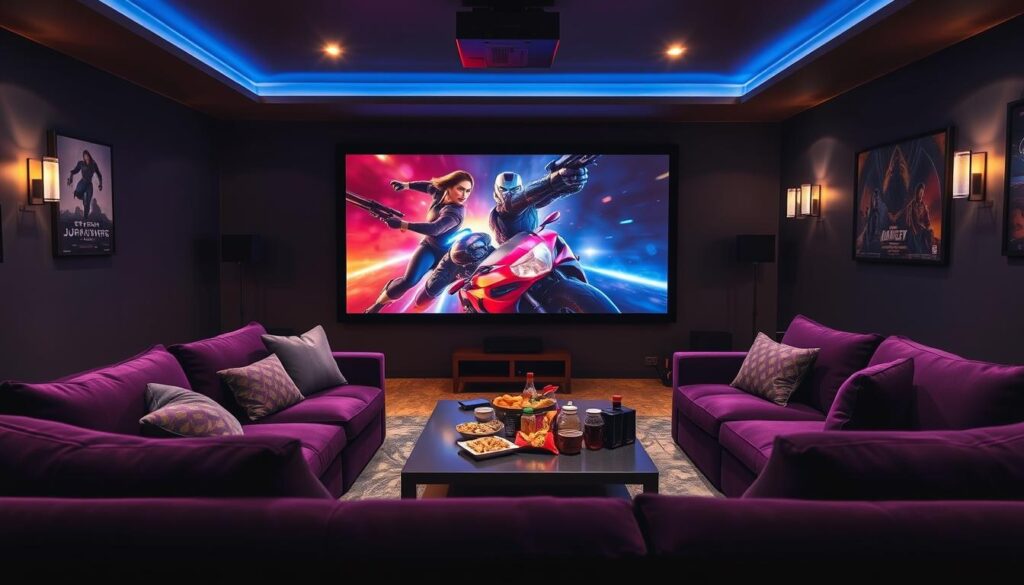
When setting up heavy equipment, safety and stability are key. For a top-notch projector installation, use a strong mount like the Peerless-AV PRGS-UNV. This mount lets you make fine adjustments, ensuring your image is perfect on the screen.
Always check if your wall or ceiling studs can hold the weight of your equipment before drilling. Use a level to make sure your projector and screen are perfectly horizontal. Even small alignment errors can cause distorted images that are hard to fix with software alone.
Wiring and Cable Management
Clean wiring is crucial for both looks and safety. Use cable sleeves or raceways to hide cords along walls and baseboards. This keeps your space safe and looks neat.
For high-definition video, quality is key. The Monoprice 4K Certified Premium High Speed HDMI Cable is a great choice. It can send video up to 4K at 60 Hz. Reliable cables ensure your signal stays strong and clear.
Testing Your Setup
After connecting everything, it’s time to check if your system is working at its best. Start by checking each input to make sure audio and video signals are reaching your display right. Run a test pattern to adjust colors and contrast levels.
Listen to each speaker separately to confirm your wiring is correct and no channels are mixed up. If you find any problems, double-check your connections before making final adjustments. A thorough test phase ensures your projector installation offers the best experience.
| Connection Type | Primary Use | Performance Level |
|---|---|---|
| HDMI 2.0/2.1 | Video & Audio | Excellent (4K/60Hz) |
| Optical Cable | Digital Audio | Good (Surround Sound) |
| RCA/Analog | Legacy Audio | Basic (Stereo) |
Home Theater Seating Options
Building a homemade cinema starts with the seating. The right furniture makes watching movies comfortable and stylish. Choose seats that are ergonomic for the best movie nights.
Types of Seating to Consider
Choosing furniture depends on your space and style. Theater recliners are great for comfort and adjustability. Plush sectionals or sofas are perfect for a cozy movie night with friends.
Large rooms can have tiered platforms for a cinema feel. This setup ensures everyone has a clear view of the screen. Popular styles include:
- Traditional Recliners: Great for individual comfort.
- Sectional Sofas: Ideal for families and casual movie nights.
- Tiered Risers: Perfect for multi-row setups to improve sightlines.
Arranging Seats for Comfort and Viewing
Proper placement is key for comfort and immersion. Measure the distance from the screen to the front row. Keep your eyes level with the screen’s center for the best viewing.
Rows should be spaced for easy movement and clear views. Make sure your seating fits your speakers for balanced sound. A well-planned layout makes your room feel luxurious and welcoming.
Accessories for a Luxurious Experience
Small touches can make a big difference. Add features that keep essentials within reach. Modern chairs often come with advanced tech for a better experience.
Consider these accessories for a complete setup:
- Integrated Cup Holders: Keep drinks safe and spill-free.
- LED Under-lighting: Adds a sophisticated glow and helps in the dark.
- Swivel Tray Tables: Offer a convenient spot for snacks and remotes.
Creating a Warm Atmosphere
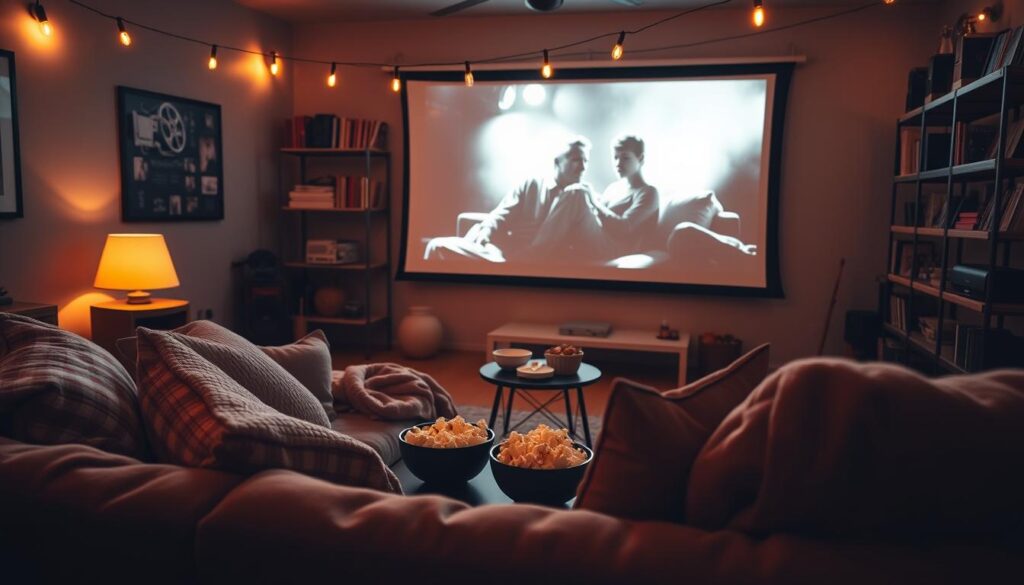
The secret to a great movie experience is the atmosphere in your home. Technology gives you the picture and sound. But, the environment makes you feel the movie. A well-designed space turns a room into a homemade cinema where you can relax.
Thematic Decor Ideas
Think about a theme for your media room ideas that matches your love for movies. You might choose a classic Hollywood look with vintage posters or film reels. These add character and make the space feel special for movies.
“The details are not the details. They make the design.”
Choosing Color Schemes
Color is key in a movie room. We suggest dark, matte colors to reduce light reflection. Shades like charcoal, navy, or forest green make your screen stand out.
Stay away from glossy paints to avoid glares. Muted walls keep your focus on the screen in your homemade cinema.
Enhancing the Experience with Personal Touches
Personal touches make a room special. Add custom lighting like dimmable LED strips for a soft glow. These small changes are big for warmth.
Don’t forget comfort. Plush blankets, pillows, or a snack station make movie nights special. These touches make your space welcoming for everyone.
Streaming and Media Options
Adding streaming platforms to your home theater makes watching movies easy. Today’s media room ideas focus on quick access to your favorite shows and movies.
Popular Streaming Services
Now, digital entertainment is all about high-definition streaming. Netflix, Disney+, and Max have huge collections for every taste.
For the best viewing, make sure your internet is fast. High-speed bandwidth is key for smooth streaming.
Setting Up Media Players
Choosing the right hardware is important. You might want a streaming stick, a gaming console, or a Blu-ray player. The goal is to keep your smart home entertainment system tidy.
Dealing with many devices can be messy. The Sofabaton U2 universal remote is a smart choice. It controls up to 15 devices, including Bluetooth, with one easy-to-use interface.
Organizing Your Movie Library
Building a movie collection is a mix of physical and digital media. Some like the feel of DVDs, while others prefer digital libraries.
Here are some tips for organizing your movies:
- Use media server software to organize your digital movies.
- Label your DVD shelves by genre or release date.
- Connect your library to your smart home entertainment system for voice control.
Improving your media room ideas means enjoying movies more. A well-organized library makes every movie night special.
Maintenance and Upgrades
A top-notch home theater setup needs regular care to keep performing well for years. By taking the time for upkeep, you safeguard your investment. This ensures every movie night is immersive and free from issues.
Regular Checks for Equipment Functionality
Make it a habit to check your gear every month. Begin by ensuring all cables are tight and not loose. Loose wires can lead to signal problems.
Also, make sure your vents are clear. Overheating can damage your equipment early, so keeping vents dust-free is essential.
When to Upgrade Components
Technology changes fast, and knowing when to update your home theater setup is crucial. If your current gear can’t handle new formats, it’s time for an audio system upgrade to enhance sound quality.
Also, swap out old cables for newer, high-bandwidth ones. This ensures your system can handle 8K resolution and future video standards.
Keeping Your Setup Clean
Dust is a major threat to your electronics. Use a soft, microfiber cloth to clean your screens and equipment often. This prevents dust buildup.
For hard-to-reach spots, compressed air is great. Regular cleaning keeps debris out, ensuring good airflow and preventing damage.
Troubleshooting Common Issues
Even the best home audio systems can run into problems. We offer fixes for issues like audio dropouts or picture quality problems.
Audio Performance Fixes
Check your HDMI cables for sound issues. Loose connections can cause signal loss. Make sure your receiver settings match your speakers for clear sound.
Visual Clarity Adjustments
Look at your display settings for flickering or odd colors. Resetting your media player can solve small software problems. Good cables help avoid visual issues during movies.
Connectivity and Signal Stability
Make sure your network hardware supports high-bandwidth streaming. A stable connection keeps your media library ready. If problems persist, contact Sony or Denon.
Creating your dream space is rewarding. It brings movie magic to your living room. This guide helps you build an immersive space for family and friends. Start your project today for the best home entertainment.