
 Zoe Nora
Did you know over 90% of music streamed today is heavily compressed? This means we miss out on the subtle textures artists work hard to create. We often choose convenience over the full emotional impact of our favorite songs.
We dive into the world of High-res audio (Hi-Res) to see if it changes your daily listening. This guide looks at the benefits, limits, and gear needed for a superior sound experience.
We aim to clear up things for both serious audiophiles and casual listeners. We want you to hear music as the artist meant it. By embracing High resolution audio, you can discover hidden layers in your digital collection.
Key Takeaways
- Most streaming services use compressed files that lose significant sound quality.
- High-resolution formats preserve the original studio recording details.
- You need specific hardware, like a DAC, to hear the full potential of these files.
- The difference in quality is most noticeable on high-quality headphones or speakers.
- Understanding your equipment helps you make better choices for your setup.
What is High-Resolution Audio?
Have you ever wondered what makes sound quality so superior? High-res audio (Hi-Res) is a big step up in capturing and storing music. It uses higher sampling rates and bit depth to keep the details that regular formats miss.
Definition of Hi-Res Audio
High resolution audio goes beyond what CDs can do. While CDs are 16-bit/44.1 kHz, Hi-Res files are 24-bit/96 kHz or even 24-bit/192 kHz. This means they hold more data, making the sound more accurate.
Listening to these files, you’ll notice a wider range of sound and better clarity. You can hear things like a singer’s breath and the sound of a guitar string fading away. It’s all about getting closer to the authentic sound the artist wanted.
Key Differences from Standard Audio Formats
So, why do audiophiles love these formats? It’s because they capture more information per second of audio than the old standards.
| Format Type | Bit Depth | Sample Rate |
|---|---|---|
| Standard CD | 16-bit | 44.1 kHz |
| Hi-Res Audio | 24-bit | 96 kHz |
| Studio Master | 24-bit | 192 kHz |
Choosing high resolution audio has big benefits:
- Greater dynamic range for quieter and louder parts.
- Less digital noise from compression.
- A more immersive sound that feels like a live show.
The Science Behind High-Res Audio
Looking into sound technology shows why high-res audio is better than regular formats. Digital audio turns sound waves into numbers. These numbers help us recreate the sound with remarkable accuracy.
How Sample Rates Affect Sound Quality
The sample rate is how often the audio signal is checked per second. A common rate is 44.1 kHz, good for everyday sound. But higher rates capture sound more accurately.
Higher sample rates mean less digital noise. This keeps the sound’s timing right. High resolution audio gives you a closer sound to the original.
Understanding Bit Depth
Bit depth is about how detailed each measurement is. More bits mean a wider range of sounds. This lets you hear more details and feel the music more.
24-bit or 32-bit depth keeps the music’s small details clear. This is what makes high resolution audio better. Here’s a table showing the differences between standard and high-quality formats.
| Format Type | Sample Rate | Bit Depth | Dynamic Range |
|---|---|---|---|
| Standard CD | 44.1 kHz | 16-bit | 96 dB |
| High-Res Audio | 96 kHz | 24-bit | 144 dB |
| Studio Master | 192 kHz | 24-bit | 144 dB |
The Benefits of High-Res Audio
High-fidelity sound changes how we see our favorite albums. It reveals layers we never knew existed. When we move beyond standard compressed files, we unlock a deeper connection to the music we love. Adopting high-res audio lets us hear recordings exactly as the artists intended.
Improved Clarity and Detail
One of the most striking advantages of this technology is the incredible level of detail it preserves. We can now hear the subtle decay of a piano note or the delicate texture of a vocalist’s breath as they prepare for a chorus. These tiny nuances often disappear in lower-quality formats, leaving the sound feeling flat or lifeless.
By capturing more information from the original studio master, we gain a faithful reproduction of the performance. This clarity ensures that every instrument occupies its own space in the soundstage. We no longer have to strain to distinguish between complex layers of guitars or percussion.
Enhanced Listening Experience
Beyond simple detail, high-fidelity sound provides a broader dynamic range that transforms our listening sessions. We can now appreciate the stark contrast between soft, intimate whispers and powerful, sweeping crescendos. This range creates a more immersive and authentic emotional journey through every track.
When we listen to high-res audio, the music feels more present and alive in the room. It invites us to sit back and truly engage with the artistry behind the production. This upgrade is not just about technical specs; it is about feeling the music in a way that standard formats simply cannot provide.
How to Enjoy High-Res Audio
To fully enjoy your music, you need more than just high-quality files. The quality of your music depends on both the files and the equipment used to play them. Make sure your playback chain can handle the detailed data in Hi-Res audio.
Compatible Devices for Hi-Res Audio
Most computers and smartphones can’t handle high-resolution formats well. A good external Digital-to-Analog Converter (DAC) is crucial for playing Hi-Res audio. It ensures your music files are converted accurately and clearly.
Also, consider using dedicated network streamers or high-fidelity portable players. These are made to handle big data streams without issues. They let you hear the music as the recording engineers intended.
Listening via Streaming Services
Now, getting high-quality music is easier thanks to special platforms. TIDAL and Qobuz offer huge libraries of digital music files for audiophiles. These services stream music directly to your compatible devices for a smooth listening experience.
For the best experience, use a wired connection or a fast network. This keeps your Hi-Res audio steady. By linking these services with a good DAC, your music time becomes an immersive journey.
Popular High-Res Audio Formats
Choosing the right file format is key for true lossless audio quality. Different containers handle data in unique ways. This helps preserve the original studio recording.
FLAC vs. DSD
The FLAC audio format is the top choice for high-fidelity music storage. It uses efficient compression to keep file size small without losing any musical detail. This makes it a hit among audiophiles who want both quality and convenience.
DSD, on the other hand, uses a high-frequency bitstream. Many listeners love its warm, analog sound. But, it needs special hardware to play back correctly. Both formats are better than standard compressed files, as long as the source is genuine.
MQA and Other Innovations
New tech like MQA (Master Quality Authenticated) aims to bring studio sound to smaller files. These innovations use “folding” to pack high-res data into smaller sizes. This makes streaming easier.
But, beware of “fake” high-res files. Some sellers offer up-sampled tracks that don’t restore lost data and cost more. Always check your sources to get real high-resolution audio, not just inflated files.
| Format | Type | Compression | Best Use Case |
|---|---|---|---|
| FLAC audio format | Lossless | Efficient | Archiving & Streaming |
| DSD | Bitstream | None | Critical Listening |
| MQA | Lossy/Lossless | High | Bandwidth-limited Streaming |
| WAV | Uncompressed | None | Professional Editing |
High-Res Audio for Musicians and Professionals
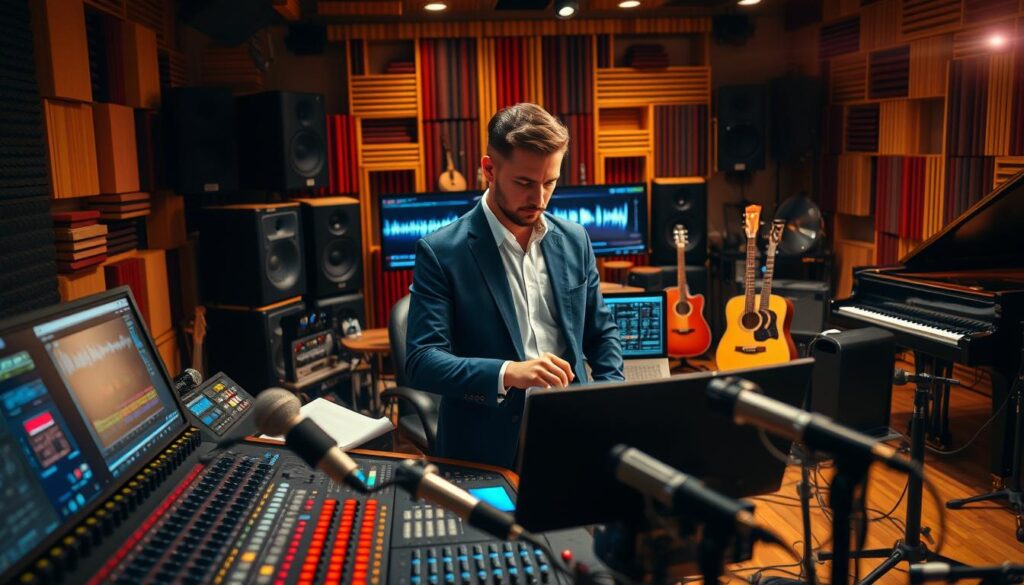
For audio pros, the quest for perfect sound starts early. They focus on high-res audio to keep every detail of a performance. This is from the first recording to the final mix.
Benefits for Recording Artists
Recording artists see big benefits in using higher bit depths and sample rates. This makes their instruments sound more real. It captures the natural sound of a room.
Recording in these formats means creating digital music files that are very detailed. This keeps the emotional feel of a song or a quiet guitar sound through every step of making the music.
Advantages for Sound Engineers
Sound engineers get a lot of help from working at higher sample rates from the start. It makes the digital process smoother. This reduces the need for digital filters, which can lose sound quality at lower resolutions.
Keeping the audio quality high during mixing lets engineers add lots of effects without losing sound quality. This makes EQ and compression work better. It keeps the music true to the original.
Using high-resolution digital music files gives room for new production techniques. Engineers who use these standards can make music that sounds pristine on any system.
Overcoming Common Misconceptions
Exploring digital music often raises questions about high-resolution formats. Some wonder if they’re just marketing tricks. Others doubt if most people can tell the difference in sound quality. It’s key to look beyond the hype and grasp the real tech behind these formats.
Do You Really Need High-Res Audio?
Whether you need Hi-Res audio depends on your listening habits and gear. Standard earbuds might not show the subtle differences in high-res files. But, with quality headphones or a DAC, the sound clarity is undeniable.
“The goal of high-resolution audio is to bring the listener closer to the original performance, capturing the breath of the singer and the resonance of the room.”
Many fans prefer FLAC audio format for its lossless quality. It keeps every detail of the master recording. For those who seek pure sound, investing in better equipment is a smart move.
Debunking Myths About File Size
High-quality music often takes up more space. A typical MP3 is around 5 MB, while high-res files can be over 100 MB. Yet, with today’s storage options, this is no longer a big issue for most users.
The table below shows the storage needs for different audio qualities:
| Format Type | Average File Size | Audio Quality |
|---|---|---|
| Standard MP3 | 5 MB | Compressed |
| CD Quality (WAV) | 40 MB | Lossless |
| FLAC audio format | 100 MB+ | High-Resolution |
Choosing Hi-Res audio is a personal decision. While files are bigger, the sound quality is often worth it. Knowing the tech behind it helps you make a choice that improves your music listening.
The Future of High-Res Audio
The world of digital music is changing fast. We’re moving towards a time where high-res audio is common, not just for audiophiles. Soon, we’ll enjoy studio-quality sound at home and on our phones.
Technological Advancements
New tech is making exceptional sound quality available to all. Smartphones and portable players now have better digital-to-analog converters. This means you can enjoy high-res audio without needing expensive gear.
Software updates also help play larger files without slowing down your device. This lets you enjoy crystal-clear audio without battery issues. As tech gets better, we’ll see even more improvements.
The Role of Streaming Platforms
Streaming services are leading the way in high-fidelity music. They offer lossless options, teaching people about high-res audio. This change will make the whole industry focus more on sound quality.
We expect big changes in the market:
- Wider library availability for high-fidelity tracks.
- Lower subscription costs for premium audio tiers.
- Better integration with smart home audio systems.
- Increased support for wireless high-resolution streaming protocols.
The future of music looks incredibly bright. As streaming services keep innovating, high-res audio will soon be the norm for music lovers.
Tips for Getting Started with Hi-Res Audio
If you want to improve your listening, start with a few key steps. Choosing the right hardware is crucial for a system that shows off music’s true depth. Quality components are essential to bring out the best in your favorite songs.
Recommended Equipment and Accessories
First, get a good Digital-to-Analog Converter, or DAC. It connects your digital files to your ears, keeping the sound clean and true. Without a great DAC, your system might not handle high-res audio (Hi-Res) files well.
Then, think about your output devices. You need studio-grade headphones or speakers for the best high-fidelity sound. Look for devices with a wide frequency range to catch the small details that others miss.
First Steps in Your Hi-Res Journey
Start by organizing your digital music. Choose music from trusted sources that offer lossless formats like FLAC or ALAC. These formats keep the music quality high, unlike compressed files.
After that, set up your playback software right. Make sure it’s set to avoid any system processing that could mess up the sound. By doing these basic steps, you’ll notice a big difference in sound quality.
Comparing Hi-Res Audio with Other Audio Options
When we look at our music libraries, we often face a choice. It’s between technical precision and convenience. Understanding how different formats handle music information is key to managing our digital music files well.
Lossless vs. Lossy Audio Formats
Lossy formats like MP3 or AAC are smaller because they remove data our ears might not notice. This makes them easy to store but can lose the fine details of the original recording.
Lossless audio quality, on the other hand, keeps all the data. It uses special compression that doesn’t throw away any information. This means you get to hear the music just as it was recorded in the studio. It’s perfect for those who want the best sound quality.
Understanding the Value of Hi-Res
High-resolution audio’s main benefit is its ability to capture more detail. For example, 16-bit audio offers 96dB of dynamic range. This is better than what you get from formats like tape or vinyl. It makes quiet parts quieter and loud parts louder.
Getting the most out of high-resolution audio requires good equipment. If you have a 8k receiver, you can hear the extra details in your digital music files. But if your setup isn’t top-notch, you might not notice the difference as much.
In the end, the right format depends on what you want and what you have. Choosing lossless audio quality means you’re getting a true-to-life listening experience. Try out different formats to find what works best for you.
Conclusion: Why Hi-Res Audio Matters
Music connects us to our feelings, and better sound makes that connection stronger. We think every listener should hear the true meaning behind a song. Hi-Res audio lets us feel the detailed textures in our favorite songs.
Transforming Daily Listening Habits
Choosing Hi-Res audio turns everyday sounds into something special. You’ll catch the tiny details in voices and instruments that regular files hide. This change helps us value the hard work that goes into making music.
Making the Switch to High-Fidelity
Getting better equipment is a great choice for music lovers. Start with a good pair of headphones or a digital-to-analog converter. By choosing Studio-quality audio, you get to hear music just as the artists meant it. We encourage you to try these formats and discover new depths in your music collection.