
 Zoe Nora
Did you know sound waves are continuous vibrations in the air? We often overlook the magic of music, but capturing these waves is a complex process. Whether using old equipment or new software, we’re creating a map of sound.
Analog audio turns these vibrations into continuous electrical signals. This method gives music a warmth that many find pleasing. By understanding these signals, we can better control our recording spaces.
Learning the basics of signal flow is key for top-notch production. When we master manipulating these waves, we can create professional soundscapes. Exploring analog audio shows us the balance between technical skill and artistic touch in every playback system.
Key Takeaways
- Sound waves are continuous physical vibrations that require conversion for storage.
- Electrical signals act as a direct representation of original sound waves.
- Understanding signal flow is vital for achieving high-quality production results.
- Modern playback systems rely on the fundamental principles of wave capture.
- Mastering these concepts allows for better control over music reproduction.
What is Analog Audio?
To understand high-fidelity sound, we need to know what makes analog audio special. It uses a continuous electrical signal that closely mirrors the original sound. This method captures the sound wave’s full flow.
This approach keeps the continuous signal intact. It helps keep the natural details of the sound.
A Brief Definition
Analog sound is a way to record sound where the electrical signal changes with the sound pressure. It makes a true replica of the sound source. Since it’s not turned into numbers, it stays a pure, uninterrupted flow.
History of Analog Audio
The journey of audio technology started in the late 19th century with Thomas Edison’s phonograph. These early tools stored sound waves on physical media. In the 20th century, magnetic tape and vinyl records became common for music distribution.
Comparison to Digital Audio
The main difference is how they store sound. Digital uses binary code to represent sound, while analog stores the actual waveform. This difference often affects how people hear music.
| Feature | Analog Audio | Digital Audio |
|---|---|---|
| Signal Type | Continuous | Discrete (Binary) |
| Storage Method | Physical grooves/magnetic | Numerical data |
| Sound Quality | Natural/Warm | Precise/Clean |
| Durability | Degrades over time | Stable/Consistent |
How Analog Audio Works
The journey from live music to a record is full of fascinating steps. We often see sound as simple, but it’s really a mix of physics and engineering. Understanding these steps helps us appreciate analog audio more.
The Basics of Sound Waves
Sound is just vibrations in the air. These vibrations change air pressure, which our ears turn into sound. When we make music, we push air molecules in a pattern.
“Sound is a wave that travels through a medium, carrying energy from one point to another without moving the medium itself.”
In analog recordings, we need a system that keeps up with these waves. Unlike digital, which samples, analog stays connected to the sound source.
Recording Techniques
We use transducers, like microphones, to catch these vibrations. A microphone turns sound waves into electrical currents.
These currents are then stored on something like magnetic tape or vinyl. This way, the music’s nuance is kept just like the original. The key steps are:
- Conversion: Sound pressure hits the microphone diaphragm.
- Signal Generation: The diaphragm movement creates a proportional electrical voltage.
- Storage: The electrical signal is etched or magnetized onto the recording medium.
Playback Mechanisms
To hear our analog recordings again, we need to play them back. This is the opposite of recording. The signal is pulled from the medium and goes to an amplifier.
The amplifier makes the signal stronger. Then, it goes to a speaker or headphones. Inside, another transducer turns the signal back into sound waves. This way, we can hear the music as it was meant to be.
Components of Analog Audio Systems
Analog systems use precise mechanical engineering to work. They have essential hardware that keeps the original performance’s details. This vintage audio setup needs careful calibration for the best results.
Turntables and Cartridges
The turntable connects listeners to physical media. Vinyl records have grooves that represent sound, which the stylus tracks with great accuracy. A good cartridge turns these vibrations into an electrical signal, the core of your audio equipment.
Analog Mixing Consoles
In studios, the mixing console is key for sound management. Engineers use it to adjust levels and apply effects. This hands-on approach to audio gear makes mixing more intuitive and organic than digital tools.
Tape Decks and Their Role
Tape decks capture and store audio through magnetic tape. They’re loved for adding a warm saturation to recordings. Magnetic tape keeps the classic analog sound’s unique character and richness.
The Benefits of Analog Audio
Many believe that the magic of music lies in its subtle imperfections. Analog sound offers a richer experience compared to digital technology. The right audio gear can reveal sonic details that feel alive and authentic.
Warmth and Depth of Sound
People love analog for its warmth. This comes from the distortion of vacuum tubes or magnetic tape. Unlike digital files, these add a pleasing texture to the sound.
This warmth makes instruments sound more real. High-quality audio gear lets us hear more details. It’s this organic feel that makes classic listening so special.
Emotional Connection to Music
Listening to analog music creates a deep emotional bond. It’s not just background noise. The tactile nature of analog encourages us to focus on the music.
- Increased Presence: The sound feels more immediate and physically tangible.
- Reduced Fatigue: Many listeners report that they can enjoy music for longer periods without ear strain.
- Dynamic Range: The natural compression of tape provides a smooth, musical response.
Nostalgia and Aesthetic Appeal
There’s a charm in the physical formats of our favorite songs. Holding a record or watching a reel-to-reel machine spin brings a deep sense of nostalgia. Digital streaming can’t match this.
Cleaning a record or threading a tape is part of the fun. It shows that analog sound is about the whole process, not just the output. This keeps the culture of high-fidelity listening alive today.
Challenges of Analog Audio
Having a top-notch analog setup is rewarding but comes with its own set of technical hurdles. The sound quality is often amazing, but it takes a lot of effort to keep your audio equipment in perfect condition.
Maintenance and Care
Analog systems are complex, needing regular upkeep. Over time, analog recordings can lose quality, with tape losing high notes or picking up noise.
To keep your system in top shape, you should be prepared for the following tasks:
- Regular calibration of tape machines to ensure accurate playback speeds.
- Replacing aging capacitors and resistors that drift in value over decades.
- Cleaning tape heads and rollers to prevent buildup that muffles the sound.
Availability of Equipment
Finding reliable vintage audio components can feel like a treasure hunt. Many original parts are no longer made, making repairs a challenge of finding “new old stock” or salvaged parts.
It’s also hard to find skilled technicians. When a piece of gear breaks, you might have to look far and wide for someone who knows how to fix it.
Space and Portability Concerns
Analog audio gear is big and heavy, unlike today’s digital gear. A top-notch tape deck or a large mixing console needs a lot of space and a strong base.
It’s hard to move your setup around. If you need to move your studio or listening station, you’ll have to pack your gear carefully to avoid damage.
Different Formats of Analog Audio
Over the years, many analog formats have shaped how we enjoy music. These formats let us connect with music in a way digital files can’t. By knowing what makes each format special, we can truly appreciate our favorite stereo systems.
Vinyl Records
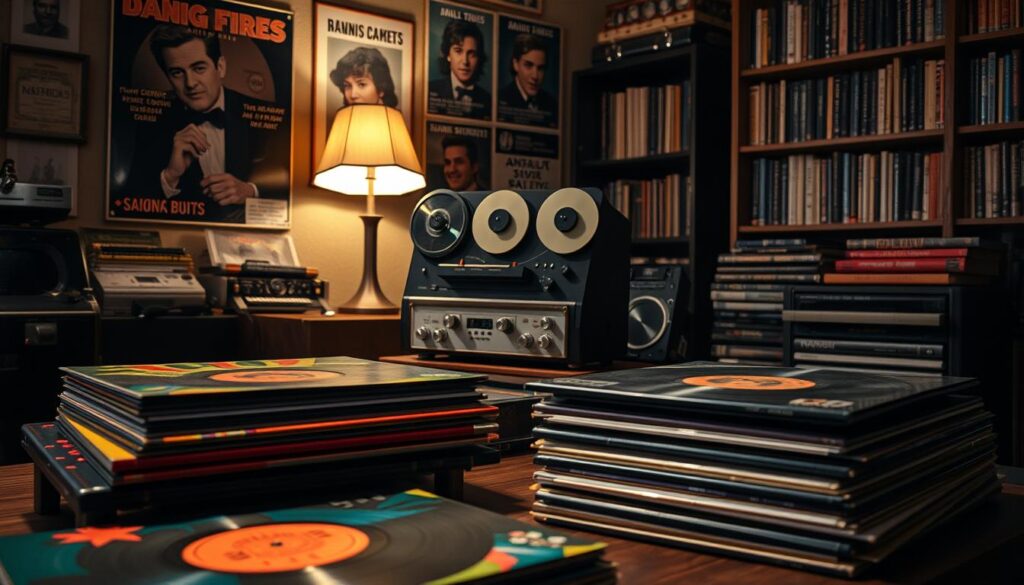
Vinyl records are loved by music fans worldwide. They store sound in grooves on a disc, which a stylus reads to create an electrical signal. Many love vinyl for its warmth and the joy of listening to an album from start to finish.
Reel-to-Reel Tapes
Reel-to-reel tapes are for those who want the best sound quality. These machines use magnetic tape to record sound with great precision. They offer clarity that’s often seen as the top choice for analog recordings.
Cassette Tapes
Cassette tapes made music portable, letting us take our music anywhere. Though they may not have the best sound quality, they’re cherished for their role in mixtape culture. Today, they’re popular again for their small size and nostalgic appeal.
- Vinyl: Best for home listening and large-format artwork.
- Reel-to-Reel: Ideal for audiophiles demanding studio-grade sound quality.
- Cassette: Perfect for portability and personal music curation.
Analog Audio in Modern Times
Digital formats are everywhere, but there’s a growing love for old-school sound. People want the authentic character that vintage audio brings. It’s about feeling a real connection to the music we love.
Revival of Vinyl Records
The rise of vinyl records is amazing. Fans love the big artwork and the fun of playing a physical record. To dive into this trend, get a top-notch record player system.
Integrated Analog-Digital Systems
Today’s audio technology connects old and new sounds. We use Digital-to-Analog Converters (DACs) to turn digital files into sound waves. This way, we keep the warmth of analog and the ease of digital.
Analog Gear in Digital Production
Producers mix old and new in their work. They use classic gear like compressors to add a special touch to their music. This mix of old and new is the best of both worlds.
The Cultural Impact of Analog Audio
Analog audio has deeply influenced how we enjoy music today. It creates a special connection between the listener and the artist. Speakers need analog signals to move and make sound waves. This makes the listening experience more real and personal.
Analog Audio in Music Genres
Some music styles, like jazz and classic rock, are closely tied to analog recording. These genres benefit from the unique sound of tape machines and tube amplifiers. They add a special touch that defines the music’s character.
Listening to analog music from the past is like hearing a piece of history. It has a “warmth” that many artists still aim for today. This quality gives their music a timeless feel.
Influence on Art and Media
Analog audio has also shaped how we see music. Vinyl records became more than just music; they became art. This made analog music a treasured item, not just a digital file.
The look of analog gear has inspired many areas, like film and fashion. The use of knobs and dials speaks of authenticity and skill. It tells us that the content is real and made with care.
Collectors and Enthusiasts
A dedicated group of collectors keeps analog music alive. They see their stereo systems as more than gadgets; they are keepers of tradition. By fixing and using old gear, they help us hear music as it was meant to be.
This community is passionate about:
- Curating private archives of rare records and tapes.
- Restoring classic stereo systems to their original state.
- Hosting sessions focused on pure analog sound.
This movement is not just about old times. It’s about choosing to listen deeply and appreciate music fully. By slowing down, we uncover the rich details in every record.
Future Trends in Analog Audio
We are at a special time where sound’s rich history meets today’s fast innovation. The analog audio amplifier market is growing. It focuses on both great sound and making things in a green way. Now, we see a move towards high-quality systems that respect the past and use today’s tech.
Innovations in Analog Technology
Today’s audio tech mixes the real sound of analog with digital’s sharpness. Engineers are working hard to catch sounds beyond what we can hear. This effort keeps the field exciting and appealing to new listeners.
Sustainability and Environmental Impact
Now, making top-notch audio gear means caring for the planet too. Companies are working to cut down on waste when making physical products. We think that making things to last is the best way to be green, avoiding the need to constantly buy new things.
The Blend of Old and New Technologies
People are coming back to analog music for a real and hands-on experience. By adding smart tech to old designs, companies offer streaming ease without losing the analog feel. Check out these mix-and-match setups to hear your favorite songs in a new, richer way.