
 Zoe Nora
Did you know over 70% of home audio setups don’t reach their full potential? This is because of poor room matching. We think that getting high performance speakers is more than just buying the biggest speakers.
Floor standing speakers give unmatched depth. But, bigger isn’t always better if your room can’t handle the sound. We’ll show you how to balance room size, amplification, and placement for the best sound.
Whether you like wireless tower speakers or passive units, our guide has all the details. We help you find the perfect match for your home, no matter your budget or listening preferences. Investing in the right equipment changes how you enjoy music and movies every day.
Key Takeaways
- Check your room size before picking audio gear to avoid sound problems.
- Know the differences between active wireless systems and traditional passive setups.
- Put your speakers in the right spot to get the best soundstage and clarity.
- Make sure your amplifier matches the sensitivity of your speakers.
- Set a budget early to focus on the most important upgrades for your space.
What Are Tower Speakers?
When you enter a room, tower speakers grab your attention. They are key in many home theaters and music setups. They offer depth that smaller systems can’t.
Definition and Characteristics
Floor standing speakers sit on the floor. They have drivers for all sound frequencies. This means they play bass, vocals, and high notes well.
The home audio speakers have a special part called the crossover network. It directs sound to the right driver. This makes the sound clear and detailed.
“The beauty of a well-designed tower speaker lies in its ability to move air with authority, creating a soundstage that feels both expansive and intimate.”
Comparing Tower Speakers to Other Types
Choosing sound system speakers means knowing the differences. Towers have more room for sound and bass. They don’t need a subwoofer.
- Cabinet Size: Towers have more room for sound, making bass deeper and fuller.
- Placement: They don’t need stands or wall mounts, fitting well on the floor.
- Versatility: They work great as main speakers in a surround sound system or for music.
Soundbars are convenient but can’t match the stereo image of tower speakers. With towers, you get a wide, immersive soundstage. It makes movies and music come alive with unmatched precision.
Advantages of Tower Speakers
The most immersive soundscapes come from tower speakers designed with care. They offer acoustic depth that smaller speakers can’t match. This makes them essential for serious music lovers.
Superior Sound Quality
The main advantage of high performance speakers is their large internal volume. This allows for deeper bass and a wider soundstage that fills the room naturally.
These speakers can handle complex audio frequencies well. You’ll find that home audio speakers of this quality offer a wider dynamic range. This means both quiet whispers and loud cinematic effects are clear.
Aesthetic Appeal
These speakers are not just about sound; they also enhance your home’s look. Manufacturers offer various finishes to fit any style, including:
- Classic wood veneers for a warm, traditional look.
- Sleek matte surfaces that blend into modern spaces.
- High-gloss cabinets for a bold, premium look.
Their slim design fits well in living areas without being bulky. Choosing quality tower speakers adds functional art to your home.
Space Considerations
These loud speakers need a dedicated space to perform well. Make sure your room is big enough to handle their bass output.
Proper placement is crucial for balanced sound. Give these high performance speakers enough space from walls. This prevents unwanted resonance and ensures a clean audio experience at home.
Factors to Consider When Buying
Choosing the right audio equipment is all about finding the right mix of technical specs and room dynamics. It’s easy to get caught up in brand names, but your choice should really depend on how the equipment works in your space. We suggest taking a detailed approach to make sure your investment gives you the best possible sound for your home.
Room Size and Speaker Height
The size of your room affects the size of the tower speakers you need. Big rooms do well with tall, multi-driver speakers that can move more air. But, huge speakers in small rooms can cause muddy bass and an overwhelming sound.
Think about the height of the tweeters when you’re sitting. They should be at or near ear level for clear sound and good imaging. If your furniture makes this hard, look for speakers with adjustable feet or stands to improve sound.
Power Rating and Sensitivity
Knowing the power rating helps match your amplifier to your loud speakers. Sensitivity, in decibels, shows how loud a speaker gets from one watt of power. High-sensitivity speakers are easier to drive, making them great for lower-powered amps.
RMS power ratings show how much power a speaker can handle without getting distorted. Make sure your receiver can provide enough clean power for your desired volume. Remember, auditioning these units in person is the best way to judge their performance, as specs don’t always tell the whole story.
Impedance and Compatibility
Impedance is a measure of electrical resistance, usually 4 or 8 ohms. Most modern receivers work well with 8-ohm floor standing speakers. But, 4-ohm models need more powerful amps to avoid overheating. Always check that your amplifier is stable at the impedance rating of your chosen high performance speakers.
| Feature | Low Sensitivity | High Sensitivity |
|---|---|---|
| Power Needs | High | Low |
| Best Use | Large Rooms | Small/Medium Rooms |
| Amplifier Load | Demanding | Efficient |
| Typical Impedance | 4-6 Ohms | 8 Ohms |
By carefully looking at these technical factors, you can avoid common mistakes and build a system that lasts. Taking the time to check compatibility ensures your tower speakers will work safely and sound their best in your unique space.
Types of Tower Speakers
Choosing the right audio gear starts with knowing your sound system’s basics. Whether you love music or are a serious audiophile, your home audio speakers shape your listening experience. First, figure out what you need in terms of ease and sound quality.
Passive vs. Active Tower Speakers
When looking for sound system speakers, you’ll find two main types: passive and active. Passive speakers need an outside amp or receiver to work. This lets you upgrade parts over time, perfect for those who like to tweak their setup.
Wireless tower speakers, on the other hand, have built-in amps and DSP. They’re easy to use because they don’t need big external gear. Plus, they have many input options, great for simple, modern homes.
“The best audio system is the one that disappears, leaving only the music to fill the room.”
Floor-standing vs. Bookshelf Models
Deciding between floor-standing tower speakers and bookshelf models depends on space and sound needs. Floor-standing speakers have big cabinets and more drivers for better bass and louder sound. They’re perfect for a top-notch audio room.
Bookshelf speakers are smaller and fit in tight spaces. They might not be as loud as floor-standing models but are great for small rooms. Think about these points when planning your setup:
- Footprint: Floor-standing models take up more space, while bookshelf speakers save room.
- Bass Response: Big cabinets in tower designs produce deeper bass.
- Output: Loud speakers in towers offer a wider soundstage for bigger rooms.
Your choice should match your room size and future audio goals. Whether you like the ease of wireless tower speakers or the flexibility of passive sound system speakers, there’s a setup for you.
Popular Brands of Tower Speakers
When you start looking for the best tower speakers, you’ll see a few big names. But remember, what matters most is how they sound in your room, not just the brand name.
Choosing the right home audio speakers means looking at how each brand designs sound. Some focus on efficiency, others on accuracy or advanced sound imaging.
Klipsch
Klipsch is known for its horn-loaded tweeter technology. This gives a dynamic and efficient sound. Their Reference Premier line is a favorite for those who want a lively sound.
These speakers are great for home theaters. They offer clear and impactful sound. If you love movies and music that come alive, Klipsch is a good choice.
Polk Audio
Polk Audio has something for everyone, from budget-friendly to high-end. Their Monitor XT series is perfect for starting your sound system.
The Legend L800 series is for those who want top-notch performance. Polk balances quality and price, making them a great choice for many.
JBL
JBL has a long history in audio. They’re known for their top rated speakers that deliver strong sound at any volume.
They offer both traditional and wireless tower speakers. Their designs aim for a balanced sound that suits many music types.
| Brand | Primary Focus | Notable Series | Best For |
|---|---|---|---|
| Klipsch | High Efficiency | Reference Premier | Home Theater |
| Polk Audio | Value & Imaging | Monitor XT / Legend | Versatile Listening |
| JBL | Professional Heritage | Studio / Stage | Dynamic Performance |
The best speakers for you depend on your room and budget. Try them out if you can. This way, you’ll know if they fit your taste.
Setting Your Budget
We think a good home audio setup starts with knowing your budget. Before looking at floor standing speakers, remember that price often means quality. But, you don’t have to spend a lot to get great sound in your living room.
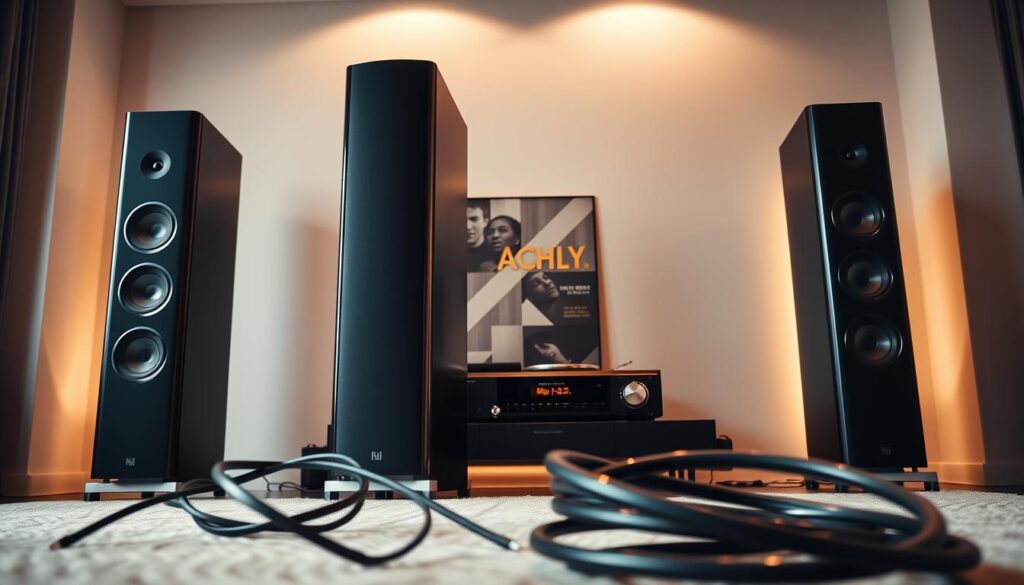
Entry-Level Options
For beginners, entry-level tower speakers are a great start. They’re easy to use, with Bluetooth and small designs for small spaces. They’re better than TV speakers but might not have the deep sound of bigger speakers.
Mid-Range Picks
In the mid-range, you’ll find wireless tower speakers with good sound and features. They have better bass and streaming support. These top rated speakers offer great value, improving sound quality without the high cost of luxury speakers.
“The true value of an audio system is not found in the price tag, but in how well it transforms your favorite music into an emotional experience.”
High-End Tower Speakers
At the top, high performance speakers are for serious listeners wanting perfect sound. These best tower speakers use top materials for clear sound. Make sure your amplifier can handle them, as they need a lot of power.
| Category | Primary Use | Key Feature |
|---|---|---|
| Entry-Level | Small Rooms | Bluetooth Ease |
| Mid-Range | Living Areas | Bass Management |
| High-End | Dedicated Audio | Refined Imaging |
Finding the right balance for your room is key. Spending too much can be wasteful. Focus on what you need for your listening habits.
How to Set Up Tower Speakers
Setting up your floor standing speakers right is key to enjoying great sound. The way you place them in your room affects how you hear the music. By following some basic steps, you can get a clear and balanced sound.
Placement in Your Listening Space
For the best sound, place your tower speakers in a symmetrical layout. This means the distance between them should be the same as the distance from each to your ears. This setup helps create a stable sound image.
Also, think about the “toe-in” angle. Slightly angling the speakers towards you can improve sound quality. For more tips, check out where should you place your tower speakers for the best sound.
Optimal Distance from Walls
The space between your home audio speakers and walls affects bass. Too close to a corner can make bass sound muddy. Start with at least 12 to 24 inches from the back wall for better sound.
“The room is the most important component in your audio system. If you ignore the interaction between your speakers and the boundaries of your space, you are leaving performance on the table.”
Ported cabinets need more space than sealed ones to avoid air issues. Always check your manual for specific needs based on your sound system speakers.
Connecting to Other Audio Devices
Connecting your gear right is crucial for clear sound. Use high-quality speaker wire for passive speakers. Make sure the positive and negative terminals match your amplifier. For wireless tower speakers, keep your Bluetooth or Wi-Fi connection strong and clear.
When adding these to a home theater, make sure your receiver settings match your speakers’ impedance. This prevents distortion and keeps your equipment safe during long use.
| Variable | Recommended Action | Impact on Sound |
|---|---|---|
| Toe-in Angle | 15 to 30 degrees | Improves clarity and focus |
| Wall Distance | 1-2 feet minimum | Controls bass resonance |
| Speaker Height | Tweeter at ear level | Enhances high-frequency detail |
Maintenance Tips for Tower Speakers
Keeping your tower speakers in top shape is easy with a few simple steps. This care ensures your speakers look great and sound their best for years. Regular maintenance keeps your audio system in perfect condition.
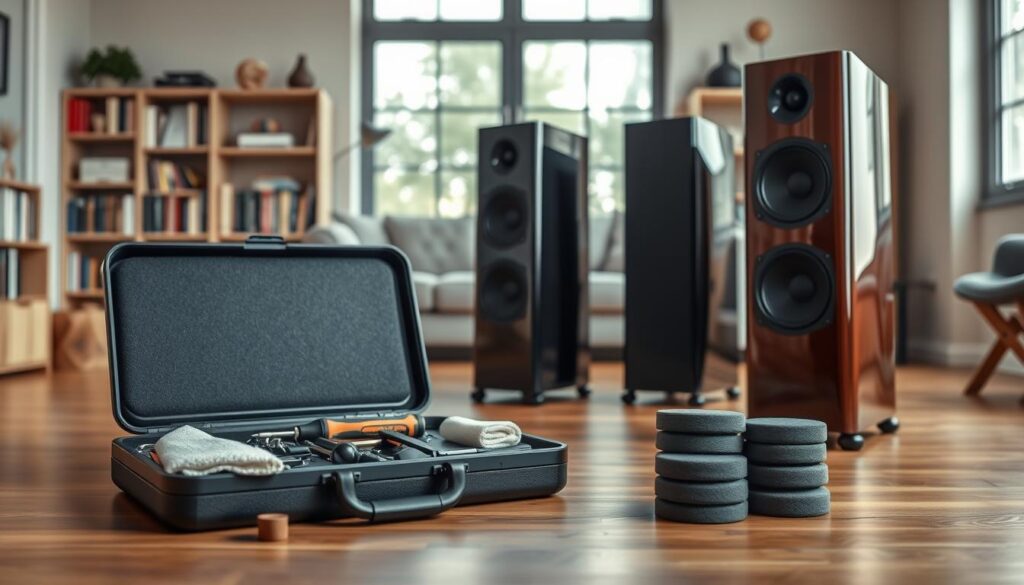
Cleaning and Care
To keep your loud speakers looking new, use a soft, dry microfiber cloth. Stay away from harsh chemicals or abrasive cleaners. They can harm the finish. Wipe off dust to stop it from building up and damaging the inside parts.
Be very careful when cleaning the drivers to avoid touching the delicate cones. If your tower speakers have removable grilles, take them off to vacuum them gently. Make sure the ports are clear to keep sound quality high.
Troubleshooting Common Issues
Even with good care, you might run into small problems. If you don’t hear any sound, check your cables first. Make sure they’re tight and not corroded. For distortion or bass issues, try moving the speakers away from walls and corners.
If your amplifier is getting too hot, check if there’s enough space around it. Using surge protection is also key to avoid damage from power changes. Here’s a quick guide to help you keep your system running smoothly.
| Issue | Potential Cause | Recommended Action |
|---|---|---|
| No Sound | Loose Cables | Check all wire terminals |
| Distortion | Overdriven Signal | Lower the volume levels |
| Bass Boom | Wall Proximity | Move speakers outward |
| Overheating | Poor Ventilation | Clear space around unit |
Enhancing Your Audio Experience
You can make your listening space better by adding to your sound system. High-quality floor-standing speakers are a good start. But, adding specific parts can make your experience even better. It’s important to keep your setup balanced and clean.
Adding a Subwoofer
Whether you need a subwoofer depends on your tower speakers and room size. If your speakers have big woofers, they might already have enough bass. But, for movies and music with deep bass, a subwoofer is key.
Think about these points when deciding on extra bass:
- Room Size: Big rooms need a subwoofer to fill them with sound.
- Content Type: Movies and electronic music get a big boost from a subwoofer.
- Frequency Response: Check if your home audio speakers go low enough.
Using Surround Sound Systems
Using your sound system speakers in a multi-channel setup feels like a movie theater. Your towers are the main left and right channels. This setup makes the sound clear and detailed.
To get the full surround sound, add a center channel and rear speakers. Modern high performance speakers come with tools to fine-tune your setup. For a neater look, wireless tower speakers are a great choice.
Calibrating your home audio speakers is the last step. Adjusting crossover settings and speaker distances makes everything sound smooth. This way, you get top-notch sound without a lot of extra gear.
Reviews of Top Tower Speakers
We’ve analyzed top rated speakers to help you compare sound quality, build, and value. We focus on bass extension, imaging, and connectivity. This ensures you get the best value for your money.
Remember, the best tower speakers depend on your room, equipment, and listening style. Knowing these factors helps you choose the right speakers for your home.
Overview of Features and Performance
When looking at floor standing speakers, you’ll find a variety of features. For example, the Polk Monitor XT60 is an affordable option with clear sound. The Polk Legend L800 uses SDA technology for a wider soundstage.
The Focal Vestia No.3 is a top choice for those who value precision and style. These speakers show how different designs affect sound quality, from deep bass to clear highs.
User Ratings and Feedback
Users often praise tower speakers for their clear sound, even at high volumes. They say these speakers are perfect for movies and music.
But, some users mention that wireless features like Bluetooth can be hit or miss. Others stress the importance of a good remote and how speakers look in a room.
| Model Name | Primary Strength | Best For | Price Tier |
|---|---|---|---|
| Polk Monitor XT60 | Value/Clarity | Entry-Level | Budget |
| Focal Vestia No.3 | Imaging/Detail | Audiophiles | Premium |
| Polk Legend L800 | Soundstage | Home Theater | High-End |
Your choice should fit your budget and room setup. Whether you want power or detail, there’s a perfect speaker for you.
Expert Answers to Common Audio Questions
Choosing the right equipment is all about thinking about your unique space. We get a lot of questions about how to set up these units for the best sound.
Optimizing Speaker Positioning
Ported designs work best about 50 cm from rear walls to avoid bass buildup. Sealed models can be placed closer if the maker says it’s okay. Try different spots to find the perfect spot for your room’s acoustics.
Selecting Your Ideal Audio Setup
Choosing tower speakers means balancing your budget and listening habits. Active models are easy and all-in-one for today’s setups. Passive units give you more freedom to pick your own amps and speakers.
It’s best to see speakers in person at a showroom. Listening with your own ears beats reading specs or wattage claims. By testing speakers yourself, you make sure your choice sounds great for years.