
 Zoe Nora
Did you know your brain can process sound in less than 10 microseconds? This amazing ability lets us pinpoint sound locations. A high-fidelity soundstage means your audio system can recreate that sense of space and depth.
A three-dimensional audio landscape lets you feel the size and acoustical characteristics of the original recording space. It turns flat noise into a vivid performance that feels alive. Follow our guide to turn your setup into a professional-grade listening room.
Improving your soundstage is a journey. It’s a commitment to the best sound quality. Let us help you unlock your favorite music’s hidden potential.
Key Takeaways
- Understand how spatial cues define the depth of your audio.
- Learn to identify the physical dimensions of a recording space.
- Transform your home setup into a professional listening environment.
- View audio optimization as a rewarding, long-term journey.
- Master the art of achieving high-fidelity sound reproduction.
Understanding Soundstage and Its Importance
Getting the most out of your home audio starts with understanding the soundstage. This term refers to the three-dimensional space your speakers create. It lets you hear music with depth, width, and height.
What Is Soundstage?
The soundstage is about how well your system shows the original recording space. It’s like an invisible map of where the music was made.
When your system is set up right, you get a better sense of audio spatial awareness. You can almost see where each sound is coming from, like they’re right in front of you.
Why Soundstage Matters in Audio
A clear soundstage makes music feel real and immersive. Without it, music can sound flat or trapped in the speakers.
By focusing on audio spatial awareness, you turn listening into a live show. You pick up on the details of the recording environment, adding emotional depth to your music.
Soundstage vs. Stereo Imaging
These terms are often mixed up, but they’re different. The soundstage is about the size and distance of the performance space.
Stereo imaging is about the exact spot of each sound within that space. Think of the soundstage as the whole stage, and imaging as pinpointing a single sound on that stage.
Factors That Influence Soundstage
Creating a immersive audio experience begins with knowing what affects your room’s sound. Your listening space is like an instrument. It can either make your high-end system sound better or worse.
Room Acoustics and Design
Symmetry is key for a realistic soundstage. If your room’s dimensions are not even, sound waves hit surfaces at different times. This messes up how your brain processes sound.
These reflections can blur the audio image, making it hard to tell where sounds come from. A balanced room layout helps sound reach your ears clearly and on time.
Speaker Placement and Positioning
Even top speakers won’t give you a wide soundstage if placed wrong. Small changes in distance from walls can greatly affect sound quality.
Try adjusting the toe-in angle to direct sound to your listening spot. This alignment helps create a stable center image, crucial for realistic sound.
Equipment Quality and Compatibility
The way your components work together affects 3D sound technology quality. High-quality electronics are needed to show off the subtle details in music.
It’s important to think about what affects sound stage when setting up. Compatibility means your amplifier, cables, and speakers work well together to keep the signal strong.
When everything matches, your system can create a sound field that seems bigger than your room. Investing in quality gear is the last step to a truly immersive audio experience that makes music come alive.
Evaluating Your Current Soundstage
To master your audio spatial awareness, start by measuring your soundstage. We often overlook the importance of checking our audio environment. This helps us find performance gaps that block a truly immersive experience.
Conducting a Soundstage Test
First, play a familiar track with clear instrument separation. Listen for the width and depth of the sound. Note if it feels confined to the speakers or if it expands into the room.
A great soundstage feels like a hologram of the original recording. If the sound feels flat or muddy, your setup needs adjustments to boost your audio spatial awareness.
Tools for Assessment
Setting up a high-fidelity system needs precision. Use a tape measure to ensure speakers are the same distance from your listening spot. A laser level helps check if speakers are aligned and angled right.
These tools help avoid phase issues and uneven sound. By keeping things symmetrical, you set up your audio system for success.
Listening Techniques for Evaluation
The best way to check your setup is to listen with your eyes closed to a high-resolution recording. You should be able to point out where each instrument is. If you can’t tell where the vocals or drums are, your system might need tweaking.
| Assessment Method | Primary Goal | Required Tool |
|---|---|---|
| Physical Measurement | Ensure Symmetry | Tape Measure |
| Laser Alignment | Optimize Toe-in | Laser Level |
| Critical Listening | Verify Imaging | Reference Tracks |
| Acoustic Analysis | Identify Reflections | Measurement Mic |
Optimizing Speaker Placement
Getting your speakers in the right spot is key to a better soundstage. It’s all about how sound waves play in your room. This can make your listening experience wider and more detailed. Whether you have a special media room or 7 home audio setup positions for PC speakers, the basics of sound are the same.
Finding the Right Distance
Many start with the “Rule of Thirds.” It says to place speakers one-third from the front wall. Your listening spot should be one-third from the back wall.
This spot helps minimize unwanted reflections from walls. Keeping speakers away from corners stops bass buildup. This keeps your soundstage clear and deep. Try different spots to find the best sound.
Angle and Height Adjustments
After setting the distance, work on the angle and height. Tweeters should be at ear level when seated. If they’re too low or high, sound details get lost.
Also, try “toe-in,” angling speakers slightly toward you. This makes the soundstage more focused. A slight tilt can make the sound more cohesive and immersive.
Creating an Optimal Listening Triangle
The goal is an equilateral triangle between speakers and your head. This ensures even distances for a wide, stable soundstage.
If speakers are too far apart, the center image may disappear. Too close and the sound narrows. Consistency is key. Measure and adjust until the sound feels perfectly centered.
Enhancing Room Acoustics
Turning your listening room into a place with concert hall acoustics is a great challenge. We often focus on the equipment, but the room itself is key. By controlling reflections, we can make the sound clearer and more immersive.
Using Acoustic Treatments
Hard surfaces like glass and drywall make sound bounce too much, causing echoes. Using acoustic absorbers can help soak up these reflections. Diffusers also scatter sound waves, making the sound more natural.
These tools help control sound waves. When your room is treated right, you’ll hear music much clearer. This is how you get concert hall acoustics at home.
Furniture’s Role in Soundstage
You don’t need to buy expensive panels to improve sound. Everyday items like heavy bookshelves and thick curtains can absorb sound. They help reduce echoes that mess up mid-range frequencies.
Try placing a bookshelf behind your chair to act as a diffuser. This can break up standing waves. Experimenting with furniture placement can help create a balanced sound environment for concert hall acoustics.
Minimizing Outside Noise
External sounds can ruin a good listening session. Seal gaps around doors and windows to keep noise out. Adding mass to walls or using acoustic blankets can block vibrations.
A quiet room lets you hear music details that are lost elsewhere. By controlling your environment, your system can perform at its best. Keeping it quiet is key for concert hall acoustics.
| Material Type | Primary Function | Best Placement | Acoustic Impact |
|---|---|---|---|
| Acoustic Foam | Absorption | First reflection points | Reduces echo |
| Wooden Diffusers | Diffusion | Rear wall | Adds spatial depth |
| Heavy Rugs | Absorption | Floor area | Dampens floor bounce |
| Bookshelves | Diffusion | Side or rear walls | Breaks up standing waves |
Choosing the Right Equipment
Building a top-notch audio system doesn’t have to break the bank. Even budget-friendly gear can offer an extraordinary sound experience with the right setup. By focusing on how well they work together, we can create a solid base for 3D sound technology at home.
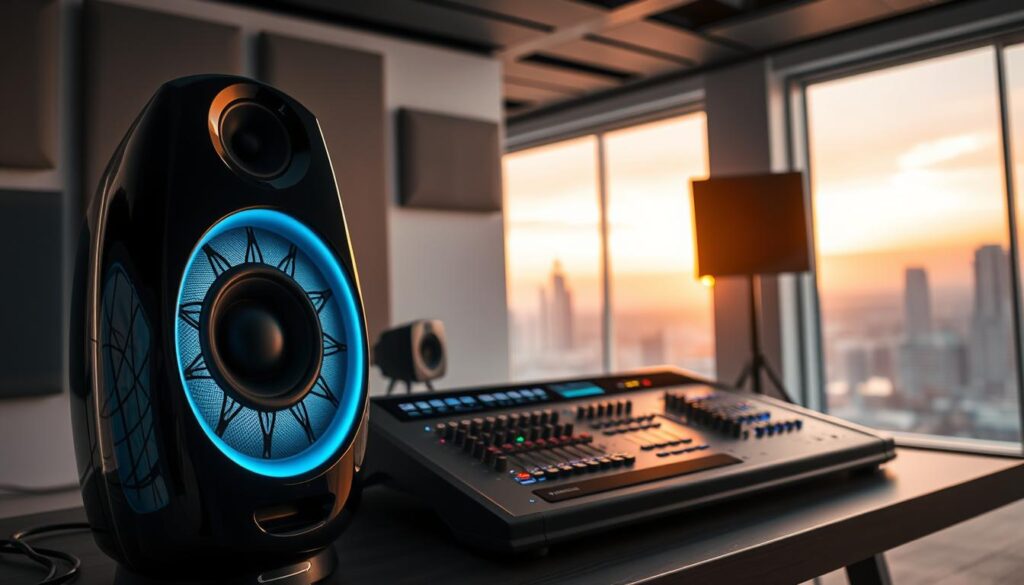
Selecting Quality Speakers
Many think that the price of speakers is the only thing that matters. But, even cheap speakers can sound great if they’re in the right spot. It’s all about finding speakers that fit your room’s size.
Instead of spending a lot on fancy speakers, focus on where you place them. A pair of entry-level bookshelf speakers can outshine expensive floor-standing models if they’re set up right. The most important thing is to keep your setup consistent.
Importance of Receiver and Amplifier
Your receiver and amplifier are the heart of your sound system. They need to power your speakers well without causing distortion. When they do this, your sound stays clear and deep.
Make sure your receiver supports 3D sound technology to keep your system up-to-date. Always check that your amplifier and speakers match in terms of impedance to avoid losing signal. A steady power supply helps your system play complex sounds accurately.
Using High-Quality Cables
Cables are often overlooked but are crucial for keeping the signal clean. Good cables connect your components without letting interference ruin the sound. You don’t need to spend a lot, but using shielded cables helps keep your sound pure.
| Component | Primary Function | Impact on 3D Sound Technology |
|---|---|---|
| Speakers | Transducing electrical signals | Defines spatial imaging and width |
| Amplifier | Powering the drivers | Ensures dynamic range and depth |
| Cables | Signal transmission | Maintains clarity and reduces noise |
Benefits of Upgrading Your Audio System
Upgrading your audio system unlocks your music’s hidden potential. Replacing basic components with high-fidelity ones changes how sound fills the room. This change turns listening into a transformative experience.
Improved Clarity and Depth
High-quality equipment lets us hear subtle details that were hidden before. We can now pick out individual instruments in complex music. This clarity adds depth, making the sound feel three-dimensional.
Greater Immersion in Soundtracks
Better hardware brings us into the world of our favorite movies and games. The emotional power of movie scores is enhanced. We feel like we’re part of the action, not just watching it.
Enhanced Music Experience
A well-tuned system makes music feel like a live performance. We can imagine the artist right in front of us. This realism makes every song feel fresh and exciting.
| Feature | Standard System | Upgraded System |
|---|---|---|
| Sound Detail | Basic clarity | High-resolution precision |
| Soundstage | Narrow and flat | Wide and immersive audio |
| Realism | Recorded feel | Live performance simulation |
| Emotional Impact | Moderate | High and engaging |
Software Solutions for Sound Enhancement
Digital tools can greatly improve your audio setup. While setting up your speakers is key, software can enhance what you hear. It lets you adjust the sound to fit your room and taste.
Utilizing Equalizers and DSPs
Our brains use frequency balance to figure out sound sources. An equalizer (EQ) helps adjust these frequencies. This makes instruments sound clearer and the soundstage wider.
Digital Signal Processing (DSP) fixes phase and timing errors in rooms. It’s all about making the sound better.
Precision is key when tweaking these settings. Start with small changes to avoid overdoing it. These tools help even out the sound, making it smoother.
Exploring Surround Sound Formats
Going beyond stereo can make your listening feel more real. Surround sound optimization lets you place sounds in space. This creates a deep, immersive experience, whether with speakers or headphones.
Streaming Services and Their Impact
The quality of your music matters a lot. High-resolution streaming services give the best data for software to work with. This ensures your soundstage is wide and accurate.
| Software Tool | Primary Function | Impact on Soundstage |
|---|---|---|
| Parametric EQ | Frequency balance | High (Instrument separation) |
| DSP Correction | Room/Phase alignment | Very High (Depth and focus) |
| Virtualization | Spatial expansion | High (Immersive feel) |
Common Mistakes to Avoid
Creating a top-notch listening space is more than just buying the best gear. Even the priciest systems can fall short if you make common setup mistakes. Many enthusiasts struggle to achieve their audio dreams because of simple errors that waste their investment.
Overlooking Room Setup
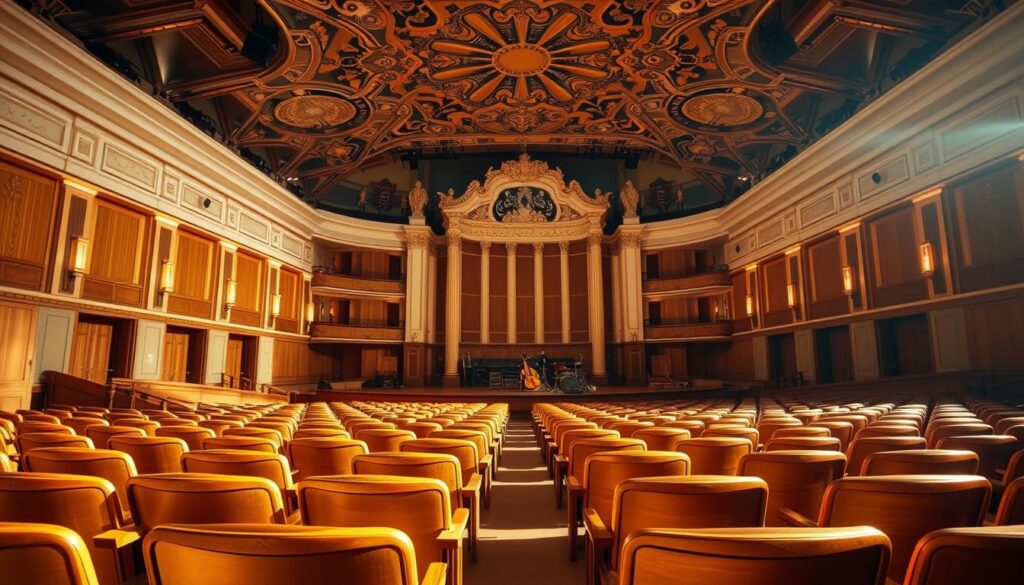
Many focus too much on the hardware and ignore the room itself. Getting concert hall acoustics at home is impossible without a symmetrical room. Unevenly placed speakers cause sound waves to bounce off walls at different times, ruining the sound balance.
Professional speaker installation is key to a good room setup. Proper placement creates a believable soundstage, just like a real venue. Without this, your system won’t reach its full potential.
Ignoring Equipment Compatibility
Another common mistake is pairing components that don’t work well together. A top-notch amplifier might not drive speakers with low sensitivity, leading to distorted sound. You need to match your power source and speakers for a convincing live performance simulation.
Compatibility isn’t just about power ratings. You also need to consider impedance and sonic signature. When components don’t match, your music’s clarity and depth suffer a lot.
Neglecting Regular Maintenance
Audio systems need regular care to stay at their best. Dust on drivers or loose cables can slowly ruin your sound quality. We recommend checking your connections and cleaning your gear at least twice a year.
Ignoring these small tasks can lead to frustration as your system’s performance drops. By staying proactive, you keep your live performance simulation crisp and immersive. Regular maintenance is the key to long-term happiness with your concert hall acoustics.
| Common Mistake | Primary Impact | Recommended Fix |
|---|---|---|
| Asymmetric Room | Poor Stereo Imaging | Adjust Speaker Symmetry |
| Mismatched Impedance | Amplifier Strain | Check Component Specs |
| Loose Connections | Signal Interference | Periodic Cable Inspection |
| Dusty Drivers | Muffled Highs | Gentle Cleaning Routine |
Fine-Tuning Your Soundstage
We think finding the perfect Soundstage is a journey of learning and improvement. After setting up your main equipment, it’s time for fine-tuning. This step turns a good setup into an amazing experience.
Calibration Techniques
To get it just right, you need a careful plan. Start with special microphones and software to check your room’s sound. These tools help you find and fix any sound issues.
Your ears are also key. Listen closely to how sounds are placed. If the center sounds off, try adjusting your speakers slightly to improve it.
Continuous Improvement and Listening
Improving your Soundstage is an ongoing task. See your audio system as a project that grows with you. Change your settings whenever you make changes to your room.
Keep track of your changes. This way, you can find the best sound for your space. With time, your music will feel more real and wide.
Seeking Professional Help
At times, even the most dedicated fans face sound problems they can’t solve alone. If you’re having trouble with sound, like muddy bass, it might be time for a pro. An expert can offer solutions that go beyond simple tweaks.
Getting a professional is a smart investment for a dedicated listening room or a complex home theater. They can suggest structural changes or advanced treatments to make your system sound its best.
Learning from the Community
Getting involved with the audio community opens up new ways to improve your listening space. It turns the technical work of audio optimization into a fulfilling virtual reality experience.
Online Forums and Resources
Places like Audiogon, AVS Forum, and subreddits are full of valuable information. They let you ask questions and get advice from seasoned audiophiles.
You can find special tips that aren’t in manuals. Active participation in these groups can change how you hear depth and imaging.
“The most sophisticated audio system is only as good as the ears that listen to it, and the community helps train those ears.”
Attending Audio Shows
Going to events like AXPONA or local audio shows is a unique chance. You can hear top-notch systems and see how different setups sound.
By trying out different systems, you learn what’s possible in your home. This hands-on experience is key for improving your taste and skills.
Finding Local Audio Clubs
Being part of a local audio club is a great way to learn and share. Members often meet up to give constructive feedback on sound quality.
This makes the hobby more social and less solitary. Connecting with others helps you create a virtual reality experience that makes music come alive.
Conclusion: Our Path to a Superior Soundstage
Creating a top-notch sound environment takes time and a sharp ear for details. We’ve looked at key steps to enhance your soundstage, from room treatment to speaker placement. These steps turn your space into a portal for deep, immersive sound.
Summary of Core Principles
High-end audio success comes from matching your gear and room perfectly. Brands like KEF or Bowers & Wilkins shine when you respect your room’s layout. Regular tuning ensures every sound hits your ears just right.
Commitment to Audio Excellence
Keep tweaking your setup to see big sound quality boosts. Even tiny tweaks to speaker angles or panel placement make a big difference. This drive for the best keeps your system sounding great for years.
Engaging with the Community
We encourage you to share your setup adventures and findings. Talking with other audio lovers helps us all get better. Your tips help us understand what makes audio truly immersive for all.