 Zoe Nora
Did you know physical music sales are making a comeback? Millions of units are sold every year. This shows people still love the tangible experience of listening to music the old way. The Syitren R300 sold out twice, showing how much people want real sound.
Looking for a portable CD player or something for your living room? The right choice is key. Finding the best CD player means looking at sound quality, design, and what formats it supports. We’re here to guide you to make sure your music collection sounds amazing.
Key Takeaways
- Physical media is experiencing a significant comeback in the digital age.
- The Syitren R300 success shows strong consumer interest in dedicated hardware.
- Sound quality and connectivity are vital when selecting a home audio device.
- Portability remains a top priority for many modern music enthusiasts.
- Our guide covers everything from maintenance to budget-friendly options.
Why CD Players Are Still Relevant Today
The CD player remains popular for its high-quality sound and tangible music ownership. Streaming services are convenient, but many prefer the real feel of physical music. Choosing an album and playing it on a CD player deepens our connection to music.
The Charm of Physical Media
Physical discs offer a sense of permanence that digital libraries can’t match. When you buy a disc, you own the music forever, without worrying about licensing or platform changes. The tactile interaction of holding liner notes and playing a disc in your CD player makes listening a special ritual.
“The beauty of physical media lies in the fact that it forces you to slow down and actually listen to the artist’s vision from start to finish.”
Comparing Digital and Analog Experiences
Digital streaming often sacrifices audio quality for convenience, leading to compressed files and playback issues. A dedicated CD player, on the other hand, offers a stable, high-fidelity sound experience. This makes it a top choice for audiophiles who value uninterrupted playback.
Digital platforms are great for discovering new music, but they can make it background noise. Using a CD player helps us focus on the soundstage and recording details. It combines the warmth of vinyl with the precision of digital audio.
The Nostalgia Factor of CD Collections
Younger generations are increasingly returning to physical formats. This shows a desire to break free from digital clutter. Building a CD library is a rewarding hobby that celebrates musical history.
Whether you’re rediscovering old favorites or searching for rare discs, the CD player is essential for music lovers. It’s more than just a device; it’s a way to enjoy music more intentionally and deeply.
Features to Look for in a CD Player
Finding the perfect CD player is all about matching your listening habits with the right features. Whether you’re setting up a CD player for home or need something portable, knowing the technical specs is key. This way, you get the most value for your money.
Sound Quality and Audio Formats
High-fidelity sound is why many fans love physical media. Look for a player that offers a wide frequency range. This ensures you get the full sound of your music.
Also, having a strong internal headphone amplifier is crucial. This is important if you use high-impedance studio headphones.
Check if your player supports formats like FLAC or MP3. This lets you play a variety of digital files, adding to your music collection.
Connectivity Options: Bluetooth and More
Today’s technology combines old-school charm with modern convenience. A CD player with Bluetooth lets you stream music wirelessly. This means no more tangled cords.
For those who prefer a wired connection, look for a player with versatile outputs. The Syitren R300 is a great example. It has Bluetooth 5.3, an optical output, and a 3.5 mm jack. These features make it perfect for use at home or in a CD player for car setup.
Design and Portability
The design of your CD player affects where and how you listen to music. If you’re always on the move, choose a lightweight model. It should also have long battery life and anti-skip protection.
When looking for a new CD player, consider these key features:
- Bluetooth 5.3 for stable, high-quality wireless streaming.
- USB connectivity to play digital files directly from a flash drive.
- Physical controls that provide tactile feedback for easy navigation.
- Optical output for connecting to high-end home audio systems.
The best CD player with USB or wireless options is one that fits your lifestyle. By focusing on these features, you ensure your music collection stays accessible and sounds great.
Top CD Player Brands You Should Consider
Finding a top rated CD player means balancing old reliability with new tech. Brand reputation is a good start, but check each model’s engineering and sound. You can find the best CD player by looking at what’s inside, not just the logo.
Sony: A Legacy of Quality
Sony is a giant in audio, known for quality and support. Their CD players have special lasers for exceptional tracking stability, even on old discs. Choosing Sony means investing in years of research.
“True audio quality is not just about the specs on the box; it is about how the device handles the nuances of your favorite recordings.”
Yamaha: Blend of Style and Performance
Yamaha is known for stylish units that sound great. They focus on vibration control and top circuitry to reduce signal noise. Many say Yamaha’s sound is warm and natural, perfect for acoustic music.
- Build Quality: Robust chassis designs that reduce resonance.
- Sound Tuning: Balanced output that favors clarity and depth.
- Compatibility: Seamless integration with existing home theater systems.
Onkyo: Innovating Audio Technology
Onkyo is known for leading in digital-to-analog conversion. They use advanced tech to make every best CD player sound crisp and detailed. Remember, even small brands like Syitren R300 and FiiO DM13 can surprise with their quality.
Your choice should match your needs, like connectivity and budget. Don’t let brand loyalty stop you from trying new, innovative players. Testing different units will help you find the perfect fit for your audio setup.
Standalone CD Players vs. Combo Units
When setting up your audio system, you face a key decision. Do you go for specialized gear or all-in-one solutions? The market has many options, from high-quality components to systems that play multiple formats. Knowing the differences helps you choose the best for your needs.
Benefits of a Standalone CD Player
A dedicated CD player focuses on top-notch audio quality. These units have better digital-to-analog converters and are built to resist vibrations. They’re ideal for a premium CD player for home listening.
These players let you upgrade your system piece by piece. You can pick components that fit your sound preferences. This level of customization is hard to find in combo units.
Pros and Cons of Combo Units
Combo units are great for those who want simplicity and small size. They often have features like FM radio, USB playback, or network streaming. They’re perfect for small spaces like apartments or offices.
But, these units might not offer the best sound quality. A portable CD player or a shelf system is convenient, but the components might not be as precise. Think about whether the convenience is worth the sound quality trade-off.
Choosing Based on Your Music Setup
Your environment affects your choice of hardware. For a CD player for car, look for one that handles road vibrations well. It should also fit your car’s dashboard easily.
At home, consider your connection needs. If you want wireless, choose a CD player with Bluetooth for streaming to speakers or headphones. The right choice depends on whether you value uncompromising sound quality or the convenience of an all-in-one system.
How to Maintain Your CD Player
Keeping your CD player in top shape is easy with a bit of care. Regular maintenance ensures your device plays music clearly for years. It also stops common problems and keeps your music collection sounding great.
Regular Cleaning Tips
Dust is a big problem for CD players. Clean your discs with a soft, lint-free cloth, starting from the center. This helps avoid scratches. Never use rough materials or harsh cleaners, as they can damage the disc.
For the lens inside, use a special laser cleaning disc. Don’t open your player yourself, as it can cause more damage. Also, keep it dry to protect the inside parts.
Optimal Storage Conditions
Keep your player in a cool, dry place, away from sunlight. Extreme temperatures can harm it. If it’s portable, take out the batteries when not in use to avoid damage.
Use dust covers or cases for stationary players. Make sure the lid is clean to keep dust out. Storing it right helps your CD player last longer.
Common Issues and Troubleshooting
Sometimes, your player might skip or have reading errors. These are often due to a dirty lens or a scratched disc. If your player has a top-loading design, like the Syitren R300, make sure the lid is closed.
For players like the FiiO DM13, handle the disc tray carefully to avoid damage. If you have connection problems, check your cables for wear or corrosion. Most issues can be fixed with a quick clean or cable swap.
| Maintenance Task | Frequency | Benefit |
|---|---|---|
| Lens Cleaning | Every 6 months | Prevents reading errors |
| Disc Surface Wipe | Before every use | Reduces skipping |
| Battery Inspection | Monthly | Prevents corrosion |
| Cable Check | Quarterly | Ensures signal clarity |
Best CD Players for Different Budgets
Looking for a deal or a top-notch audio player? Today’s market has something for everyone. Finding the best CD player means balancing your budget with the features you need.
Affordable Picks Under $100
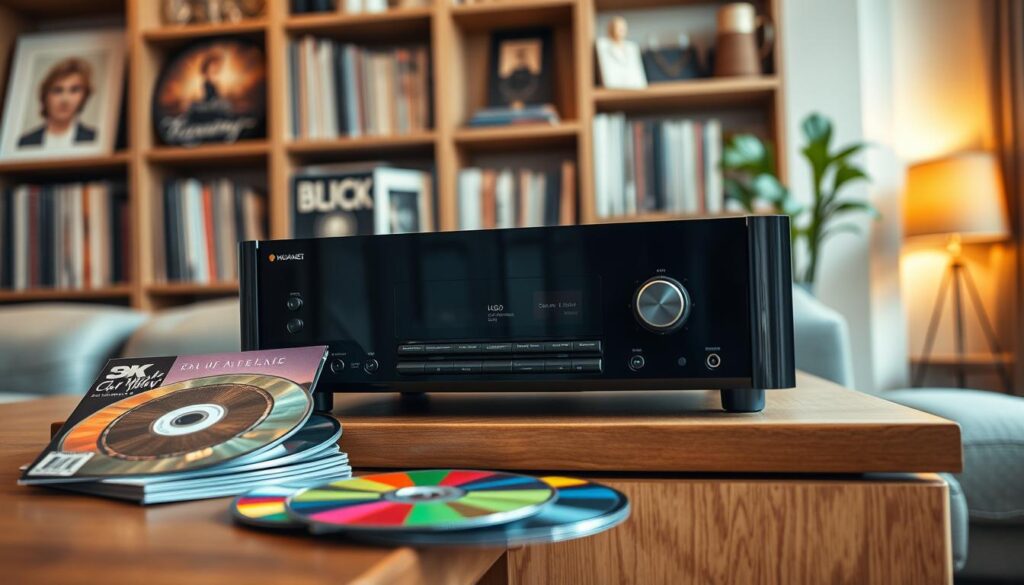
For those on a tight budget, entry-level players are a great choice. The Klim Nomad is a popular pick. It’s portable and useful.
This portable CD player has a radio and supports microSD. But, it lacks digital outputs and has lower sound quality than pricier models.
Mid-Range Selections: $100 – $500
In the mid-range, you’ll find players that look good and sound great. The Syitren R300 and FiiO DM13 are favorites among enthusiasts. They’re perfect for home use.
These players have better components and build. They also often have USB connectivity for easier setup.
“Music is the shorthand of emotion, and the right equipment ensures that every note is heard exactly as the artist intended.”
Premium Models Over $500
Premium players are for true audiophiles. They offer unmatched clarity and precision. They’re not as portable but are worth it for the sound quality.
These high-end units are built to last. They provide a rich, immersive listening experience. They’re ideal for car systems or home setups.
| Category | Key Feature | Best For | Trade-off |
|---|---|---|---|
| Budget | Portability | Casual listeners | Limited audio fidelity |
| Mid-Range | Versatility | Daily enthusiasts | Moderate price point |
| Premium | High-End Sound | Serious collectors | Higher investment |
CD Player Accessories You Might Need
Choosing the right accessories is key to getting the most out of your audio system. A top-notch CD player is the core, but the components you connect to it shape the sound and ease of use. Whether you’re setting up a desktop or a living room system, the right add-ons make your music sound just right.
Headphones for Pure Listening
For a close-up listening experience, picking the right headphones is crucial. If you have a CD player with Bluetooth, wireless headphones let you move freely without losing sound quality. But for the clearest sound, wired headphones with an amplifier are the best choice.
Devices like the FiiO DM13 offer various output options for different headphones. A high-quality wired connection captures every detail of the music. This setup is great for quiet nights when you want to dive into your music.
High-Quality Cables and Connectors
The quality of your cables affects the sound. If your CD player with USB has digital output, use a top-notch optical or coaxial cable. These cables keep the signal clean, ensuring your music sounds just as it was recorded.
For those who want the best, balanced cables are a great choice. They reduce noise and enhance sound quality. Make sure your device supports balanced cables before buying.
Storage Solutions for Your CDs
Keeping your CDs organized is as important as your equipment. Store them in a cool, dry place to prevent damage. Whether you like wall racks or classic cabinets, easy access makes choosing music fun.
If you rip CDs digitally, consider fast external drives for backups. Modern players often have one-button ripping. This mix of physical and digital media is convenient and reliable.
| Accessory Type | Primary Benefit | Best For |
|---|---|---|
| Wired Headphones | Maximum Fidelity | Critical Listening |
| Optical Cables | Noise Reduction | Digital Connections |
| CD Storage Racks | Disc Protection | Collection Management |
| USB-C Drives | Digital Archiving | Backup & Portability |
How to Build Your CD Collection
Building a music library turns your listening space into a personal sanctuary. Investing in physical media gives you a real connection to your favorite artists. A top-notch CD player is key, ensuring every note is clear.
Essential Albums for Any Collector
Every great collection starts with albums that shaped your musical taste. Choose records that sound great in your home stereo, CD player, and car. This way, you can enjoy your favorite tracks anywhere.
Look for albums with high production value and emotional depth. These albums will set the standard for your collection. Consistency in quality is crucial when starting.
Curating Genre-Specific Collections
Once you have your essentials, explore different genres that interest you. Organizing by style helps you find hidden gems and deep cuts. It also makes finding the right mood for listening easier.
“The beauty of a physical collection lies in the ritual of choosing an album, reading the liner notes, and letting the music wash over you without the distraction of a screen.”
Tips for Finding Rare CDs
Finding rare discs takes attention to detail and patience. Always check the catalog number and pressing details. Make sure the disc and booklet are in good condition to keep your collection’s value.
When buying online, focus on seller reliability and their price history. A well-maintained CD player can play even older, rare discs beautifully. Here’s a guide to evaluating the condition of your finds.
| Condition Grade | Disc Surface | Booklet/Inserts | Value Potential |
|---|---|---|---|
| Mint (M) | Perfect | Flawless | Highest |
| Excellent (EX) | Minor marks | Very clean | High |
| Good (G) | Visible scratches | Some wear | Moderate |
| Fair (F) | Heavy wear | Damaged | Low |
Listening Room Setup for Optimal Sound
Getting great sound is more than just having top-notch equipment. It’s also about setting up your space right. When you buy a CD player for home, think about how your room will affect the sound.
Importance of Room Acoustics
Sound waves bounce off every surface in your room. This can make your audio sound messy. Hard floors can echo, while soft furniture absorbs sound better. It’s also key to keep your gear still to avoid laser tracking issues.
“The room is the most important component in your audio system, as it dictates how the sound waves reach your ears.”
To make your room better for sound, try rugs on hard floors or acoustic panels on walls. Place your equipment on a solid, heavy base to block vibrations. These tweaks can make your music sound sharp and clear.
Positioning Your CD Player
Put your CD player where you can easily reach it. This makes listening more comfortable. Make sure there’s enough space for the disc tray to open fully.
If you have a CD player with Bluetooth, keep it away from other wireless devices. Good airflow is also crucial to avoid overheating. A well-ventilated spot is best for keeping your player in top shape.
Adding Speakers for Enhanced Experience
Connecting your audio source right is key to a great home stereo system. For example, the Syitren R300 has various output options. You can connect it to powered speakers or an external amplifier for passive speakers.
| Connection Type | Best For | Audio Quality |
|---|---|---|
| 3.5 mm Output | Powered Speakers | Good |
| Optical Output | External DAC/Amp | Excellent |
| Bluetooth | Wireless Headphones | Convenient |
For private listening, plug in high-quality headphones. Try adjusting speaker angles to improve sound quality. Taking the time to fine-tune your setup lets you enjoy music as the artist meant it.
The Future of CD Players in a Digital World
We’re seeing a big change as physical media gets a new lease on life. Streaming services give us instant access to tons of songs. But, many people are finding joy in owning their music again. A top-notch CD player is key for those who love great sound and the feel of a real collection.
Digital Streaming vs. CD: The Ongoing Debate
The fight between streaming and physical media is about ease versus control. Streaming has endless music, but it needs the internet and deals with licensing. On the other hand, a dedicated disc player lets you enjoy your favorite albums anytime, without worrying about server issues or platform changes.
Many music lovers say that CDs offer a better sound because they have uncompressed audio. By picking a top rated CD player, you get to hear music in a way that streaming can’t match. This makes you feel closer to the artists.
Potential for Retro Revival
Is the love for discs just a short-term thing? We think it’s more than that. It shows a lasting love for listening offline and owning music. The joy of picking a disc and reading the liner notes is a nice break from screens.
This isn’t just about old times; it’s about listening on purpose. Fans are discovering that a portable CD player lets them enjoy music anywhere, free from distractions. This shows that physical media will keep being important in our homes.
Innovations on the Horizon
Companies are making devices that mix old-school sound with new tech. For example, the FiiO DM13 has cool Bluetooth and USB-C features. A modern CD player with USB lets you easily add your music to digital setups.
These updates keep your gear up-to-date, even in a world that’s going wireless. Whether you like a traditional player or one with USB, the tech is getting better to meet your needs. Here’s a table that shows how different ways of playing music compare for today’s listener.
| Feature | Streaming Service | Physical CD | Modern Portable CD Player |
|---|---|---|---|
| Audio Quality | Compressed/Variable | Uncompressed | High-Resolution |
| Ownership | Subscription-based | Permanent | Permanent |
| Connectivity | Wi-Fi Required | Standalone | Bluetooth/USB-C |
| Portability | High | Low | High |
Frequently Asked Questions About CD Players
Choosing the right audio equipment means knowing your listening habits well. We get many questions about using these devices in today’s homes.
Selecting the Ideal Device
Your choice depends on where you listen to music. For on-the-go listening, pick a model with long battery life. A dedicated CD player with USB lets you play digital files too.
Make sure the output ports fit your amplifier or speakers.
Smart Speaker Integration
Connecting your gear to smart speakers is doable if your devices support the right signals. A CD player with Bluetooth can connect to many wireless speakers. If it doesn’t have Bluetooth, an analog cable can help.
Models like the Syitren R300 look great, while the Klim Nomad is perfect for travel.
Understanding Disc Formats
Different discs have different sound quality and data storage. Standard discs work in most players, but some handle high-resolution or compressed formats better.
Whether you want a simple player for your kitchen or a top-notch system for your living room, check the formats first. The right CD player ensures you enjoy your music for years.