
 Zoe Nora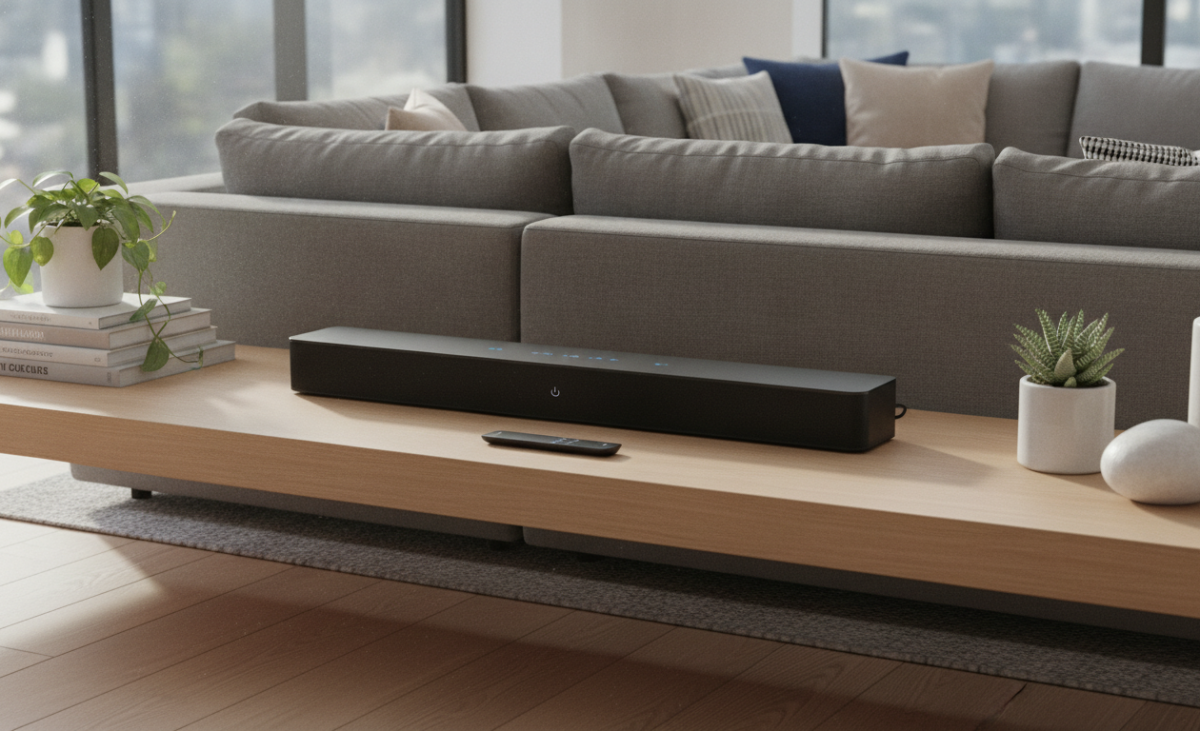
Did you know that nearly 70% of viewers say bad audio quality ruins their movie and sports experience? Upgrading your audio setup can greatly improve your entertainment. A top-notch living room soundbar ensures every sound is clear and sharp.
In this detailed soundbar buying guide, we’ll help you pick the perfect device for your space. We’ll look at sound quality, connectivity, and how easy it is to set up. You can find the best smart soundbar by thinking about your room’s layout and height.
We’ll also talk about how surfaces and where you mount it affect your choice. Our aim is to help you find a smart home soundbar that meets your needs for both sound quality and control.
Key Takeaways
- Audio quality significantly impacts your overall media immersion.
- Room dimensions and layout are critical factors when selecting equipment.
- Reflective surfaces can alter how audio travels through your space.
- Proper mounting and placement maximize the performance of your device.
- Modern units offer seamless integration with existing digital assistants.
What is a Smart Home Soundbar?
Modern home theaters use a smart home soundbar to connect high-quality audio with digital tech. Unlike old speakers, these devices are smart hubs for your media world.
Definition and Purpose
A smart home soundbar is a small, all-in-one speaker system. It boosts TV sound and links to your home network. It connects to streaming services, apps, and voice assistants.
“The evolution of home audio is no longer just about volume; it is about creating an intelligent, immersive environment that responds to the listener’s needs.”
As a central hub, a smart home soundbar lets you control your entertainment with voice or apps. This makes your audio and devices work together smoothly.
Key Features of Smart Home Soundbars
What makes these devices special is their advanced tech. Features like HDMI eARC send high-quality audio. Wi-Fi and Bluetooth offer flexible streaming.
Many models support Dolby Atmos, creating a realistic sound effect. For example, the Harman Kardon Enchant 1100 has eleven drivers and app-based room calibration for a custom sound.
| Feature | Standard Soundbar | Smart Home Soundbar |
|---|---|---|
| Connectivity | Basic Optical/Aux | Wi-Fi, Bluetooth, HDMI eARC |
| Voice Control | None | Integrated Assistants |
| Audio Processing | Virtual Surround | Dolby Atmos & Room Calibration |
| App Integration | No | Full Ecosystem Support |
These systems also focus on clear dialogue. A smart home soundbar makes sure you catch every word in movies and shows, even with background noise.
Benefits of Using a Smart Home Soundbar
Choosing the best smart home soundbar is the best way to improve your living room’s sound. TV speakers often sound thin and muffled. But a dedicated soundbar brings depth and clarity for a cinematic feel.
Enhanced Audio Quality
Modern soundbars fill the room with sound. They use advanced tech for crystal-clear dialogue and deep bass. This is something TV speakers can’t do.
The Klipsch Flexus Core 200 is a great example. It has a 3.1.2 channel layout and upward-firing drivers. This creates an immersive sound environment. Plus, the three-level Dialogue Boost makes sure you catch every word.
“True audio immersion is not just about volume; it is about the precision of every sound effect and the clarity of the human voice in your favorite films.”
Smart Integration Capabilities
The best smart home soundbar is a central hub for your entertainment. It has Wi-Fi and mobile apps for streaming high-resolution audio. You don’t need extra hardware.
These systems also work with voice assistants. This lets you control your media hands-free. Many models also let you add more speakers later for a full surround sound setup.
Space-Saving Design
Traditional home theater systems take up a lot of space. They have bulky receivers and complex wiring. But a soundbar is sleek and low-profile. It fits perfectly under your TV.
| Feature | Traditional System | Smart Soundbar |
|---|---|---|
| Installation | Complex/Wired | Simple/Wireless |
| Space Usage | High | Minimal |
| Control | Manual/Remote | App/Voice |
| Audio Tech | Standard | Advanced/AI |
By picking the best smart home soundbar, you get top-notch audio without losing your room’s style. This mix of power and simplicity is perfect for today’s homes.
Top Brands for Smart Home Soundbars
When you look at smart home soundbar reviews, you’ll see a few big names stand out. It’s tempting to stick with what you know, but think about your whole setup first. The best pick often depends on how well it works with your TV, voice assistants, and speakers.
Sonos
Sonos is known for seamless multi-room audio and an easy app. Their devices can adjust sound based on your room. They’re great for those who want a hassle-free setup.
Bose
Bose leads in acoustic engineering, offering great sound in small packages. Their soundbars have advanced tech for an immersive sound without taking up too much space. Bose is a top choice for clear sound and quality build.
“The true power of a modern soundbar lies not just in its drivers, but in how it communicates with every other smart device in your living room.”
Samsung
Samsung is great at working with their TVs, thanks to Q-Symphony. This tech makes sound better by using TV speakers too. If you’re already using Samsung, their devices are easy to set up.
LG
LG focuses on top-notch sound and intelligent AI sound processing. Their soundbars have great subwoofers for deep bass. They offer good value and performance.
| Brand | Primary Strength | Ecosystem Focus |
|---|---|---|
| Sonos | Multi-room Audio | High |
| Bose | Acoustic Clarity | Medium |
| Samsung | TV Integration | High |
| LG | AI Processing | Medium |
Choose based on what you need, not just brand popularity. Look at wireless and voice assistant support. Always check the latest smart home soundbar reviews for updates.
Key Features to Consider When Buying
Choosing a top-rated smart home soundbar means finding the right sound for your room and entertainment needs. Make a checklist to make sure it fits well with your TV and smart home setup.
Audio Performance
The sound quality is key. Look for a multi-channel layout like 5.1.2. This uses height drivers for a better sound experience.
Dialogue clarity is also important. Make sure the soundbar has special modes for clear voices. Also, check for room correction technology to adjust the sound to your room.
Connectivity Options
Modern soundbars need to connect to many devices. Choose one with HDMI eARC for the best surround sound.
While Wi-Fi and Bluetooth are handy for streaming, don’t forget physical ports. Some soundbars have only one HDMI port, so check if it fits all your devices.
Voice Assistant Compatibility
A smart soundbar should control your home. Most top-rated smart home soundbar models work with Amazon Alexa or Google Assistant.
This lets you control the sound and lights with voice commands. Make sure it works with your preferred voice assistant before buying.
Design and Aesthetics
Your soundbar should match your room’s style. It should be the same width as your TV for a neat look.
Look for wall-mount compatibility for a clean look. Also, make sure the soundbar’s height doesn’t block your TV’s sensor or the bottom edge.
Smart Home Soundbar Installation Tips
Setting up your new audio system right is key to enjoying all the smart home soundbar features you bought. Proper placement and setup help your device deliver the sound quality you want. If you’re still picking the right model, you can learn how to choose one that fits your room.
Choosing the Right Location
For the best sound, place your soundbar at or near ear level. This keeps dialogue clear and centered in movies. Also, keep a small gap between the soundbar and your TV to avoid sound interference.
Don’t put your device in a recessed cabinet or shelf. Enclosed spaces can muffle sound and hurt your smart home soundbar features. Make sure the surface is stable and flat to prevent audio distortion.
Cable Management Solutions
A clean setup looks good and protects your cables. Use the following connection strategy for the best signal quality:
- HDMI eARC: This is for the highest quality audio between your TV and soundbar.
- Power Cables: Keep these separate from audio cables to avoid interference.
- Optical and Ethernet: Use these as secondary connections if needed for wired network or legacy audio.
Wireless Setup Instructions
Modern devices need seamless connectivity to work well. After setting up your unit physically, follow these steps to activate your smart home soundbar features:
- Download the manufacturer’s app on your phone or tablet.
- Make sure your soundbar is on and in pairing mode, shown by the status light.
- Follow the app’s prompts to connect to your Wi-Fi network.
Remember, keep the area above your soundbar clear. If it has upward-firing drivers for Dolby Atmos, any ceiling obstructions will block sound waves. An open space above is crucial for the full experience of your smart home soundbar features.
How to Maximize Use of Your Smart Home Soundbar
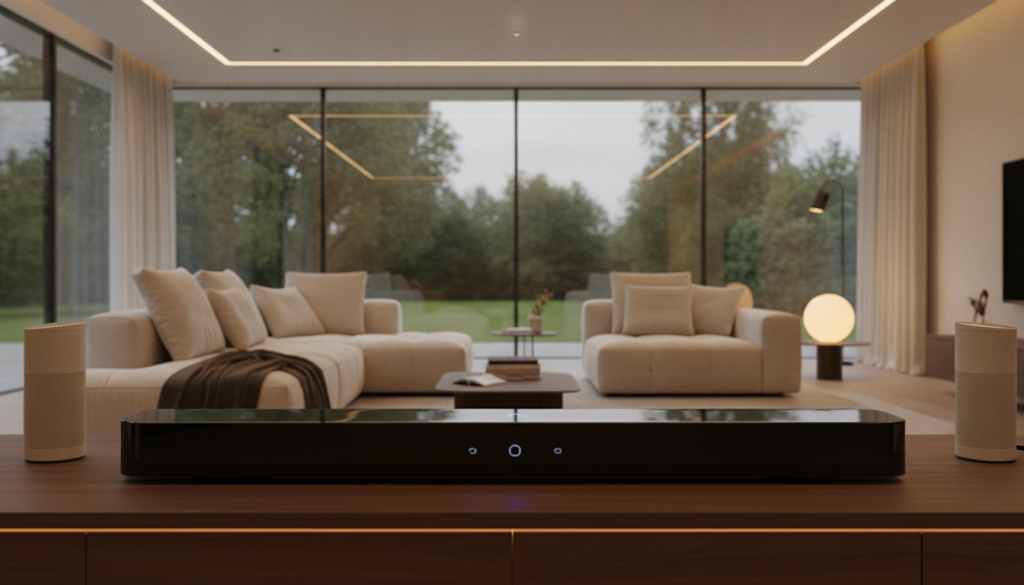
Modern smart home soundbar technology lets you customize your listening space. You can get a movie theater feel in your living room. Start by exploring the advanced settings in your device’s app.
Integrating with Other Smart Devices
Your soundbar is the heart of your home entertainment. Connect it to your TV via HDMI eARC for top-notch audio. Adding wireless subwoofers and rear speakers from Sonos or Bose can make it a surround sound system.
Many systems let you connect your audio across rooms. For example, Yamaha’s MusicCast or Bose’s ecosystem syncs audio everywhere. To improve sound quality, keep your firmware up to date for the latest streaming and smart home tech.
Customizing Sound Settings
Top devices have tools that adjust sound based on your room’s acoustics. These tools tweak the sound for your space’s layout and walls. Fine-tuning these settings manually can make dialogue and bass sound better.
For late-night movies, look for a “Night Mode” setting. It reduces loud sounds and boosts quiet ones, so you won’t disturb anyone. Brands like Devialet and Harman Kardon let you adjust height settings for better Dolby Atmos sound.
Using Voice Control Features
Voice assistants make controlling your audio easy. You can change volume, switch inputs, or play music with just a voice command. Integrating your soundbar into smart home routines can even dim lights and start movies with one command.
While voice assistant features vary, most support basic controls and multi-room grouping. Set up voice shortcuts for your favorite sound profiles. This smart home soundbar technology makes sure your audio is always perfect for what you’re watching.
| Brand | Calibration Tool | Customization Level |
|---|---|---|
| Sonos | Trueplay | High |
| Bose | ADAPTiQ | Medium |
| Yamaha | YPAO | High |
| Devialet | Advanced EQ | Very High |
Comparing Price Range of Smart Home Soundbars
It’s important to know the difference between entry-level, mid-range, and high-end soundbars. This helps us choose wisely based on our budget. Each tier offers unique features and quality levels.
Budget-Friendly Options
Entry-level soundbars are a big step up from TV speakers but don’t break the bank. The Klipsch Flexus Core 200 is a great example. It’s an affordable smart home soundbar for many.
It costs about $550 and has physical Atmos height drivers. You can also add more parts later. It’s perfect for those who want great sound without spending too much.
Mid-Range Selections
In the mid-range, we see soundbars with advanced networking and easy integration with other smart devices. The Harman Kardon Enchant 1100 and the Sonos Arc Ultra are around $899.
These soundbars come with sophisticated room calibration. They adjust the sound to fit your room. They’re great for those who want top-notch sound and smart features.
Premium Soundbars
Premium soundbars are the top of the line, costing over $2,000. The Devialet Dione and KEF XIO are examples. They’re pricey but offer upscale construction and special driver tech.
These systems deliver amazing sound and room adaptation. They’re for those who want the best music and movie experience.
| Category | Price Range | Key Focus |
|---|---|---|
| Budget | $300 – $600 | Value and Expandability |
| Mid-Range | $700 – $1,200 | Ecosystem and Calibration |
| Premium | $2,000+ | Luxury and Performance |
Customer Reviews and Recommendations
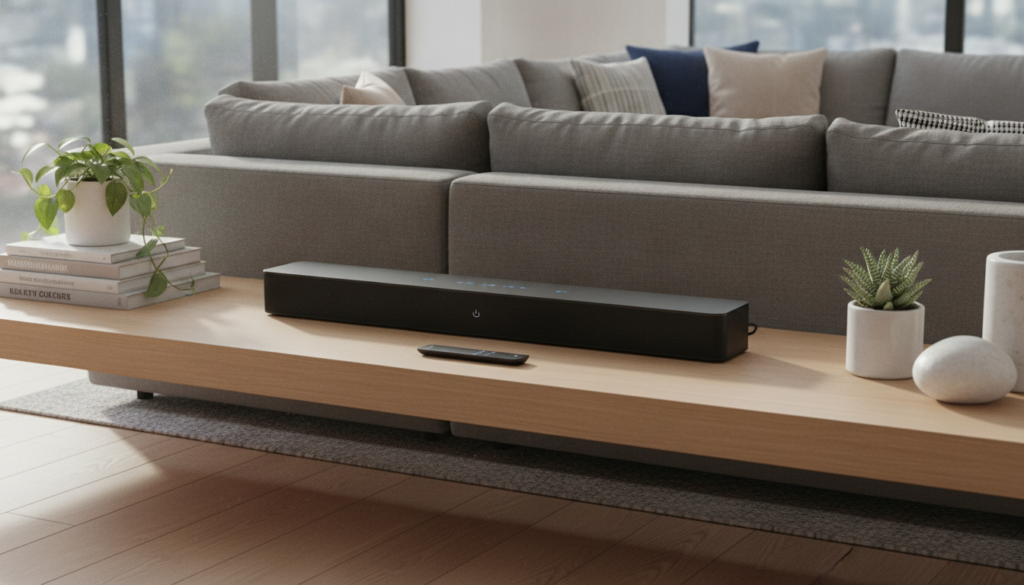
We think real feedback is key when looking for a smart home soundbar for sale. While specs are important, how it sounds in your living room matters more. Looking at verified purchases helps us see which systems really work.
Top-Rated Models
Some models keep getting top marks for their reliability and sound quality. Here are a few that often get praised:
- Sonos Arc: Known for its immersive Dolby Atmos and easy multi-room setup.
- Bose Smart Ultra: Chosen for its crystal-clear dialogue and modern design.
- Samsung Q-Series: Recommended for its strong performance and TV brand integration.
User Experiences and Feedback
Remember, results can vary based on your home. Things like ceiling height, wall materials, and room shape affect sound. What sounds great in a showroom might need tweaking in your home.
When shopping for a smart home soundbar, keep these tips in mind for lasting satisfaction:
- Check the firmware support history for updates.
- Look at the return policy and warranty before buying.
- Think about the total cost, including accessory expenses like mounts or rear speakers.
Your choice should match your listening needs. Whether you want convenience or deep bass, feedback helps you decide. Reading different user experiences will help you find the right smart home soundbar for you.
Smart Home Soundbar vs. Traditional Sound Systems
Choosing between a compact soundbar and a multi-speaker system depends on your lifestyle and space. A smart home soundbar comparison helps decide what’s best for your entertainment needs. Both options aim to enhance your audio experience but in different ways.
Pros and Cons
Modern soundbars are convenient because they combine multiple channels into one unit. They are great for small spaces because they take up little room. Setting them up is quick and easy, without the need for messy wires.
On the other hand, a traditional home theater system offers more flexibility for serious listeners. You can pick individual components, like high-end receivers and dedicated speakers. This means you can upgrade parts over time to keep your system up-to-date.
“True audio immersion is not just about the volume, but about the precision of the soundstage and the clarity of every note in the room.”
While traditional systems offer better sound separation, modern tech is catching up. For example, the Harman Kardon 7.1.4 system shows how a wireless surround sound system can deliver deep, immersive audio without cables. This makes enjoying cinema-quality sound easier than ever before.
Ideal Use Cases
Soundbars are perfect for apartment dwellers and renters who can’t change their walls or run wires. They look sleek and match modern TVs well. If you mainly want to improve dialogue and movie enjoyment, a soundbar is a good choice.
Dedicated component systems are best for audiophiles and home theater enthusiasts. They offer deeper soundstage and the chance to fine-tune your audio environment. If you have a big media room, investing in a traditional setup will be worth it for better sound quality.
| Feature | Smart Soundbar | Traditional System |
|---|---|---|
| Setup Complexity | Low (Plug and Play) | High (Requires Calibration) |
| Space Required | Minimal | Significant |
| Upgradeability | Limited | High (Modular) |
| Aesthetic | Minimalist | Technical/Robust |
Future Trends in Smart Home Soundbars
We’re in a new era for home theater audio. Manufacturers are making amazing advancements. Our living rooms are becoming more immersive than ever.
The focus is now on smart, adaptive systems. These systems understand your space’s unique acoustics.
Emerging Technologies
Dolby Atmos soundbar technology is becoming the top choice for high-end setups. We’ll see more systems using physical height drivers. This gives a more accurate sense of vertical space in movies.
AI audio calibration is changing how we set up our sound systems. These systems analyze your room and furniture to optimize sound. This ensures everyone gets a balanced soundstage, no matter where they sit.
Predictions for 2024 and Beyond
By 2026, multi-room audio will be huge. Soundbars will connect your whole home, syncing with speakers in every room. This will be made easy by advanced streaming platforms that focus on high-quality sound.
Wireless rear speakers with rechargeable batteries will become common. This means no more cables on your floor. Convenience will be a big factor in choosing a new home theater system.
| Feature | Current Status | Future Outlook |
|---|---|---|
| Calibration | Manual/Basic | Advanced AI Automation |
| Surround Setup | Wired/Hybrid | Fully Wireless/Rechargeable |
| Audio Depth | Virtual Processing | Physical Height Drivers |
| Connectivity | Standard Wi-Fi | Unified Multi-Room Mesh |
Conclusion: Choosing the Right Smart Home Soundbar for You
Choosing the right audio setup is more than just looking at specs. Consider your room size, ceiling height, and how surfaces reflect sound. This ensures the best performance. A good living room audio upgrade also means your equipment works well with your TV and smart home.
It’s important to balance clear dialogue, deep bass, and Atmos drivers. Small rooms do well with compact bars from Sonos or Bose. But, big, open spaces need stronger models with subwoofers and rear speakers.
Before buying, measure your space. Make sure your HDMI ports and voice assistants fit your devices. Also, compare the total cost to find the best value for your needs.
Pick a model that matches your viewing and listening habits. A well-chosen home theater enhances your movie nights. We hope this guide helps you create a great atmosphere for every movie night.