
 Zoe Nora
Did you know sound waves can bounce off hard surfaces like drywall and glass up to 50 times? This constant bouncing makes it hard to focus or relax at home.
We often forget how our surroundings affect our comfort. By adding an acoustic panel, we can soak up these echoes. This helps balance our living spaces.
These tools are not just functional. They also add style to our rooms. The right acoustic wall panel can turn any room into a peaceful place where sound is clear.
Key Takeaways
- Too much sound reflection makes homes noisy.
- Controlling echoes greatly improves sound quality.
- Modern sound solutions also serve as decor.
- Placing sound-absorbing materials right can make rooms more comfortable.
- Choosing quality materials ensures good sound for a long time.
Introduction to Acoustic Panels
Getting perfect sound in any room starts with knowing the basics of acoustic treatment. Standard walls often bounce sound back, causing echoes that mess up the sound. By placing special panels, we can take back control of our space.
What Are Acoustic Panels?
Acoustic panels are tools made to soak up sound energy, not bounce it back. They have a stiff frame filled with thick, soft stuff like mineral wool or foam. These panels are key to any good acoustic treatment plan.
How Do They Work?
The science behind these panels is interesting. When sound hits the soft surface, it gets trapped in the material. This turns the sound’s energy into heat, stopping it from bouncing back.
This reduces echoes, making the room quieter and more controlled. It’s a simple yet effective way to handle sound.
Benefits of Acoustic Panels
The main perk of using these panels is creating a great listening space. Whether you’re recording music or watching a movie, clear sound is key. Good acoustic treatment makes sure every sound is heard right.
| Feature | Standard Wall | Acoustic Panel |
|---|---|---|
| Sound Reflection | High | Low |
| Echo Control | Poor | Excellent |
| Audio Clarity | Low | High |
| Installation | N/A | Simple |
Types of Acoustic Panels
Not all panels are the same. The right one depends on your sound goals. We sort them by material, performance, and how they look in your room.
Foam Panels
The acoustic foam panel is great for beginners. They are light and good at soaking up sound waves. This helps cut down on echo and flutter.
- Extremely budget-friendly for large spaces.
- Easy to install with adhesive strips or spray.
- Available in various shapes like wedges or pyramids.
Fabric-Wrapped Panels
For a professional look and top-notch sound, go for a sound absorption panel in fabric. They have a solid core that handles more sound types than foam.
They look clean and fit well in theaters or offices. You can pick from many colors and textures to match your space.
Wood Panels
Wood slat panels are for those who want style and sound quality. They mix absorption and diffusion to keep rooms lively.
They’re great for areas where you want better sound without losing style. The natural wood finish adds warmth to any room.
| Panel Type | Best Use Case | Primary Benefit |
|---|---|---|
| Foam | Home Studios | Cost-effective |
| Fabric | Offices/Theaters | High Performance |
| Wood | Living Rooms | Aesthetic Appeal |
Choosing the right sound dampening panel is about finding the right mix of cost and style. Whether you focus on sound quality or looks, there’s something for everyone.
Installation Methods for Acoustic Panels
Getting your acoustic treatment right is key. First, find the main spots where sound bounces back in your room. This helps your panels catch sound waves better. Putting your equipment in the right place can turn a noisy room into a quiet space.
Wall-Mounted Panels
Wall mounting is easy and works well. You can use Z-clips, adhesive strips, or clips to hang each sound absorbing panel. Make sure your wall is clean and dry before sticking anything to it. This keeps your panels in place over time.
Ceiling-Mounted Panels
Ceiling panels, or “acoustic clouds,” stop sound from bouncing off the ceiling and floor. Use strong eye hooks and wire to hang them safely above your work area. This setup works great in small rooms without using up floor space.
Freestanding Panels
Freestanding panels are great for flexibility. They have sturdy bases or stands, so you can move them easily. They’re very useful for quick recording sessions or when you don’t want to drill into your walls.
Choosing the Right Acoustic Panel
We think finding the perfect acoustic wall panel for your space is key to great sound. It’s not just about looks; you need to know about the Noise Reduction Coefficient (NRC). By understanding your space, you can make sure each acoustic panel does its job well.
Consider Room Size and Layout
The size of your room affects how sound moves and where it hits. Big rooms can have too much echo, while small ones might have sound bouncing back too much. For a workspace, our guide to soundproofing can help find where sound hits too hard.
“Sound is a physical force that interacts with every surface it touches, and controlling that interaction is the key to clarity.”
Assessing Sound Frequency Needs
Every sound type needs its own treatment. Thin materials work well for high sounds, while thick ones handle low bass better. Know what sound problems your room has before buying. This way, your acoustic wall panel will handle all sound types well.
Panel Thickness and Density
The power of an acoustic panel comes from its thickness and density. Thicker panels soak up more sound, and denser ones trap sound energy better.
Always look at the NRC rating when picking your gear. A higher NRC means better sound absorption. This is crucial for top-notch sound quality in any room.
Popular Brands of Acoustic Panels
Looking for top-notch acoustic solutions? Several leading brands are known for their quality and performance. We’ve checked them out to guide you in finding the best fit for your budget and needs.
Auralex Acoustics
Auralex is a well-known name in professional recording studios and home theaters. They have a wide range of products, including the popular acoustic foam panel. It’s easy to install and works well.
- Extensive catalog for various room sizes.
- Industry-standard sound absorption panel designs.
- Proven track record in professional audio environments.
ATS Acoustics
ATS Acoustics offers a mix of looks and function. They specialize in fabric-wrapped panels that are both effective and stylish. These panels fit well with your home decor.
They let you customize colors and sizes to match your space. Many like their use of high-quality materials at good prices.
Primacoustic
Primacoustic is all about high-end solutions for homes and businesses. Their panels have superior fire safety ratings, perfect for public areas or offices.
They use dense materials for maximum sound control. Their panels are built to last, making your investment worthwhile for years.
| Brand | Primary Strength | Best For |
|---|---|---|
| Auralex | Variety | Studios |
| ATS | Customization | Home Decor |
| Primacoustic | Safety | Commercial |
DIY Acoustic Panel Solutions
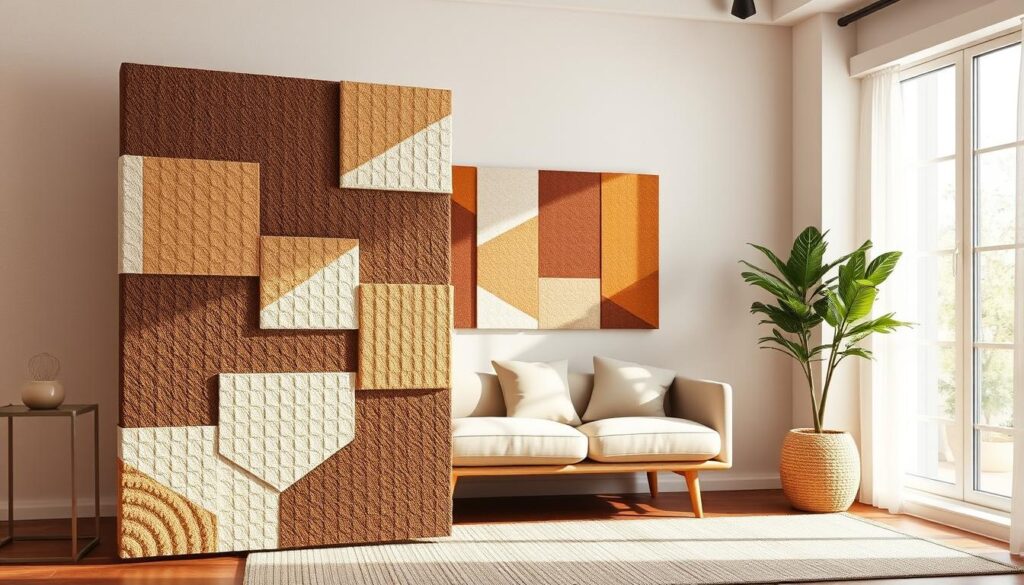
If you love DIY projects, making your own sound absorbing panel can be very rewarding. You get to pick the materials and make sure it fits your home perfectly. Plus, it’s often cheaper than buying pre-made panels.
Materials Needed
To start, you’ll need some basic items. High-density mineral wool or rigid fiberglass insulation is key for sound absorption. You’ll also need 1×4 lumber for the frame, breathable fabric for the cover, and heavy-duty staples.
Don’t forget to get mounting hardware like Z-clips or heavy-duty picture wire. This will help you hang your acoustic wall panel securely. Quality materials are important to make sure your panels work as well as those in recording studios.
Step-by-Step Instructions
First, build a rectangular frame from your lumber. Make sure it’s the right size for your insulation boards. Once it’s square, put the insulation inside and hold it in place with wire or netting.
Then, wrap the frame with your chosen fabric, pulling it tight to avoid wrinkles. Staple it to the back of the wood. After that, attach your mounting hardware to the back of the frame. Make sure to measure your wall space right before hanging your sound absorbing panel. This simple step will give you a professional-looking acoustic wall panel that cuts down on echo.
| Feature | DIY Panels | Pre-made Panels |
|---|---|---|
| Cost | Low to Moderate | High |
| Customization | High | Limited |
| Assembly Time | 2-4 Hours | None |
| Performance | Professional | Professional |
Enhancing Home Theater Experience
If you want your movies to sound like they do in a cinema, you need to think about sound waves in your room. Many people spend a lot on speakers but forget about the room itself. By controlling sound reflections, we can turn any room into a top-notch sound space.
Reducing Echo and Reverberation
Hard surfaces like walls and floors reflect sound like mirrors. This creates a mix of sounds that can be confusing. A good soundproof panel absorbs these reflections, making your sound clearer.
It’s important to place these panels right. Focus on your side walls and the area behind your seats. A noise reduction panel in these spots helps you hear only the direct sound from your speakers.
“The difference between a good home theater and a great one is not just the equipment, but how the room handles the energy of the sound.”
Improving Voice Clarity
Ever had trouble hearing dialogue in loud scenes? This happens when background sounds cover up the voices. Acoustic treatments help clean up the sound, making voices clear.
With the right treatment, you don’t need to turn the volume up to hear what’s being said. This makes watching movies more comfortable and keeps you fully into the story. Here’s how treatment changes your viewing experience.
| Feature | Untreated Room | Treated Room |
|---|---|---|
| Audio Clarity | Muffled and muddy | Crisp and defined |
| Echo Levels | High and distracting | Minimal and controlled |
| Dialogue | Hard to distinguish | Clear and natural |
| Immersion | Low | High |
Getting a reliable soundproof panel or noise reduction panel is key to a better home theater. Once you see the difference in sound quality, you’ll never go back to untreated rooms.
Acoustic Treatment for Offices
Too much background noise in today’s offices can really hurt how well people work. Open-plan offices let sound move around easily. This makes it hard for people to focus and work well.
Boosting Productivity Through Sound Control
Using soundproof panels helps teams control the sounds around them. By placing these panels in key spots, we can block out the constant noise. This includes the sounds of people talking and machines humming.
This control is key for deep work. When people can’t hear distractions, they can do complex tasks better.
Creating a Comfortable Workspace
A comfortable workspace is also important for keeping employees happy. A good noise reduction panel makes rooms quieter and less stressful.
We think a quieter office helps with talking during meetings and private chats. By adding a soundproof panel, companies show they care about their employees’ well-being.
In the end, picking the right noise reduction panel makes a busy office a calm place. This investment in sound quality boosts both happiness and work efficiency.
Acoustic Panels for Music Studios
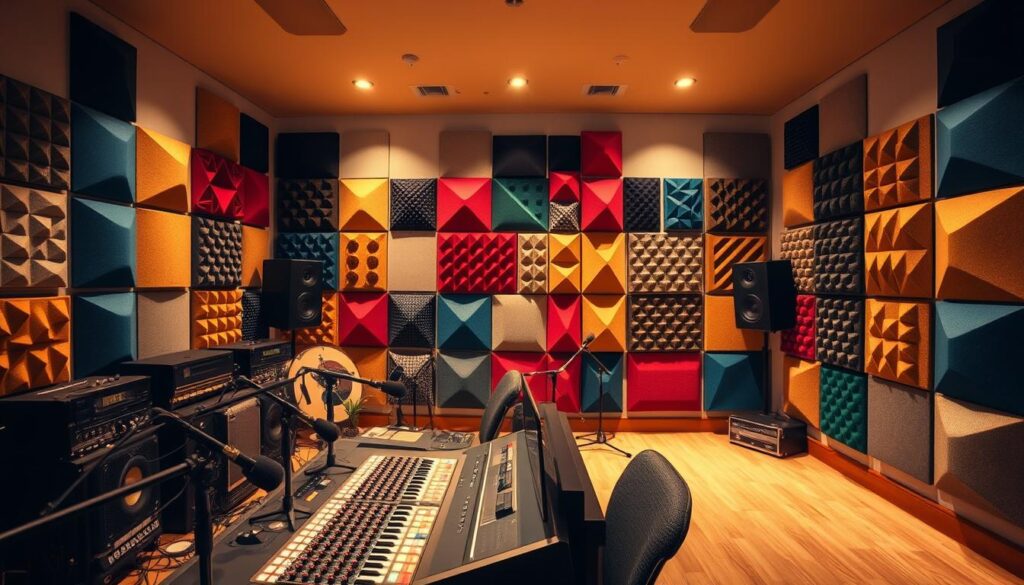
We know that a world-class recording needs the right acoustics. To get clear audio, we must stop sound waves from bouncing off hard surfaces. This keeps the final track clean.
Using a top-notch sound absorption panel helps a lot. It stops unwanted reflections. This makes the room sound “dead,” perfect for mixing and recording.
Optimal Sound Quality for Recording
Getting the whole frequency spectrum right is key. We need thick panels and bass traps for low-end buildup in corners.
“The goal of any serious studio is to remove the room from the recording, leaving only the pure performance of the artist.”
An acoustic foam panel in key spots tightens the stereo image. Adding a sound dampening panel captures every frequency with accuracy.
| Panel Type | Primary Function | Best Placement |
|---|---|---|
| Bass Traps | Low-end control | Room corners |
| Broadband Absorber | Mid/High frequencies | First reflection points |
| Diffusion Panel | Sound scattering | Rear wall |
Insulation Against Outside Noise
Recording sessions can be ruined by outside sounds. A standard sound absorption panel is great for internal control. But we also need mass and density to block outside noise.
A heavy-duty sound dampening panel on shared walls blocks noise. Adding an acoustic foam panel around doors and windows seals the space. This keeps our recordings professional and free from background noise.
Customizable Acoustic Panel Designs
We think noise reduction should be as pleasing to the eye as it is to the ear. Gone are the days of ugly, bulky acoustic treatments. Today, you can find a stunning variety of aesthetic choices. This means you can add a soundproof panel to your space without ruining its look.
Color and Fabric Options
Modern makers know your space shows off your style. You can pick from many colors, from calm tones that match your walls to bright ones that stand out. Plus, many come with premium fabrics for a fancy look.
These materials look great and last long. When picking a noise reduction panel, think about these design perks:
- Textured weaves that make your walls interesting.
- Custom printed fabrics with cool patterns or art.
- Acoustically transparent materials that look like regular wall art but work.
Shapes and Sizes Available
The shape of your acoustic treatment can change a room’s feel. You don’t have to stick to squares anymore. Now, you can find panels in shapes like circles or triangles to make unique patterns on your walls.
Using different sizes lets you create a layout that fits your walls perfectly. A noise reduction panel in various sizes adds both sound control and style. By placing them thoughtfully, your soundproof panel setup will look good and work well.
Maintenance of Acoustic Panels
Keeping your acoustic treatment in top shape is key for both sound quality and looks. Caring for your gear means your space stays both useful and nice to look at. Regular upkeep stops dust and dirt from harming your sound over time.
Cleaning Techniques
Most fabric panels are easy to clean. Use a soft vacuum brush to gently sweep away dust from your sound absorbing panel. Move slowly and lightly to avoid damaging the fabric or frame.
For small stains, a damp cloth with mild soap works well. Test a small area first to make sure the color doesn’t run. Stay away from strong cleaners and too much water, as they can harm the inside materials.
“Quality maintenance is the bridge between a temporary fix and a permanent solution for your room’s audio environment.”
Lifespan and Replacement Tips
Materials will eventually wear out, even with good care. Check your panels yearly for sagging, warped frames, or frayed fabric. If sound quality drops or echoes increase, it might be time for new panels.
When deciding to replace your sound absorbing panel, think about these points:
- Visible Damage: Tears or deep stains that can’t be cleaned.
- Structural Integrity: Frames that no longer fit snugly against the wall.
- Performance Shifts: Changes in room use that need different panel types.
Replacing old parts keeps your acoustic treatment working well. Being proactive with these steps will keep your space sounding great for years.
Conclusion: Choosing the Best Acoustic Panel
Choosing the right acoustic panel means knowing what you want for your room. We think mixing material density with your style goals is key. This mix works best for any space.
Assessing Your Unique Requirements
Every room has its own sound challenges. You might need to control echoes or bass buildup. High-quality panels from brands like Auralex Acoustics or Primacoustic can help.
Making an Informed Decision
Investing in sound quality makes your space more comfortable and professional. Check your NRC ratings and space before buying. This ensures your panel meets your needs for years.
Start by reaching out to local suppliers or looking online. Begin your journey to better sound today.