
 Zoe Nora
Did you know that nearly 30% of home audio signal loss is due to bad wire connections? Many people spend a lot on top-notch speakers but still get poor sound quality. We think your entertainment system should be better than having messy, exposed copper wires.
Using a banana plug is the best way to get a clean, steady signal. These connectors make it easy to connect your cables. You can switch components without worrying about frayed wires. Achieving a professional-grade setup is now easier than ever for everyone.
In this guide, we show how these reliable tools can enhance your sound experience. By following our expert tips, you’ll make a connection that lasts for years. Let us guide you to make your home audio setup better and more efficient.
Key Takeaways
- Understand how to reduce signal loss in your home audio system.
- Learn the primary benefits of using high-quality connectors.
- Discover how to eliminate messy, exposed speaker wires.
- Improve the longevity and reliability of your audio connections.
- Follow simple steps to achieve a professional-grade sound setup.
What is a Banana Plug?
Learning about banana plugs is key to top-notch audio. They are crucial audio equipment accessories that connect your amplifier to speakers.
They ensure your signal path stays clear. This design is a must for anyone who cares about sound quality.
Definition and Purpose
A banana plug has a unique cylindrical shape. It fits perfectly into a banana jack, making a strong electrical connection.
These audio connectors join speaker wires to devices easily. They don’t need soldering or complex tools. They keep the electricity flow steady and clear of interference.
Common Applications
These connectors are a big deal in high-fidelity home theaters and recording studios. They’re also used in labs for circuit tests because they’re easy to use.
They’re great speaker connectors for many audio setups. They work well with everything from high-end receivers to bookshelf speakers. They offer a standard solution for your wiring.
Advantages of Using Banana Plugs
Using banana plugs means your connections stay stable. They hold tight, unlike bare wire connections that can come loose.
They also stop wire fraying, which can cause short circuits or bad sound. With these speaker connectors, you can change your audio gear without harming your cables.
Types of Banana Plugs
We categorize various cable connectors to help you find the right one for your home theater. Most hardware today uses a 4mm diameter. This is the standard for reliable electrical connectors in home audio.
Standard Banana Plugs
The standard banana plug is a top pick for many. They have a simple design that fits well into binding posts. This makes them great for keeping the signal strong without needing special tools.
Stackable Banana Plugs
For projects needing many connections to one spot, stackable plugs are perfect. These electrical connectors let you connect one cable to another. This is great for saving space in crowded areas.
Right Angle Banana Plugs
Right angle plugs are made for tight spots where cables might bend. They keep the wire straight, reducing strain on the terminal. This keeps your connection strong over time.
Specialty Banana Plugs
Specialty plugs are for unique wiring needs. They might have locking features or be made for high-current use. Picking the right banana plug ensures your system works its best.
| Plug Type | Primary Benefit | Best Use Case |
|---|---|---|
| Standard | Ease of use | General home audio |
| Stackable | Daisy-chaining | Complex wiring setups |
| Right Angle | Space saving | Tight equipment cabinets |
| Specialty | Enhanced grip | High-performance systems |
How to Choose the Right Banana Plug
Starting with audio hardware means picking the right banana plug. The right connector keeps your signal clear and protects your gear from shorts.
Factors to Consider
Think about how permanent you want your connections to be. Some like quick setups, others want a strong, lasting bond.
“Quality is never an accident; it is always the result of high intention, sincere effort, intelligent direction and skillful execution.”
Also, check the material of the connector. Gold-plated ones prevent corrosion, keeping your signal clear in damp places.
Compatibility with Different Devices
Before buying, check your amplifier or speaker posts. Make sure the banana plug fits well without forcing it.
Some devices need specific plug lengths. Our guide to banana plug types can help find the right one for your setup.
Price Range and Quality
Finding the right balance between cost and quality is key for great sound. Even affordable plugs can work well for home use.
- Screw-on plugs: Easy and cheap, great for beginners or those who change their setup often.
- Compression models: Tight grip, perfect for permanent use.
- Solder-type plugs: Best for a strong connection but need some skill to install.
The best banana plug is one that works well with your audio system. By considering these points, you can choose connectors that will last for years.
How to Install a Banana Plug
Getting a top-notch audio connection is simpler than you might think with a banana plug. By installing these connectors right, your audio signals will flow smoothly through your system. This means no interruptions or signal loss.
Tools Required
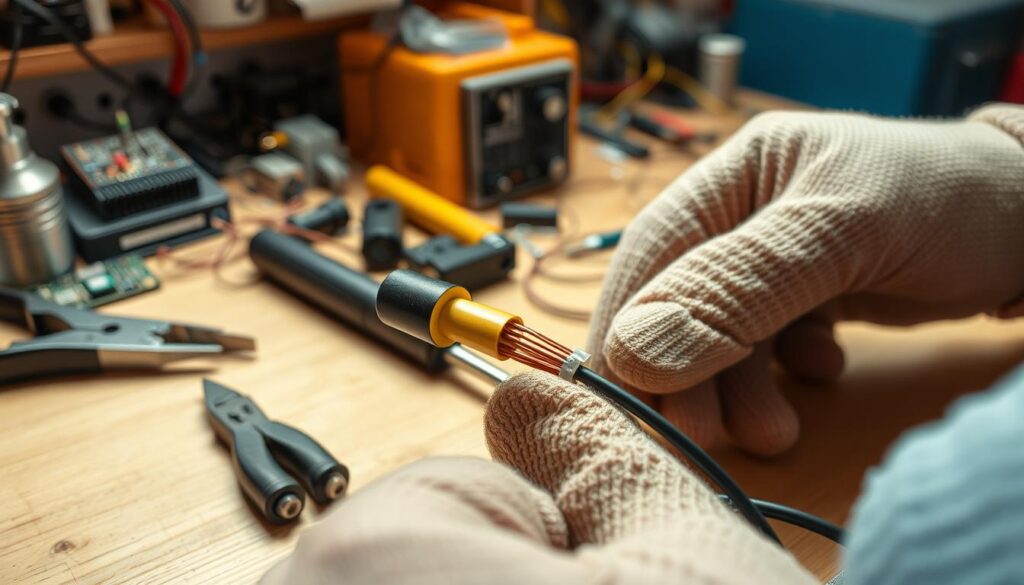
Start by getting the right tools for a smooth installation. You’ll need wire cutters or a wire stripper for your cables.
Also, have a small flat-head screwdriver ready if you’re using screw-type connectors. This keeps your workspace clean and avoids frustration while working on your audio equipment.
Step-by-Step Installation Process
First, strip about 1/2 inch of insulation from your speaker wire. This exposes the copper strands. Then, twist these strands together to keep them bundled and prevent fraying.
Next, unscrew the banana plug housing and slide the wire through. Put the exposed copper wire into the center hole and tighten the screws to secure it.
Lastly, screw the outer casing back onto the connector body. Make sure the connection is tight and no wire strands are outside the metal housing.
Safety Tips to Keep in Mind
Always turn off your amplifier or receiver before working on speaker connections. This step prevents short circuits that could harm your electronics.
Double-check that the positive and negative wires are correctly matched. Proper polarity is essential for the best sound quality in your room.
| Feature | Screw-Type Plug | Solder-Type Plug |
|---|---|---|
| Installation Ease | Very High | Moderate |
| Tool Requirement | Screwdriver | Soldering Iron |
| Reusability | Excellent | Low |
| Connection Strength | Strong | Permanent |
Using Banana Plugs in Audio Equipment
Upgrading your speaker connections with a reliable banana plug ensures a professional and secure signal path for your home theater. The quality of your audio experience greatly depends on these small but essential components.
Benefits for Sound Quality
High-quality audio connectors significantly reduce signal degradation. They provide a tight, consistent contact point. This ensures your music and movies sound exactly as the creators intended.
Also, a banana plug prevents short circuits by keeping wire strands from fraying. This keeps your wires neat, avoiding interference from loose or messy connections.
Compatibility with Speaker Wires
These plugs are versatile audio wiring accessories that work with many gauge sizes. They are a universal solution for your speaker connectors, whether you use thick, high-end cables or standard wiring.
They make it easy to move or upgrade your gear. You can quickly disconnect and reconnect your speakers without the hassle of untwisting bare wires or dealing with stripped insulation.
Tips for Best Performance
To keep your signal integrity at its best, check your connections often. Make sure the metal surfaces are clean and free of oxidation. This keeps your audio equipment accessories performing at their peak.
Always ensure the banana plug is fully inserted into the binding post for a snug fit. A loose connection can lead to intermittent sound or poor audio quality over time.
| Connection Type | Ease of Use | Signal Stability | Durability |
|---|---|---|---|
| Banana Plug | High | Excellent | High |
| Bare Wire | Low | Moderate | Low |
| Spade Lug | Moderate | High | Moderate |
Banana Plugs for DIY Projects
Building your own audio system lets you customize it like never before. You get to pick every part, making sure it fits your space perfectly. This way, you turn a basic setup into a top-notch system that meets your exact needs.
Applications in Electronics
DIY fans often build complex speaker systems. They pick the right cable lengths to avoid mess. This makes your entertainment area tidy and organized.
Whether it’s a home theater or a listening room, a good banana plug is key. It ensures your sound is clear and true.
How to Create Your Own Connections
Making your own connections is easy with a few tools. First, measure and cut your cable to the right length. Then, strip the insulation and attach it to your cable connectors with a screwdriver or crimping tool.
“The beauty of DIY audio lies in the ability to refine every detail, turning a collection of parts into a cohesive, high-performance system.”
Precision is key when you’re done. Make sure no wire strands touch other terminals to avoid short circuits. A well-done banana plug will fit snugly, keeping your signal strong.
Cost-Effective Solutions
Many think pro audio means expensive cables. But buying wire and cable connectors in bulk is cheaper. This way, you can spend more on better parts and still look professional.
Investing in good audio wiring accessories means less need for replacements. This smart choice keeps your system working well and looking great for years. Building your own connections is a wise choice for any serious hobbyist.
Troubleshooting Common Issues
Even the most advanced audio setups can face frustrating problems. When sound quality drops or cuts out, it’s often a banana plug issue. Being proactive helps keep audio signals strong in our homes.
Identifying Connection Problems
Common signs include intermittent sound or audio loss in one channel. If moving the wire causes sound to crackle or drop, it’s a sign of a bad connection. This usually means the electrical connectors aren’t making good contact.
“A secure connection is the foundation of every great listening experience, ensuring that every note reaches your ears without interference.”
Tips for Better Contact
Loose plugs need tightening first. Modern plugs have a mechanism to expand and fit snugly. Check these often to keep them tight.
Keeping your equipment clean is also key. Dust or oxidation can cause resistance. A soft, dry cloth can clean the contact points and improve performance.
| Issue | Common Cause | Recommended Fix |
|---|---|---|
| Intermittent Audio | Loose physical fit | Tighten the plug tip |
| Signal Distortion | Oxidation or dirt | Clean with contact cleaner |
| No Sound | Disconnected wire | Re-terminate the cable |
When to Replace Your Banana Plugs
Sometimes, a banana plug needs to be replaced. Look for cracks or if the spring tension is weak. Worn-out electrical connectors can harm your equipment.
Replace any damaged parts to keep your system working well. High-quality replacements ensure clear sound. Regular checks prevent big problems later.
Maintaining Banana Plugs
Keeping your audio gear in top shape starts with simple care. These components are tough, but they need regular checks to keep your audio wiring accessories sounding great. This ensures your sound quality stays high without any hitches.
Cleaning and Care
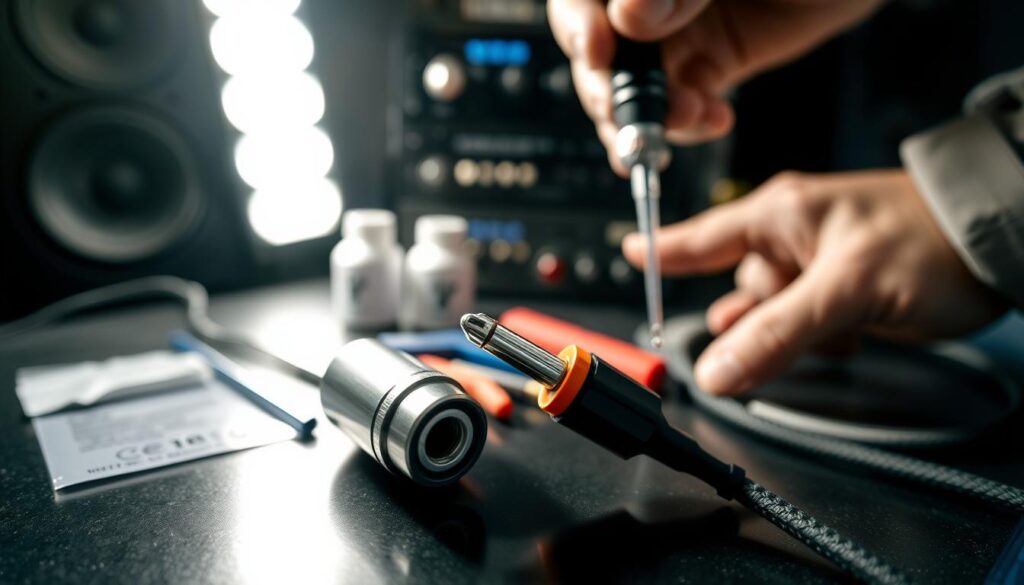
Dust and tiny particles can build up on your connectors over time. This can slow down your signal quality. Use a top-notch contact cleaner and a soft cloth to clean the metal parts.
Never use abrasive materials or strong chemicals that might damage the plating. Keeping the contacts clean helps your audio signal flow smoothly.
Signs of Wear and Tear
Regularly check your equipment for signs of wear. If you see any of these, it might be time for a new one:
- Visible oxidation or green corrosion on the metal surface.
- A loose fit that causes the plug to wiggle inside the terminal.
- Cracked or brittle insulation near the base of the connector.
- Intermittent sound drops when the cable is moved slightly.
“A reliable connection is the foundation of any great audio system; neglecting the small parts often leads to the biggest headaches.”
Best Practices for Longevity
Environmental factors affect how well your gear lasts. For example, temperature changes can make metal expand and contract. This can loosen the connection between the banana plug and the terminal.
Check your connections every few months to avoid signal loss. Make sure the set screws are tight and the spring tension is firm. By doing this, you can keep your system running at its best for many years.
Comparing Banana Plugs with Other Connectors
Choosing the right audio connectors is key for a top-notch sound system. The type of connector affects both ease of use and signal quality. Knowing how different connectors perform helps build a reliable setup.
Banana Plugs vs. Spade Connectors
Spade connectors are great for a tight, secure connection. They’re best for those who don’t move their gear often. They resist vibrations well.
Banana plugs are easier to use. They don’t need to be tightened like spades. This makes them perfect for those who change their setup often.
Banana Plugs vs. Bare Wires
Bare wires are cheap but have downsides. Copper can oxidize, affecting signal quality. You might need to trim and re-strip the wire.
Banana plugs offer a clean look and keep cables organized. They prevent wire shorts, ensuring safety behind your receiver.
Choosing the Best Connector for Your Needs
Choosing the right speaker connectors depends on your setup and lifestyle. Consider these factors before buying:
- Frequency of changes: For frequent moves, go with banana plugs.
- Binding post type: Make sure your gear matches the connectors you choose.
- Aesthetic goals: For a neat look, specialized plugs beat bare wire.
- Environmental factors: In humid areas, gold-plated connectors prevent corrosion better than copper.
The best audio connectors offer a stable signal path and fit your maintenance style. High-quality speaker connectors keep your system working well and looking good for years.
Frequently Asked Questions
We get a lot of questions about using these audio parts safely and correctly. Many people want to make sure they’re using the right electrical connectors for their home theaters or stereo systems.
Can Banana Plugs Carry High Voltage?
A banana plug is made for low-voltage audio signals. It’s not for high-voltage power or household electricity.
Using them for high-voltage can cause short circuits or damage your equipment. Always use them for their intended purpose in audio and low-power electronics.
Are Banana Plugs Safe for Home Use?
Yes, they are safe for most home audio setups. They offer a secure and reliable connection that prevents wire fraying or shorting.
They are fully insulated in many designs, adding extra protection. You can enjoy your music safely and with confidence.
What Is the Lifespan of a Banana Plug?
The lifespan of these electrical connectors depends on the materials and how often you use them. High-quality gold-plated plugs can last many years without losing signal quality.
If you see oxidation or loose contacts, it’s time to clean or replace them. With the right care, your connections will work well for your audio equipment’s whole life.
Additional Resources
Building a top-notch sound system needs focus on every detail. We suggest checking out these professional resources. They can help you fine-tune your setup and make sure your audio gear works its best.
Top Industry Brands
Trusted brands are key to a solid connection. Companies like AudioQuest, Sewell Direct, and Monoprice make cables and connectors for HiFi surround sound. They stick to high quality for every banana plug they make.
Where to Purchase
For top components, check out places like Crutchfield or Sweetwater. They have big collections of audio accessories for all budgets. You can also find a lot of options on Amazon for your project needs.
Learning Through Visual Guides
Watching how to install can make things clearer for newbies. YouTube channels like Audioholics have great video tutorials on cable management and connections. Watching these can help you get better at using banana plugs for your home theater or studio.