
 Zoe Nora
Did you know that 80% of moviegoers say audio quality matters more than picture quality? The real magic of movies is in the sound. Upgrading your home can turn any room into a private cinema.
The right surround sound speakers can change how you see every scene. You might love Dolby Atmos bars for depth, bookshelf units for precision, or a full system for power. Our guide has options for every space, making your movies, sports, and games feel bigger than life. We’ll help you understand the tech so you can buy and install with confidence.
Key Takeaways
- Audio quality is a primary driver of emotional engagement in home cinema.
- Modern systems offer flexible solutions for various room sizes and layouts.
- Dolby Atmos technology provides a vertical dimension to your home audio.
- Bookshelf units offer a compact alternative for smaller viewing areas.
- Proper installation is essential to maximize the performance of your new gear.
What Are Surround Sound Speakers?
Ever wondered how movies sound so real? The secret is surround sound speakers. They go beyond the simple left-and-right sound field. By placing speakers around you, they create a three-dimensional soundstage that puts you right in the action.
The Basics of Surround Sound
A surround sound system uses many audio channels to create sound from different directions. Most homes use a 5.1 setup, with five speakers and one subwoofer. This setup balances dialogue, effects, and music perfectly.
It aims to mimic how we hear sounds in real life. When a helicopter appears on screen, the sound moves from one speaker to another. This gives a truly immersive experience that TV speakers can’t match.
How They Work Together
The system’s components work together to handle complex soundtracks. An AV receiver decodes the audio and sends it to each speaker. This way, each channel can pinpoint where a sound should come from.
Together, these surround sound speakers fill your listening space. The front speakers handle the main action, while the sides and rears add background noise. This creates a unified sound bubble that matches the movie’s visuals.
Key Components Explained
Let’s look at what each speaker does:
- Center Channel: This speaker is key for clear dialogue and vocals.
- Front Left and Right: These speakers carry the main music and sound effects.
- Surround Speakers: These add depth and immersion, placed on the sides or rear.
- Subwoofer: This unit handles low sounds, adding a deep, cinematic rumble to movies.
- Height Speakers: Found in newer setups, these speakers add a vertical dimension for a more realistic sound.
Benefits of Surround Sound Systems
Modern home theater surround sound speakers bring the theater to our couches. They go beyond simple stereo, creating a dynamic soundscape that surrounds us.
The main perk is placing sounds exactly where they should be in a room. This realism is unmatched by standard TV speakers.
Immersive Audio Experience
When watching films, we want to feel like we’re in the action. Directional audio effects make us hear a helicopter or rain with clarity.
This immersion keeps us hooked during quiet moments too. Clear dialogue ensures we catch every whisper, even with loud music.
Enhances Home Theater Setup
A dedicated system improves our living space’s look and feel. A powerful subwoofer adds deep, resonant bass we can feel in action scenes.
With high-quality speakers, our TV becomes a true cinema. Every movie night becomes a special event with this setup.
Perfect for Gaming
Gamers get a big boost from multi-channel audio. We can pinpoint an opponent’s footsteps or incoming fire before seeing them.
This competitive advantage makes gaming more exciting. Whether in open-world games or fast-paced shooters, the audio precision enhances every session.
Types of Surround Sound Speakers
Choosing the right surround sound speaker system can be tough. It depends on your room size and what you want to hear.
5.1 vs. 7.1 Surround Sound
The 5.1 system is common for home theaters. It has five speakers and one subwoofer. It’s good for most rooms.
For bigger spaces, a 7.1 system is better. It adds two more rear speakers. This makes sound move smoothly around the room.
Sound Bars vs. Speakers
Sound bars are popular for their size and ease of use. They fit well in small places or simple decor.
But, separate speakers give a better soundstage. They let you place each speaker for a deeper cinematic experience.
Wireless vs. Wired Options
Choosing between wireless and wired speakers is about convenience versus sound quality. Many like wireless surround sound speakers for their ease.
But, there are things to think about:
- Installation: Wireless is quicker to set up in finished rooms.
- Latency: Wired is best for no delay in sound.
- Power: Wired systems give more power to speakers.
Your choice should match your audio goals or your need for a clean space.
How to Choose the Right Surround Sound Speakers
We think making your home feel like a cinema is possible with the right steps. First, think about your space and what you want to hear. Planning well means your speakers will sound great in your home.
Consider Room Size and Layout
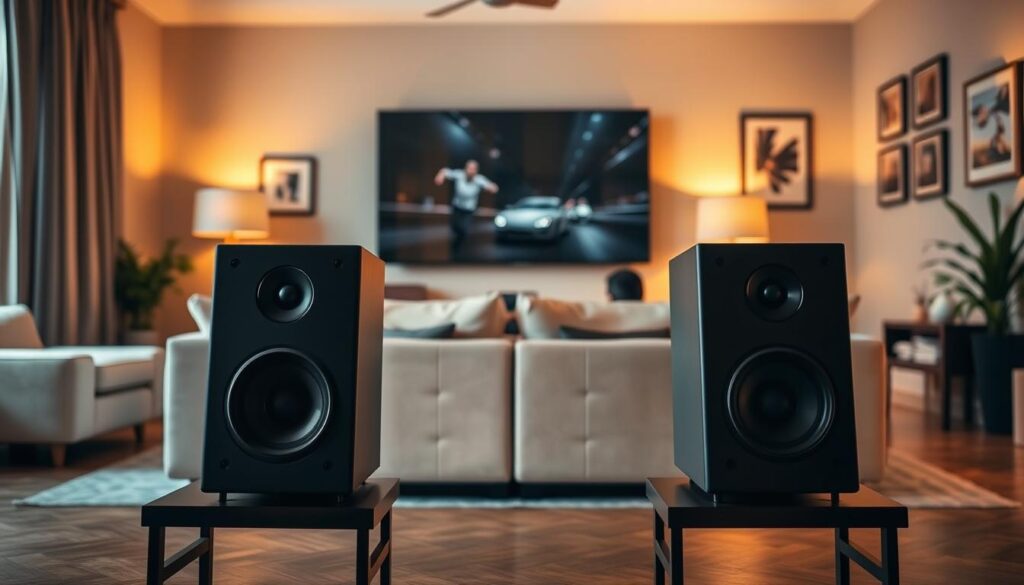
The size of your room affects how sound moves and sounds. Big rooms need strong speakers, while small ones do better with smaller ones. Make sure speakers are placed right for the best sound.
Walls and floors also change how sound sounds. Hard floors can echo, so you might need rugs or curtains. Putting your center channel and subwoofer right is key for a truly immersive movie experience.
Speaker Quality and Specifications
Look at the speakers’ sensitivity and how they handle sound. High sensitivity means they can get loud with less power. Choose how many channels you need based on your setup.
A good subwoofer adds deep bass. Make sure it works well with your other speakers. Check if it fits with your TV or projector to avoid problems later.
Price Range Considerations
Finding affordable surround sound speakers doesn’t mean you have to settle for less. Many brands offer good deals for beginners. Focus on what you really need to save money.
Soundbars are great for small rooms and are easy to set up. But, if you want to connect lots of things, a full system is better. Getting affordable surround sound speakers lets you build a system that can grow with you.
Best Surround Sound Speakers for Movies
We’ve picked out some top audio systems to make your movie nights better. Finding the best surround sound speakers depends on your room and what you value most. It’s not about finding one perfect system. Instead, look for ones that excel in clear dialogue and sound range.
Top Picks for Home Theaters
The Klipsch Reference Cinema System 5.1.4 is a top choice for a real movie feel. It has a Dolby Atmos setup that uses your ceiling for sound. This makes every sound in your favorite movies feel like it’s right above you.
For a dedicated space, check out high-end options from top audio brands. These systems offer better sound control, making audio move smoothly around your room.
Budget-Friendly Options
Looking for affordable surround sound speakers? A soundbar system is a great choice. The Vizio 2.1 Soundbar is perfect for small spaces. It’s a big upgrade from TV speakers without costing too much.
- Easy Installation: Most budget systems connect with a single HDMI or optical cable.
- Space-Saving Design: Ideal for rooms where floor space is limited.
- Improved Dialogue: Dedicated processing helps clarify speech in movies and shows.
Premium Choices for Audiophiles
The Bose Smart Ultra Soundbar is a favorite for those who want the best. It uses advanced tech to create a wide soundstage from a single unit. It’s a top pick for home theater surround sound speakers who value looks and ease of use.
Even though these premium bars are small, they can be expanded with wireless subwoofers or rear speakers. Investing in Surround sound speakers means your sound stays clear, even at loud volumes. The right choice is one that fits your home and your love for great sound.
Setting Up Your Surround Sound System
A top-notch surround sound speaker setup turns your living room into a home theater. The quality of your equipment is key, but how you arrange it matters most. Take your time to plan the room layout before setting up any mounts or cables.
Speaker Placement Tips
For a 5.1.2 setup, place your center channel speaker below or above your TV. This keeps dialogue clear and connected to the screen. Your front left and right speakers should be at ear level, angled slightly towards you.
Put your surround speakers to the sides or a bit behind you for a wide soundstage. For a 5.1.2 setup, mount height channels on the ceiling or high walls. This setup prevents sound overlap and ensures every sound effect hits hard.
Calibration and Tuning
After setting up your surround sound speaker system, calibrate it to your room’s acoustics. Modern receivers often come with a calibration microphone. This tool helps balance sound levels for each speaker.
“The secret to great sound is not just the equipment, but how well you tune it to the space you are in.”
After auto-calibration, you might need to tweak the bass response. If your subwoofer sounds muddy, adjust the crossover frequency. This fine-tuning creates a unified and professional sound environment.
Choosing the Right Receivers
The receiver is the heart of your setup, handling HDMI connections and signal processing. Make sure it supports the latest formats like Dolby Atmos. A quality receiver ensures clear sound, even during loud scenes.
- Check for enough HDMI 2.1 ports for high-resolution video.
- Verify that the power output matches your speaker impedance requirements.
- Look for built-in room correction software for easier setup.
Choosing a strong receiver lets you grow your surround sound speaker system later. Pick a model with enough channels for future upgrades.
Popular Surround Sound Brands
When looking for top-notch audio gear, it’s key to know what each big name offers. Don’t just focus on brand names. Look at the whole package, including how well it works with other stuff and the warranty it comes with. This is important when picking your surround sound speakers.
Bose: Innovation Meets Quality
Bose is known for making sleek, easy-to-use audio systems that fit right into today’s homes. They focus on smart soundbar features and wireless connections. This makes them great for those who want top sound quality without the hassle of tangled wires.
- Compact design that blends into any room decor.
- Advanced software for easy room calibration.
- Seamless integration with smart home ecosystems.
Sony: A Legacy of Audio Excellence
Sony is all about technical excellence and versatility. Their gear is a top pick for gamers and movie lovers. They need strong receiver connections to handle lots of high-definition inputs.
Choosing Sony means you get cutting-edge processing technology. Your surround sound speakers will give you clear, sharp sound during games or movies.
JBL: Robust Sound Options
JBL is all about delivering strong, theater-like sound that audiophiles love. Their products are known for durability and raw audio output. They’re a solid choice for any serious home theater setup.
| Brand | Primary Strength | Best For |
|---|---|---|
| Bose | Smart Features | Minimalist Setups |
| Sony | Connectivity | Gaming & Movies |
| JBL | Audio Power | Immersive Surround Sound Speakers |
The best brand for you depends on what you value most in sound. Try out these systems in person. See which one sounds best to you.
Common Issues with Surround Sound Speakers
Even the most advanced home theater systems can face technical problems. These issues can ruin your viewing experience. By looking at surround sound speaker reviews, we can find common problems and solutions to keep your sound clear.
Troubleshooting Audio Distortion
Audio distortion often comes from wrong receiver settings or pushed limits. If you hear crackling or muffled sound, check your crossover frequencies on the AV receiver. Make sure they match your speaker specs.
Weak bass is another common issue. It usually means your subwoofer is not placed right or its phase settings are off. Adjusting the distance settings in your receiver menu can fix these problems quickly. Also, make sure your cables are tight, as loose ones can cause poor sound quality.
Connectivity Problems and Solutions
Modern setups often use complex digital connections that can fail. If you have Bluetooth lip-sync delays, try resetting the connection or updating the firmware. Many surround sound speaker reviews say these software glitches are fixed with a quick reboot.
HDMI issues, like a lack of signal or handshake errors, are common in multi-device setups. Use high-speed, certified HDMI cables for stable data transmission. If a channel is silent, check your speaker wire mapping to make sure everything is connected right.
Maintenance Tips for Longevity
Keeping your equipment in good shape is key. Avoid areas with high humidity or moisture, as they can damage your gear over time. Regular dusting of the speaker cones and vents will prevent overheating and keep your system running well.
Don’t play your system at max volume for too long to avoid driver wear. By following these simple steps, you can make your hardware last longer. Looking at expert surround sound speaker reviews can also give you specific cleaning tips for your model.
Future Trends in Surround Sound Technology
Looking ahead, smart technology and spatial audio are changing how we listen. We’re moving from static audio to dynamic soundscapes that fit our rooms perfectly.
This change means everyone can enjoy a truly cinematic experience at home. No need for a professional studio. Technology is getting smarter, making it easier to enjoy the content, not the hardware.
Dolby Atmos and Beyond
Dolby Atmos has revolutionized home sound. It adds height channels for a three-dimensional audio bubble. This bubble moves around you with pinpoint accuracy.
Future updates will enhance this with advanced room-mapping software. This software lets speakers adjust automatically. They’ll reflect sound off walls and ceilings, just like a high-end theater.
Evolution of Wireless Technology
Wireless surround sound speakers have gotten much better. Now, they focus on low-latency connections. This keeps audio perfectly in sync with what you see on screen.
“The future of home audio lies in the seamless marriage of high-fidelity sound and effortless connectivity, removing the clutter of cables while maintaining sonic purity.”
Wireless systems are now more reliable. They use dedicated frequency bands to avoid interference. This ensures a high-quality, immersive listening experience.
Trends in Smart Home Integration
Modern audio systems are becoming the heart of smart homes. You can control your theater with voice commands or automated routines. These routines adjust lighting and volume for you.
This integration makes complex systems easy for everyone. As these technologies grow, we’ll see even better compatibility with streaming platforms and home devices.
| Feature | Traditional Systems | Future Smart Systems |
|---|---|---|
| Connectivity | Wired cables | Advanced wireless |
| Calibration | Manual setup | AI-driven auto-tuning |
| Control | Dedicated remotes | Voice and app integration |
| Audio Quality | Standard surround | Immersive spatial audio |
Conclusion: Elevate Your Movie Experience
Choosing the right audio gear changes how you watch every film. We think the best results come from balancing room size, channel setup, and budget. This approach makes your home theater the best it can be.
Smart Choices for Audio Quality
Starting with surround sound speakers for about $500 is a good first step. For those who want the best, spending tens of thousands on top-notch gear and room makeovers is possible. Look for speakers that offer clear dialogue and deep sound to get the most out of your money.
Planning for Long-Term Enjoyment
Choose systems that can grow with you as your needs change. Easy-to-use speakers mean everyone in your home can enjoy them without hassle. A smart investment leads to years of fun movie nights.