
 Zoe Nora
Did you know that about 70% of a movie’s sound comes from one unit? This key piece is the anchor for your entire audio setup. It keeps dialogue sharp and clear, even in loud scenes.
This piece is the heart of a good front stage. Without a top-notch center channel speaker, your home theater might sound off or unclear. We aim to guide you to the best center channel speaker for your room and style.
Looking to upgrade or start fresh? Our center channel speaker buying guide has got you covered. We look at how well it performs, its connections, and price. This way, you can choose wisely for your home.
Key Takeaways
- The middle unit handles the majority of movie dialogue and vocal clarity.
- Proper placement is essential for achieving a balanced soundstage.
- Consider your room dimensions before selecting a new audio component.
- Matching your equipment to existing gear improves overall system harmony.
- Budget-friendly options can still provide significant upgrades to your listening experience.
What is a Center Channel Speaker?
Many listeners often miss the most important speaker in their surround sound setup. The center channel speaker is key for your audio experience. It’s not just for music and ambient effects.
Definition and Purpose
This device is a front speaker made for dialogue and vocals in movies or TV shows. It makes voices sound like they’re coming from the actors on screen, not from the sides. This ensures a seamless transition of sound as objects move on your display.
Want to know more about the technical side? Check out what is a center channel and its acoustic engineering. It’s crucial for a balanced soundstage in any high-fidelity setup.
Importance in Home Theater Systems
In a 5.1 setup, the center speaker for home theater handles most of the vocal information. Without it, your system might struggle to keep dialogue clear during loud scenes or complex scores.
Using a top-notch center speaker for home theater keeps your audio crisp and clear. It ensures the sound stays locked to the screen, avoiding the “hollow” feeling from only left and right channels. Investing in this speaker can greatly improve your home cinema.
Key Features to Look For in a Center Channel Speaker
When searching for a center speaker with great sound quality, ignore the marketing. Many numbers don’t mean better sound in your home. Look for how they make dialogue clear and crisp.
Frequency Response
Many think a wide frequency range means better sound. But, a balanced response is key. You want voices to sound natural, not colored.
Pay attention to midrange frequencies for dialogue. A flat response here makes voices sound clear. Avoid extreme numbers that are beyond human hearing.
Sensitivity Rating
The sensitivity rating shows how loud a speaker gets from a certain power. A higher rating means it’s more efficient and needs less power. This is important if you have a small receiver or want to save energy.
If your amplifier is not powerful, choose a speaker with a sensitivity above 88dB. This ensures great sound quality even in loud scenes. Lower sensitivity speakers can sound strained without enough power.
Design and Build Quality
The speaker’s design and build affect the sound. Two-way MTM layouts can have a narrow sound area. This means sound quality drops if you’re not in the center.
For better sound everywhere, look for three-way designs. These separate the midrange driver for clearer sound across the room. Also, a sturdy cabinet reduces vibrations for clearer sound at high volumes.
Top Brands for Center Channel Speakers
Three names stand out in the market for their audio excellence. Choosing a center channel speaker from a well-known brand ensures better compatibility. This helps us find a system that meets our needs.
Klipsch
Klipsch is famous for its horn-loaded tweeter technology. This technology makes their speakers efficient and deliver dynamic sound. Many center channel speaker reviews praise their ability to project clear dialogue.
Polk Audio
Polk Audio offers a wide range of options for all listeners. Their speakers are easy to use and fit various budgets. If you want a top rated center channel speaker that’s affordable, Polk Audio is a great choice.
Yamaha
Yamaha aims for a natural sound that accurately reproduces audio. Their speakers are designed to work well with other speakers. We suggest Yamaha for those who value sonic accuracy and reliability.
| Brand | Primary Strength | Best For |
|---|---|---|
| Klipsch | High Efficiency | Large Home Theaters |
| Polk Audio | Value & Versatility | General Home Use |
| Yamaha | Natural Sound | Audiophile Accuracy |
The best choice depends on your room and preferences. Reading center channel speaker reviews helps understand each brand’s strengths. This makes finding a top rated center channel speaker easier.
Benefits of a Quality Center Channel Speaker
A good center channel speaker is key to an immersive movie experience. It keeps the sound focused on the screen, unlike left and right speakers. A center speaker for home theater ensures that key sounds are right where they should be.
Enhanced Dialogue Clarity
A dedicated center speaker makes every word clear, even in loud scenes. A center speaker with great sound quality keeps dialogue clear, even when music or effects are loud. This means you can watch movies at a lower volume and still hear what’s being said.
Improved Surround Sound Experience
A top-notch center channel speaker makes sound move smoothly across your room. When a car moves on screen, the sound moves with it, creating a seamless experience. Without it, the sound can feel off or have a “hole” in the middle.
Versatility in Usage
Movies use the center channel for dialogue, but it’s also great for music. In stereo setups, vocals are split between speakers. But, modern receivers let you use the center for music, making it sound richer and more balanced.
| Feature | Standard Speaker | Quality Center Speaker |
|---|---|---|
| Dialogue Focus | Diffuse/Wide | Pinpoint Accuracy |
| Soundstage | Limited | Seamless Integration |
| Volume Control | Requires High Gain | Clear at Low Levels |
| Primary Use | General Audio | Cinematic Vocal Clarity |
Getting a center speaker with great sound quality is a smart upgrade for your home theater. It moves your audio from simple stereo to a professional-grade experience. Your audio will be as clear as your picture.
How to Choose the Best Center Channel Speaker
Finding the perfect center channel speaker is about matching your room’s sound with what you like to hear. It’s important to keep dialogue clear and the sound immersive. This center channel speaker buying guide will help you understand the technical stuff to find the right one for your home.
Room Size Considerations
The size of your room affects how sound reaches you. Bigger rooms need speakers that can handle more power. The distance from your seat also matters, as it affects the sound quality.
Think about where your TV is when picking a speaker. If it’s low, you might need a smaller speaker. But in larger rooms, you can choose bigger speakers. Always check the space before buying.
Matching with Other Speakers
To get a smooth sound, your center speaker should match your left and right speakers. They should have the same materials and sound. This makes the sound move smoothly across the screen.
Using three identical speakers is the best for a consistent sound. If you can’t do that, choose a speaker from the same line as your main speakers. This helps keep the sound cohesive.
Listening Habits
What you usually watch or listen to should guide your speaker choice. If you like loud movies, get a speaker that can handle high volumes. For quiet TV shows, look for one that’s great at clear dialogue.
Consider what you watch most. A good speaker should have clear highs and deep lows. The best center channel speaker is one that fits your lifestyle and enhances your favorite shows and movies.
Budget-Friendly Center Channel Speaker Options
Finding an affordable center channel speaker is a smart move to enhance your movie nights. You don’t have to spend a lot to get clear dialogue. Many entry-level systems work great with the right affordable parts.
Affordable Models Worth Considering
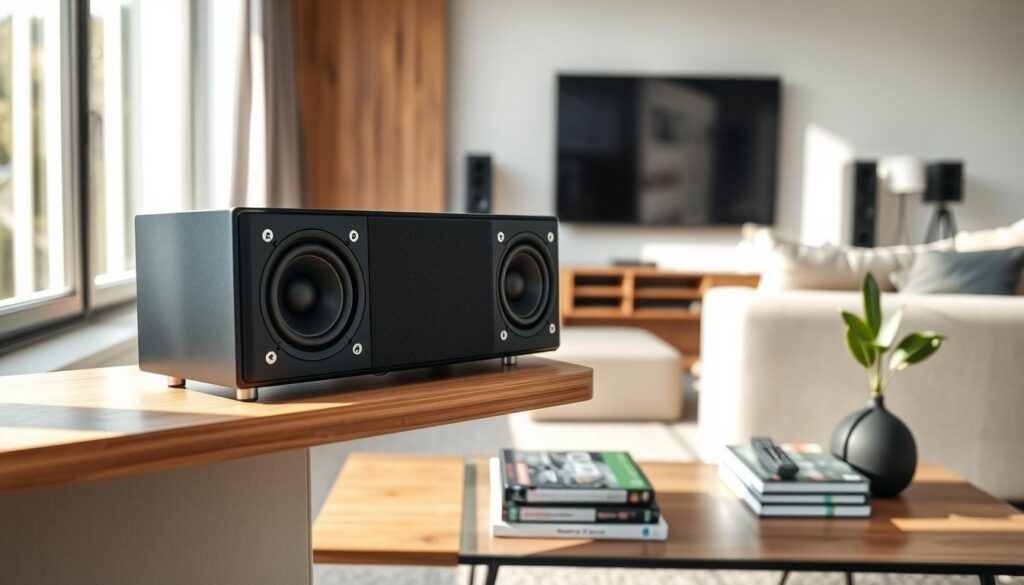
Looking at center channel speaker reviews, some models really stand out. The Micca MB42X-C G2 is great for small rooms. It has a balanced sound that’s perfect for voices.
The Dayton Audio Classic C40 is another good choice. It’s built well and sounds good. If you want a known brand, the Sony SS-CS8M2 is a top pick. It works well with many receivers and fits in tight spaces.
Best Value for Money Speakers
Finding the best center channel speaker for your budget means looking beyond price. You need to think about the whole system cost. A good receiver is key to clear sound, whether it’s loud or quiet.
The table below compares these budget-friendly options. It helps you choose the right one for your home theater:
| Model | Driver Configuration | Best Feature | Receiver Requirement |
|---|---|---|---|
| Micca MB42X-C G2 | Dual 4″ Woofers | Compact Size | Standard Entry-Level |
| Dayton Audio C40 | Dual 4″ Woofers | Build Quality | Standard Entry-Level |
| Sony SS-CS8M2 | Dual 4″ Woofers | Dialogue Clarity | Standard Entry-Level |
The best center channel speaker is one that fits your budget and room’s sound needs. By choosing these reliable models, you can have a theater-like experience without breaking the bank.
Premium Center Channel Speakers for Audiophiles
For those who demand nothing less than sonic perfection, premium center channel speakers offer an unparalleled listening experience. When you move into the high-end market, you are not just buying a speaker; you are investing in precision engineering designed to anchor your entire soundstage. These models are frequently cited in center channel speaker reviews as the gold standard for home cinema enthusiasts.
High-End Options to Consider
Several manufacturers stand out when searching for a top rated center channel speaker. The SVS Prime Center and the more advanced SVS Ultra Evolution Center provide incredible dynamics that bring movies to life. If you prefer a different sonic signature, the KEF Q6 Meta and KEF R2 Meta utilize unique driver technology to create a center speaker with great sound quality that remains consistent across a wide seating area.
These speakers are designed for listeners who refuse to compromise on clarity. By choosing a best center channel speaker from these lineups, you ensure that every whisper and explosion is rendered with absolute accuracy. They represent the pinnacle of current acoustic design for the home.
Features that Justify the Price
The jump in price for these premium units is backed by sophisticated internal components. Most of these models feature a three-way architecture, which separates the midrange frequencies from the bass and treble. This design choice prevents distortion and allows for a much more natural vocal reproduction.
Further, these speakers utilize high-quality crossovers and heavily braced cabinets to eliminate unwanted vibrations. These features ensure that the sound remains clean even at high volumes. The following table highlights the key differences between these elite models:
| Model | Architecture | Primary Benefit | Price Range |
|---|---|---|---|
| SVS Prime Center | 3-Way | Dynamic Impact | $449.99 |
| SVS Ultra Evolution | 3-Way | Refined Imaging | $799.99 |
| KEF Q6 Meta | 2.5-Way | Wide Dispersion | $799.99 |
| KEF R2 Meta | 3-Way | Audiophile Clarity | $1,399.99 |
Ultimately, selecting a top rated center channel speaker is about finding the right balance for your specific room. Whether you prioritize the raw power of SVS or the detailed imaging of KEF, these premium options deliver a transformative experience. They are the cornerstone of any serious home theater setup.
Setting Up Your Center Channel Speaker
After picking your audio gear, it’s time to set it up right. This ensures your center channel speaker sends clear dialogue straight to your ears.
Placement Tips
For the best sound, put your speaker above or below your TV. It must be centered for a balanced sound. If it’s on a shelf, make sure it’s stable to avoid sound distortion.
Face the speaker towards where you sit. If it’s low, use a wedge to tilt it up. Don’t block the speakers with furniture or decorations, as it harms the sound quality of your center speaker for home theater.
With an acoustically transparent screen, you can hide the speaker behind it. But for regular screens, keep the speaker out of the way. A clear view between the drivers and listeners is key for great sound.
Connection Options
How you connect your gear depends on what you have. Most passive speakers need a good speaker wire to an AV receiver. This lets the receiver control the sound for your whole system.
For powered soundbars, you might use HDMI ARC, optical cables, or Bluetooth. Make sure your center channel speaker fits with your current setup for a flawless connection.
When setting up your center speaker for home theater, adjust the levels through your receiver. This makes sure dialogue is clear, even during loud scenes. Getting this right is key for a great viewing experience.
Common Issues with Center Channel Speakers
Even the best home theater systems can sometimes have problems. These issues can ruin your movie nights. Finding these problems early is key to keeping your center speaker with great sound quality working well.
Distortion Problems
Distortion or muffled dialogue at high volumes often comes from the receiver’s power or speaker placement. MTM speakers can have horizontal lobing, causing uneven sound for those not in the center.
To fix this, make sure your speaker is aimed at ear level. If distortion continues, check the crossover settings on your receiver. Setting it too low can make the speaker handle bass it’s not meant for, leading to audible strain.
Connectivity Troubleshooting
When you get silence or hums, follow a step-by-step approach. Check your center channel speaker buying guide to ensure cables are tight and polarity is correct. Swapping positive and negative wires can cause sound to thin out.
Next, check your receiver’s input and HDMI-ARC settings. Sometimes, the source is set to stereo, ignoring the center channel. Make sure your receiver is set for surround sound formats like Dolby Digital or DTS.
Lastly, adjust the power levels for the center channel in your receiver’s menu. If it’s too low, dialogue will be lost under music and effects. Adjusting these settings is a crucial part of any comprehensive center channel speaker buying guide.
Maintenance Tips for Longevity
Keeping your home theater gear in top shape is key for great movie nights. A little routine care can protect your center channel speaker from damage. This way, it stays in great condition for a long time.
Regular Cleaning
Dust is a big enemy of audio equipment. Use a soft, dry microfiber cloth to clean your center channel speaker often. This keeps it looking and sounding good.
When cleaning the front grille, do it carefully. Remove it gently to avoid damage. Never press too hard on the driver cones or tweeter domes. They are very delicate.
Monitoring Speaker Performance
Regular checks help spot problems early. Look at all cables and terminals often. Make sure they are tight and not corroded.
Also, check the ports for blockages. Listen for any odd sounds or changes in sound quality. If something seems off, check your settings and connections right away.
Proactive maintenance keeps your audio system working well. It ensures you get the best sound for years to come.
Where to Buy Center Channel Speakers
Looking for a top rated center channel speaker or an affordable center channel speaker? The place you buy matters a lot. It’s smart to check both online stores and physical shops. This way, you get the best deal and support for your purchase.
Online Retailers
Online shopping is super convenient. You can look at lots of options and compare prices easily. But, make sure to check the model and specs before buying. This ensures it works with your current setup.
When buying a center speaker for home theater online, look at the return policy and how they handle shipping damage. Many sites offer good warranties or renewed products. Always check the packaging when it arrives to spot any damage.
Local Electronics Stores
Going to a local store lets you try out speakers before buying. You can hear how they sound and feel their quality. Plus, the staff can give you advice based on your room and sound needs.
Buying in person makes returns and getting help easier. You can take your new speakers home right away. Here’s a table to help you decide between online and local stores.
| Feature | Online Retailers | Local Stores |
|---|---|---|
| Auditioning | Not possible | Highly recommended |
| Pricing | Competitive/Frequent sales | Fixed/Occasional bundles |
| Support | Email/Chat based | In-person assistance |
| Availability | Extensive inventory | Limited to stock |
Before you buy, check the warranty and make sure it’s a current model. Doing these things will help protect your purchase. Your home theater will sound great for a long time.
Conclusion: Finding the Right Center Channel Speaker for You
Choosing the right center channel speaker can turn your living room into a real cinema. We focus on clear dialogue and matching tones for an immersive sound. Our guide helps you pick a speaker that fits well with your front speakers.
The best center channel speaker makes your Dolby Surround sound great by covering your listening area well. Before you decide, think about your room size and budget. Reading reviews can help you find the best value for your needs.
Clear dialogue is key in movies and TV shows. Try different speaker placements to find the perfect spot. Good equipment makes every word sound clear and natural.
Test your new equipment with your favorite movies. We aim to help you create a great sound system. Share your experiences to help others find their perfect audio setup.