
 Zoe Nora
Did you know over 80% of high-end studio monitoring needs external amps for true sound? Many modern setups prefer ease, but true audiophiles know passive speakers give unmatched control over sound. By separating power from the cabinet, you can tailor your system to fit your space perfectly.
We check these speakers based on room size, power needs, and sound quality. Unlike powered speakers with built-in amps, these need an external amp. This ensures your home audio speakers perform well for both listening and professional work.
In this guide, we share practical advice on picking, setting up, and placing your gear. We also cover important care tips to keep your speakers sounding great for years.
Key Takeaways
- External amplification lets you customize your sound better.
- Room size is key when choosing the right speakers.
- Correct placement boosts your audio’s clarity.
- Matching power needs prevents damage and ensures top performance.
- Regular care extends your equipment’s life.
Understanding Passive Speakers
Building a great sound system often means using top-notch parts. To get the best sound, you need to understand how each part works together.
What Are Passive Speakers?
Passive speakers don’t have an amplifier inside. They need an outside power source to work.
This setup lets you pick your own amplifier. You can control the sound’s power and quality. It also makes setting up your audio easier.
How Do Passive Speakers Work?
A passive speaker system works by sending electrical signals. The amplifier sends these signals through cables to the speakers.
A crossover inside the speaker then sorts the signals. It sends low sounds to the woofer and high sounds to the tweeter.
“The beauty of a high-fidelity system lies in the synergy between the amplifier’s power and the speaker’s ability to translate that energy into pure, uncolored sound.”
Benefits of Using Passive Speakers
Using a passive speaker system has many benefits. You can easily change your amplifier or speakers as you want.
These systems are also easier to fix because the electronics are separate. This makes them great for complex setups where precision is important.
| Feature | Passive Speakers | Active Speakers |
|---|---|---|
| Power Source | External Amplifier | Built-in Amplifier |
| Flexibility | High (Modular) | Low (Fixed) |
| Setup Complexity | Moderate | Simple |
| Serviceability | Excellent | Difficult |
In the end, passive speakers offer more customization than active speakers. By choosing each part carefully, you can make your audio system perfect for you.
Key Features to Look For
Exploring audio equipment speakers can be tough without knowing what to look for. It’s important to balance technical specs with your own listening tests. This way, you find the perfect sound for you.
Speaker Sensitivity
Sensitivity shows how well passive speakers turn amplifier power into sound. A higher sensitivity means they need less power to play louder. This is great for small amplifiers.
Speakers with lower sensitivity need stronger amps to sound good. Knowing this helps match your amp to your room and listening habits. Always check this spec to avoid poor sound quality at high volumes.
Frequency Response Range
The frequency response range shows what sounds a speaker can play, in Hertz. A wider range often means a fuller sound. But, a balanced sound is more important than just a wide range.
Look for high fidelity speakers with smooth sound across all frequencies. Don’t chase extreme numbers that don’t matter in real life. A good speaker sounds natural and clear.
Build Quality and Materials
The build of your audio equipment speakers greatly affects sound quality. Good cabinets are solid and don’t vibrate much. They should feel heavy and not hollow when tapped.
Check the driver materials, crossover design, and input terminals. High fidelity speakers use strong materials for lasting quality. Investing in quality passive speakers keeps your music clear for years.
Best Passive Speakers for Home Use
Finding the right high fidelity speakers starts with picking the best passive speakers for your home. It’s about matching your listening needs with your room’s size. Passive systems let you pick your own power source for a custom sound.
Top Choices for Audiophiles
For top-notch sound, high fidelity speakers are the best. They offer accurate sound reproduction and a wide range of frequencies. This lets you hear every detail in your music.
Choosing premium components means a better listening experience. Pairing these speakers with a quality amplifier unlocks their full potential. This combo creates a deep, rich sound that feels like live music in your room.
Budget-Friendly Options
Great sound doesn’t have to cost a lot. Many affordable models offer amazing quality. Look for bookshelf speakers that are clear and affordable.
These budget-friendly speakers are great for beginners. Starting with a good pair of bookshelf speakers lets you upgrade later. This modular approach helps you grow your system as your budget grows.
Compact Speakers for Small Spaces
Even in small spaces, you can have great sound. Compact bookshelf speakers fit tight spots and sound full and vibrant. But, they might lack deep bass, so add a subwoofer for the low-end.
When space is limited, where you place your speakers matters. Put them at ear level and away from walls to avoid reflections. Even in small rooms, the right passive speakers can make your space sound like a pro audio studio.
Best Passive Speakers for Professional Use
Professional settings need strong audio equipment speakers. Unlike home setups, they must handle long hours without losing sound quality. Mixing tracks or managing live events requires the right speakers, amplifiers, and mixers.
Studio Monitors for Sound Engineers
In studios, accuracy is key. Sound engineers use high fidelity speakers to catch every detail without adding color. These monitors must have a flat frequency response for mixes to sound good everywhere.
- Choose monitors with precise imaging for better spatial awareness.
- Ensure your amplifier provides enough headroom to prevent clipping during critical listening.
- Calibrate your room to work in harmony with your chosen monitor pair.
Speakers for Live Performances
Live sound needs gear that can handle the road. For concerts or events, we look for durable, high-output passive speakers. They must cover the whole venue clearly without losing sound quality.
Reliability is crucial for live performances. Look for cabinets with reinforced corners and protective grilles. Make sure your power amplifier matches your speakers’ needs to avoid failure during a show.
Portable Passive Speaker Options
For small events or mobile setups, portability is a big plus. Many use compact passive units that are easy to carry but still powerful. These speakers can also be part of surround sound speakers setups for special events.
While some might prefer wireless speakers for ease, passive systems are still the top choice for pros. They offer full control over sound with high-quality cabling and dedicated amplification. This setup lets you adjust your system as needed for any project.
How to Connect Passive Speakers
Getting top-notch sound at home begins with knowing how to connect your gear. Passive speakers need an outside power source to work. Making sure your connection is right keeps your sound clear and strong.
Understanding Amplification
The core of a passive speaker system is the amplifier or receiver. It’s crucial to match the amplifier’s power to the speakers’ needs. If the amplifier is too weak, it can harm your speakers over time.
Also, check the impedance ratings, usually in ohms. Most setups work best with an 8-ohm match. For surround sound speakers, make sure your AV receiver can handle each speaker without overloading.
Wiring and Setup Tips
Good wiring keeps the signal strong. Use high-quality speaker wire and match the positive and negative terminals correctly. Connecting them wrong can make your sound thin and hollow.
When setting up your passive speaker system, keep cables short to reduce resistance. Make sure all connections are tight to avoid short circuits. Lastly, check that your surround sound speakers are set up correctly for the best sound experience.
Placement Tips for Optimal Sound
Getting the best sound from your speakers is more than just having the right equipment. It’s also about how your room affects the sound. The way sound waves hit your walls, floors, and furniture can either make the sound better or worse. By understanding these interactions, we can get the most out of our audio systems.
Room Acoustics Consideration
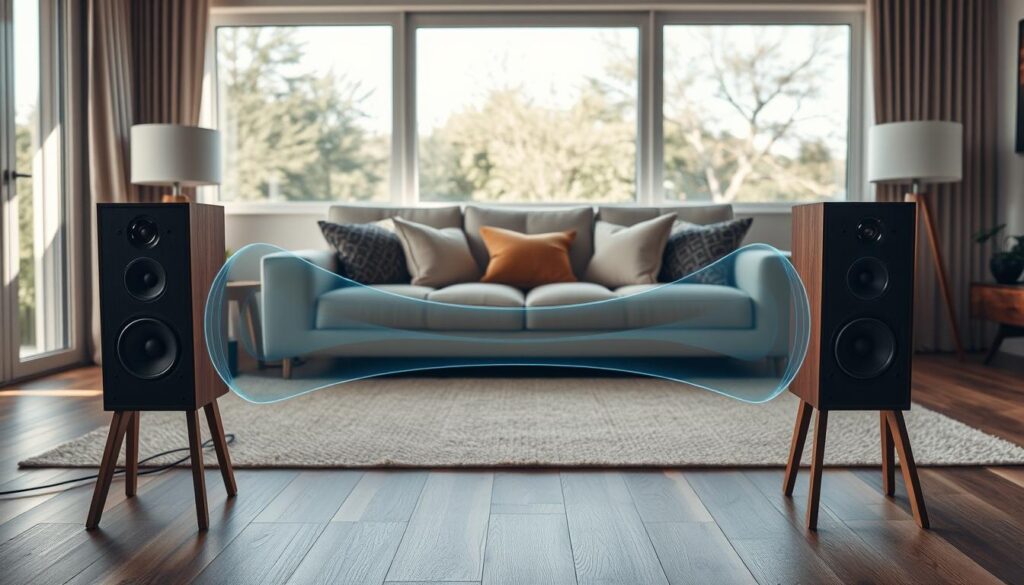
Every room has its own sound signature, shaped by its size and materials. Hard surfaces like glass or hardwood floors can make sound bounce back, leading to harsh echoes. To fix this, using rugs, curtains, or acoustic panels can help absorb these reflections and improve the sound balance.
“The room is the most important component in your audio chain, as it dictates how the sound waves reach your ears.”
Where you place your furniture also affects the sound. Big, soft items like sofas can help dampen unwanted noise. Heavy bookshelves can also act as natural diffusers. When setting up bookshelf speakers, make sure they’re on stable stands, not on surfaces that can cause vibrations.
Speaker Positioning Guidelines
To get a clear stereo image, form an equilateral triangle with the speakers and your listening spot. Angle the speakers slightly inward, so the tweeters point towards your ears. This simple trick can make high frequencies much clearer.
For surround sound speakers, symmetry is key. Place the rear speakers at the same distance from your seat to ensure sound reaches your ears at the same time. Keep your subwoofer away from corners to avoid a boomy, distorted bass sound.
| Placement Factor | Recommended Action | Impact on Sound |
|---|---|---|
| Speaker Height | Align tweeters with ears | Improved clarity |
| Wall Distance | Keep at least 12 inches away | Reduced bass boom |
| Surface Type | Use stands or pads | Less vibration |
| Symmetry | Create a perfect triangle | Better imaging |
Remember, experimentation is crucial to find the perfect spot in your room. Even small changes can greatly improve the soundstage. Take the time to test different positions, and your ears will appreciate the effort.
Maintenance and Care for Passive Speakers
Keeping your passive speakers in top shape is key to enjoying great sound. A little time each day for maintenance ensures they sound clear and crisp for years. It’s all about taking care of your audio equipment speakers.
Regular Cleaning Tips
Dust and dirt can harm your speakers’ sound quality. Use a soft, dry microfiber cloth to clean the cabinets often. For the grilles, a soft brush or vacuum attachment is best to avoid damage.
Be very careful when cleaning the drivers. Use a soft brush to gently remove dust, but never touch the sensitive parts. Also, clean the terminals with contact cleaner to keep connections strong.
“The longevity of your sound system is directly proportional to the care you invest in its components.”
Troubleshooting Common Issues
Even with good care, problems can still arise. If your speakers are silent or not working right, check the wiring. Make sure the speaker wires are connected correctly to avoid sound issues.
If you hear distortion or humming, check your amplifier settings. Also, make sure cables aren’t near power cords. Remember, some speakers, like the OS-10, have limits to their bass.
- Channel Imbalance: Check your amplifier balance settings and swap cables to isolate the issue.
- Exposed Drivers: Always keep protective covers on when not in use to prevent accidental punctures.
- Humming: Ensure all audio equipment speakers are properly grounded to avoid ground loop interference.
Top Brands in the Passive Speaker Market
Finding the right audio equipment speakers means looking beyond the brand name. It’s important to check the engineering, how the speaker is made, and the support from the manufacturer. This way, you make sure your money is well spent.
Overview of Industry Leaders
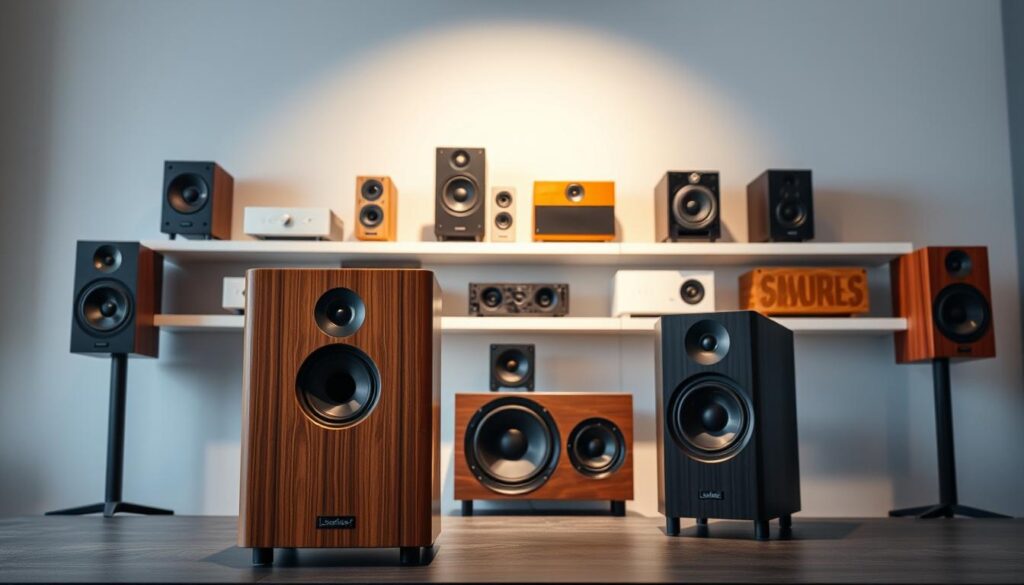
Big names in the high fidelity speakers world often have a strong reputation. They usually offer good warranties and keep parts available for a long time. Their fame comes from making drivers well and controlling the sound in the cabinet.
When looking at these big brands, focus on those that share clear details and tell you what amplifiers work best. A good brand will give you all the specs you need. This way, you can pick the right passive speakers for your setup. Always check if the quality matches the price before buying.
New Entrants to Keep an Eye On
New companies are shaking things up by offering quality at lower prices. Brands like Edifier and HiVi-Swans are making waves. Even though wireless speakers are popular, these dedicated speakers offer deeper sound for those who really listen.
Even old brands like Victrola are updating to meet today’s needs while keeping their classic look. These new or updated brands focus on giving you great value. They’re perfect for starting your first serious sound system. Always check how well they sound in your room.
| Brand Category | Primary Strength | Best For | Support Level |
|---|---|---|---|
| Industry Leaders | Engineering Precision | Professional Studios | High/Long-term |
| Value Innovators | Price-to-Performance | Home Enthusiasts | Moderate |
| Modern Entrants | Design & Versatility | Small Spaces | Growing |
The best audio equipment speakers fit well with what you already have. Whether it’s a well-known brand or a new one, look at the build and sound quality. This way, you’ll get a system that lasts.
Conclusion: Choosing the Right Passive Speaker
Getting great sound means knowing what you need for your space and how you want to listen. It’s all about finding the right mix of room size, sensitivity, and sound range.
Refining Your Selection Process
Choosing the right passive speakers is about matching them to your amplifier and room’s sound. A small setup might need a subwoofer for deep sounds. For example, the Victrola Tempo sends sounds below 116 Hertz to keep your audio clear and balanced.
Building Your Perfect Sound System
Focus on quality and where you place your speakers for the best sound. Whether it’s for music or movies, getting it right is key. Check out professional home audio installation to make sure everything works together. A well-thought-out system turns any room into a place of amazing sound that lasts.