
 Zoe Nora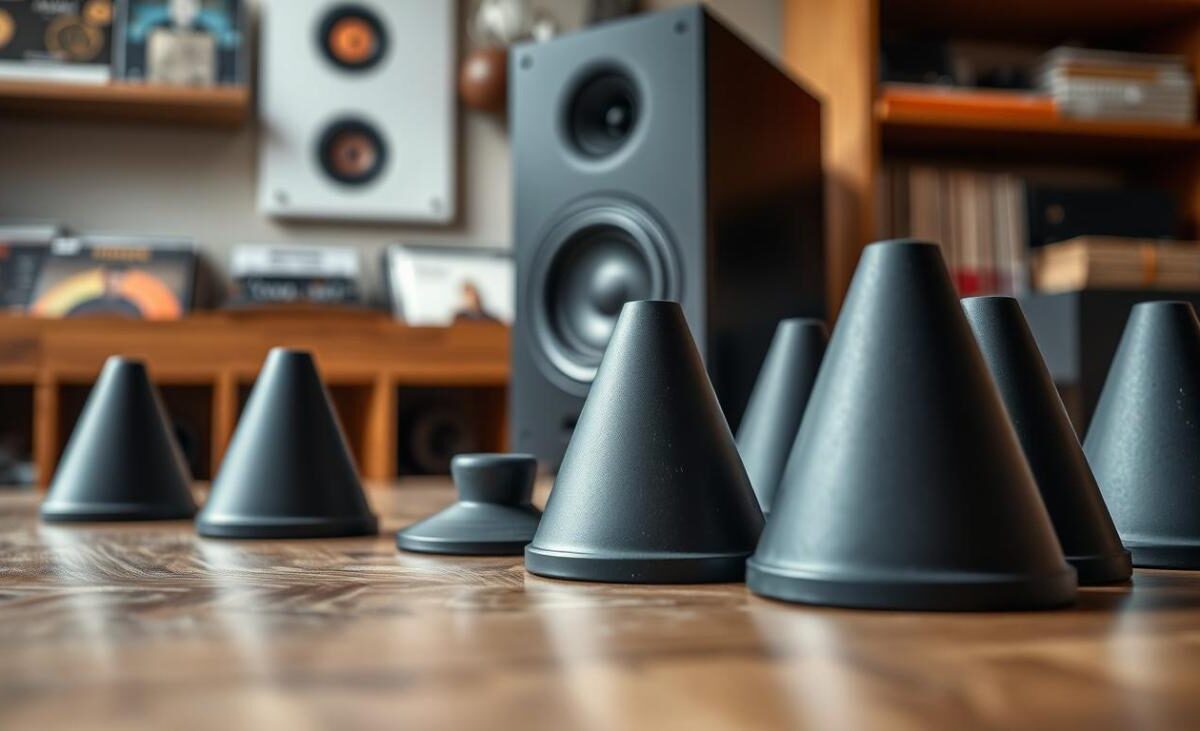
Did you know that nearly 40% of low-frequency energy can be lost to structural vibrations? This means your sound isn’t filling your room as it should. When your audio gear sits directly on the floor, it often creates unwanted rattles and muddy bass.
We believe that achieving a clean, tight sound starts with proper decoupling. By using subwoofer isolation feet, you can effectively separate your hardware from the floor. This prevents energy transfer that causes annoying floor buzz.
These small but powerful tools offer a discreet alternative to bulky platforms or heavy risers. In this guide, we will help you navigate the market. We’ll consider your specific flooring, the weight of your unit, and your total budget. Choosing the right subwoofer isolation feet ensures your home theater delivers the crisp, punchy performance you deserve.
Key Takeaways
- Decoupling prevents bass energy from vibrating your floor structure.
- Proper hardware reduces muddy sound and eliminates unwanted rattles.
- Isolation accessories provide a low-profile alternative to large platforms.
- Always verify your unit’s weight and mounting threads before purchasing.
- Budget-friendly options can significantly improve your overall audio clarity.
What Are Subwoofer Isolation Feet?
Subwoofer isolation feet connect your equipment to the room. They act as a mechanical link, keeping the subwoofer separate from the floor or shelf.
These feet stop low-frequency energy from reaching your home’s structure. Unlike subwoofer spikes, they don’t pierce the carpet. Spikes, on the other hand, can send vibrations into your home’s foundation.
Definition and Purpose
These devices manage the energy from powerful drivers. When a subwoofer plays, it vibrates. This energy can cause rattling in nearby objects or walls.
“True audio fidelity is found in the details, and controlling the physical movement of your equipment is the first step toward sonic purity.”
Isolation feet use materials like foam or rubber to absorb energy. They don’t solve all sound problems but reduce unwanted noise. They manage vibrations, not room modes.
How They Improve Sound Quality
Decoupling your subwoofer improves sound quality. The bass becomes cleaner and more precise. You hear the driver’s sound directly, not mixed with floor resonance.
This reduces buzzes and vibrations in other rooms. Bass feels tighter and more defined. The right tools ensure your subwoofer spikes don’t mess with your audio system’s clarity.
Importance of Isolation in Audio Systems
When you turn up the volume, your subwoofer creates two types of energy. Airborne sound waves reach your ears, while structure-borne vibrations go through the floor. Using isolation pads helps manage this interaction, keeping your audio clean and precise.
The Science Behind Sound Isolation
Your subwoofer’s interaction with your floor depends on your home’s construction. On a rigid concrete slab, vibrations are absorbed quickly. But on a suspended wood subfloor, it acts like a giant drumhead, amplifying unwanted resonances.
By placing decoupling devices between the cabinet and the floor, you stop mechanical energy from transferring. This prevents your floorboards from becoming a secondary speaker. You can check out the SVS SoundPath Subwoofer Isolation System to see how it works.
Benefits of Reducing Vibrations
The main benefit of isolation pads is reducing annoying rattles in your furniture and wall hangings. When the cabinet is decoupled, bass energy stays focused. This results in tighter, more articulate bass without the buzz of loose items.
These accessories also improve the listening experience for those in adjoining rooms. They minimize low-frequency energy transmission, allowing you to enjoy your music or movies without disturbing others. Clearer bass definition is a key benefit, but results can vary based on your room’s layout and treatments.
Types of Subwoofer Isolation Feet
Not all support solutions are created equal. The right one depends on your flooring and sound goals. When you upgrade, you’ll find different vibration isolation feet to manage energy transfer. Knowing the mechanical differences is crucial for a cleaner sound in your home theater.
Foam Isolation Feet
Foam pads are a budget-friendly option for better audio clarity. They decouple the subwoofer from the floor, stopping structural resonance. They’re great for smaller subwoofers that don’t need heavy support.
Rubber Isolation Feet
Rubber or elastomer designs balance support and vibration absorption well. These vibration isolation feet compress under weight, absorbing low-frequency energy. Many prefer them for their stable base and protection of hardwood or tile floors.
Adjustable Isolation Spikes
Adjustable spikes are best for leveling and stability. Unlike foam or rubber, they create a rigid floor connection. They’re perfect for thick carpets, piercing through to the solid subfloor beneath.
| Type | Best For | Primary Benefit |
|---|---|---|
| Foam | Hardwood Floors | Budget-friendly decoupling |
| Rubber | Versatile Surfaces | Vibration absorption |
| Spikes | Thick Carpeting | Maximum stability |
Features to Consider When Buying
Choosing the right hardware for your audio setup is more than just looking at the price. It’s important to focus on the technical performance of your speaker isolation feet. This is what really affects the sound quality.
Material Quality
The materials used in making the feet are key to how well they dampen vibrations. Look for high-grade polymers or special alloys for durability. Make sure they won’t rust, which is important if you live in a humid area.
The size of the feet’s contact area with the floor is also crucial. A bigger, high-friction surface helps keep the subwoofer steady. This is important for clear sound during loud bass.
Weight Capacity
Don’t overlook the weight rating of your chosen support system. Choose products that match the actual weight of your cabinet. For example, the Aperta SUB is for 80 pounds, and the Aperta SUB XL is for up to 160 pounds.
Going over these limits can damage the material, making it less effective. Always check the specs to make sure your equipment is supported. This is key for clear, distortion-free sound.
Design and Aesthetics
While performance is key, the look of your audio gear is important too. Many designs are discreet and fit well with your home decor. You can find options that match your style, whether it’s minimalist or industrial.
Think about how the feet will look under your subwoofer. A low-profile design can make your setup look cleaner. By choosing wisely, you can have a setup that sounds great and looks good too.
How to Choose the Right Isolation Feet
Finding the best results often means matching your hardware to your room’s unique sound profile. Choosing the right subwoofer decoupling feet is crucial. It’s not just about looks; it’s about solving specific vibration issues in your listening area.
Assessing Your Space
Before you buy, examine your flooring closely. Hard floors like hardwood or tile tend to rattle more than carpeted ones. Carpets naturally absorb some sound.
Think about your room’s size and how much bass you use. If walls vibrate or buzz, you need a strong isolation solution. This will help separate the cabinet from the floor.
Matching with Your Subwoofer
Your choice should match your subwoofer’s size and weight. Always check the weight rating for any subwoofer decoupling feet you’re interested in.
It’s wise to pick a product with comfortable capacity headroom. This means choosing one that’s not at its maximum limit. This way, the material stays effective without compressing too much.
Look at the bottom of your cabinet for existing threaded inserts. Some subwoofers have factory-installed feet. These can be unscrewed to attach better spikes or isolation pucks for a cleaner look.
Budget Considerations
You don’t need the most expensive platform for great sound. Simple elastomer pads often work well and are cheaper than big, complex stands.
If you have a smaller, lighter subwoofer, basic subwoofer decoupling feet might be enough. Save money for bigger, more expensive platforms only for huge, high-output subwoofers. These need strong mechanical decoupling to stop structural resonance.
Installation Tips for Maximum Effectiveness
Getting your new hardware right is key to deep, clean bass. When you add subwoofer anti-vibration feet, do it right. This keeps your gear safe and sounds its best.
Proper Positioning Techniques
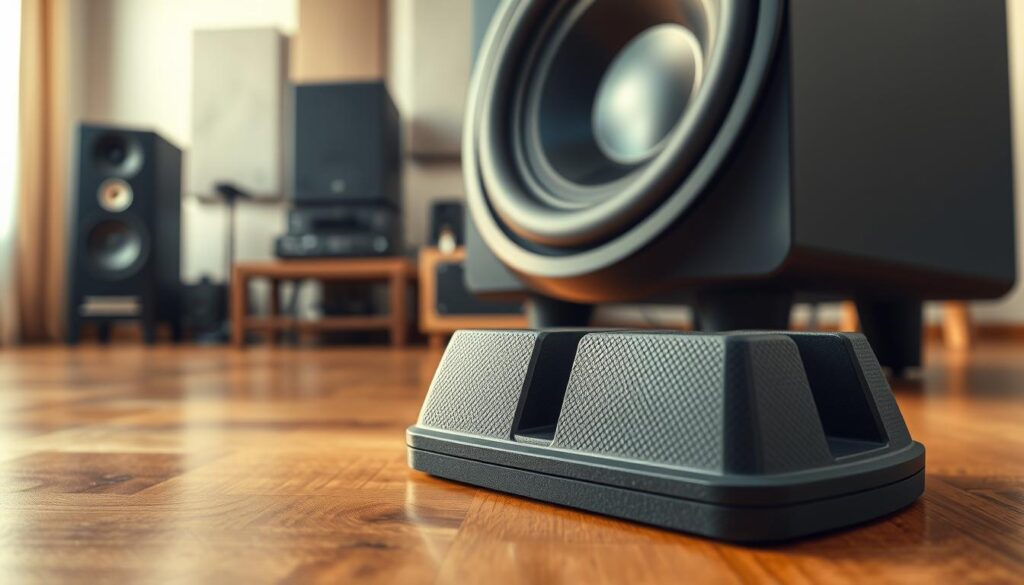
Start with a soft, flat area like a carpet or thick towel. Lay your subwoofer on its side to avoid damage. Remove any factory feet carefully with a screwdriver.
Make sure the subwoofer anti-vibration feet fit the holes. Hand-tighten each foot, then use a wrench for a snug fit. Stand the subwoofer up, making sure it’s level to avoid shaking.
“Stability is the foundation of high-fidelity sound; if your subwoofer wobbles, your bass will lose its precision and impact.”
Maintenance and Care
Keep your gear in top shape with regular checks. Tighten fasteners every few months to stop them from coming loose. Look for cracks in the elastomer surfaces that could affect performance.
Keep the area around your subwoofer anti-vibration feet clean. Dust can reduce contact with the floor. Replace damaged parts to keep your sound clear.
| Task | Frequency | Action Required |
|---|---|---|
| Tighten Fasteners | Quarterly | Check for loose bolts |
| Inspect Elastomers | Bi-Annually | Look for cracks or wear |
| Clean Surfaces | Monthly | Remove dust and debris |
| Level Check | Initial Setup | Ensure no rocking |
Top Brands for Subwoofer Isolation Feet
Finding the right subwoofer isolation stands can be tough. It’s key to get a clean, tight bass sound in your home theater. We’ve picked the best options for you.
Auralex Acoustics
Auralex is known for top-notch acoustic treatment. They make foam platforms that keep your subwoofer off the floor. These are ideal for easy installation without changing your cabinet.
IsoAcoustics
IsoAcoustics offers the Aperta SUB and ISO-Puck series. They use special tech to control energy transfer. These are great for cabinets without threaded inserts, making them a top pick for subwoofer isolation stands.
“True isolation is not just about stopping movement; it is about controlling the energy so the sound remains pure and undistorted.”
Soundproof Cow
Soundproof Cow makes heavy-duty platforms for big, powerful subwoofers. Their products help prevent floor resonance. Make sure to check the load ratings for your subwoofer.
When choosing between these brands, consider the following comparison:
| Brand | Primary Format | Best For |
|---|---|---|
| Auralex | Foam Platforms | Budget-friendly decoupling |
| IsoAcoustics | Pucks & Stands | Precision audio performance |
| Soundproof Cow | Heavy-duty Mats | Large, high-output units |
Check the dimensions and weight capacity of your subwoofer isolation stands before buying. Some like threaded feet for looks, but platforms work better for cabinets without mounts.
Customer Reviews and Recommendations
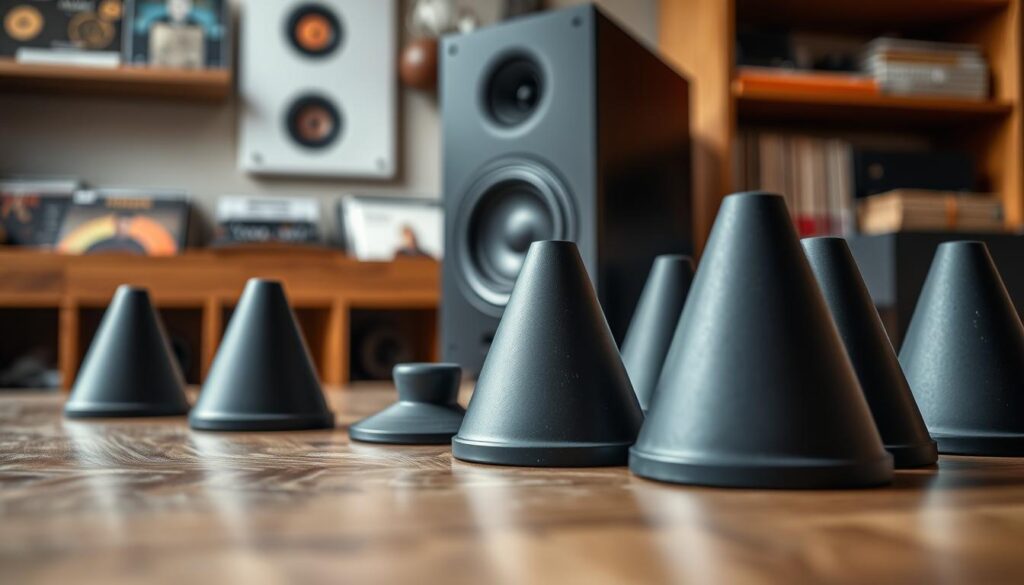
We often look to the experiences of fellow audiophiles to gauge the real-world impact of gear upgrades. When it comes to subwoofer isolation cones, the community feedback is quite diverse. This reflects different room setups and personal listening preferences.
Highlights from Users
Many users report that adding isolation hardware leads to a noticeable improvement in bass clarity. They say their bass feels tighter and more controlled. This helps eliminate muddy frequencies.
Beyond sound quality, many owners appreciate the reduction in structural vibrations. By decoupling the unit from the floor, users often notice fewer rattles in nearby furniture. They also notice less sound bleeding into other rooms. This creates a cleaner and more immersive experience for everyone in the house.
Common Complaints
Despite the positive reports, some users find the changes to be quite subtle. It is important to manage expectations. These accessories are not a magic fix for poor room acoustics or a low-quality subwoofer.
Compatibility issues also arise, mainly with heavy units that might not sit level on certain types of subwoofer isolation cones. The effectiveness of these products also depends heavily on the specific flooring material. For example, thick carpet versus hardwood.
Expert Opinions
Audio experts often suggest that while subjective improvements are common, they can be difficult to measure with standard equipment. Professionals emphasize that the benefits of isolation are most repeatable in rooms with suspended floors or thin structures.
We recommend viewing these products as a fine-tuning tool rather than a primary upgrade. When used correctly, subwoofer isolation cones can provide that final touch of precision. This makes a high-end system truly shine. Always consider your specific environment before making a final purchase decision.
Conclusion: Elevate Your Sound Experience
Getting high-fidelity sound means paying attention to every detail. Even small changes can make a big difference in sound quality.
Adding quality subwoofer isolation feet is a key step for serious music lovers. They help keep your speakers from vibrating too much, which can mess up the sound.
Refining Your Listening Environment
Check out proper subwoofer isolation feet to boost your system’s performance. Brands like IsoAcoustics and Auralex Acoustics offer great options to keep your gear stable.
These accessories not only protect your floors but also improve your speakers’ low-end sound. You’ll hear a big difference when vibrations don’t affect your furniture or walls.
Commitment to Sonic Excellence
Try different materials to find the best fit for your room’s acoustics. Regular testing will help you achieve a cleaner, more immersive sound. This makes movies and music feel more real.
We suggest making these upgrades a priority to fully enjoy your audio setup. Start improving your sound today by using the right support for your equipment.