
 Zoe Nora
Did you know that nearly 70% of homeowners say music boosts their mood and productivity? We think your home should sound amazing, just like it looks. A multi-room audio system lets you fill your home with great sound easily.
Want to start a podcast in the kitchen or keep music playing while you move to the bedroom? Seamless connectivity is key. We aim for effective home audio distribution so your media is always with you. By setting up speakers in zones, you control your space.
Our guide shows you how to get wireless whole home audio without messy cables. We’ll cover picking the right gear, smart installation tips, and how to grow your system as needed.
Key Takeaways
- Create a unified listening experience across every room in your house.
- Use smart zones to play different media in separate areas simultaneously.
- Select the right wireless technology for reliable and high-fidelity sound.
- Follow our simple installation steps to get your setup running quickly.
- Plan for future growth by choosing scalable hardware solutions.
What is a Multi-Room Audio System?
Imagine walking from your kitchen to your bedroom with your favorite playlist playing everywhere. A multi-room audio system lets you enjoy music in every room of your home. No more being stuck in one spot.
Overview of Multi-Room Audio
An audio distribution system sends music to different areas at once. You can have the same song everywhere for a party or different songs in each room. It’s all about control and creating a perfect sound for your lifestyle.
“Music is the shorthand of emotion, and bringing it into every room transforms a house into a living, breathing home.”
Key Components of the System
To build a strong multi-zone audio setup, you need a few key items. These include network-connected speakers, amplifiers, and devices like media players. You control it all with apps on your phone or tablet.
For those who like hands-on controls, there are wall-mounted keypads and voice assistants. These work together to keep your music clear and consistent. They make sure your audio system is reliable and easy to use.
Benefits for Homeowners
The main perk of a multi-room audio system is creating separate zones. You can listen to a podcast in the office while your family enjoys jazz in the living room. It’s all about finding your own perfect sound.
Another great thing is how easy it is to grow your system. You can start with just two speakers and add more as you go. This makes it a smart choice for anyone wanting to improve their home with a multi-zone audio setup.
How Does a Multi-Room Audio System Work?
A multi-room audio system sends digital signals from a source like a smartphone to speakers in different rooms. It uses a central controller or network to manage data flow. This ensures your music plays where you want it, without lag.
Wired vs. Wireless Systems
Choosing between wired and wireless systems is key. Wired systems use Ethernet cables for a reliable connection. They’re best for new homes where cables can be hidden.
Wireless whole home audio uses your Wi-Fi to stream music. It’s great for existing homes, avoiding the need for wiring. But, a strong network is crucial to avoid playback issues.
Important Technologies Used
Modern systems use protocols like AirPlay 2 and Google Cast for streaming. These ensure devices work together, no matter the brand.
Services like Spotify Connect and Tidal Connect save your phone’s battery. Platforms like HEOS and Linkplay manage zones and sync audio. They make it easy to play different music in different rooms.
Zones and Speakers Explained
A multi-zone audio setup divides your home into listening areas. You can play different music in each zone. This flexibility is key to a good system.
Each zone has its own amplifier or powered speaker. They get instructions from your app. This way, you can have the same song play everywhere, creating a unified experience.
Choosing the Right System for Your Home
Successful audio projects start with careful planning. First, think about how many rooms you want to cover and how you’ll use them. A good multi-room audio system makes your home sound great everywhere.
Factors to Consider
Begin by mapping out your home. Decide how many zones you need. Choose between architectural speakers or standalone units based on your needs.
Also, think about your streaming habits and mobile compatibility. These affect how you’ll control your home audio distribution.
Consider future needs too. A flexible audio distribution system lets you add more zones later. This makes your investment last longer as technology changes.
Popular Brands and Options
The market has many solutions, from easy-to-use products to professional gear. Pick a brand that fits your tech level and smart home audio integration goals.
| Brand | Primary Focus | Best For |
|---|---|---|
| Sonos | Ease of Use | General Consumers |
| Bluesound | High-Res Audio | Audiophiles |
| Control4 | Full Automation | Smart Home Enthusiasts |
Sonos is great for beginners, while Bluesound is for those who want top sound quality. For advanced smart home audio integration, consider Crestron or Savant.
Budgeting for Your Setup
Planning your budget for a audio distribution system is more than just speaker prices. Remember to include wiring, network upgrades, and calibration services. These costs are crucial for a reliable home audio distribution.
Automation and architectural installation can also raise costs. Set aside extra for unexpected needs. A thorough budget ensures a smooth experience with your multi-room audio system.
Setup and Installation Tips
Getting sound right in your home starts with good planning. A well-set multi-room audio system changes how you enjoy music and media. Follow a clear plan to avoid problems and get the best sound.
DIY Installation vs. Professional Help
Choosing between DIY and a pro install depends on your skills and goals. Simple setups with tabletop speakers are easy to do yourself. These systems come with apps that help you set them up.
But, for complex setups like in-ceiling speakers or hidden wiring, get a pro. They make sure everything is safe and works well with your home. They also have the right tools for advanced audio distribution systems.
Placement of Speakers
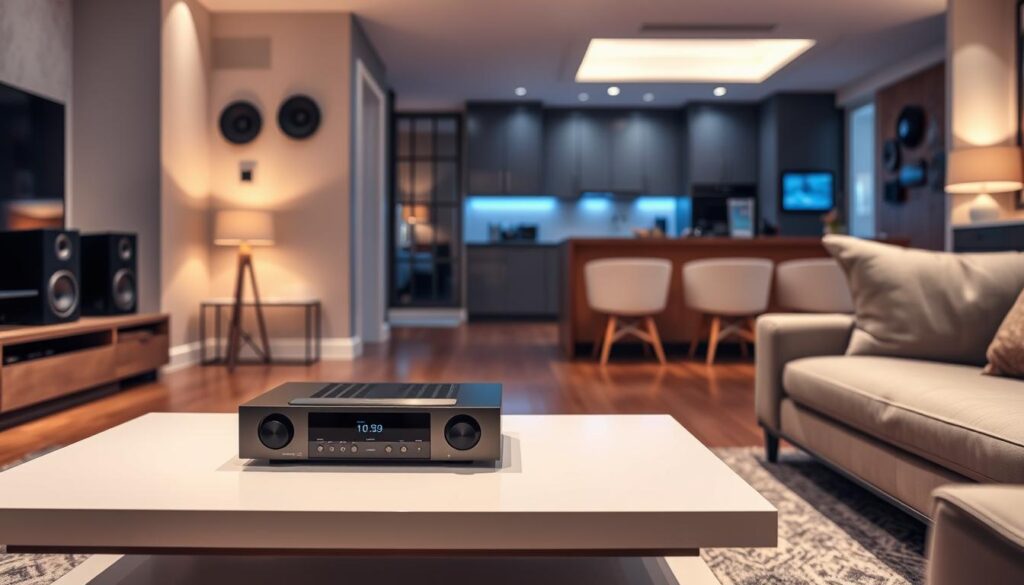
Where you put speakers is key for good sound in every room. Don’t put them in corners or tight spots. Instead, choose open areas for better sound spread.
Here’s a table to help pick the right speakers for you:
| Speaker Type | Best Use Case | Installation Difficulty |
|---|---|---|
| Tabletop Wireless | Living rooms and bedrooms | Low |
| In-Ceiling | Kitchens and hallways | High |
| Outdoor Weatherproof | Patios and decks | Medium |
| Bookshelf Speakers | Dedicated listening areas | Low |
Network Setup Essentials
A strong network is crucial for wireless whole home audio. Make sure your Wi-Fi is strong everywhere you stream music. For big homes, a mesh Wi-Fi system can help.
For the best sound, use Ethernet for your main audio distribution system parts. This keeps your network clear and your music streaming smoothly. Also, keep your router updated for easy device connection across your multi-zone audio setup.
Integrating Voice Control and Smart Home Features
Smart home audio integration changes how we enjoy music at home. By linking your multi-room audio system to a network, you can control music with voice commands or a smartphone tap.
This makes it easy for everyone to listen to their favorite music anywhere. Whether it’s a party or unwinding after work, modern tech makes your wireless whole home audio easy.
Compatible Devices
A good setup needs devices that talk well to each other on your network. Most smart speakers, high-end receivers, and soundbars work together.
Using your phone or tablet as a remote control is simple. They connect your music library to speakers all over your home.
Setting Up Voice Assistants
Voice platforms like Amazon Alexa, Google Assistant, and Apple Siri are key for hands-free control. First, make sure all your devices are on the same Wi-Fi and under one account.
Then, use AirPlay 2 or Google Cast to stream great sound everywhere. You can play the same song everywhere or different songs in different rooms.
| Voice Platform | Primary Strength | Best For |
|---|---|---|
| Amazon Alexa | Broad Compatibility | Smart Home Hubs |
| Google Assistant | Search Integration | Android Users |
| Apple Siri | AirPlay 2 Support | Apple Ecosystem |
Controlling Audio with Mobile Apps
Dedicated apps give you detailed control over your sound. Name your rooms clearly to avoid confusion when giving commands.
In these apps, you can group speakers for synchronized playback. You can also adjust volume for each zone, keeping the sound perfect everywhere.
Creating the Perfect Audio Experience
Turning your home into a top-notch sound haven takes focus and balance. A multi-room audio system is a great start. But how your room affects the sound is key. We aim to elevate your listening space to professional levels.
Tips for Acoustic Optimization
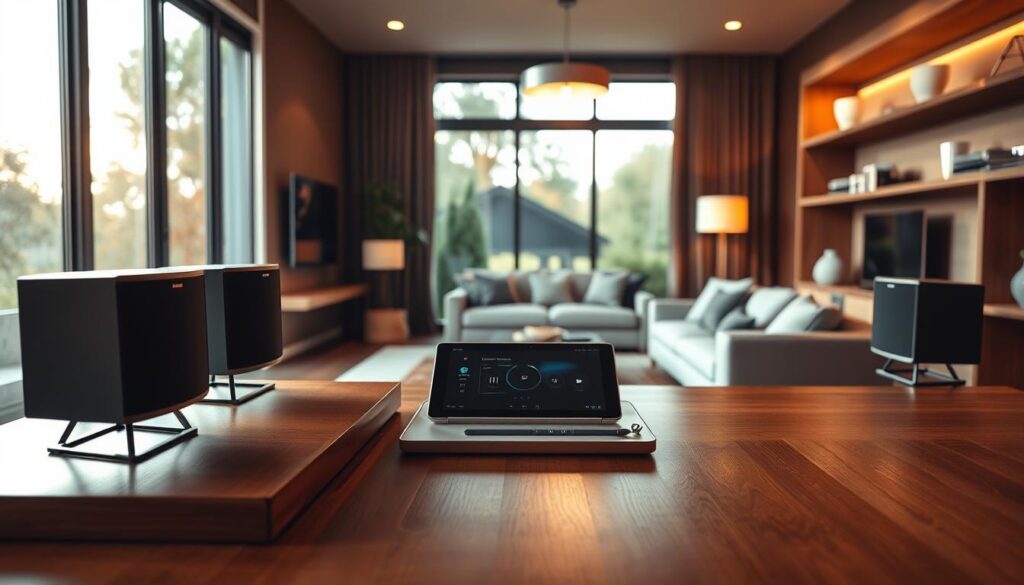
Sound waves act differently on various surfaces. Hard surfaces like glass and wood can make sounds harsh. Soft items like rugs and curtains help soften the sound.
Where you place your speakers is crucial for a balanced multi-zone audio setup. Keep speakers symmetrical for a centered soundstage. If your room is tricky, use room-correction software in your amplifier.
Selecting the Right Music Sources
The quality of your music matters as much as your equipment. Choose high-resolution streaming services for the best sound. Compressed files can lack the detail that makes music feel real.
Many systems let you combine sources into one interface. This makes your multi-room audio system easy to use. Make sure your network can handle high-bitrate streams, even when playing in multiple rooms.
Playlists for Different Occasions
Creating the right mood is the last step in perfecting your multi-zone audio setup. The right playlist can instantly set the mood. Organize your music by occasion to fit your daily life.
| Occasion | Audio Focus | Recommended Volume |
|---|---|---|
| Entertaining | Upbeat, vocal-heavy | Moderate |
| Relaxation | Acoustic, ambient | Low |
| Workouts | High-tempo, bass-driven | High |
| Background | Instrumental, jazz | Very Low |
Maintenance and Troubleshooting
Even the most advanced home audio setups need occasional care to keep performing well. Whether you have a multi-room audio system or something simpler, being proactive helps avoid annoying problems during your listening time.
Common Issues and Solutions
Technical hiccups like missing speakers or failed device discovery can happen. These problems often come from small network issues or software bugs that are simple to fix.
For issues like delayed control or uneven volume, try these quick fixes:
- Make sure all devices are on the same Wi-Fi network.
- Check that power cables are plugged in correctly.
- Restart your router and audio gear to refresh the connection.
- Update your mobile app to the latest version for better performance.
For tips on setting up your space, check out 7 home audio setup tricks for multi-purpose rooms. This will help keep your equipment reliable.
Regular Maintenance Tips
Being consistent is key to a long-lasting multi-zone audio setup. Regular checks can prevent many common problems before they become big issues.
Do a quick maintenance check every few months to keep your system in top shape. Always focus on these tasks:
- Software Updates: Check for firmware updates from the manufacturer to keep your system secure and up-to-date.
- Cable Inspection: Look for signs of wear or loose connections in your physical wiring.
- Account Syncing: Make sure your streaming service credentials are active and linked to your audio app.
When to Contact a Professional
While many problems can be fixed with basic troubleshooting, some need a pro’s help. If you’ve tried everything and still have issues, it’s time to call a technician.
Call a specialist if you face these problems:
- Audio dropouts that keep happening, even with a strong network.
- Internal wiring faults or damaged speaker cables hidden behind walls.
- Hardware failures, like an amplifier that won’t turn on or sounds distorted.
- Complex calibration needs that require special tools.
Professional technicians can find hidden problems and ensure your multi-zone audio setup sounds its best. Getting expert help protects your equipment and ensures a top-notch listening experience for years.
Enhancing Your Multi-Room Audio System
You can make your listening space better by adding special parts to your audio distribution system. A basic setup is convenient, but upgrades can make the sound and function fit your lifestyle.
Add-ons and Accessories
For a better multi-room audio system, think about adding subwoofers to small areas for deeper bass. Architectural speakers in ceilings or walls offer great sound without cluttering your space.
Room-correction tools are also great. They adjust sound to fix echoes or dead spots, making your home audio distribution sound amazing everywhere.
Future-Proofing Your System
Thinking ahead keeps your system valuable as tech changes. Choose hardware that works with open protocols to avoid being stuck with one brand.
Getting a strong, wired Ethernet backbone is wise for wireless whole home audio. Hybrid wiring gives a solid base for your network, even as you add more devices to your smart home audio integration.
Integration with Home Theatre Systems
You don’t have to keep music and movies separate. Modern gear lets you mix your smart home audio integration and TV audio through your audio distribution system.
This makes your home theatre a central zone. You can send game-day sounds or movie tracks all over the house. This boosts your home audio distribution setup’s usefulness.
A flexible multi-room audio system grows with you. Whether you’re adding to your wireless whole home audio or syncing speakers, these upgrades keep your home a sound hub.
Conclusion: Enjoying Your Perfect Home Audio
Creating a top-notch multi-room audio system changes how we enjoy music and media at home. The best systems offer clear sound, easy connections, and simple controls. You can pick from wired, wireless, or a mix to fit your space.
Good home audio starts with a solid network and smart speaker placement. Begin with two speakers to see what works for you. Then, you can add more as you grow or find new favorites.
Integrating your smart home with audio makes everything easier. Sonos, Bose, and Denon are great for managing your sound. Pick the right gear for your rooms and enjoy a unified audio experience.
Your quest for the perfect sound is a personal journey. Share your favorite tunes or ask about gear. Start your setup today and enjoy deeper sound in every room.