
 Zoe Nora
Did you know that nearly 90% of audio quality can be lost before sound reaches your ears if connections are poor? Many people spend a lot on top-notch equipment. Yet, they often use subpar connections that limit their system’s performance.
Choosing the right speaker wire is key to a high-quality system. These wires connect your amplifier to your speakers. They affect how well power flows through your system.
Learning about these essential audio cables can prevent common problems. We aim to guide you in making the best choice for your setup, whether at home or for work.
Opting for the correct audio cables means your system will sound clear. Investing in good speaker wire now will safeguard your equipment. It will also improve your listening experience for years.
Key Takeaways
- Proper connectivity prevents significant signal loss in high-end systems.
- The link between your amplifier and output devices is vital for performance.
- Understanding technical specifications helps you avoid common audio pitfalls.
- Quality materials ensure long-term durability for your home setup.
- Informed choices lead to superior sound clarity and system efficiency.
Understanding Speaker Wire Basics
We often focus on speakers and amplifiers, yet the speaker wire is the true bridge for your audio signal. It carries electrical energy from your receiver to the magnetic coils inside your speakers. This allows them to produce sound.
Without a reliable connection, even the most expensive audio equipment will struggle to perform at its peak. Understanding how these cables function is the first step toward building a high-quality home audio environment.
What is Speaker Wire?
At its core, speaker wire is a specialized electrical cable. It is designed to carry low-voltage, high-current audio signals. It consists of two or more electrical conductors insulated by plastic or rubber.
These conductors work together to complete a circuit between the amplifier and the speaker. When the amplifier sends a signal, the wire ensures that the electrical current reaches the speaker’s voice coil without significant loss or interference.
Types of Speaker Wire
There are several varieties of cables available on the market today. Most are made from copper, but you will also find options like silver-plated copper or copper-clad aluminum.
Construction styles also vary, ranging from simple zip cord designs to complex braided cables. Choosing the right type depends on your specific installation needs and the distance between your components.
Gauge Explained
The American Wire Gauge (AWG) system is the standard used to measure the thickness of the wire. When discussing the wire gauge for speakers, it is important to remember that a lower number indicates a thicker wire.
Thicker wires offer less electrical resistance, which is crucial for maintaining signal integrity over long distances. Using the correct wire gauge for speakers ensures that your system delivers clear, powerful sound without distortion.
| AWG Size | Recommended Use | Max Distance |
|---|---|---|
| 12 AWG | High-power systems | Up to 100 feet |
| 14 AWG | Standard home audio | Up to 50 feet |
| 16 AWG | Short runs/Rear speakers | Up to 25 feet |
Identifying Your Audio Needs
Getting high-quality sound is more than just having great speakers. It’s also about how you connect them. When setting up a home theater, think about how your audio cables work with other parts. Good planning stops signal loss and makes sure your amplifier powers your speakers well.
Matching Wire to Your Equipment
It’s important to match your amplifier’s power with your speakers’ needs. Using a thin wire for a long distance can lose power as heat, hurting your sound. We suggest choosing the right speaker wire based on the distance to your speakers.
Choosing the right wire gauge for speakers depends on the cable length. Short distances need thinner wire, while longer ones need thicker wire to keep the signal strong. Always choose quality to get the best from your system.
Impedance Considerations
Impedance is the speaker’s resistance to electrical current, measured in ohms. Most systems use 8 ohms, but some high-end speakers use 4 ohms. Lower impedance means more current is needed, making the right audio cables crucial to avoid overheating or distortion.
Knowing these technical details helps you pick the perfect wire gauge for speakers for your setup. Use the table below to find the best wire thickness for your needs based on distance and resistance.
| Distance (Feet) | 8 Ohm Load (Gauge) | 4 Ohm Load (Gauge) |
|---|---|---|
| Under 25 ft | 16 AWG | 14 AWG |
| 25 to 50 ft | 14 AWG | 12 AWG |
| Over 50 ft | 12 AWG | 10 AWG |
Exploring Speaker Wire Materials
Speakers and amplifiers get all the attention, but the real hero is the wire material. The type of wire you use affects how well it conducts, lasts, and sounds. When you pick the right speaker wire, think about how metals carry signals over long distances.
Copper vs. Copper Clad Aluminum
Oxygen-free copper is the top choice for top-notch audio. It conducts well and doesn’t corrode. On the other hand, Copper Clad Aluminum (CCA) is cheaper but has an aluminum core with a copper layer.
- Pure Copper: Has lower resistance and better signal quality.
- CCA: Cheaper but can oxidize and have higher resistance.
- Durability: Pure copper is more flexible and less likely to break.
Importance of Wire Quality
Choosing high-quality materials is key for any serious audio fan. Good audio cables keep your signal clear and free from noise. Low-grade materials can cause signal loss and poor sound quality over time.
This is crucial for outdoor speaker wire. These cables face moisture and temperature changes, so they need strong insulation and conductors. Picking the right audio cables now can save you from future headaches. Whether it’s for an indoor theater or an outdoor speaker wire system, quality should always come first.
Speaker Wire Length and Setup
When planning your room, cable length is key to performance. Good planning keeps your home theater wiring neat and sound quality high everywhere.
Determining the Right Length
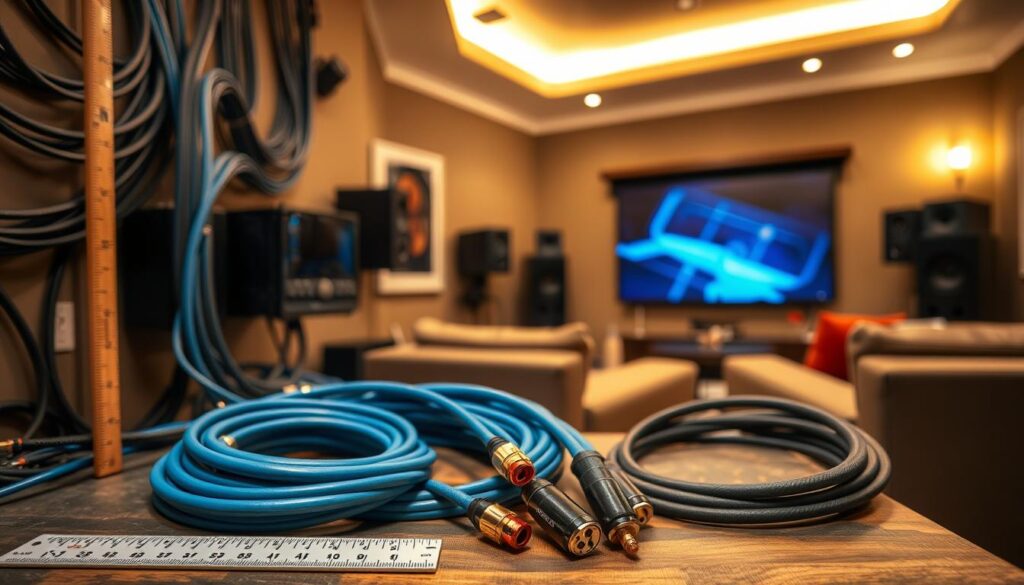
Measure the path of your cables before buying. Add extra feet for corners and future changes.
Remember, longer cables mean more resistance. Thin wires can lose signal or power. Choose the right thickness for your surround sound wiring distance.
Strategies for Long Runs
For big rooms, manage long cables carefully to avoid interference. Keep in-wall speaker wire away from power lines to stop hum.
Use shielded in-wall speaker wire for better protection against interference. Label both ends of your cables for easy troubleshooting later.
Don’t coil cables behind speakers or amps. It can harm signal quality. Trim excess or keep cables straight and neat.
Speaker Wire Accessories
Getting a top-notch audio setup is all about the little things, like speaker cable connectors. While bare wire works, the right hardware makes your system much better. It keeps your cables from coming loose and stops short circuits in busy spots.
Connectors and Terminals
There are many ways to end your cables for a clear sound. Check out high-quality speaker cable connectors for different binding posts. Spade lugs are great for a tight, lasting connection. Pin connectors are perfect for tight spots.
Choosing the right connector depends on your gear and how often you move your speakers. Reliability is key, as a bad connection can harm your amp over time.
Benefits of Using Banana Plugs
Banana plugs are a favorite among home audio fans. They offer a snug, easy-to-use connection that doesn’t need tools. Learn more about these efficient connections to keep your setup safe and tidy.
These plugs cut down on short circuits from stray wires. They also make your wiring look neat and organized behind your entertainment system.
| Connector Type | Ease of Use | Connection Security | Best For |
|---|---|---|---|
| Banana Plug | High | Excellent | Frequent changes |
| Spade Lug | Medium | Superior | Permanent setups |
| Pin Connector | High | Good | Spring-clip terminals |
| Bare Wire | Low | Fair | Budget installations |
Budgeting for Speaker Wire
Starting your audio project budget is all about understanding speaker wire’s true value. We think you don’t need to spend a lot to get exceptional sound quality. Focus on the technical specs, not fancy packaging. This way, you can spend more on things that really improve your listening experience.
What Should You Expect to Spend?
Looking for high-fidelity cables can be confusing with all the high prices. Many entry-level options work great for most home setups. Look at the wire’s gauge and material purity, not the brand or fancy shielding.
“The best audio system is one that balances performance and practicality, ensuring that every dollar spent contributes directly to the clarity of the sound.”
Set a budget for 5% to 10% of your total audio equipment cost. This usually gets you reliable, quality connections without overpaying. Here’s a comparison of different cabling tiers.
| Wire Category | Typical Use Case | Price Expectation |
|---|---|---|
| Standard Copper | Basic home audio | Low |
| Oxygen-Free Copper | High-fidelity cables | Moderate |
| Premium Shielded | Professional studios | High |
Tips for Cost-Effective Choices
To stay within budget, focus on the essential technical requirements of your setup. First, figure out the exact length you need to avoid extra wire. Buying in bulk or choosing standard spools can save a lot compared to pre-terminated, fancy options.
Here are some tips to save money:
- Prioritize Gauge: Make sure the wire thickness fits your power needs to avoid signal loss.
- Material Matters: Choose oxygen-free copper for durability and signal quality without the cost of rare metals.
- DIY Terminations: Adding your own banana plugs can save money and ensure a secure, professional connection.
By making smart choices, your high-fidelity cables will last for years. Remember, investing in the right materials is better than spending on marketing claims.
Brands to Consider
Top audio performance often comes from brands that focus on quality and standards. Many companies offer similar products, but the key difference is in materials and manufacturing precision.
It’s important to look beyond marketing to find real value. Focus on technical specs, not just the brand name. This ensures your investment is worth it in the long run.
Top Speaker Wire Brands
Some manufacturers are known for their excellence in meeting the needs of audiophiles and home theater fans. They offer products that balance price with performance.
- AudioQuest: Known for high-end materials and advanced geometry that minimizes signal distortion.
- Monoprice: A favorite for those seeking exceptional value and reliable performance without a premium price tag.
- Belden: Highly regarded for professional-grade cables that offer excellent shielding and durability.
- Canare: A top choice for users who prioritize signal integrity and robust construction in their audio runs.
What to Look for in a Brand
When evaluating manufacturers, look for quality indicators. A reputable brand will be open about their materials and construction methods.
Make sure the company uses standard American Wire Gauge (AWG) ratings. Also, check for high-quality insulation to protect the wire from environmental factors.
“Quality is never an accident; it is always the result of high intention, sincere effort, intelligent direction and skillful execution.”
Choosing brands that value quality and precision will protect your audio equipment. Investing in a brand that focuses on precision engineering will enhance your listening experience at home.
Common Mistakes to Avoid
DIY installers often make mistakes when setting up their home theaters. Planning your home theater wiring can prevent frustration and poor sound quality. Knowing these common errors can help you install your equipment smoothly.
Overlooking Gauge Requirements
Choosing the wrong wire gauge is a common mistake. Thin wire for long distances increases resistance, causing degraded audio performance and overheating. Always check the manufacturer’s recommendations for the right wire gauge.
Using the correct wire thickness is key for clear sound across your room. Ignoring these requirements can lead to a loss in sound quality. Proper surround sound wiring means matching the gauge to the cable length for safe operation.
Ignoring Installation Practices
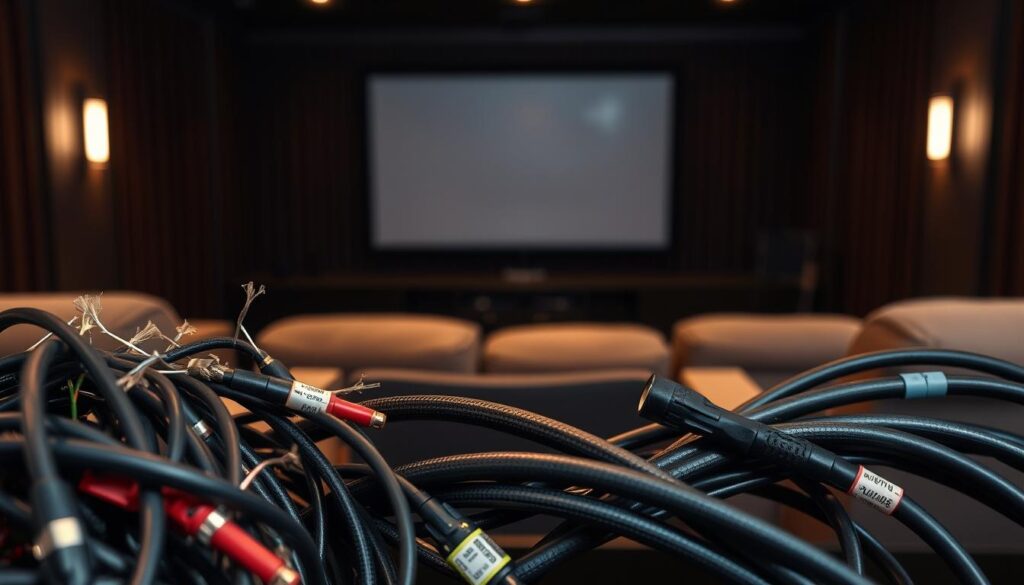
How you install your cables is just as important as what you use. Sharp bends or kinks in the wire can damage the conductors over time. Keep your cable paths straight for a clean signal flow.
Ensuring all connections are secure is crucial in your surround sound wiring project. Loose connections can cause sound issues or buzzing, ruining your home theater wiring experience. Always double-check your connections for tightness and cleanliness.
| Common Mistake | Potential Impact | Recommended Fix |
|---|---|---|
| Using thin gauge wire | Signal loss and heat | Use thicker gauge for long runs |
| Sharp cable bends | Internal wire damage | Use gentle, sweeping curves |
| Loose connections | Intermittent audio issues | Tighten terminals and use plugs |
| Poor cable routing | Tripping hazards and noise | Use cable ties and conduits |
Maintaining Your Speaker Wire
Your sound system needs every connection to work well for clear audio. Taking good care of it helps your equipment last longer.
Preserving Cable Integrity
Check your cables often to avoid signal loss from damage. Keep them away from sharp edges and heavy furniture. This prevents damage to the insulation.
If you have outdoor speaker wire, watch for moisture or sun damage. Using a protective conduit can shield cables from bad weather.
Knowing When to Upgrade
Look for green oxidation or brittle casings on your cables. These are signs you need to replace them. Replacing frayed cables keeps your sound system working right.
High-quality care makes your home theater reliable for fun. We want to hear about your audio projects. Share your favorite brands with our community. Your input helps others create better systems.