
 Zoe Nora
Did you know the human eye can see about 20 stops of light? Yet, most cameras can only capture half that. This huge difference makes understanding dynamic range crucial for creators. It shows the range from the brightest parts to the darkest shadows in your picture.
Mastering this technical skill lets you control the visual depth of your work. If your settings are wrong, you might lose important details in scenes with lots of contrast. We aim to help you avoid overexposed skies or dark, unclear shadows in your final work.
By learning to manage light well, you can take your work to a professional level. This guide offers the practical tips you need to handle different shooting situations with confidence. Let’s dive into how to improve your dynamic range to make every shot clear, balanced, and lifelike.
Key Takeaways
- Human vision perceives more light detail than most digital sensors.
- This metric defines the balance between bright highlights and deep shadows.
- Proper light management prevents loss of detail in high-contrast shots.
- Mastering these principles leads to more professional-looking visual media.
- Actionable techniques help you adapt to any shooting environment.
What is Dynamic Range in Photography?
A camera’s ability to capture a wide range of light is called dynamic range. It shows the full range of tones, from the darkest shadows to the brightest highlights.
This idea is like audio dynamics in top-notch audio equipment. Just as a sound system balances quiet and loud sounds, a camera must handle light extremes to keep details in every part of the image.
Definition of Dynamic Range
Dynamic range is the difference in light exposure between the brightest and darkest parts of a scene. If a scene is too bright or too dark, parts of it can become pure white or black.
This means we lose important details in those areas. A camera with a wider range can keep texture and color in both bright and dark parts of a scene.
Importance of Dynamic Range in Imaging
Knowing about dynamic range helps us understand a camera’s ability in high-contrast lighting. Without enough range, our photos might look flat or miss important details.
We need this skill to make our photos look natural and balanced. By learning how our equipment handles light, we can capture scenes just as we see them, no matter the light.
Understanding Dynamic Range in Video
When we start recording motion, our camera sensors face new challenges. Unlike still photography, video needs consistent dynamic range for smooth visuals. Just as picking the right audio equipment is crucial, setting the camera correctly is key for clear motion capture.
Differences Between Photo and Video Dynamic Range
In photography, we often adjust images later to fix shadows or highlights. But video needs to capture these details in real-time, frame by frame. If the exposure is wrong, the motion can look unnatural or lose important texture.
Keeping the dynamic range steady is crucial. Changes in light can cause flickering or reduce image quality. This is what makes amateur footage different from professional movies.
How Dynamic Range Impacts Motion Capture
Modern cinema cameras are built to handle extreme light conditions. Cameras like the Arri Alexa or RED Dragon can capture up to 16–17 stops of dynamic range. This lets filmmakers keep details in both dark and light areas of scenes.
The table below shows how different cameras handle light in videos:
| Camera Category | Typical Dynamic Range | Best Use Case |
|---|---|---|
| Consumer Mirrorless | 10–12 Stops | Vlogging and casual video |
| Professional Cinema | 14–17 Stops | Feature films and commercials |
| Broadcast Cameras | 12–14 Stops | Live news and studio events |
Knowing these limits helps us prepare our scenes better. Whether adjusting lights or choosing the right sensor, focusing on dynamic range ensures our motion capture is sharp and professional.
The Science Behind Dynamic Range
Every high-quality image starts with turning photons into digital info. To improve our photography, we need to grasp these basics. By mastering techniques for capturing light, we control our camera’s output better.
Light and Dark: The Concept Explained
Dynamic range is about how well sensors handle light and dark. Cameras must deal with both bright and dark parts of a scene at once. This is like managing audio dynamics in a studio.
Photographers aim to keep both highlights and shadows clear. If light is too strong, details get lost. Finding this balance is key to natural-looking images.
Sensor Technology and Dynamic Range
Modern sensors set the contrast limit for cameras. Each pixel is like a bucket for photons. When full, they can’t take more light, causing detail loss.
Knowing our gear’s limits helps us in our creative work. Better sensors mean wider dynamic range in tough light. Understanding these limits helps us choose the right gear and settings for our photos.
Measuring Dynamic Range
Learning to measure the range of light your camera captures is key to mastering photography. By checking your sensor’s limits, we can make sure every photo is top-notch. Dynamic range is the main way to measure this.
Tools for Measuring Dynamic Range
Several tools help us see how well a sensor handles light. The histogram is a visual tool that shows light levels in your photo. Learning to read these graphs helps us avoid overexposed or underexposed areas before taking the photo.
For video, we use waveform monitors. They give a detailed look at light levels across the screen. These tools help us adjust exposure settings on the fly.
Numerical Representation of Dynamic Range
We measure this ability in “stops,” a term from film cameras. A stop means the light doubles or halves. Dynamic range is how many stops a camera can capture at once.
A higher number of stops means a camera can show details in both bright and dark areas. Understanding these numbers helps us pick the right camera for challenging lighting. This way, we get the best results in high-contrast scenes.
Factors Influencing Dynamic Range
Just like a studio engineer balances frequencies in music production, photographers must manage hardware variables to optimize their results. Achieving a wide dynamic range is not just about settings; it is about understanding the physical limitations of your equipment. Much like the precision required in audio mixing, your gear dictates the final quality of your output.
Camera Sensor Quality
The sensor acts as the heart of your camera, determining how much light information is captured. Larger sensors generally offer superior performance because they feature larger pixels that collect more photons. This increased capacity allows the camera to retain detail in both deep shadows and bright highlights simultaneously.
When sensors are high-quality, they produce less electronic noise. Lower noise floors are critical for maintaining a clean signal, which directly expands the usable dynamic range of your files. Investing in a camera with a modern, high-resolution sensor is often the most effective way to improve your results.
Lens Choice and Its Effect
Your lens serves as the gateway for light, and its quality significantly impacts contrast and clarity. High-end glass is engineered to minimize internal reflections, which helps preserve the subtle gradations between light and dark areas. If a lens suffers from poor light transmission, you will lose data before the light even reaches the sensor.
Choosing the right optics ensures that the light hitting your sensor is as accurate as possible. Sharpness and contrast are essential elements that define the perceived depth of your images. By pairing a high-quality lens with a capable sensor, you maximize the potential for capturing a broad dynamic range in every shot.
| Hardware Component | Primary Impact | Performance Benefit |
|---|---|---|
| Full-Frame Sensor | Light Gathering | Reduced Noise |
| Prime Lens | Light Transmission | Higher Contrast |
| Sensor Bit-Depth | Data Precision | Smoother Gradations |
Dynamic Range in Different Lighting Conditions
Managing light is like the balance in music production. An audio engineer balances loud and quiet tracks. A photographer balances highlights and shadows. Mastering dynamic range is key for a professional look in any setting.
High Contrast Scenes
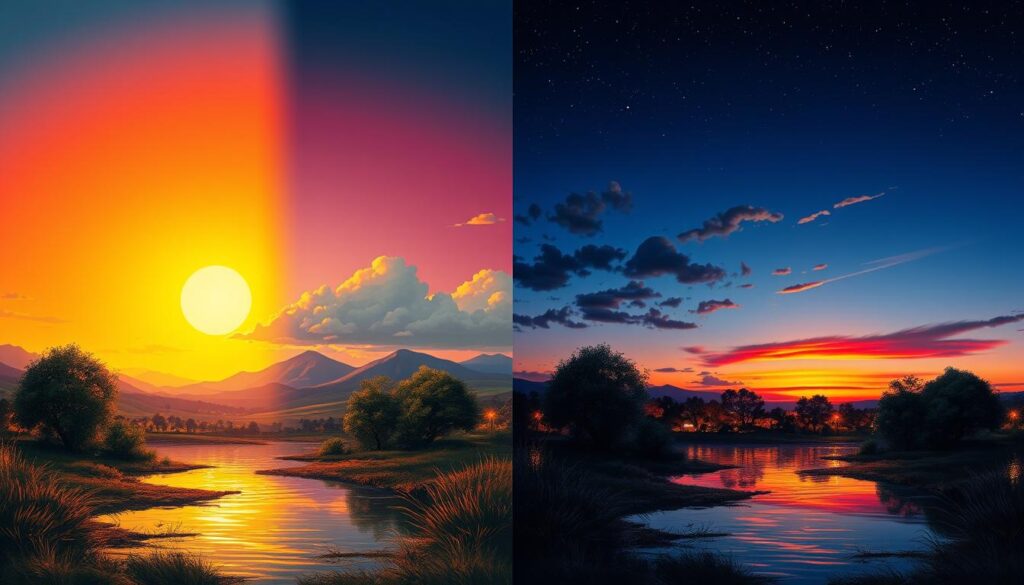
Shooting in high contrast scenes is challenging. Your camera must handle extreme light well. If it fails, you lose details in highlights or shadows.
This is like managing dynamic range in music production. You aim to avoid clipping bright spots and keep shadows clear. Exposure bracketing can help capture the scene’s full range.
Low Light Environments
In low light, detail is key without noise. As light drops, images can become grainy. Use a tripod and low ISOs to keep your dynamic range clean.
Proper exposure is crucial in any light. It ensures your images are clear and detailed. Always keep shadows clean for the best image.
Post-Processing and Dynamic Range
Post-processing is like a digital darkroom where we refine our images. Cameras capture the initial shot, but the final look comes from software interpretation. Knowing what is dynamic range helps us make better adjustments.
Dynamic Range in Editing Software
Today’s editing tools give us great control over light and dark. It’s like sound engineering, balancing frequencies for clarity. Just as audio mixing enhances quiet or loud sounds, our software brings out hidden details.
Working with high-quality files means we’re tweaking the dynamic range to show what was lost. This is crucial for photographers in high-contrast settings. Adjusting exposure curves helps us achieve our vision.
Techniques to Enhance Dynamic Range
For the best results, use non-destructive editing. This keeps your image quality high without permanent changes. Here are some techniques to boost your dynamic range:
- Shadow Recovery: Gently increase dark areas to show textures without noise.
- Highlight Compression: Reduce the brightest parts to reveal detail in clouds or skies.
- Local Adjustments: Target specific areas with gradient filters or brushes instead of global changes.
- Tone Mapping: Use algorithms to adjust tonal range while keeping local contrast.
Mastering these tools helps manage your dynamic range. Regular practice makes your images more vibrant and lifelike. Remember, small adjustments often lead to better results than big changes.
The Importance of Dynamic Range in HDR
When a single photo can’t capture a scene’s full beauty, HDR comes to the rescue. Many photographers struggle with losing details in bright spots or dark shadows. By mastering dynamic range, we can tackle these common issues.
What is HDR?
High Dynamic Range, or HDR, helps create images that look like they were seen by the human eye. We take multiple photos of the same scene at different exposures. This is called bracketing.
Then, we mix these exposures into one balanced image. This way, every part of the photo is well-lit. The result is a picture with details in both the brightest and darkest areas.
How HDR Utilizes Dynamic Range
Processing HDR images is like sound engineering. We balance light levels to create a perfect picture. It’s like mixing different “layers” of light for a harmonious final image.
By using the full dynamic range of your camera, you can capture scenes that were once impossible. This technology helps overcome camera limits in high-contrast settings.
- Exposure Bracketing: Capturing multiple frames to cover the full light spectrum.
- Tone Mapping: Compressing the wide range of light into a viewable format.
- Detail Preservation: Ensuring textures remain visible in extreme highlights and shadows.
With these tools, we can explore new creative possibilities. We don’t have to settle for less when we can use HDR to show the world as it truly is.
Dynamic Range in Different Types of Cameras
Choosing the right camera is key to high fidelity in your photos. Each camera type handles light differently, affecting detail recovery. It’s important to think about how our camera choices affect dynamic range during a shoot.
DSLR Cameras and Dynamic Range
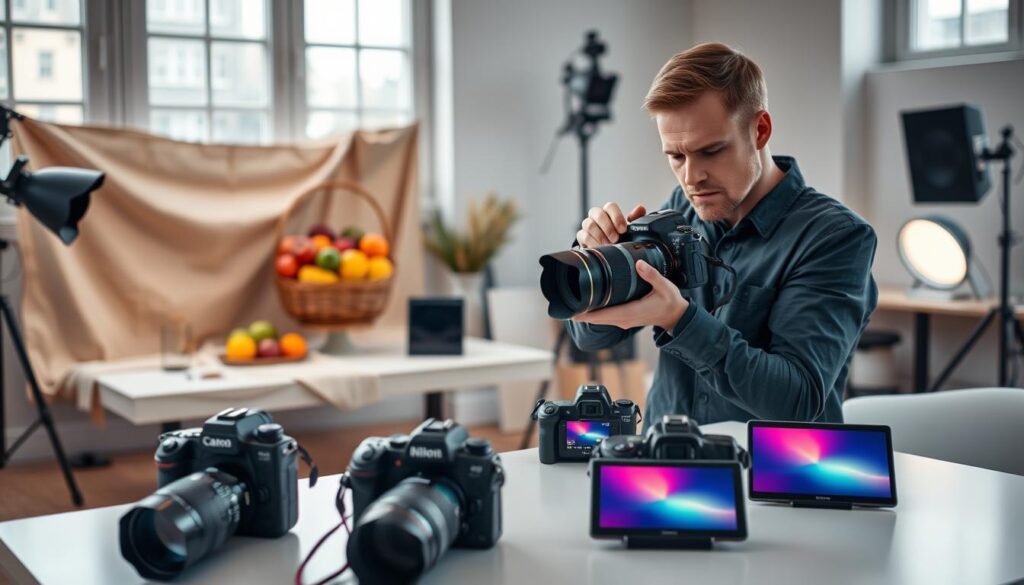
DSLR cameras are a top choice for pros. They use optical viewfinders, giving a clear scene view but no real-time exposure preview. This makes using histograms crucial for managing dynamic range.
DSLRs offer great sensor performance but need a manual approach for balancing light and dark. Mastering these tools can be tough, but they’re reliable for high fidelity results.
Mirrorless Cameras and Their Advantages
Mirrorless cameras changed our workflow with electronic viewfinders. These displays show exposure effects in real-time, helping us manage dynamic range better.
Seeing the dynamic range instantly lets us adjust settings for the best results. This tech prevents overexposed highlights and underexposed shadows, making our creative process smoother. Advanced sensors in these cameras also help achieve high fidelity images.
| Feature | DSLR Performance | Mirrorless Performance | Impact on Workflow |
|---|---|---|---|
| Exposure Preview | Optical (None) | Electronic (Real-time) | High |
| Dynamic Range | Excellent | Excellent/Advanced | Moderate |
| Sensor Tech | Traditional CMOS | Modern Stacked/BSI | High |
Tips for Maximizing Dynamic Range in Photography
Getting the right mix of light and shadow needs careful camera settings. The difference between a simple photo and a pro shot often comes down to light management. By improving our workflow, we can make sure our photos show the full range of a scene.
Shooting Techniques for Better Range
Using your camera’s histogram is a great way to capture dynamic range. This tool shows the light levels in your photo, helping you avoid losing details. If the graph hits the edges, adjust your exposure right away.
Exposure bracketing is also key for scenes with lots of contrast. By taking shots at different exposures, we can later mix them to get one photo with exceptional detail. This way, even the brightest and darkest parts stay clear and visible.
The Role of RAW Format in Dynamic Range
Shooting in RAW format is crucial for keeping high fidelity in your photos. RAW files keep more light data than JPEGs, which lose some info. This lets us bring back details in editing that would be lost.
Working with RAW files gives us more control over our photos. We can adjust exposure and contrast without losing image quality. Choosing RAW ensures our dynamic range stays strong, giving us high fidelity results for professional work.
Dynamic Range in Mobile Photography
Now, your phone is a powerful tool for capturing complex lighting. Traditional cameras were once the only choice for quality results. But, modern mobile devices use computational photography to close the gap. Knowing what is dynamic range in photography is key for both smartphone users and pros.
Advancements in Smartphone Cameras
Smartphone makers have added advanced sensors that process light in new ways. These devices capture multiple exposures quickly and merge them. This creates images with impressive depth and detail.
Some phones even sync image data with digital audio metadata for better video capture. They adjust settings to keep a consistent dynamic range. This lets anyone get cinematic results without big equipment.
Apps That Improve Dynamic Range
For more control, many apps offer manual exposure settings. These tools let you lock exposure or adjust shutter speed. This way, you can prevent blown-out highlights and keep every part of your frame right.
These apps also handle digital audio levels, making them great for content creators. With the right software, your phone becomes a top-notch tool for any photography project.
Real-World Applications of Dynamic Range
Professional creators know that telling stories visually is more than just about light. They balance shadows and highlights to create a mood that connects with viewers. This skill makes sure every frame looks polished.
The Role of Visual and Sound Integration
Cinematography is about mixing great images with clear sound. Effective dynamic range use adds depth, pulling viewers into your story. This mix of sight and sound makes the difference between amateur and professional work.
Try these techniques in your next project. Play with camera settings to see how they change your scenes’ feel. Mastering light can turn your work into a powerful visual experience.
Keep working on these skills to find your style. We think your hard work will lead to amazing results. Start bringing your vision to life with confidence today.