
 Zoe Nora
Did you know physical record sales have been rising for over 17 years? This shows analog audio is more than a trend. Starting this hobby might seem daunting, but setting up a vinyl setup for beginners is easy.
We think anyone can enjoy the warm sound of vinyl with the right help. Many fans get confused by too much online advice. But we’re here to guide you through the basics, so you can create a system that sounds amazing.
We aim to make the turntable setup easy for you. We’ll cover the key gear and tweaks to get your music playing right. Let us show you how to turn your home into a concert hall.
Key Takeaways
- Analog audio remains a popular and growing hobby for music lovers.
- Building a great system is accessible for beginners with the right information.
- Understanding core components helps you avoid common technical pitfalls.
- Fine-tuning your equipment is essential for achieving optimal sound quality.
- We simplify complex audio concepts to help you enjoy your record collection.
Why Choose a Vinyl Setup for Your Listening Experience?
Building a vinyl record player setup is more than a tech choice. It’s a lifestyle. Many prefer vinyl over digital streaming because it offers deeper sound and character. Vinyl brings a more mindful way to enjoy our favorite albums.
The Unique Sound of Vinyl
The main reason people love vinyl is its warmth. Unlike digital files, vinyl captures sound in a continuous groove. This gives music a rich, organic feel that’s often described as more authentic and immersive.
Optimizing your vinyl setup reveals music details lost in digital files. The soft crackle of the needle adds a human touch. It makes every listen feel like a live show at home.
Nostalgia and Musical Connection
Playing a record is a special emotional ritual. You must carefully remove the disc and place it on the platter. This process makes us slow down and focus on the music.
This ritual deepens our connection to the artist and the album. We listen from start to finish, not skipping tracks. It turns background noise into a rewarding experience.
Collecting Records as a Hobby
Collecting records is more than just listening. It’s a personal journey. Each album in your collection reflects your tastes and history. A vinyl record player setup showcases these treasures in a way digital playlists can’t.
Looking for rare records or discovering gems at local shops is exciting. It connects you with others who love high-fidelity sound. Your collection shows who you are and your love for music.
Essential Equipment for a Vinyl Setup
We think a great vinyl system setup is more than just parts. It’s about how each piece works together in your vinyl setup. Choosing quality components means your records sound just like the artists meant them to.
Turntables: Key Features to Consider
The turntable is the heart of your vinyl equipment setup. Look for models with adjustable tracking force and anti-skate controls to protect your records. Decide between belt-drive and direct-drive motors for different speed stability and vibration isolation.
Speakers: What to Look For
Choosing the right speakers is key for your vinyl sound system setup. You have to pick between powered speakers and passive speakers. Passive speakers are more flexible for future upgrades.
Amplifiers: Making Your Sound Come Alive
An amplifier boosts the signal from your turntable to your speakers. Many turntables have a built-in phono stage, but an external preamp can offer better clarity for your analog audio setup. A quality amplifier keeps your music dynamic and alive.
| Component | Primary Function | Key Consideration |
|---|---|---|
| Turntable | Reads the record groove | Tonearm quality |
| Preamplifier | Boosts signal level | Phono stage quality |
| Amplifier | Powers the speakers | Wattage output |
| Speakers | Produces sound waves | Passive vs. Powered |
Setting Up Your Turntable Correctly
We think a well-set-up system is key to great sound. A precise record player setup makes your music clear. It also keeps your vinyl safe from damage.
Leveling Your Turntable
The first step in turntable setup is making sure it’s on a flat surface. If it’s not, the sound will be bad and your records might get damaged.
Use a small bubble level to check if your turntable is level. If it’s not, use leveling feet or shims to fix it. This way, the bubble will be in the center.
Arm Height and Tracking Force Adjustments
After leveling, adjust the tonearm’s height for the right tracking force. This force is critical for clear sound.
Start by setting the counterweight so the tonearm floats. Then, adjust the weight to what your cartridge needs. Proper weight stops the needle from skipping or digging too deep.
Anti-Skate Settings Explained
Anti-skate stops the tonearm from pulling towards the record’s center. Without it, your stereo setup might sound uneven and distorted.
Most makers say to set the anti-skate to match your tracking force. This keeps the stylus centered, giving you a better soundstage for every album.
Choosing the Right Vinyl Records
Building a great record collection is key to a successful vinyl record player setup. Your records decide how good your music sounds. Knowing about different formats and conditions helps your vinyl record player setup sound its best.
Different Types of Vinyl: LPs vs. EPs
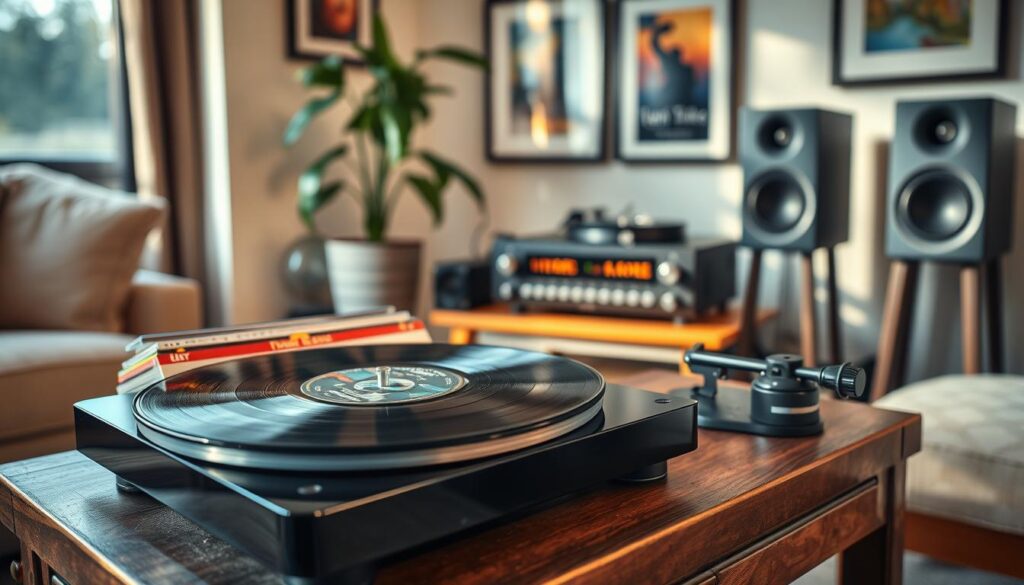
LPs and EPs are the most common formats. LPs spin at 33 1/3 RPM and hold a full album. They’re great for long listening sessions.
EPs, spinning at 45 RPM, are shorter. They’re perfect for focused listening or showcasing a few tracks. Knowing the difference helps you set the right playback speed and expectations.
How to Assess Record Quality
Checking your records before buying is crucial. Look for these quality indicators, whether buying new or used:
- Surface Scratches: Avoid deep gouges that can cause skipping or permanent noise.
- Warping: Place the record on a flat surface to ensure it sits perfectly level.
- Cleanliness: Check for excessive dust or grime, which can degrade your stylus over time.
Best Genres for Vinyl Listening
Some genres really come alive on vinyl. Jazz and classical music are often praised for their dynamic range and soundstages.
Rock and blues also sound great on vinyl. The best genre is the one that makes you happy when you listen.
The Importance of Proper Cleaning Techniques
A clean collection is key for any serious vinyl system setup. Dust, oils, and tiny particles can get stuck in your records’ grooves. This can lead to pops and crackles when you play them. Keeping your records clean ensures your music sounds clear and your stylus works well.
Cleaning Vinyl: Tools You’ll Need
To keep your records in top shape, you need a few essential tools. A high-quality carbon fiber brush is great for removing surface dust. For a deeper clean, use a special record cleaning solution with a microfiber cloth or a vacuum-based cleaner.
These tools help keep your records in great condition, which is crucial for a long-lasting vinyl system setup. Always handle your records by the edges to avoid oils from your skin getting on them. For more tips on caring for your vinyl records, check out this guide.
How Often Should You Clean Your Records?
It’s a good idea to quickly brush your record before playing it. This keeps dust out of the grooves. If you notice your records making noise or if you bought a used one, a wet cleaning is needed to get back to their original sound.
Storing Records: Best Practices
Storing your records right is as important as cleaning them for your vinyl system setup. Always store them standing up to avoid warping. Keep them in a cool, dry place, away from sunlight or heat.
| Maintenance Task | Recommended Tool | Frequency |
|---|---|---|
| Surface Dust Removal | Carbon Fiber Brush | Before every play |
| Deep Groove Cleaning | Cleaning Solution/Cloth | As needed or monthly |
| Stylus Maintenance | Stylus Brush | Every 5-10 records |
| Record Storage | Vertical Shelving | Always |
Acoustic Considerations for Your Listening Space
The space where you listen to records is key. Even top-notch gear sounds bad if the room isn’t right. By focusing on your vinyl sound system setup, you can hear more in your favorite albums.
Sound Treatment Ideas for Improved Quality
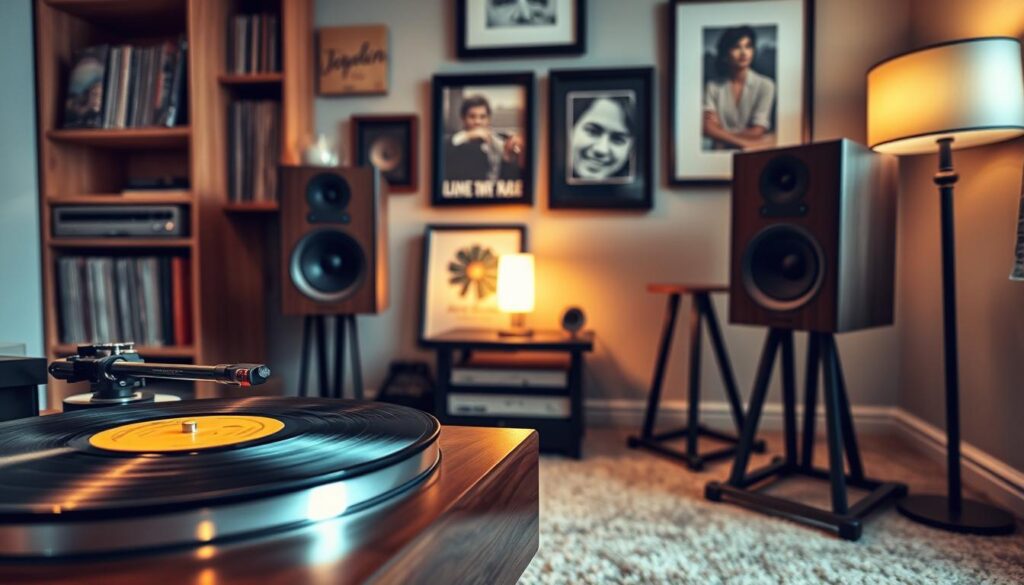
Hard surfaces like wood floors and bare walls can make sound bounce back, causing echoes. You can fix this with simple items. Adding soft materials absorbs sound energy and improves the sound quality.
- Place thick rugs or carpets on the floor to dampen sound reflections.
- Hang heavy curtains over windows to prevent glass from vibrating.
- Install acoustic foam panels on walls to reduce flutter echoes.
- Use bookshelves filled with books to act as natural diffusers.
Room Setup: Positioning Your Turntable and Speakers
Getting your stereo setup right is crucial. Keep your turntable away from speakers to avoid vibrations. If they’re on the same surface, it can cause feedback and ruin your sound.
Put your speakers on stands, away from the turntable. If space is tight, use isolation pads or heavy platforms. Try to make an equilateral triangle with your speakers and your listening spot for the best stereo imaging.
Managing External Noise Interference
Outside sounds can mess with your music. Traffic, appliances, and household noise can be distracting. To protect your vinyl sound system setup, find and seal sound leaks.
Make sure windows and doors are sealed to block outside noise. If you live in a busy area, use heavy furniture or acoustic blankets as a buffer. A quiet space lets you enjoy your records fully, without needing to crank up the volume.
Upgrading Your Vinyl Setup
Improving your vinyl equipment setup is an exciting journey. It changes how you enjoy your favorite albums. As you listen more, you start to notice small differences in sound quality.
This growth often leads to a desire for clearer and deeper music. You want to hear every detail in your music.
When to Consider Upgrading Components
You might need to upgrade when your system’s sound quality starts to decline. Look out for distortion during complex parts or dull high frequencies. These signs often mean your stylus or cartridge needs a refresh.
Another reason to upgrade is to match your equipment with your music taste. If you’re collecting high-quality records, your current analog audio setup might not be enough. Better components help you hear every detail in your records.
Budget-Friendly Upgrade Ideas
You don’t have to spend a lot to improve your sound. Small changes can make a big difference in your analog audio setup. Here are some affordable ways to enhance your listening experience:
- Replace your slipmat: A good slipmat can reduce vibrations and improve record stability.
- Upgrade your stylus: A new, high-quality stylus can greatly improve tracking.
- Improve cable quality: Better RCA cables can cut down on hum and interference.
- Add isolation feet: Specialized pads can help eliminate external vibrations.
High-End Options for Audiophiles
For the ultimate listening experience, high-end upgrades are key. They focus on precision and signal purity. These components aim to reduce distortion and enhance the soundstage.
Upgrading your phono preamp is a significant step. A dedicated, high-performance preamp offers better gain and lower noise. Also, switching to a high-output moving coil cartridge can bring unparalleled detail and transparency.
Common Mistakes to Avoid in Vinyl Setup
Getting high-quality sound is not just about the equipment. It’s also about the small details. Even experts can miss adjustments that make a big difference. By improving your vinyl setup, you can keep your records safe and enjoy better sound.
Incorrect Needle Pressure Settings
One big mistake is not setting the needle pressure right. If it’s too light, the stylus might skip tracks, causing audible distortion and damage. On the other hand, too much pressure can harm both the vinyl and the cartridge.
Use a digital scale to check your tracking force often. Sticking to the manufacturer’s settings for your record player setup helps your records last longer.
Poor Cable Management and Setup
Many people don’t realize how messy cables can affect sound quality. Power cords near phono cables can introduce hum or interference. This noise can ruin quiet parts of records.
To better your turntable setup, keep audio cables away from power lines. Use cable ties or sleeves to keep things tidy. A clean workspace is key for great stereo setup.
Ignoring Speaker Placement
Putting speakers on the same surface as your turntable is a mistake. It causes acoustic feedback. Vibrations from the speakers can make your sound muddy or distorted. Always keep your turntable away from speakers.
For the best sound, put your speakers on stands or use isolation pads. Proper placement in your room will make your stereo setup sound wider and more immersive. These small steps will make your turntable setup sound its best.
Maintaining Your Vinyl Setup for Longevity
Keeping your setup in top shape is key to great sound. By taking care of your vinyl equipment setup, every record will sound as good as new. Regular checks prevent small issues from becoming big problems.
Regular Maintenance Routines
A well-maintained record player setup needs a simple routine. Always cover your turntable when not in use to avoid dust. Clean your stylus regularly to keep sound clear and records in good shape.
Check your turntable’s settings every few months. Make sure your cables are organized and not too tight. These habits help your vinyl system setup last longer.
Troubleshooting Common Issues
Even with good care, you might run into small problems. A humming sound often means a bad ground wire connection. If your speed is off, it might be time to replace the drive belt.
Distortion usually means a dirty stylus or a misaligned cartridge. Keep a basic toolkit ready to fix these issues fast. Fixing them early saves your vinyl collection from damage.
When to Seek Professional Help
Some problems need a pro’s touch. If you hear motor noise or see irregular rotation, get help. Trying to fix complex parts yourself can harm your vinyl system setup.
It’s also smart to get professional help for upgrades like new tonearm bearings or cartridges. Expert care keeps your vinyl equipment setup in top shape for years.
| Maintenance Task | Frequency | Difficulty |
|---|---|---|
| Stylus Cleaning | Every 10-20 hours | Easy |
| Belt Inspection | Every 6 months | Moderate |
| Cartridge Alignment | Annually | Advanced |
| Professional Tune-up | Every 2-3 years | Expert |
The Community and Culture of Vinyl Collecting
The magic of vinyl music comes from its community. Spinning records is a personal act, but the hobby is also social. Talking with others can improve your vinyl record player setup for better sound.
Connecting with Other Vinyl Enthusiasts
It’s easy to find people who love vinyl online or in local clubs. These places are great for talking about gear, sharing finds, and trading tips. Building these connections can lead to lasting friendships.
Record fairs and swap meets are also great places to meet others. These events let you meet people who love the analog experience as much as you do. You’ll often find that more experienced collectors are eager to help newcomers.
Resources for Learning and Sharing
The internet is full of information for vinyl lovers. Sites like Discogs are key for cataloging your collection and learning about records. There are also many tutorials online that can help with common problems.
YouTube channels focused on audiophile gear offer visual guides. These can make complex tasks easier to understand. By using these resources, you can avoid common mistakes and get the best sound from your system. Continuous learning is key for any serious collector.
Local Record Shops: Supporting Your Community
Your local record shop is the heart of vinyl culture. These stores are more than places to buy music; they are places to discover new sounds and get advice. The staff often knows a lot and can give you personalized recommendations for your vinyl record player setup.
Shopping at these stores helps keep vinyl alive in your area. When you buy locally, you support a thriving music scene. Never underestimate the value of talking to a fellow music lover at the store.
Enjoying Music on Your Vinyl Setup
Your journey into high-fidelity sound reaches its peak when you curate the environment around your gear. A well-tuned analog audio setup serves as the heart of a home sanctuary designed for deep listening.
Setting the Mood
Dim the lights and choose comfortable seating to prepare your space for a long session. Soft lighting reduces visual distractions and helps you focus entirely on the warmth of the music. A dedicated vinyl sound system setup thrives in a room where you feel relaxed and ready to engage with every note.
Turning Listening into an Experience
We encourage you to treat each record as a deliberate event rather than background noise. Take the time to read the liner notes while the music plays to deepen your connection with the artist. This intentional approach transforms a standard analog audio setup into a gateway for emotional discovery.
Discovering New Sounds
Expand your horizons by visiting local shops to find albums from genres you rarely explore. Whether you choose jazz classics from Blue Note or modern indie pressings, variety keeps your hobby fresh. Your vinyl sound system setup acts as a perfect tool for uncovering hidden gems and appreciating the artistry behind every groove.